


History
In Germany the breed is called the Deutsch Kurzhaar. According to the FCI standard its roots lie in the Mediterranean hunting dogs used with nets and in falconry, dogs bred to find game and hold a point. Once the double-barrelled gun arrived in the mid-eighteenth century, hunters needed more than a pointer: they wanted one dog that would search, point, retrieve, track wounded game and work in water, all in a single day's hunting.
The standard credits Prince Albrecht zu Solms-Braunfeld with setting out the breed's characteristics and the rules for judging it in work. A studbook has existed since 1897, and German breeding has always been tied to working tests, so that a Kurzhaar is expected to remain a reliable hunting companion throughout its life. The breed belongs to FCI Group 7, Section 1.1, the continental pointers of braque type, and is subject to a working trial.
Temperament
The standard asks for a firm, balanced, reliable and restrained temperament, neither nervous nor shy nor aggressive. At home that translates into a dog that is affectionate, physically close and keen to be involved in whatever its people are doing. Many follow their owners from room to room and lean against legs when they are content.
Outdoors the picture changes. A shorthair switches on the moment it smells birds, rabbits or deer, and its hunting drive is strong and quick. The breed is clever and easy to motivate, but a bored or under-exercised dog becomes restless, vocal and inventive, and it will find work for itself if none is given. This is a dog for people who enjoy being outside every day in all weathers.
Children and other pets
Well-exercised shorthairs are generally kind and patient with children, and they enjoy being part of family life. A young dog is boisterous, though, and can knock over small children with sheer enthusiasm, so supervision matters. They usually get on well with other dogs and enjoy a playmate. Cats can be accepted if the dog grows up with them, but the prey drive is genuine, and rabbits, guinea pigs and birds kept at home are at real risk.
Exercise and the daily walk
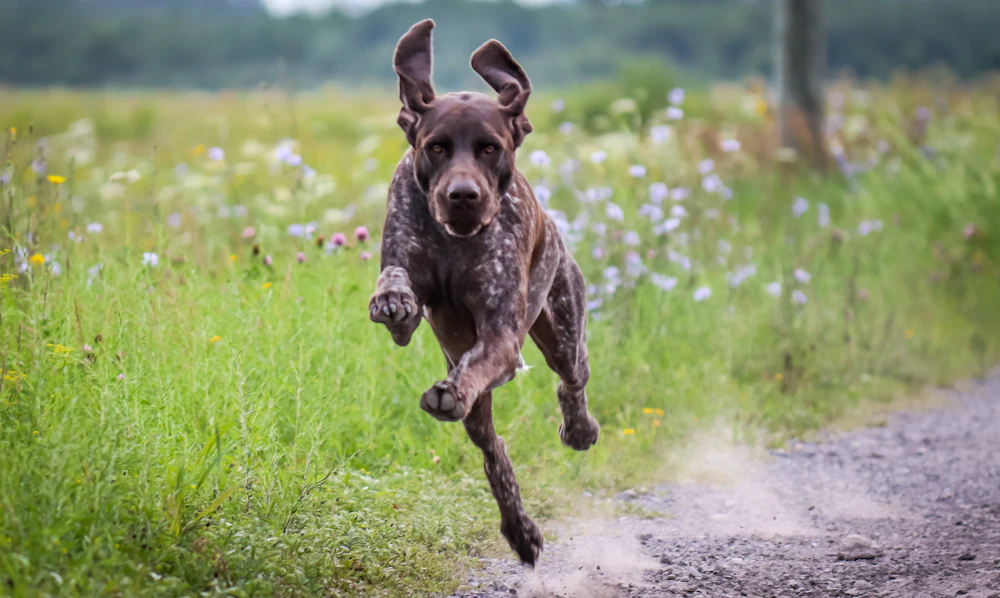
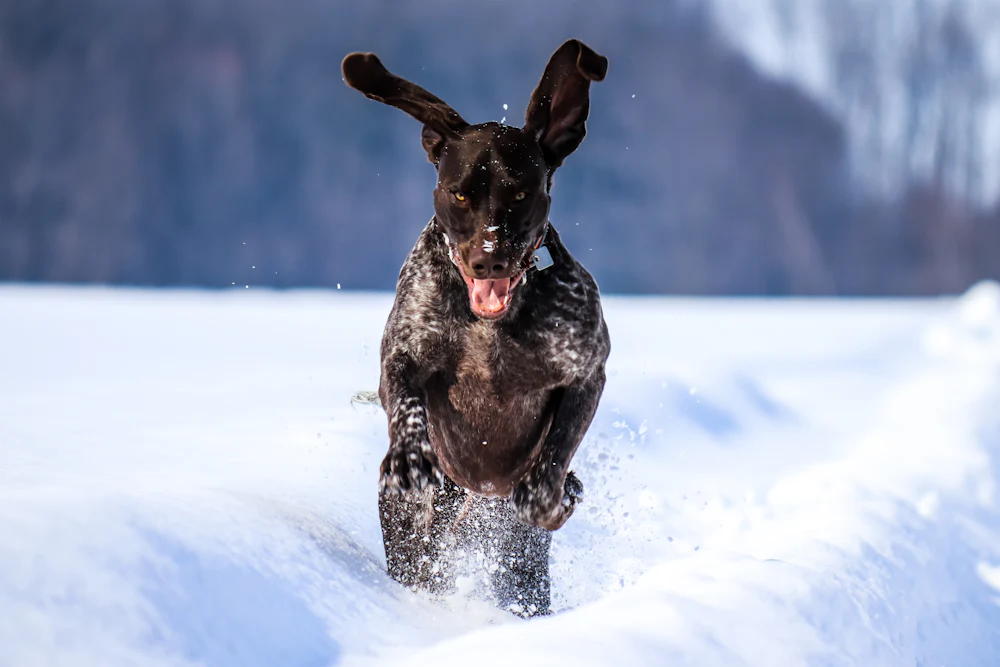
Two hours a day is a sensible minimum for a healthy adult, and working lines often need more. Pure lead walking rarely satisfies the breed: it needs to run, sniff and search. Long-line work in open areas, structured search games, retrieving, and canicross or cycling with an adult dog are all good outlets.
Off-lead freedom must be earned. A shorthair that catches the scent of deer in a forest can be gone in seconds, and road crossings make that dangerous. Use a long line until recall is solid, and choose open areas where you can see well ahead. Puppies should not be taken on long runs until growth has finished, usually around eighteen months.
Training
The breed learns fast and enjoys working with a handler, which makes it rewarding to train. Consistency and calm leadership are essential, because a shorthair quickly notices when rules are applied loosely. Short, varied sessions with food, play and the chance to use its nose bring out the best in it.
Priorities are recall, a stop signal at distance, impulse control around wildlife and calm behaviour at home. Teaching the dog to switch off, for example by rewarding settling on a mat, is as important as tiring it out. Hunting associations, gundog clubs and nose work classes give the dog a real outlet for its instincts.
Coat and grooming
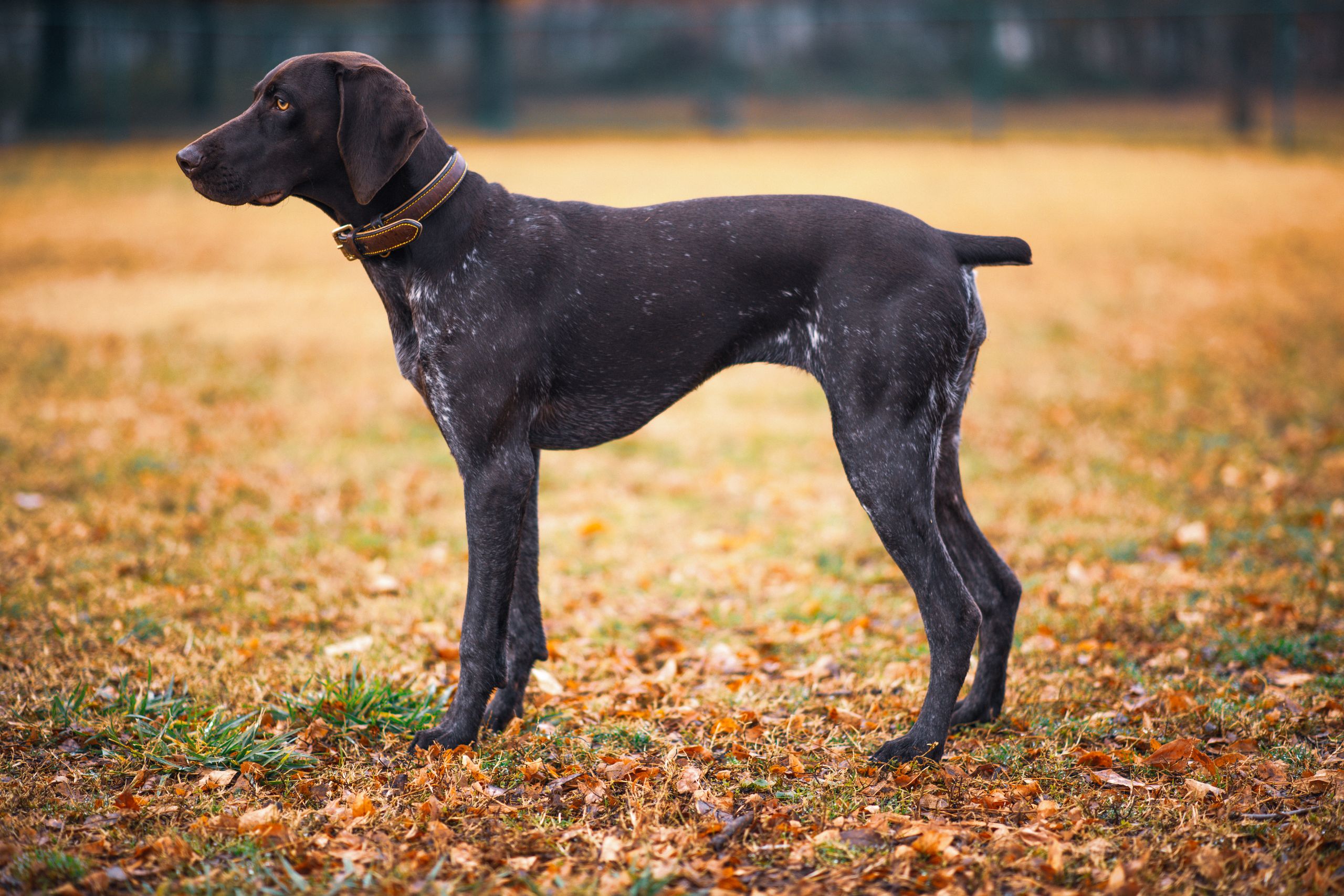
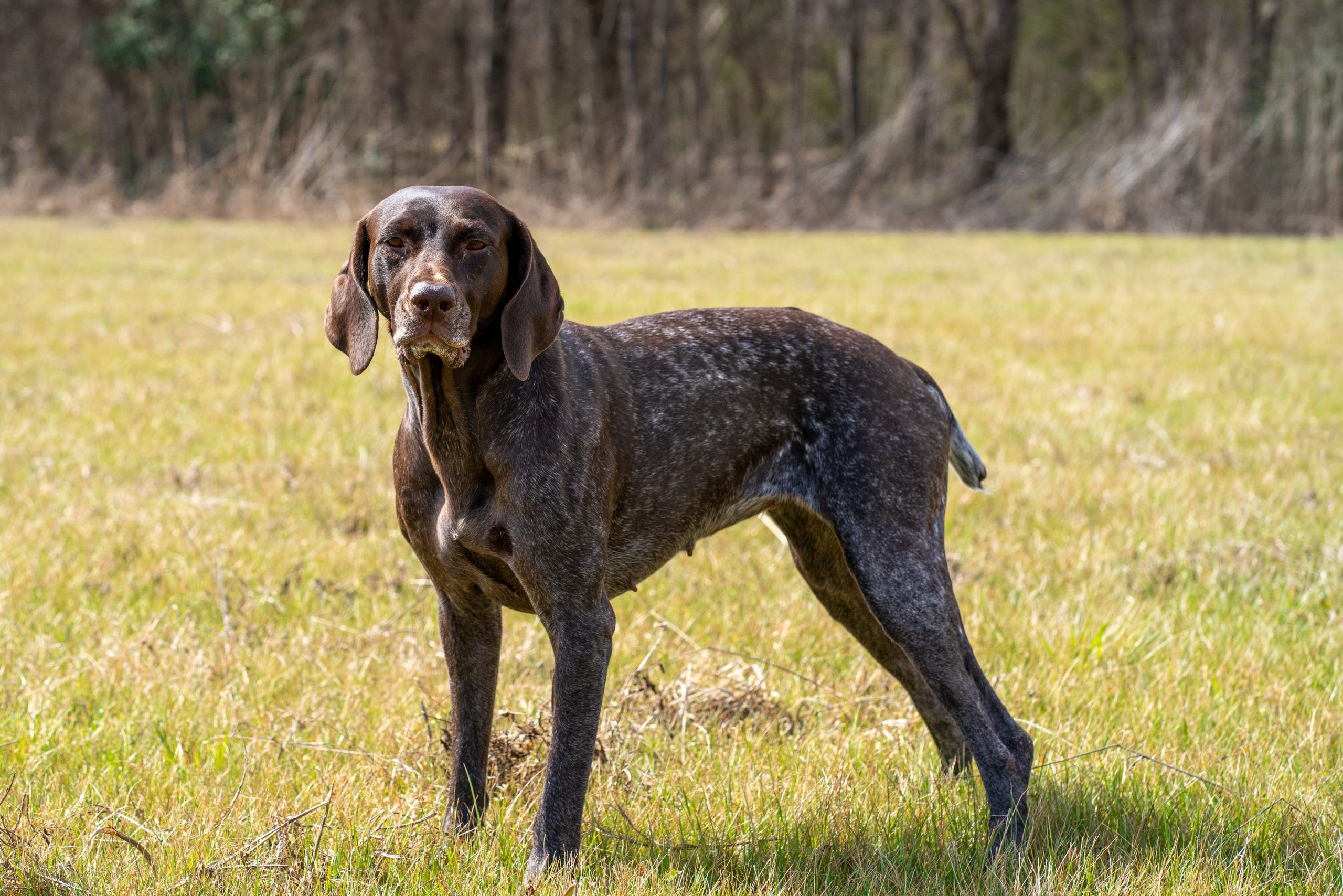
The coat is short and dense and feels rough and hard to the touch, slightly longer under the tail. It needs little work: a rubber mitt or bristle brush once or twice a week and a wipe down after muddy walks. Shedding is steady and the short hairs weave into fabric. The FCI standard allows solid brown, brown with white markings, dark and light brown roan, white with brown markings, and the corresponding black variants, with yellow tan markings permitted.
Feeding and weight
An active shorthair needs a high-quality complete diet with enough energy for its workload, adjusted for the seasons and for how much it actually runs. Feed two meals a day and avoid hard exercise for an hour or so either side of feeding because of the deep chest. Keep the dog lean and athletic; a visible waist and easily felt ribs are the target.
Work out a starting calorie figure and food weight with the calorie calculator. Not sure this is the right breed? Take the quiz.
Health
Every breed carries predispositions. These are the conditions most often discussed for the German Shorthaired Pointer, not a prediction for any individual dog.
- Hip dysplasia
- Gastric dilatation-volvulus (bloat)
- Von Willebrand disease type II (bleeding disorder)
- Cone degeneration (day blindness)
- Exfoliative cutaneous lupus erythematosus (lupoid dermatosis)
- Entropion
What to ask the breeder. Ask for hip scores for both parents and DNA results for von Willebrand disease type II, cone degeneration and lupoid dermatosis, and ask whether the parents come from working or show lines.
Choosing a puppy
Shorthair puppies are bold, curious and fast, so a secure home and close supervision outdoors are essential. Socialise them with people, traffic, lifts, other dogs and city noise, and introduce a calm crate or rest area early so the puppy learns to sleep in a busy household. Start recall games and name response from the first week. Keep exercise short and varied, with plenty of sniffing, rather than long runs.
In Luxembourg the national kennel club is the Fédération Cynologique Luxembourgeoise (FCL), a member of the FCI. Many owners also buy from breeders in Germany, France or Belgium; a puppy coming from another EU country must be microchipped and vaccinated against rabies, which in practice means it cannot travel before about fifteen weeks of age. Where to get a dog in Luxembourg.
The older German Shorthaired Pointer
Many shorthairs stay active into old age, which can hide early stiffness. Shorter, more frequent outings, scent games and gentle swimming keep them engaged. Watch weight closely, since a dog that moves less still often eats with enthusiasm. A warm bed and a coat on cold, wet days help, because the short coat gives little protection as the dog ages.
A realistic day
A realistic weekday for a working household in Luxembourg City, with a midday visit. Adjust it to your dog, not the other way round.
An hour of running and searching on a long line in an open area
Breakfast, then a food puzzle and a rest in a quiet room
Midday visit: a brisk walk with a scent search or retrieving session
Evening outing with jogging, recall practice and free sniffing, then dinner
Short calm walk and settle for the night
A German Shorthaired Pointer in Luxembourg
A shorthair can live in a flat, but only if its exercise is met every day without fail. The Grünewald and Bambësch forests offer long routes, but they are also full of deer and boar scent, so a long line is usually wiser than free running until recall is reliable. Open ground on the edges of the city is better for training distance work.
The short coat makes the breed fairly comfortable in summer, though hard exercise in the 30s °C should still be moved to early morning. In the wet, cold months many shorthairs appreciate a waterproof coat. Free buses and trams make it easier to reach the forests without a car. The usual Luxembourg rules apply: microchip, declaration to the commune, liability insurance and the annual dog tax.
Every dog in Luxembourg must be identified, declared to the commune and covered by liability insurance. How registration works.
When you travel
A sitter needs to understand that this dog needs real exercise every day, not just short toilet walks. Keep it on a long line in woodland unless recall has been proven, and watch for deer. Food and rubbish must be secured. Feed two meals a day with rest around them, and get immediate veterinary help for signs of bloat such as retching or a swollen belly.
PAWLY's holiday and overnight care takes place in your home, so your dog keeps its own bed and routine.
Myths and facts
MythA short coat means no shedding.
FactThe coat sheds steadily, and the short, stiff hairs work their way into sofas and clothing.
MythA pointer only needs to run.
FactRunning alone is not enough; the breed needs mental work, especially searching and scent tasks.
MythHunting dogs cannot be family dogs.
FactShorthairs are affectionate and usually good with children, provided their exercise and training needs are met.
Is it the right dog for you?
Suits
- Runners, cyclists and hikers who are out every day
- Hunters or people interested in dog sports and scent work
- Families with older children and an active lifestyle
- Owners prepared to invest in serious training
Think twice if
- Your walks would usually be under an hour
- You keep small pets such as rabbits or birds
- The dog would be alone for most of the working day
- You want a calm dog in its first two years
Questions owners ask
Can a German Shorthaired Pointer live in a flat?
Yes, if it gets at least two hours of varied exercise every day and mental stimulation at home. The flat itself matters less than the routine. A well-exercised shorthair will rest calmly indoors, while an under-exercised one may bark, pace or chew.
Will it chase cats?
The breed has a strong prey drive. Shorthairs raised with a cat often accept it, but outdoor cats, rabbits and birds are likely to be chased. Introduce any cat carefully and never assume the dog will ignore small animals outside.
Is it a good jogging partner?
An adult shorthair is an excellent running partner, with real endurance and speed. Wait until growth has finished, usually around eighteen months, and build distance gradually. In summer, run early in the morning and carry water for the dog.
How much does it bark?
Not excessively in a well-exercised dog, but shorthairs can whine and bark when bored or excited, and some vocalise when they see wildlife. Meeting exercise and training needs is the best way to keep a dog quiet in a block of flats.
Sources
Photo: Pexels (Pexels License) · Photo: Unsplash (Unsplash License) · Photo: Pexels (Pexels License) · Photo: Unsplash (Unsplash License) · Photo: Pexels (Pexels License)
General information for dog owners in Luxembourg, not veterinary or legal advice. Official facts (origin, size, group, history and temperament as described by the breed standard) follow the FCI standard; health and care sections reflect breed-club and veterinary guidance and are typical ranges rather than rules. For your own dog, ask your vet, the breed club or your commune. How this guide is written and checked. Last reviewed 8 October 2026.
Need someone for your German Shorthaired Pointer?
PAWLY offers an individual 45-minute walk or a home visit at your dog's pace, the same walker every time, and a written report with photos after every visit, across Luxembourg City.
Read next: the journal, for the German Shorthaired Pointer
All articles
Feeding, portions and how to tell if your dog is the right weight
Large dogs suffer more from extra weight; this is how to judge the right one.

Working breeds in a city flat: the honest version
High-drive dogs like the German Shorthaired Pointer can live in a flat, but it takes a plan.

Dog first aid: the six emergencies and what to do first
Bloat is an emergency in deep-chested breeds like the German Shorthaired Pointer; this covers what cannot wait.
Similar breeds
All 198 breeds
German Wirehaired Pointer
The Deutsch Drahthaar is a bearded, weatherproof all-rounder, built for a day of fieldwork and not for a quiet life.
EnergyGroomingFlat life
Hungarian Vizsla
A golden-rust pointer from Hungary, sensitive, affectionate and famously known as the velcro dog.
EnergyGroomingFlat life
Weimaraner
The silver-grey hunting dog of Weimar: elegant, athletic and so attached to its people that it shadows them from room to room.
EnergyGroomingFlat life

