


History
The FCI lists this breed as the Deutsch Drahthaar. According to the standard, it was developed in Germany from about 1900, when breeders combined the best of the rough-coated types, the Pudelpointer, the Griffon Korthals and the German Broken Coated Pointing Dog, with the German Shorthaired Pointer. The aim was an effective hunting dog with a weather-resistant coat.
The standard adds that within decades it became the most popular large gundog in Germany and worldwide. It is classified in Group 7, Section 1.1, Continental pointing dogs, with working trial, and described as a versatile gundog for all the work in field, wood and water, before and after the shot. German breeding is closely linked to hunting performance, so many dogs come from working lines in which drive and stamina count above all.
Temperament
The standard asks for a firm, self-controlled and well-balanced dog, without shyness of game, neither sensitive to gunshot nor shy or aggressive. Off the field, that translates into a confident, devoted dog that bonds closely with its family, is reserved with strangers and needs plenty to do. It is intelligent, serious about its work and often single-minded.
For the non-hunting household, the main point is drive. A working-line Drahthaar is relentless in pursuit of birds, hares and scent, and a family life of two short walks leaves it frustrated, noisy and destructive. A calm dog that sleeps at home is the result of generous exercise and structured work, not of luck. It is not a lap dog, nor a guard dog, but a partner that wants a job.
Children and other pets
A well-exercised German Wirehaired Pointer is affectionate and good-natured with children in its own family, and robust enough for energetic games. Its size and exuberance can knock over small children, so supervise young ones. It usually gets on with other dogs. The hunting instinct is strong, so cats, rabbits and birds are at risk, though a puppy raised alongside a cat will often learn to accept it indoors.
Exercise and the daily walk
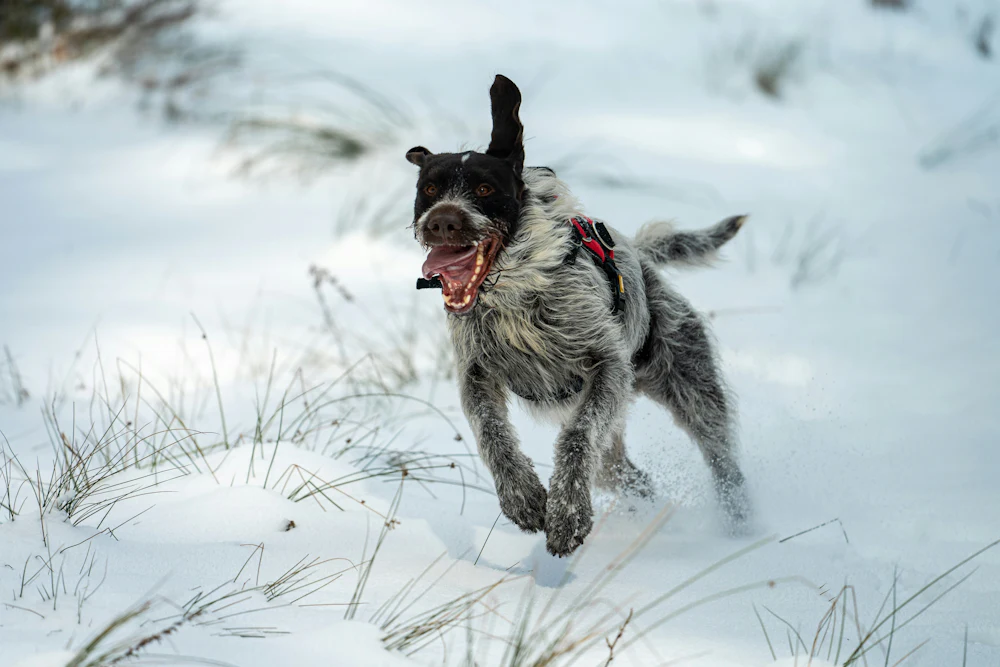
This is a dog for people who like to be outdoors every day of the year. Two hours of exercise is a sensible minimum for a fit adult, and it needs more than walking: running, swimming, retrieving and searching. A Drahthaar that does not get this outlet becomes restless and loud.
Structured activity is the best answer: gundog training, dummy work, tracking, nose work or canicross. These use the breed's brain and nose, and tire it more than a lap of the park. Keep the dog on a long line near wildlife until training is reliable, and avoid hard running on hard surfaces while a puppy's bones are growing. After exercise, check ears, coat and feet for burrs and ticks.
Training
The German Wirehaired Pointer is intelligent and eager to learn, and it was bred to work closely with a handler. It responds to clear, consistent, fair guidance with plenty of rewards and some challenge. It is sensitive enough that harsh correction damages trust, yet strong-willed enough that a weak owner will be ignored. Begin early, and keep sessions engaging.
Teach recall, steadiness and a settle on a mat from puppyhood, and use a long line while building reliability. The nose and prey drive will compete with you outdoors, so reward heavily when the dog chooses to return. Socialise it widely to prevent shyness or over-reserve, and teach it to be calm in the flat. For non-hunting owners, joining a gundog class or a nosework club is a good way of channelling its talents.
Coat and grooming
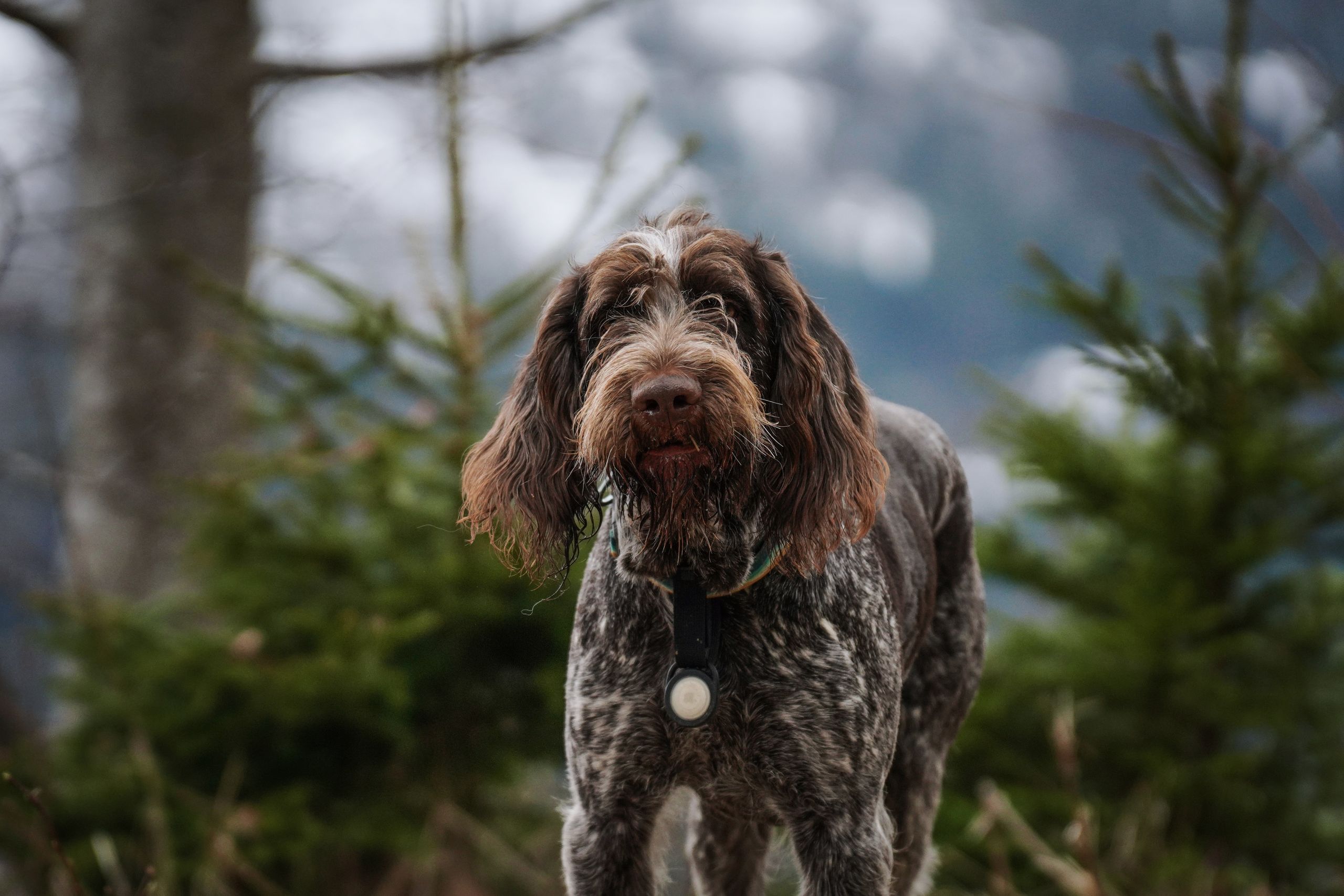
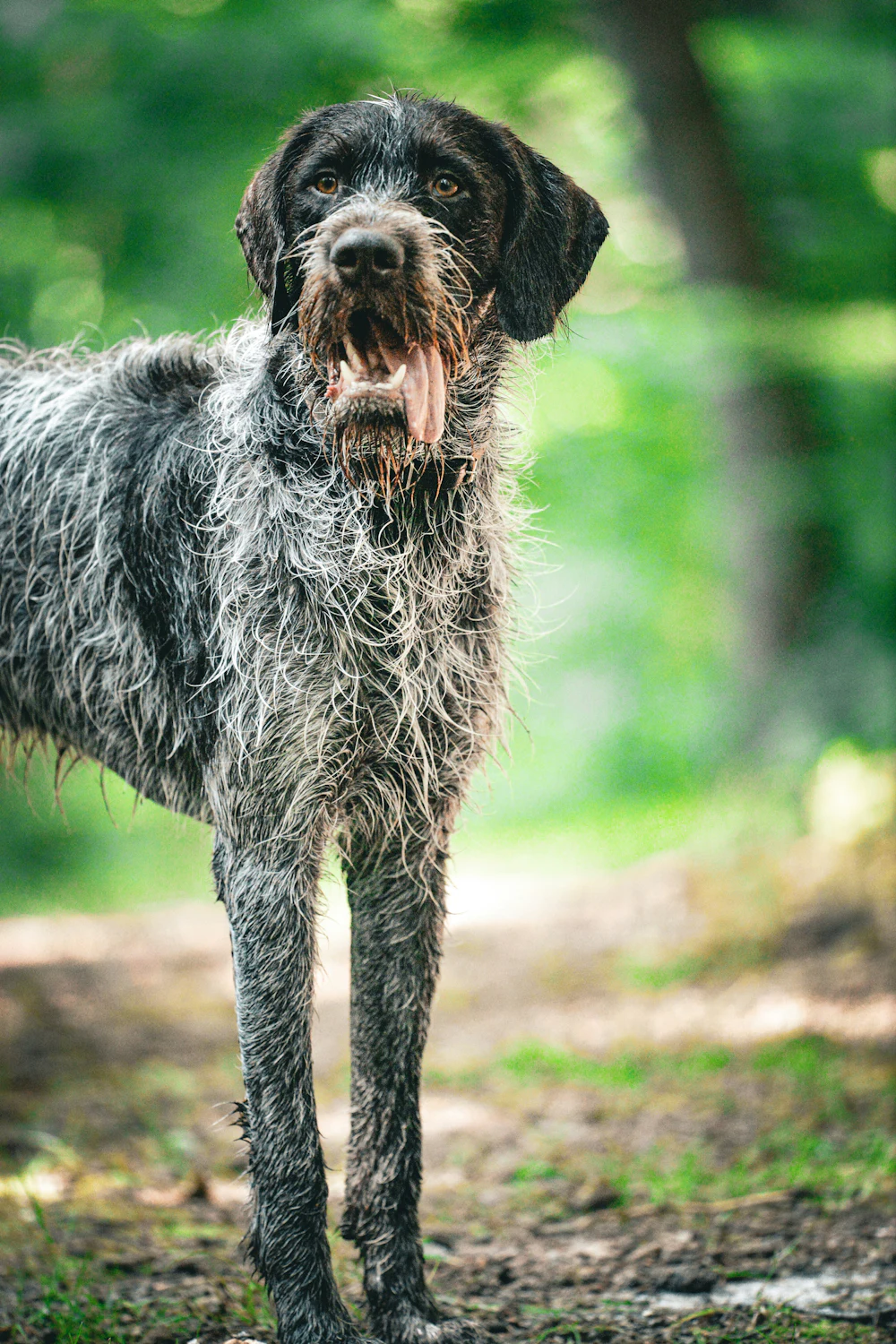
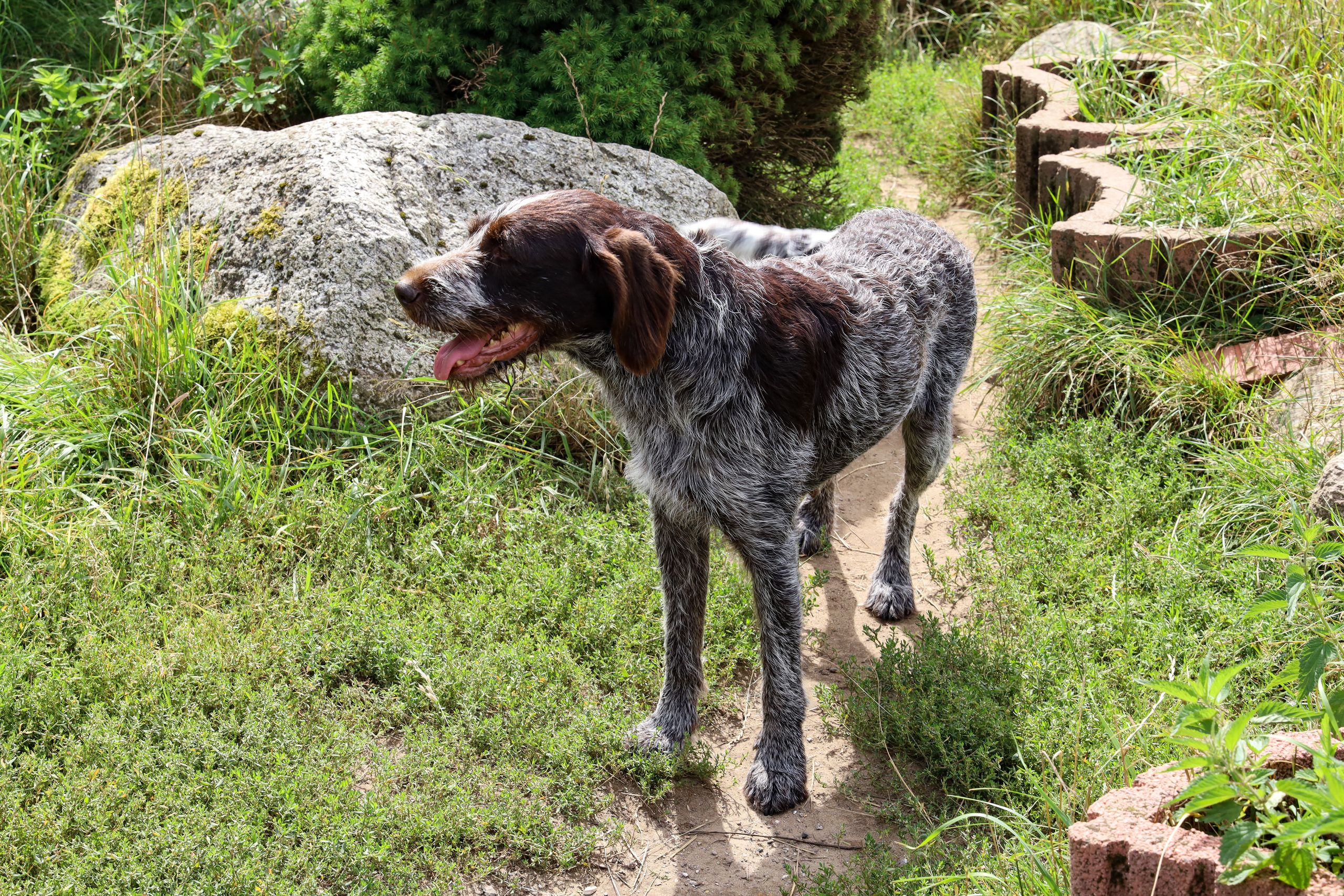
The standard describes a wirehaired, harsh, flat-lying, dense outer coat, 2 to 4 cm long, with a water-resistant undercoat and shorter, denser hair on the head and ears, with pronounced eyebrows and a beard. It protects against brambles, cold and water. Brush weekly and have the coat tidied or hand-stripped a couple of times a year, and keep the beard and ears clean. Permitted colours are brown roan, black roan, brown or light roan, with or without patches or a white chest patch.
Feeding and weight
Feed a good complete diet suited to a large, very active dog, in two meals a day, and adjust portions to workload. A deep-chested dog should rest quietly for an hour around meals to reduce the risk of bloat. Keep fresh water available, particularly after exercise. A working dog may need more food in winter and less when exercise falls, so watch the waistline and ribs regularly.
Work out a starting calorie figure and food weight with the calorie calculator. Not sure this is the right breed? Take the quiz.
Health
Every breed carries predispositions. These are the conditions most often discussed for the German Wirehaired Pointer, not a prediction for any individual dog.
- Hip dysplasia (poor hip joint formation)
- Ear infections, helped by drop ears and an active life in water
- Entropion and ectropion (inturned or drooping eyelids)
- Bloat (gastric dilatation and volvulus), as in other deep-chested breeds
- Von Willebrand's disease (an inherited bleeding disorder)
- Epilepsy
What to ask the breeder. Ask to see hip and elbow results and relevant genetic and eye tests for both parents, and ask whether the dogs are working-line, because the amount of drive determines whether a pet home is realistic.
Choosing a puppy
A Drahthaar puppy is boisterous, mouthy and quick, and it grows fast. Begin socialisation, lead training and recall with a long line as soon as the puppy arrives. Provide lots of short play sessions and chew toys, rather than long runs that tax immature joints. Introduce the lift, the bus and different surfaces early. A crate or pen helps for rest periods, and gentle alone time prevents a lifelong dependence.
In Luxembourg the national kennel club is the Fédération Cynologique Luxembourgeoise (FCL), a member of the FCI. Many owners also buy from breeders in Germany, France or Belgium; a puppy coming from another EU country must be microchipped and vaccinated against rabies, which in practice means it cannot travel before about fifteen weeks of age. Where to get a dog in Luxembourg.
The older German Wirehaired Pointer
From about nine or ten, a German Wirehaired Pointer slows down, with stiffer joints and less stamina, but it still wants to go out. Offer shorter, more regular walks, an orthopaedic bed and a lean body. Check ears, eyes, teeth and lumps at each vet visit. Gentle scent games keep its mind engaged. Watch for sudden restlessness or swelling of the belly, which remains an emergency.
A realistic day
A realistic weekday for a working household in Luxembourg City, with a midday visit. Adjust it to your dog, not the other way round.
Active 45-minute walk or run, including ball or training work, then breakfast and a rest.
Owner leaves for work; the dog sleeps on its bed after a hard morning workout and a stuffed chew.
Midday visit: a 60-minute walk on a long line in woodland, with search games and fresh water.
Evening outing of 60 to 90 minutes, with a run or training session in a fenced area if possible.
Short final walk, check the coat and ears, then bed.
A German Wirehaired Pointer in Luxembourg
Luxembourg City is not the natural home for a working Drahthaar, but it can be done by active owners. The Grünewald and Bambësch forests are within reach and offer the scents and space the dog craves, though wildlife is abundant, so keep the dog on a long line until recall is firmly established. In town, the Pétrusse valley and Parc Merl are useful for training but not enough for exercise on their own. Free buses and trams help reach the forests.
Flat life depends on the dog meeting its exercise needs: a tired Drahthaar sleeps, and an under-exercised one barks and chews. A lift makes life easier with a large dog. Summer heat in the 30s °C calls for early and late exercise, plenty of water and no strenuous work at midday. Remember the obligations: microchip, declaration to the commune, third-party liability insurance and the annual dog tax. Many owners join a gundog or tracking club.
Every dog in Luxembourg must be identified, declared to the commune and covered by liability insurance. How registration works.
When you travel
A sitter must be able to give this dog long, active days, since a bored Drahthaar is loud and destructive. Keep it on a long line or lead outdoors, as it will follow a scent or a bird. Rest it around meals, check ears and coat after woodland walks for ticks and burrs, and keep it away from cats and small pets. Leave the vet's details and the owner's rules.
PAWLY's holiday and overnight care takes place in your home, so your dog keeps its own bed and routine.
Myths and facts
MythA German Wirehaired Pointer is just a shaggy German Shorthaired Pointer.
FactThe standard says it was built from several rough-coated pointing types plus the Shorthaired, and it has its own standard and use.
MythA pointer will calm down by itself.
FactA working-line gundog is calm only if its exercise and mental needs are met every day.
MythWiry coat means no grooming.
FactThe coat is weatherproof, but it needs weekly brushing, regular tidying and checks for burrs, ticks and ear problems.
Is it the right dog for you?
Suits
- Active owners who spend a lot of time outdoors
- Hunters or people interested in gundog work
- Homes with access to forest or countryside
- Owners who enjoy structured training
Think twice if
- You want a relaxed pet that needs a short daily walk
- You live in a small flat with no access to nature
- You have cats or small pets
- The dog would be alone for long working days
Questions owners ask
Is a German Wirehaired Pointer a good family dog?
It can be for an active family with time for exercise and training. It is affectionate and loyal, but its size, energy and hunting drive make it a demanding choice for a quiet household.
Can a German Wirehaired Pointer live in a flat?
Only if the dog receives about two hours of active exercise and mental work every day. A tired dog is calm indoors, but an under-exercised one barks, chews and paces.
How is it different from the German Shorthaired Pointer?
The Wirehaired has a harsh, dense, weatherproof coat with beard and eyebrows, whereas the Shorthaired has a smooth coat. The standard says the Wirehaired was developed by crossing rough-coated types with the Shorthaired.
Does the German Wirehaired Pointer shed?
It sheds moderately, mostly the dead hair of the undercoat, which can be removed by weekly brushing and tidying. The coat does not need clipping.
Sources
Photo: Unsplash (Unsplash License) · Photo: Pexels (Pexels License) · Photo: Pexels (Pexels License) · Photo: Unsplash (Unsplash License) · Photo: Pexels (Pexels License)
General information for dog owners in Luxembourg, not veterinary or legal advice. Official facts (origin, size, group, history and temperament as described by the breed standard) follow the FCI standard; health and care sections reflect breed-club and veterinary guidance and are typical ranges rather than rules. For your own dog, ask your vet, the breed club or your commune. How this guide is written and checked. Last reviewed 8 October 2026.
Need someone for your German Wirehaired Pointer?
PAWLY offers an individual 45-minute walk or a home visit at your dog's pace, the same walker every time, and a written report with photos after every visit, across Luxembourg City.
Read next: the journal, for the German Wirehaired Pointer
All articles
Building a recall you can actually rely on
Scent and movement can cancel a recall; this is the method for the German Wirehaired Pointer.

What actually tires a dog indoors
Walks alone rarely tire a busy breed like the German Wirehaired Pointer; this covers what works indoors.

How much exercise does your dog actually need?
The German Wirehaired Pointer is an active breed, so it is worth checking the exercise numbers against your actual week.
Similar breeds
All 198 breeds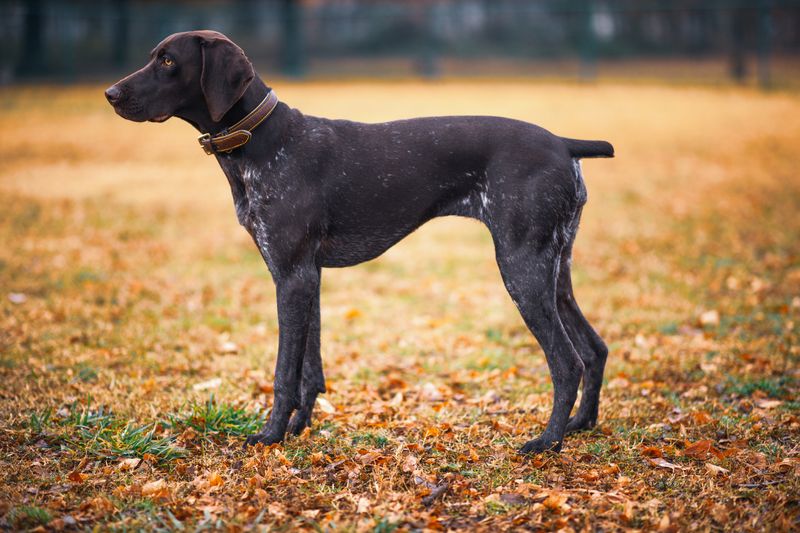
German Shorthaired Pointer
A versatile German hunting dog built for strength, endurance and speed, affectionate on the sofa and tireless outdoors when given a job.
EnergyGroomingFlat life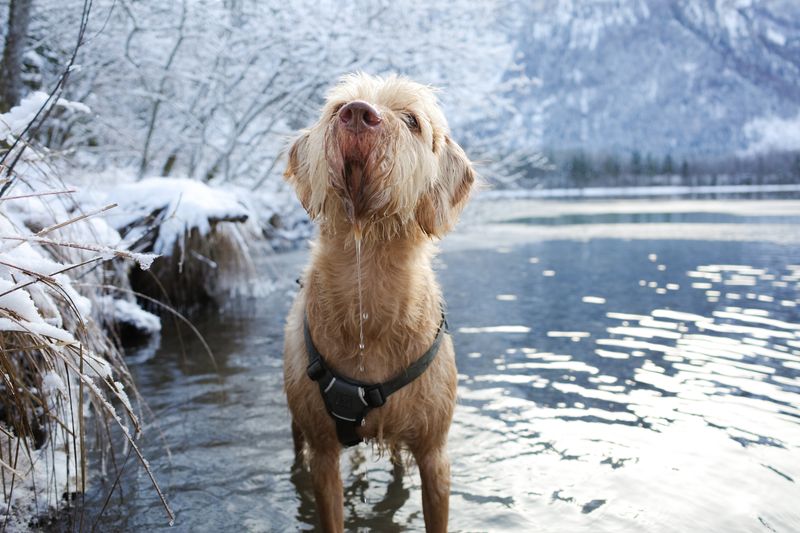
Wirehaired Vizsla
A russet-gold Hungarian gundog in a weatherproof coat, built for field, forest and water and happiest when given all three.
EnergyGroomingFlat life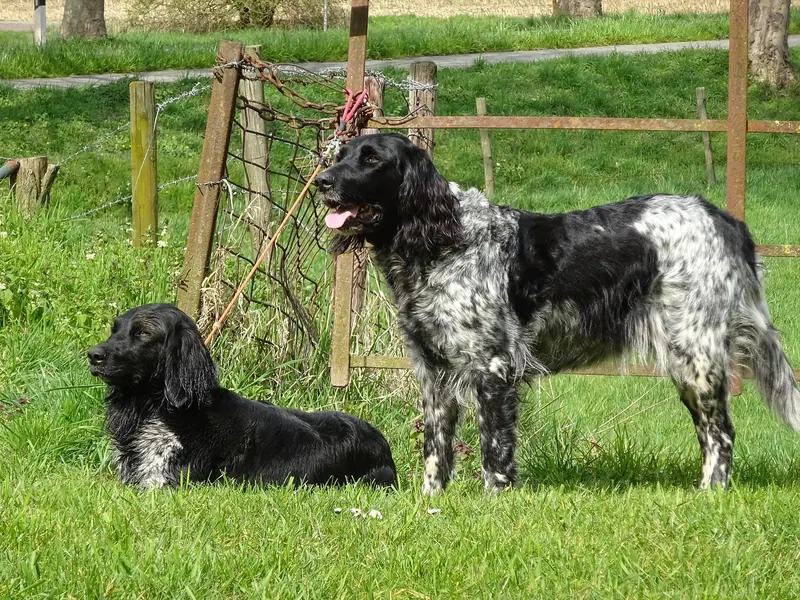
Large Münsterländer
A black-headed German gundog that points, retrieves and swims all morning, then expects to be included in everything else.
EnergyGroomingFlat life

