History
The FCI classes the Large Münsterländer in Group 7, Pointing Dogs, Section 1.2, Continental pointing dogs of spaniel type, with Germany as its country of origin. According to the standard, it developed from medieval hunting dogs through the pointer breeding of the nineteenth century. Planned breeding began in 1922, when the Club for the pure breeding of the black and white Münsterland Pointers drew up a foundation list of 83 dogs.
The standard defines it as a versatile gundog, able to work in varied terrain before and after the shot. That phrase covers a lot: finding game, pointing, retrieving from field and water and following a trail. The breed has stayed close to its hunting roots, and many are still bred by hunters for work. The FCI standard demands a strong, muscular body with a racy general impression and an expression of intelligence and nobility.
Temperament
The standard requires a dog that is tractable and easily taught, dependable for use as a gundog, with a lively temperament without being nervous. That describes the Large Münsterländer well: friendly, willing, sociable and sensitive. It bonds closely with its family and wants to be part of everything, from the morning walk to the evening on the sofa. It is generally gentle with strangers rather than a guard.
Beneath the friendliness is a serious working dog with a hunting nose and stamina to match. It loves to run, swim and retrieve, and it will track a scent with intense concentration. Bored or under-exercised, it can become restless, noisy or destructive, and it suffers when left alone for long hours. Treated as a partner and given work, it is calm, cooperative and affectionate indoors.
Children and other pets
A well-exercised Large Münsterländer is generally good with children, being friendly, patient and sturdy, though its size and exuberance can knock over small ones, and a wagging tail sweeps coffee tables. It usually gets on well with other dogs. Because it is bred to hunt, cats and small pets outside the household may be chased, while those it has grown up with are usually accepted. Supervise early introductions and teach children to respect the dog's rest.
Exercise and the daily walk
A healthy adult needs about two hours of activity a day, and it enjoys every minute of it. Long walks, jogging, swimming, retrieving games and hikes are all welcome, and the dog has the stamina to keep going all day. Because of its hunting instincts, a Large Münsterländer should be off lead only in secure places until recall is dependable, since a strong scent can override a call.
Mental work is just as important. Tracking, retrieving, scent games, dummy training and obedience give the dog a purpose, and many owners join a gundog training group even if they never hunt. Puppies should avoid long runs and hard jumping while the joints grow; short walks, free play on soft ground and gentle swimming are enough until about a year to eighteen months. Avoid hard exercise around mealtimes because of the bloat risk.
Training
The standard describes a tractable dog that is easily taught, and most Large Münsterländer dogs learn quickly and enjoy working with their owner. Reward-based methods, with plenty of praise and variety, bring out the best. They are sensitive, so harsh corrections do more harm than good. Early socialisation to people, traffic, lifts, trams and other dogs helps the friendly temperament develop into easy confidence.
Priorities are recall, loose-lead walking, calm greeting and settling in the house, since an exuberant large dog is hard work if it jumps on every guest. Retrieving and tracking games give a legitimate outlet to hunting instincts, which should be directed rather than suppressed. Teach calm alone-time in small steps from the first weeks, as the breed is people-oriented and can struggle with isolation.
Coat and grooming
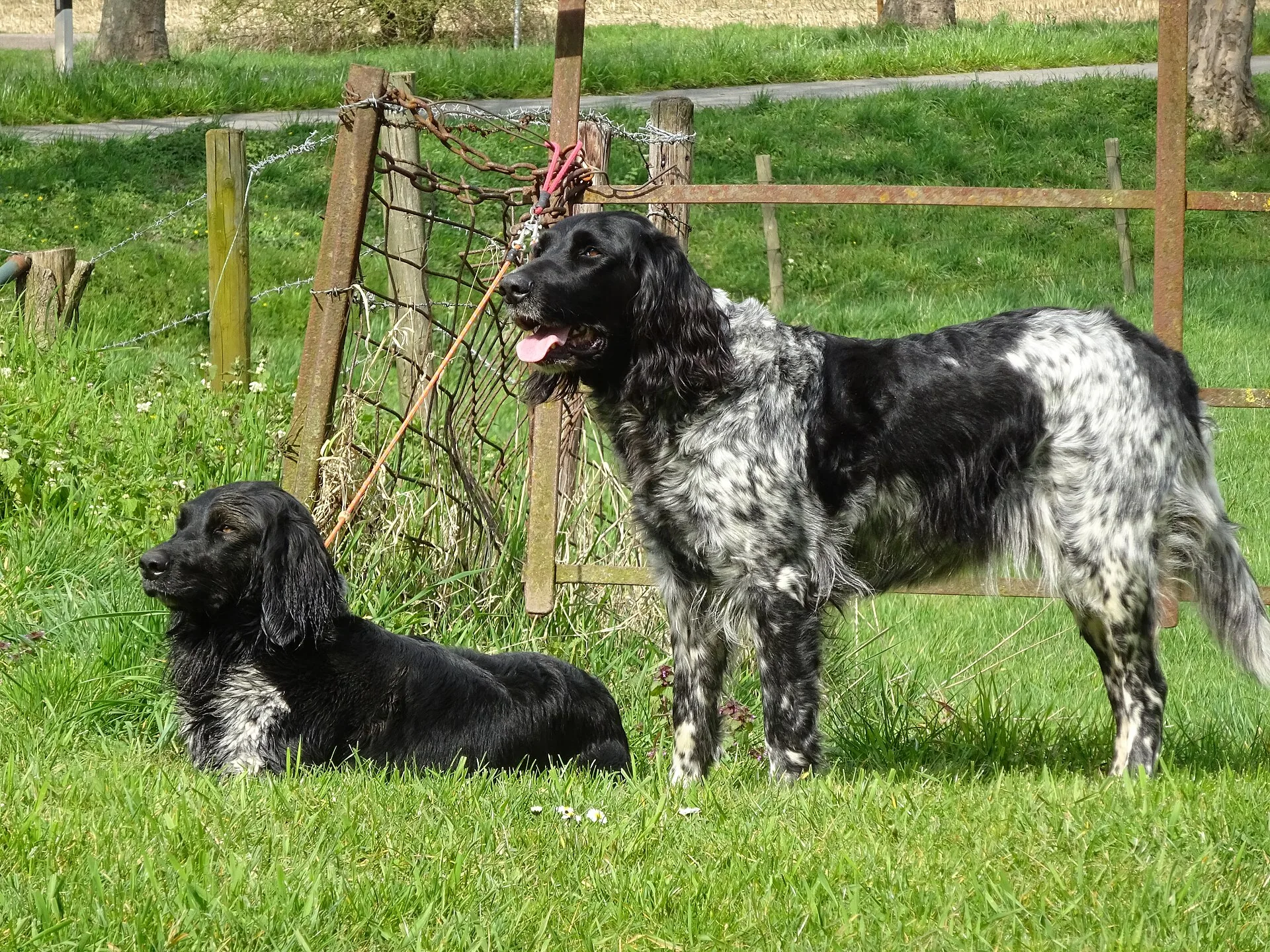
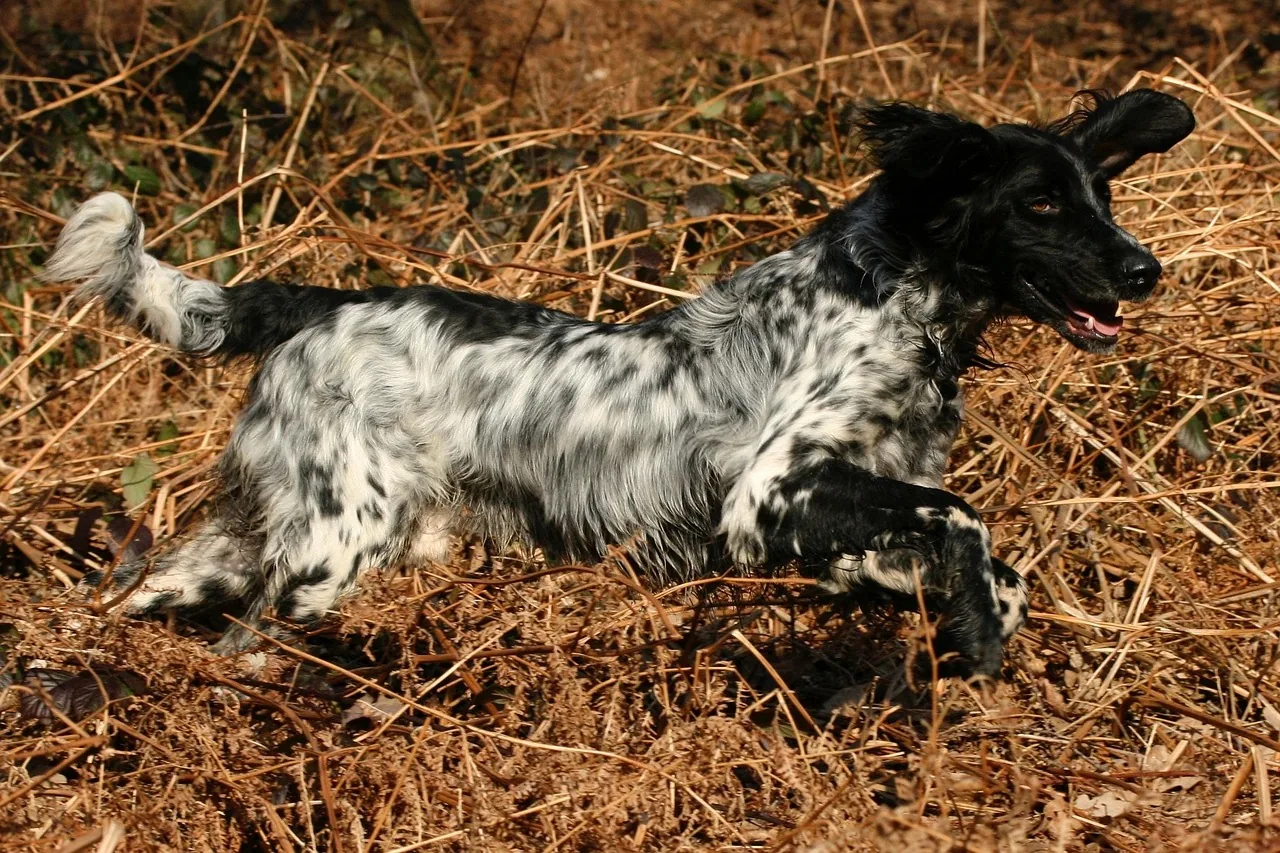
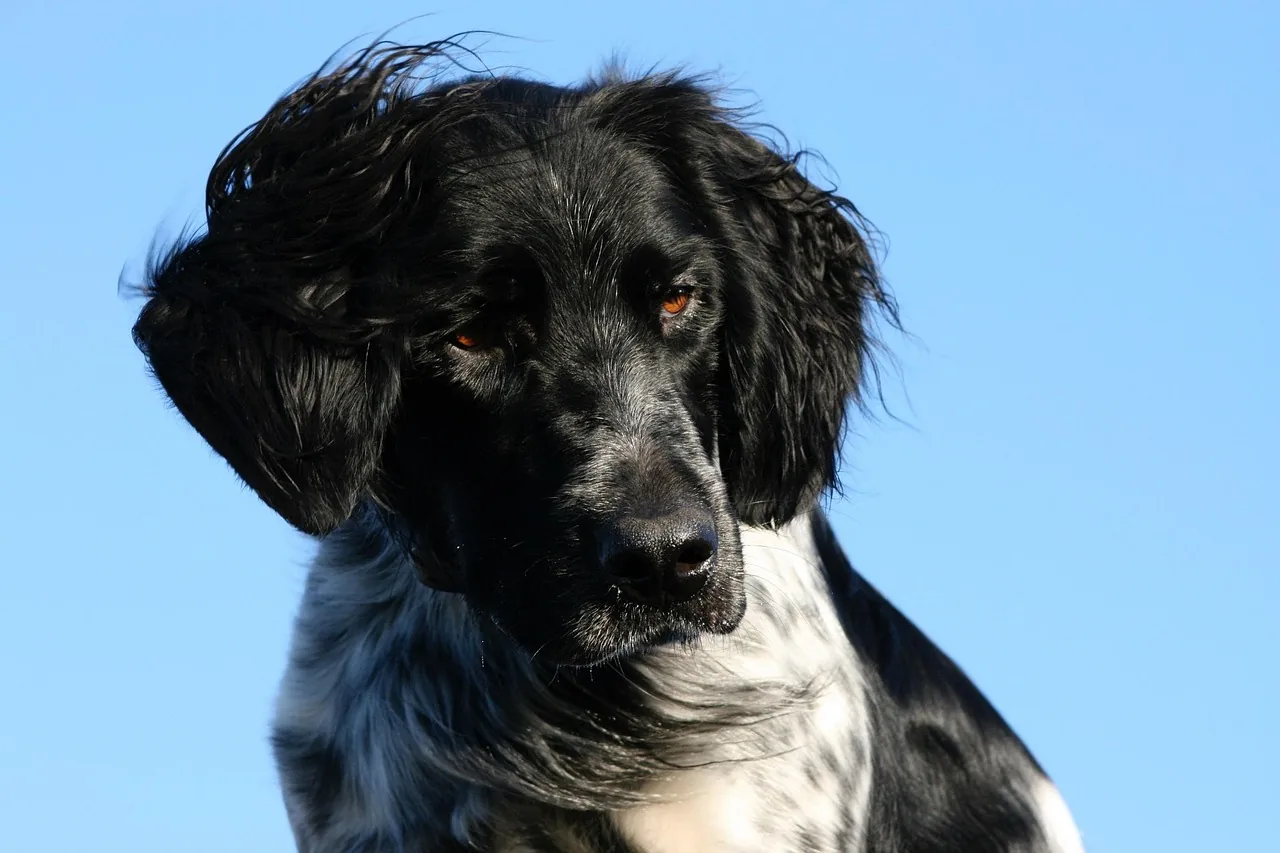
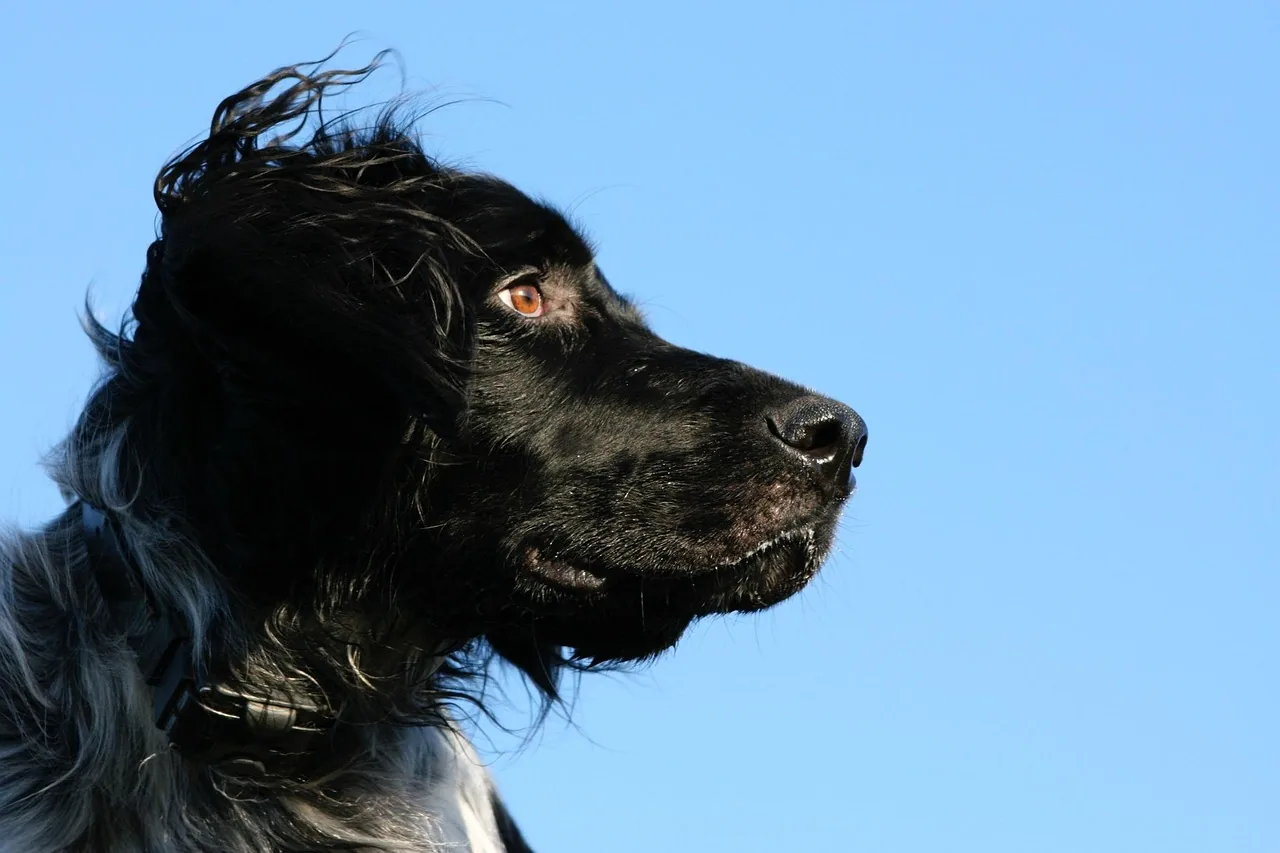
The FCI describes a long, dense coat that is sleek, not curly, with especially long and dense feathering on the legs and tail. The colour is white with black patches and spots, blue roan, or pure black, and the head is always black. Brush two or three times a week to remove loose hair and prevent tangles in the feathering, and expect more shedding in spring and autumn. After wet or muddy walks check the ears, feet and feathering for burrs.
Feeding and weight
Feed a complete diet suited to a large, active breed, divided into two meals rather than one large one, as the deep chest makes bloat a risk. Rest the dog for an hour around meals and avoid exercise just before or after eating. Keep a close eye on body condition, as a hunting dog that is less active in the city needs less food. Fresh water should always be available, especially after exercise or swimming.
Work out a starting calorie figure and food weight with the calorie calculator. Not sure this is the right breed? Take the quiz.
Health
Every breed carries predispositions. These are the conditions most often discussed for the Large Münsterländer, not a prediction for any individual dog.
- Hip dysplasia
- Elbow dysplasia
- Gastric dilatation-volvulus (bloat)
- Epilepsy
- Ear infections
- Eye conditions such as cataract
What to ask the breeder. Ask to see hip and elbow scores and eye examination certificates for both parents, and ask whether any dogs in the line have had epilepsy or bloat.
Choosing a puppy
Large Münsterländer puppies are friendly, bouncy and eager to learn. Socialise them widely with people, lifts, trams, traffic and other dogs before about sixteen weeks, and begin short periods of being alone from the first week. Provide chew toys, avoid long walks and repeated jumping while joints grow, and teach lead manners early, since a large puppy pulling on the lead soon becomes a strong adult. Handling of ears, paws and coat prepares the dog for grooming and vet visits.
In Luxembourg the national kennel club is the Fédération Cynologique Luxembourgeoise (FCL), a member of the FCI. Many owners also buy from breeders in Germany, France or Belgium; a puppy coming from another EU country must be microchipped and vaccinated against rabies, which in practice means it cannot travel before about fifteen weeks of age. Where to get a dog in Luxembourg.
The older Large Münsterländer
Many Large Münsterländer dogs stay active and happy into old age, but from about nine or ten expect a slower pace and some stiffness. Shorter, more frequent walks, a supportive bed and a healthy weight help the joints. Check ears, eyes and teeth regularly, and mention any change in mobility or behaviour to your vet. Swimming is a kind form of exercise for older dogs, and gentle scent games keep the mind active.
A realistic day
A realistic weekday for a working household in Luxembourg City, with a midday visit. Adjust it to your dog, not the other way round.
45-minute walk with retrieving or scent games, then breakfast after a rest.
Owner leaves; the dog rests on a bed with a stuffed chew toy.
Midday visit: 60-minute outing in a green area, on a long line, with fetch and a short training game, fresh water.
Evening outing of about an hour, ideally with a forest walk or swim, followed by dinner after a rest.
Calm toilet break, ears checked after the day's walks, bed.
A Large Münsterländer in Luxembourg
A Large Münsterländer is a country dog, and Luxembourg's forests suit it well. The Bambësch and the Grünewald offer good scent and long walks, though wildlife is plentiful and a long line is wise until recall is reliable. In town, the Pétrusse valley and Parc Merl are pleasant for lead walks. Free buses and trams help reach the forest edges, and a calm dog of this size travels well once trained.
Flat life is possible only if there is a lift, daily exercise of about two hours and company during the day, because the breed does not cope well with long periods alone. The sleek coat copes with Luxembourg's damp winters, though ears and feathering need checking after wet walks. Summer days in the 30s °C call for early and late exercise, shade and fresh water. As elsewhere, the dog must be microchipped, declared to the commune and insured for third-party liability, and the commune charges an annual dog tax.
Every dog in Luxembourg must be identified, declared to the commune and covered by liability insurance. How registration works.
When you travel
A sitter should be fit and confident with a large, active gundog that needs about two hours of exercise each day. Keep the dog on a lead or long line outdoors unless the area is fully secure, as a scent or bird may draw it away. Feed in two meals with a rest around them, and know the signs of bloat. Check ears and feathering after walks, and leave vet contacts and the usual routine.
PAWLY's holiday and overnight care takes place in your home, so your dog keeps its own bed and routine.
Myths and facts
MythA hunting dog is not suitable as a family pet.
FactThe standard describes a tractable, easily taught dog, and many Large Münsterländer dogs make good family companions if given enough exercise and work.
MythIt will be happy in a flat with a daily walk around the block.
FactIt needs about two hours of activity and real mental work, and does not cope well with long hours alone.
MythIt is the same as the Small Münsterländer, only larger.
FactThe two are separate breeds, with different standards, size and some differences in type and use.
Is it the right dog for you?
Suits
- Active owners who enjoy long walks and swimming
- Families with older children
- People who want a friendly, trainable gundog
- Households with access to forest and open space
Think twice if
- You are away from home for long hours
- You live in a small flat without a lift
- You want a laid-back, low-exercise dog
- You have cats or small pets that may be chased
Questions owners ask
Can a Large Münsterländer live in a flat?
Yes, with a lift, about two hours of daily exercise and company during the day. It is friendly and calm indoors when worked, but it will struggle if left alone for long periods.
Do they need a job?
Not necessarily hunting, but they need purposeful work such as retrieving, tracking, scent games or dog sports. Without it, a clever dog becomes restless, noisy or destructive.
Are they good with children?
Generally, yes. They are friendly and sturdy, though large and exuberant. Supervise young children and teach calm greetings, and make sure the dog has a place to rest.
Is it hard to train?
The standard says it is tractable and easily taught. Most learn quickly with reward-based methods, though recall needs steady work because of the hunting nose.
Sources
Photo: Pieter Delicaat, CC BY-SA 4.0, via Wikimedia Commons · Photo: dendoktoor / Pixabay (Pixabay Content License) · Photo: Redkite / Pixabay (Pixabay Content License) · Photo: Redkite / Pixabay (Pixabay Content License) · Photo: Redkite / Pixabay (Pixabay Content License)
General information for dog owners in Luxembourg, not veterinary or legal advice. Official facts (origin, size, group, history and temperament as described by the breed standard) follow the FCI standard; health and care sections reflect breed-club and veterinary guidance and are typical ranges rather than rules. For your own dog, ask your vet, the breed club or your commune. How this guide is written and checked. Last reviewed 8 October 2026.
Need someone for your Large Münsterländer?
PAWLY offers an individual 45-minute walk or a home visit at your dog's pace, the same walker every time, and a written report with photos after every visit, across Luxembourg City.
Read next: the journal, for the Large Münsterländer
All articles
Building a recall you can actually rely on
Scent and movement can cancel a recall; this is the method for the Large Münsterländer.

Feeding, portions and how to tell if your dog is the right weight
Large dogs suffer more from extra weight; this is how to judge the right one.

How long can a dog really be left alone?
A sociable breed has a real limit on time alone; this is how to work it out.
Similar breeds
All 198 breeds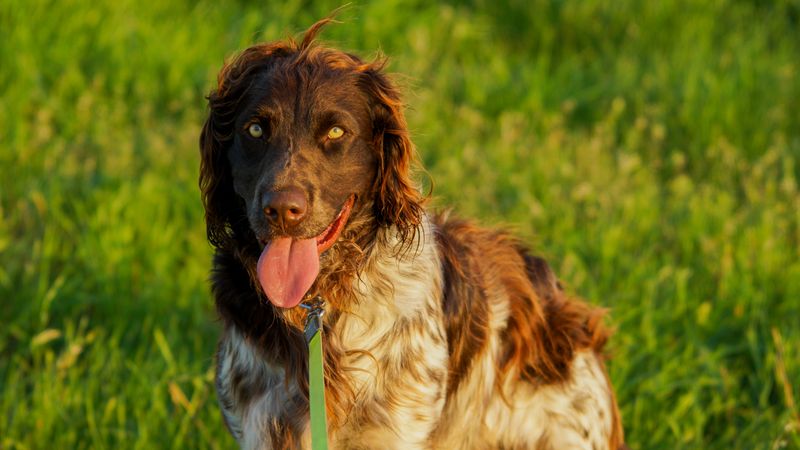
Small Münsterländer
A brown-and-white German gundog with a spaniel's charm and a pointer's focus, happiest when its nose and brain are both employed.
EnergyGroomingFlat life
German Wirehaired Pointer
The Deutsch Drahthaar is a bearded, weatherproof all-rounder, built for a day of fieldwork and not for a quiet life.
EnergyGroomingFlat life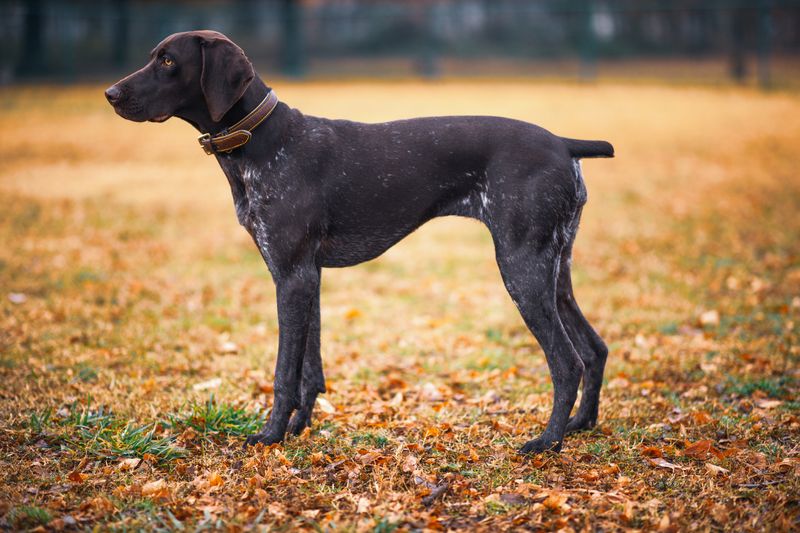
German Shorthaired Pointer
A versatile German hunting dog built for strength, endurance and speed, affectionate on the sofa and tireless outdoors when given a job.
EnergyGroomingFlat life

