


History
The FCI standard traces the Vizsla's ancestors to the nomadic Hungarian tribes that moved into the Carpathian Basin, with documented evidence appearing in records from the fourteenth century. From the eighteenth century the breed grew in importance as a hunting dog, and by the nineteenth century organised pointing dog competitions were being held in Hungary. It is the traditional gundog of the Hungarian plains.
Modern, selective breeding began in 1920, and the short haired variety was recognised by the FCI in 1936. The breed is generally reported to have come close to extinction after the Second World War and to have been rebuilt from a small number of dogs, some taken abroad by emigrating Hungarians. The Wire-haired Vizsla is a separate breed. The FCI uses it as a versatile hunting dog with an excellent nose, firmness on the point and good retrieving, and notes that it also adapts well to indoor companion life.
Temperament
The standard describes a lively, friendly, evenly tempered dog that is easily trained, with exceptional contact with its handler during work. It also states that the Vizsla cannot tolerate rough treatment, and that aggression and shyness are unacceptable. That sensitivity shapes everything: a Vizsla reads its owner's mood and shrinks from anger, but blossoms with encouragement.
Vizslas are gentle, affectionate and extremely attached to their people, which earns them the nickname velcro dog. They follow you to the bathroom, lean against your legs and want to share the sofa. They also carry a great deal of energy and a strong hunting instinct, so a bored Vizsla can be destructive, loud or anxious, and a Vizsla off the lead may disappear on a scent.
Children and other pets
Vizslas are affectionate and gentle with children, and they enjoy being part of a lively family, though an adolescent is bouncy and can knock small children over. They are usually friendly with other dogs. Small pets may trigger their hunting instinct, and cats are best introduced when the dog is young. They need a household with plenty of time for them.
Exercise and the daily walk
Plan on two hours a day, and expect to use them. A Vizsla needs proper walks, running and mental work, not a garden. Off lead exercise in a safe space is ideal, but the dog must be well trained, because a nose to the ground can override recall. Swimming, fetch, cycling beside a bike, running with an owner and scent games are all useful.
Mental work is as important as physical. Teach retrieves, searches, tracking and trick training, and consider gundog work or dog sports such as agility and obedience. A tired Vizsla is calm and affectionate, but a bored one becomes a nuisance. Be careful with young puppies, whose joints need gentle exercise, and avoid long runs before about a year.
Training
Vizslas are sensitive, eager to please and quick to learn with gentle, reward based methods. Harshness shuts them down, just as the standard warns. Build a strong recall early, using a long line and high value treats, and teach them to settle, because their energy and attachment can otherwise turn into restlessness.
Alone time needs careful, gradual training. Vizslas want to be with their people, and many struggle with long absences. Start with seconds, build slowly, and never leave a young Vizsla unattended for a long time. Socialise early with people, dogs, trams and lifts, and keep training varied. Many are slow to calm in adolescence, so persevere.
Coat and grooming
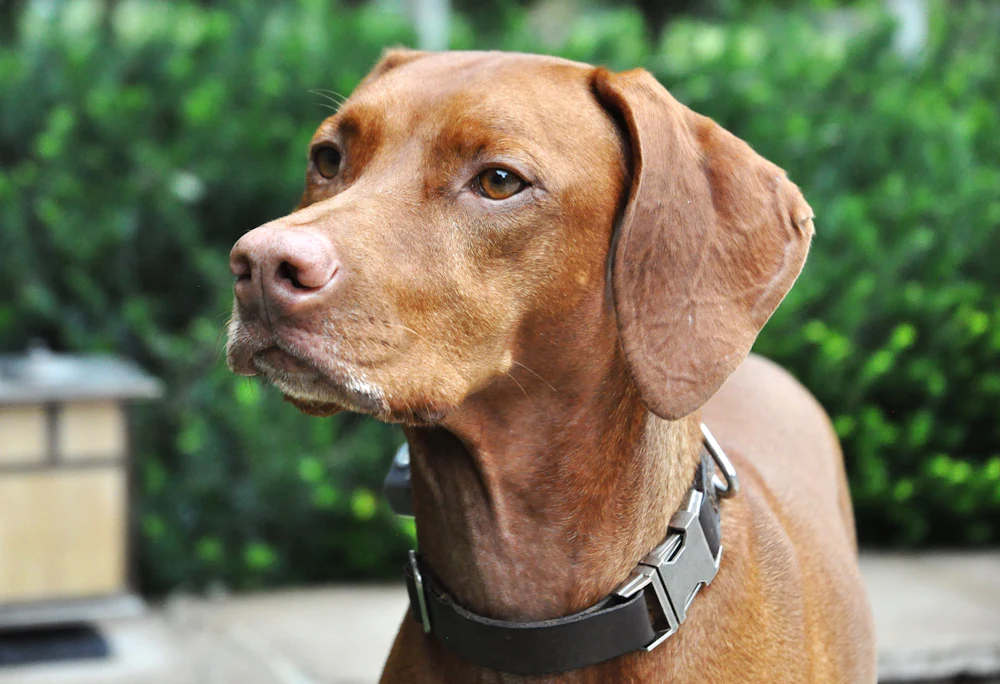
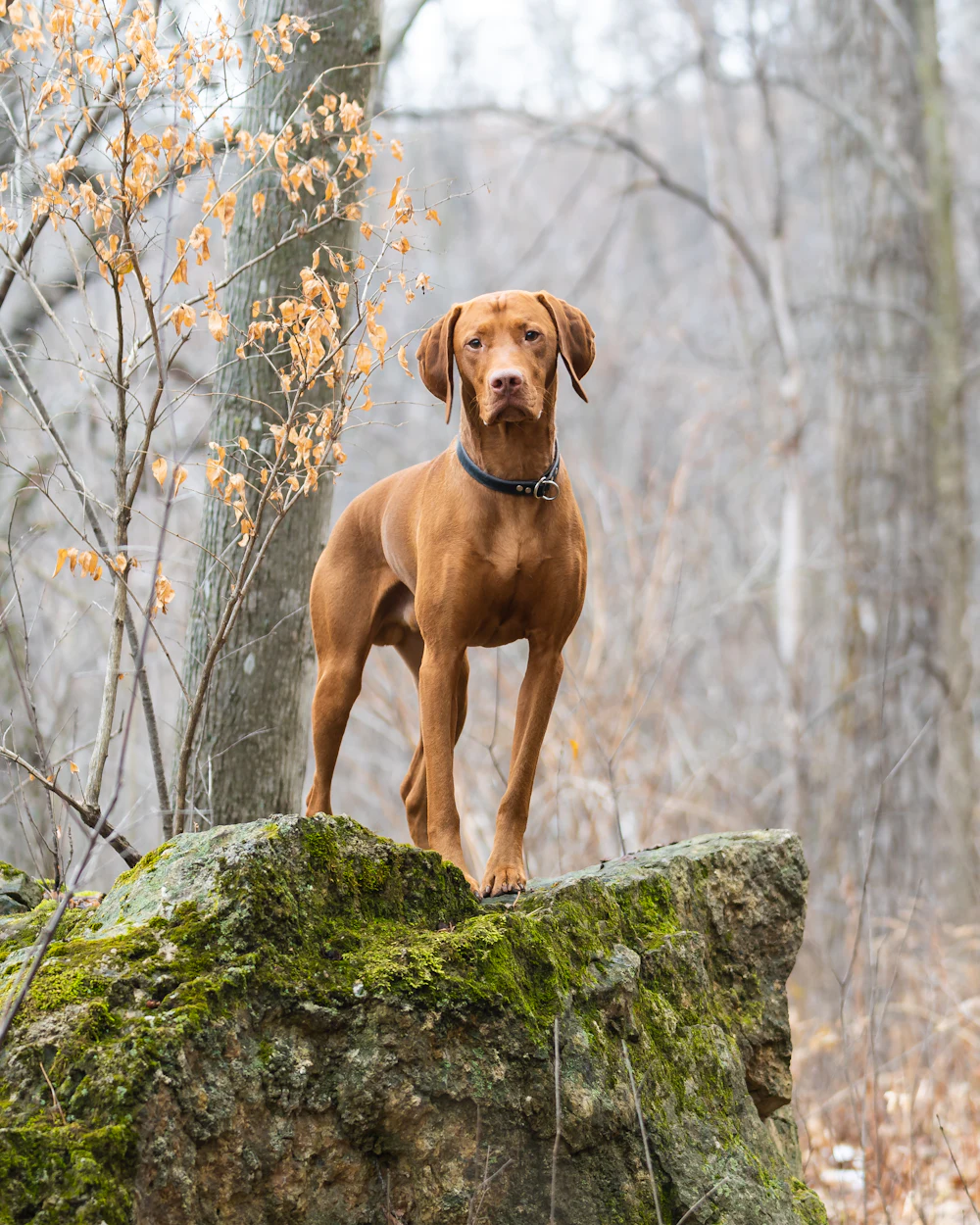
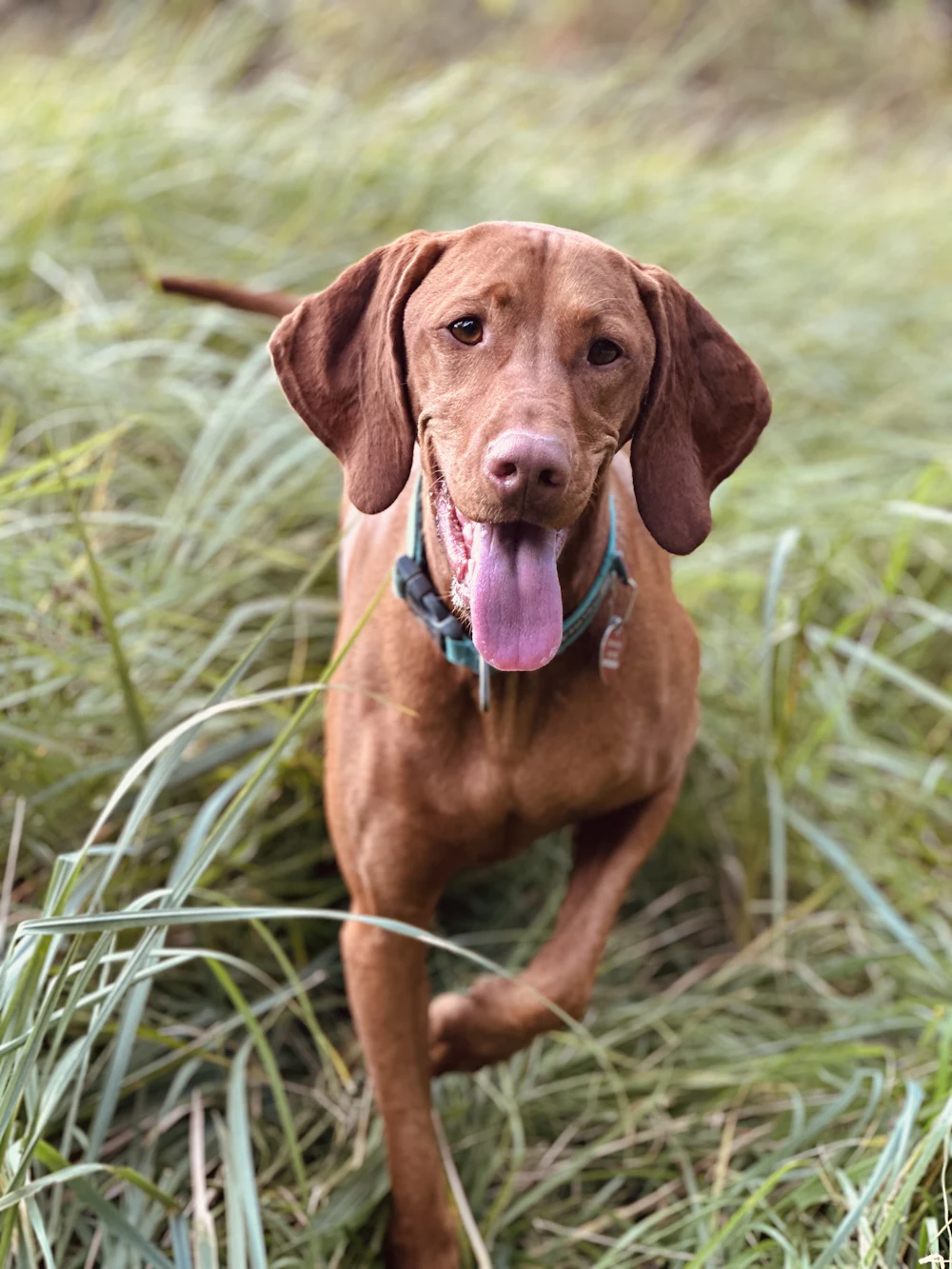
The short, dense coat is described as coarse and hard on the body, finer on the head and ears, with no undercoat. The FCI describes the colour as various shades of russet gold and dark sandy gold, with small white markings permitted on the chest and toes. The coat needs almost nothing: a weekly rub with a rubber mitt and a wipe after muddy walks. Because it is so thin, a Vizsla feels the cold.
Feeding and weight
They are lean, athletic dogs, so feed according to activity and keep them trim, with ribs easily felt but not seen. Measure two meals a day and avoid heavy exercise around mealtimes. Some have sensitive digestion, so change foods gradually. Puppies benefit from a good quality growth diet, fed in controlled amounts.
Work out a starting calorie figure and food weight with the calorie calculator. Not sure this is the right breed? Take the quiz.
Health
Every breed carries predispositions. These are the conditions most often discussed for the Hungarian Vizsla, not a prediction for any individual dog.
- Epilepsy (seizures, which can run in families)
- Hip dysplasia (a malformed hip joint)
- Hypothyroidism (an underactive thyroid)
- Sebaceous adenitis (a skin condition)
- Some cancers, including lymphoma and haemangiosarcoma
What to ask the breeder. Ask for hip scores and an eye examination for the parents, and ask directly about epilepsy and cancer in the lines.
Choosing a puppy
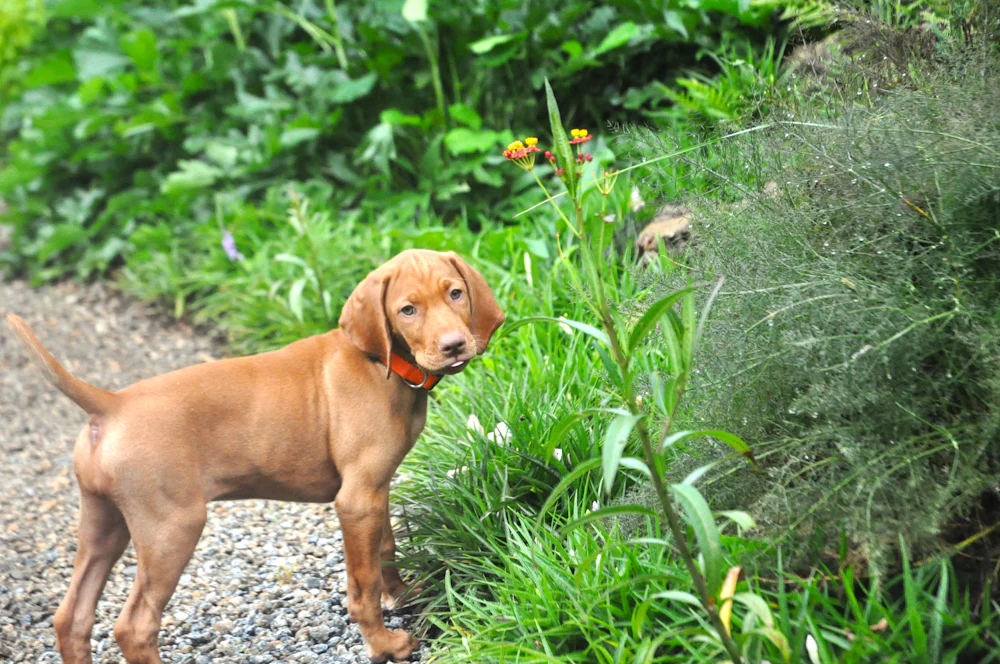
A Vizsla puppy is affectionate, fast, mouthy and always underfoot. Expect plenty of chewing and a need for company, and begin lead training, recall and short absences at once. Socialise gently with people and dogs, and keep play on soft ground. Choose a breeder who health tests, handles puppies from birth and shows you the parents, ideally in a home.
In Luxembourg the national kennel club is the Fédération Cynologique Luxembourgeoise (FCL), a member of the FCI. Many owners also buy from breeders in Germany, France or Belgium; a puppy coming from another EU country must be microchipped and vaccinated against rabies, which in practice means it cannot travel before about fifteen weeks of age. Where to get a dog in Luxembourg.
The older Hungarian Vizsla
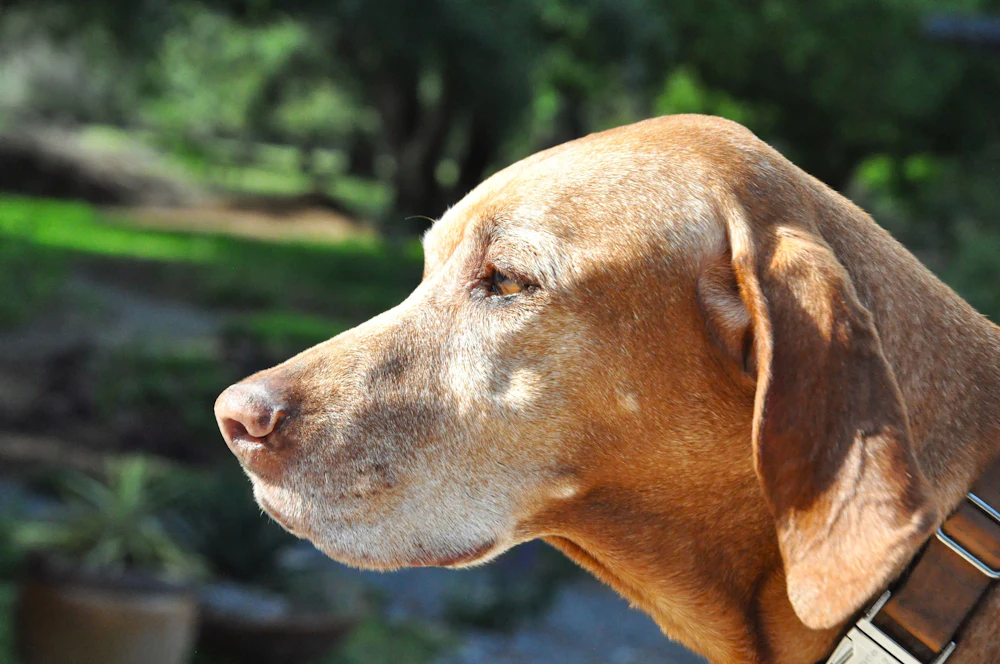
Vizslas often remain athletic until ten or more. As they age, watch for stiffness, lumps, weight changes and thinning coat, and have senior check-ups. Shorter, steadier walks suit older dogs, and many keep the velcro habit to the end. A warm coat for winter walks and an orthopaedic bed are worthwhile.
A realistic day
A realistic weekday for a working household in Luxembourg City, with a midday visit. Adjust it to your dog, not the other way round.
A brisk 45 minute walk or run, with recall practice and a sniff stop.
Breakfast, then a chew toy or puzzle while you get ready.
Midday visit from a walker for a toilet break and a 40 minute walk or play session.
A longer outing of an hour or more in a park or forest, with off lead running where safe.
A final toilet stroll, then settle beside you for the evening.
A Hungarian Vizsla in Luxembourg
A Vizsla can live in a Luxembourg flat only if the walking is real: two hours a day is the price of a calm evening. The dog will want to follow you everywhere, and a long day alone will be difficult, so a midday visit is essential. Lifts are rarely a problem, but a lively adolescent needs training to wait at doors and not pull on stairs.
The Bambësch and the Grünewald are excellent for long runs on long lines, and Kinnekswiss and Parc Merl suit shorter outings. Summers in the 30s are demanding for an athletic dog with a thin coat and no shade, so exercise early and late. In winter a thin coated Vizsla enjoys a warm jacket. Public transport is free, and a well trained Vizsla copes calmly.
Every dog in Luxembourg must be identified, declared to the commune and covered by liability insurance. How registration works.
When you travel
A sitter must be active, committed and prepared to provide proper exercise on every visit. Vizslas fret without people, so keep the routine, add extra visits if you can and give them a long walk before you leave. Use a secure lead or long line outdoors, as the nose may lead the dog away. Provide chews and a warm bed.
PAWLY's holiday and overnight care takes place in your home, so your dog keeps its own bed and routine.
Myths and facts
MythVizslas are just red Weimaraners.
FactThey are a separate Hungarian breed, usually a little smaller and softer in temperament, with a russet gold coat.
MythA garden is enough exercise.
FactA garden is not a job. Vizslas need proper walks, running and mental work, or they find their own entertainment.
MythVizslas are aggressive hunters.
FactHunting instinct is strong, but the standard requires a friendly, even tempered dog and rules out aggression. Most are gentle, but they do need training around small animals.
Is it the right dog for you?
Suits
- Active owners who run, cycle or hike
- People who are at home for much of the day
- Experienced or committed first-time owners who enjoy training
- Families with energetic older children
Think twice if
- You work long hours away from home
- You want an independent dog
- You cannot offer two hours of exercise a day
- You prefer a dog that is quiet and low maintenance
Questions owners ask
Why are Vizslas called velcro dogs?
Because they stick to their owners and want to be close at all times. They follow you from room to room, lean on you and struggle when left, so they suit people who are home or can bring the dog along.
Vizsla or Weimaraner?
Similar needs for exercise and company. The Vizsla is usually slightly smaller and softer in temperament, and its coat is russet gold, while the Weimaraner is grey. Both demand active owners.
Can a Vizsla live in a flat?
Yes, if it gets about two hours of exercise a day and company. It is calm when tired, but a flat with no daily outlet leads to a restless, noisy dog.
Do Vizslas get on with other pets?
Usually with other dogs. Small pets may trigger the hunting instinct, so introduce cats carefully and young, and keep small animals supervised.
Sources
Photo: Unsplash (Unsplash License) · Photo: Unsplash (Unsplash License) · Photo: Unsplash (Unsplash License) · Photo: Unsplash (Unsplash License) · Photo: Unsplash (Unsplash License)
General information for dog owners in Luxembourg, not veterinary or legal advice. Official facts (origin, size, group, history and temperament as described by the breed standard) follow the FCI standard; health and care sections reflect breed-club and veterinary guidance and are typical ranges rather than rules. For your own dog, ask your vet, the breed club or your commune. How this guide is written and checked. Last reviewed 8 October 2026.
Need someone for your Hungarian Vizsla?
PAWLY offers an individual 45-minute walk or a home visit at your dog's pace, the same walker every time, and a written report with photos after every visit, across Luxembourg City.
Read next: the journal, for the Hungarian Vizsla
All articles
Building a recall you can actually rely on
Scent and movement can cancel a recall; this is the method for the Hungarian Vizsla.

Working breeds in a city flat: the honest version
High-drive dogs like the Hungarian Vizsla can live in a flat, but it takes a plan.

Lumps and bumps: what to check and when
Early checks on lumps matter in a breed prone to tumours.
Similar breeds
All 198 breeds
Weimaraner
The silver-grey hunting dog of Weimar: elegant, athletic and so attached to its people that it shadows them from room to room.
EnergyGroomingFlat life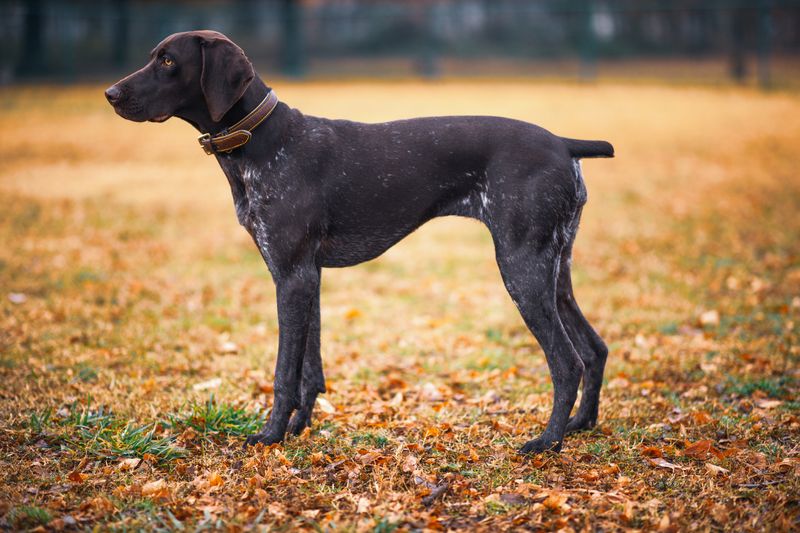
German Shorthaired Pointer
A versatile German hunting dog built for strength, endurance and speed, affectionate on the sofa and tireless outdoors when given a job.
EnergyGroomingFlat life
Rhodesian Ridgeback
The African lion dog: dignified, independent and athletic, with the ridge of hair along its back that gives it its name.
EnergyGroomingFlat life

