


History
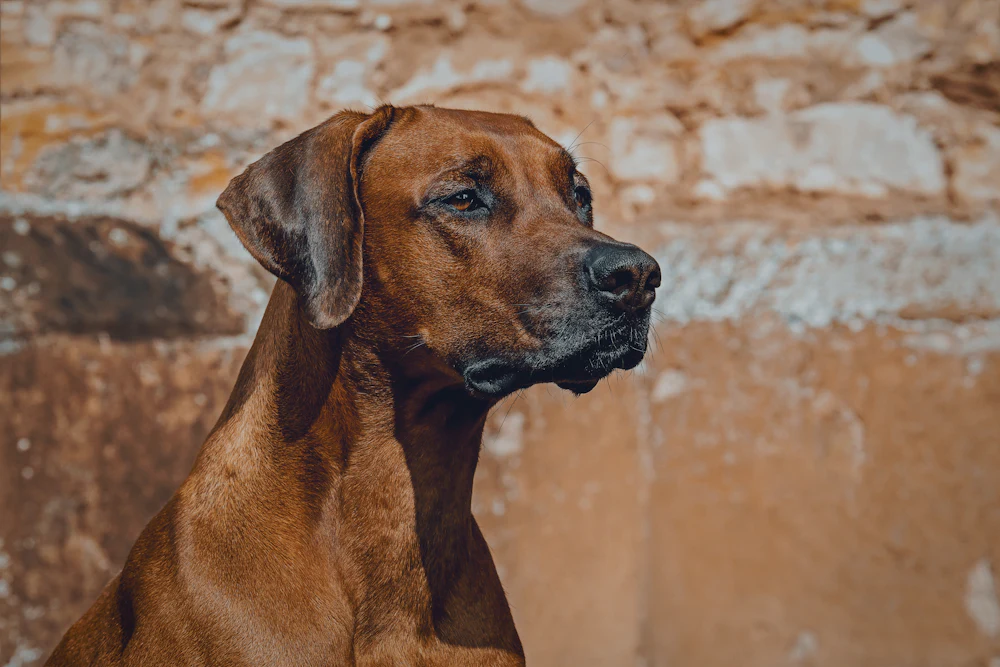
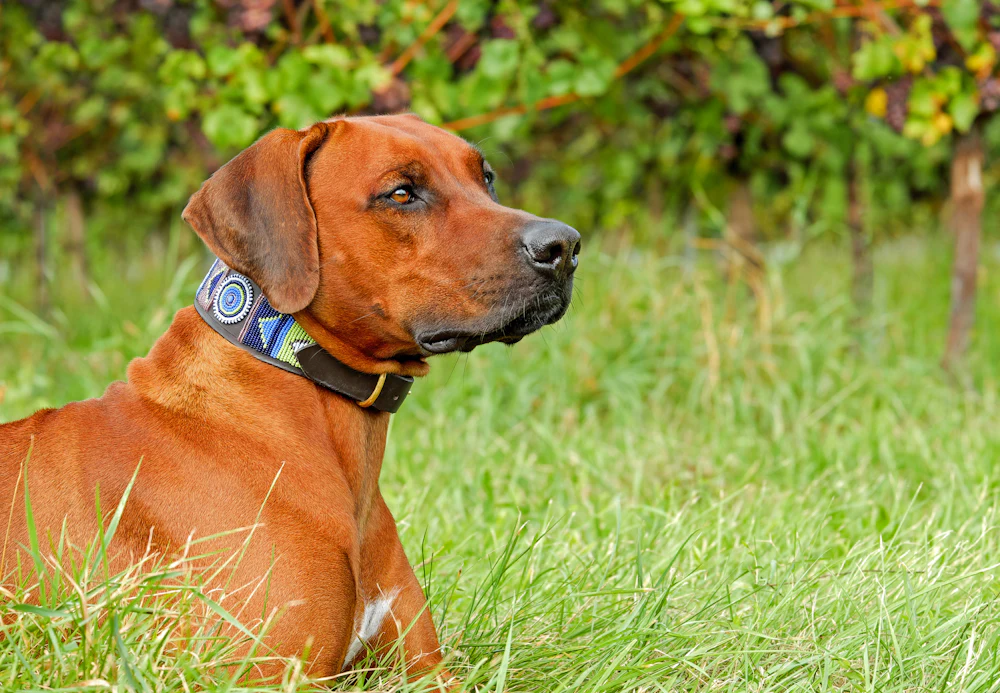
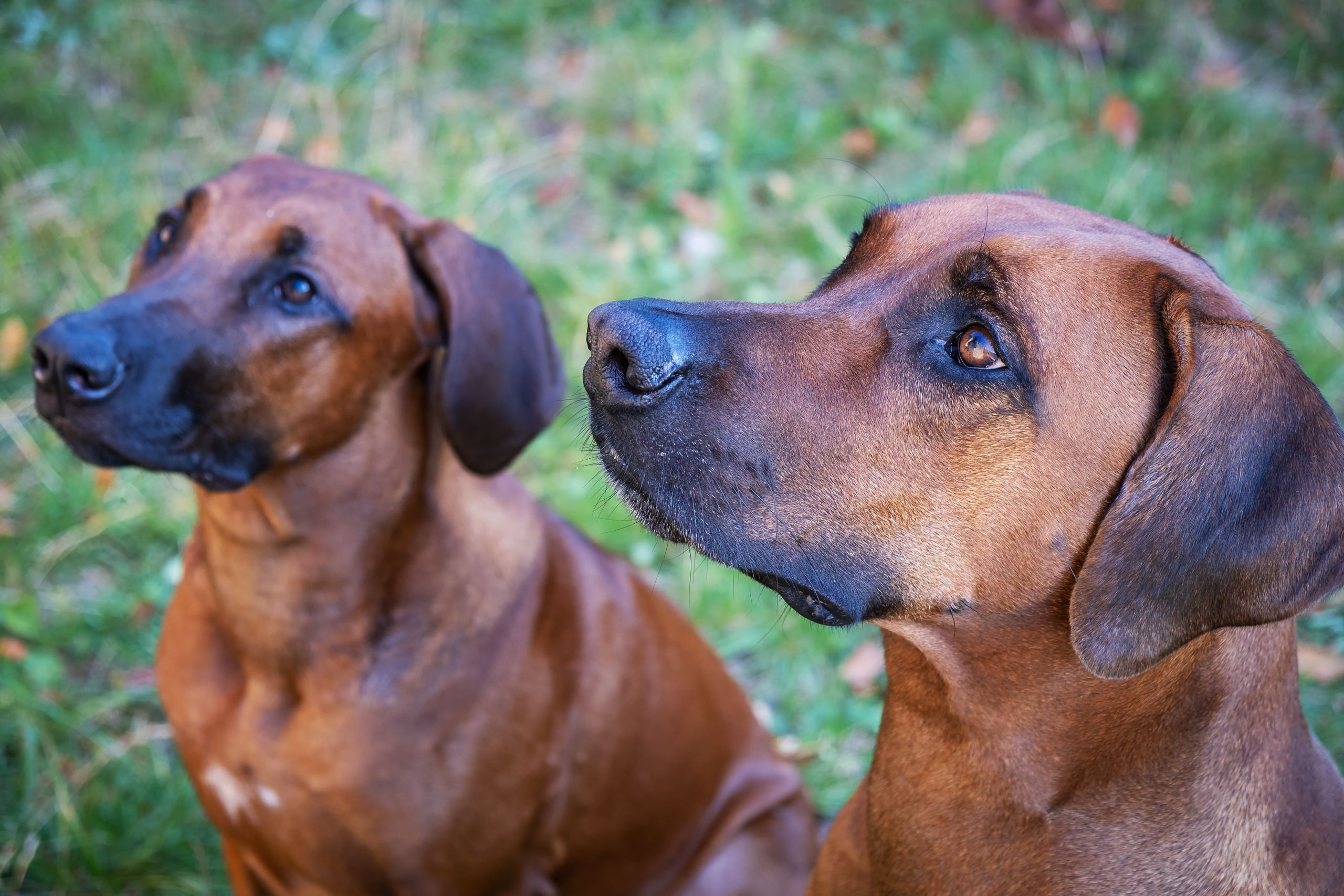
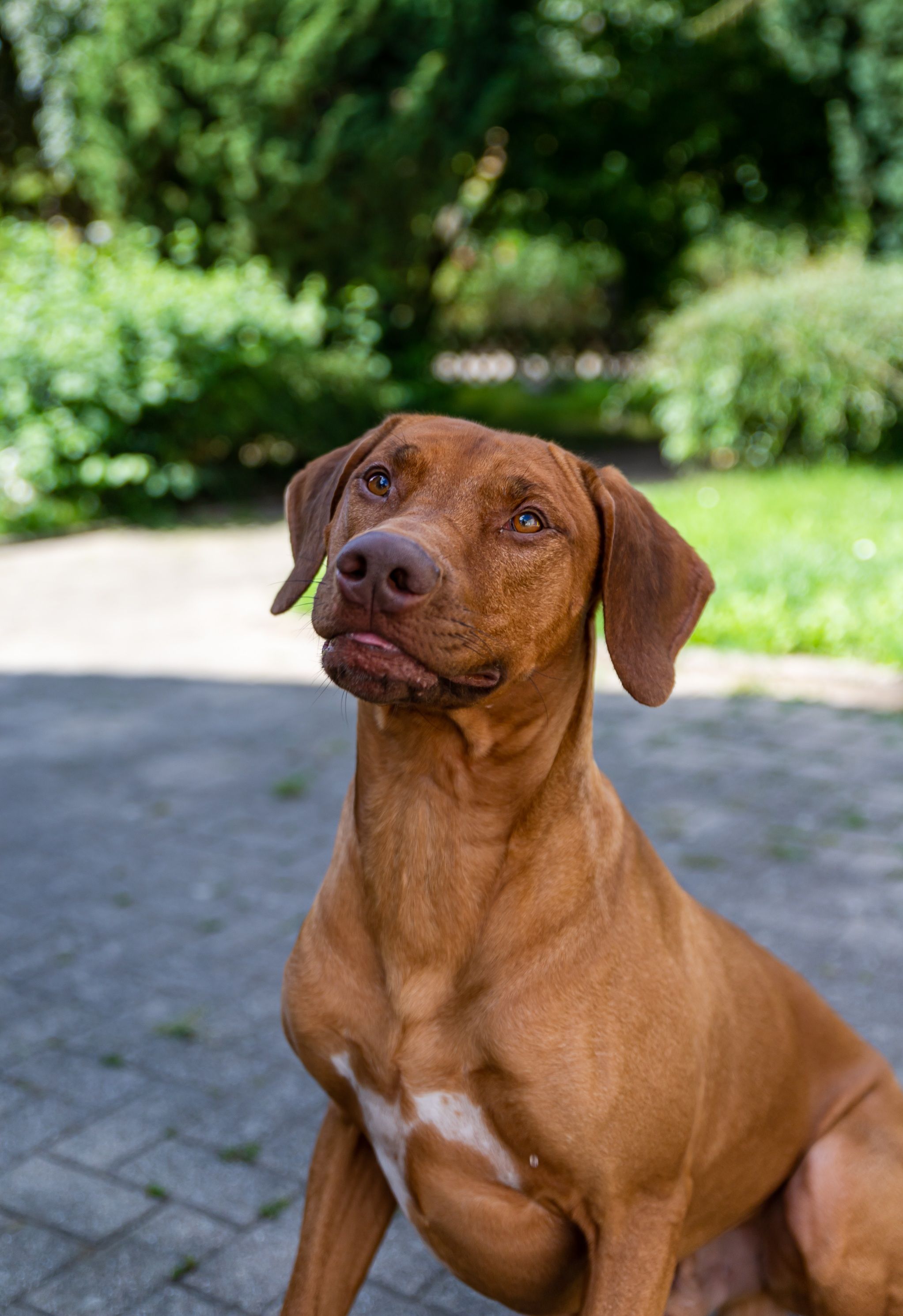
The FCI describes the Rhodesian Ridgeback as the only registered breed indigenous to southern Africa. Its ancestors came from the dogs of the Cape Colony, which interbred with the pioneers' dogs and with the ridged hunting dogs kept by the local Khoikhoi people. The ridge, a strip of hair growing against the lie of the rest of the coat, is the legacy of those native dogs, and it is the breed's defining feature.
The dogs were first known as Lion Dogs, because they were used to track game, especially lion, and with great agility keep it at bay until the hunter arrived. They were not meant to kill, only to hold and dodge. The first standard was drafted by F.R. Barnes in Bulawayo, Rhodesia, in 1922, and approved by the South African Kennel Union in 1926. The FCI standard still describes a dog with elegance and agility, and no tendency towards massiveness.
Temperament
The FCI sums up the temperament as dignified, intelligent and aloof with strangers, but showing no aggression or shyness. That is a fair portrait. A Ridgeback is not a dog that throws itself at visitors; it watches them, makes up its mind, and may then ignore them entirely. With its own family it is affectionate and often surprisingly sensitive, leaning against legs and following from room to room.
There is a strong independent streak, and a hunter's instinct that never goes away. A Ridgeback will notice a cat, a squirrel or a hare before you do. Many are calm and almost cat-like indoors, sleeping for hours, then explosive outside. Counter surfing is a famous habit, since a tall dog with a keen nose can clear a worktop in seconds. Early socialisation matters, because aloofness without confidence can turn into suspicion.
Children and other pets
A well-bred, well-socialised Ridgeback can be a gentle, loyal family dog, and many love children they know. Size and strength mean it can knock over a toddler without meaning to, and its sensitivity does not suit boisterous or chaotic games. Supervise all interaction with young children. With other dogs, many Ridgebacks are fine if raised with them, though some are dominant with dogs of the same sex. Small pets and unfamiliar cats can trigger the chase instinct, so introductions need care.
Exercise and the daily walk
This is an athletic, active breed, and it needs between an hour and a half and two hours of exercise a day. A walk around the block will not do. Running beside a bike, long hikes, structured games and safe off lead running all suit a healthy adult. Young dogs should not be pushed hard while still growing, since their joints are still developing, but they do need regular outlets for their energy.
Mental work matters as much as miles. Scent games, trick training and sports such as tracking or lure coursing provide something to think about, and a Ridgeback with a task is calmer at home. Be wary of letting the dog off lead near roads or wildlife, because the hunting instinct is real and a dog on the scent may not hear you. Hot weather needs care: choose early or late outings and carry water.
Training
Ridgebacks are intelligent, but they are not eager to please in the way of a retriever. They ask why. Short, varied and fair sessions work best, with rewards that mean something to the dog. Harsh handling backfires: a sensitive, dignified dog may simply refuse. Start in puppyhood, and keep training for life, since adolescence often brings selective hearing.
Recall deserves particular attention and should be built slowly with a long line before any freedom is given. Teach loose lead walking early, because a strong adult pulling at the end of a lead is hard to manage. Socialise widely and positively, so that natural reserve does not become suspicion. This breed suits an owner with previous dog experience, patience and a calm, consistent manner.
Coat and grooming
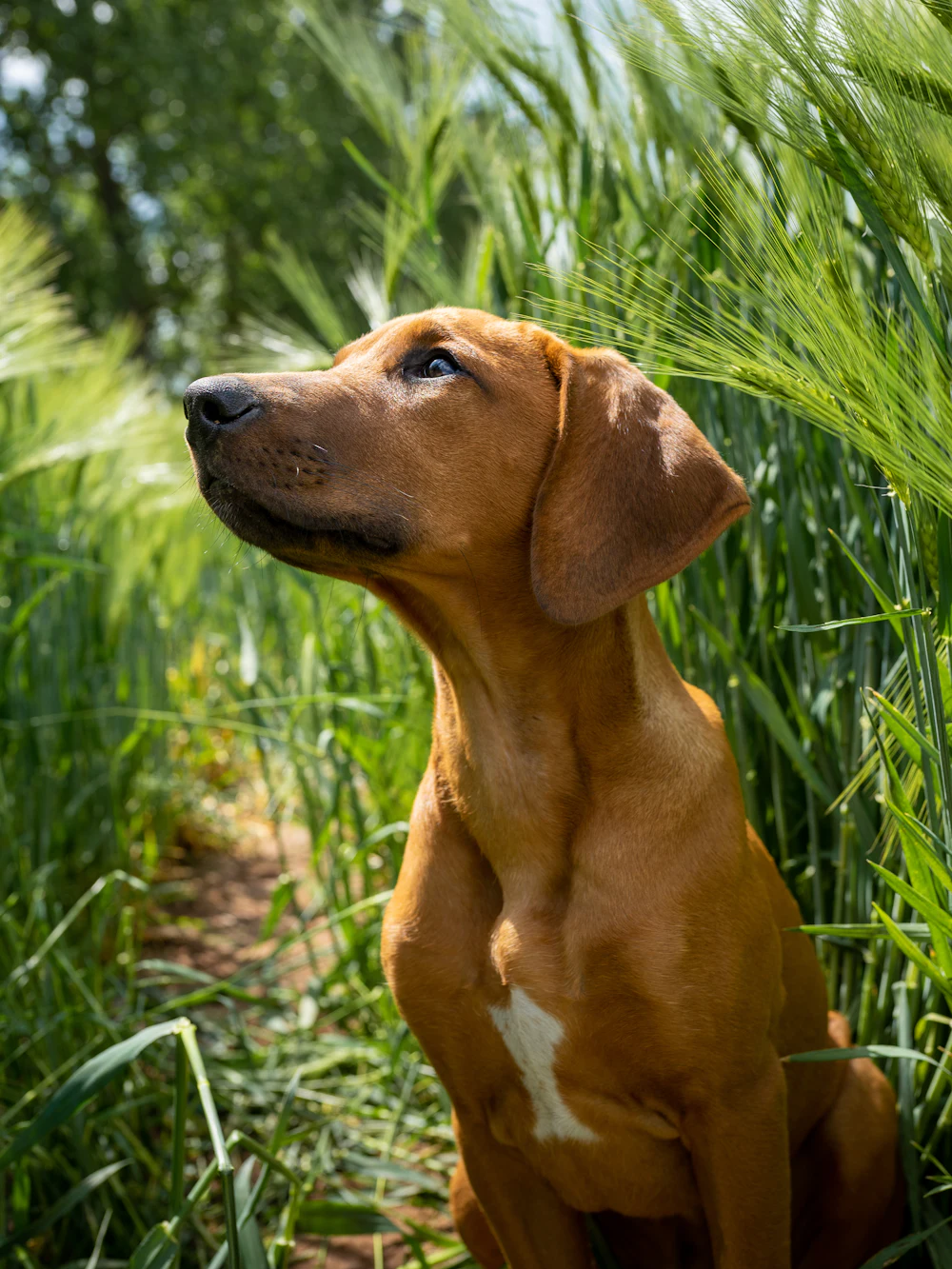
The coat is short and dense, sleek and glossy, neither woolly nor silky. The FCI lists colours from light wheaten to red wheaten, with a little white on the chest and toes permitted. The coat is easy to keep: a weekly rub with a rubber glove removes loose hair, and a bath is needed only when the dog is dirty. Ridgebacks do shed, with short hairs that weave into fabric. Check the ridge and skin, and keep nails short.
Feeding and weight
Feed a good complete diet suited to a large, lean, active dog, and keep the dog slim. Extra weight strains the joints. Because the chest is deep, split the daily ration into two meals and avoid hard exercise just before or after eating. A food loving Ridgeback will exploit any opportunity, so keep food off the worktops and bins closed. Ask your vet to advise on puppy diets, since steady growth is better than rapid growth.
Work out a starting calorie figure and food weight with the calorie calculator. Not sure this is the right breed? Take the quiz.
Health
Every breed carries predispositions. These are the conditions most often discussed for the Rhodesian Ridgeback, not a prediction for any individual dog.
- Dermoid sinus, linked to the ridge (puppies should be checked at birth)
- Hip and elbow dysplasia
- Degenerative myelopathy
- Hypothyroidism
What to ask the breeder. Hip and elbow scores, and confirmation that puppies were checked for dermoid sinus.
Choosing a puppy
Pick a breeder who health tests the parents and who can show hip and elbow scores. Ask whether the puppies were checked for dermoid sinus, a skin condition associated with the ridge, at birth. Meet the mother and watch her manner: a good Ridgeback is calm and aloof, not nervous. Expect a lively puppy that chews, climbs and tests rules. Start socialisation, short training sessions and crate or alone time early, and avoid long runs until growth is complete.
In Luxembourg the national kennel club is the Fédération Cynologique Luxembourgeoise (FCL), a member of the FCI. Many owners also buy from breeders in Germany, France or Belgium; a puppy coming from another EU country must be microchipped and vaccinated against rabies, which in practice means it cannot travel before about fifteen weeks of age. Where to get a dog in Luxembourg.
The older Rhodesian Ridgeback
Ridgebacks are often active until late in life, but ageing brings stiffness, especially in the hips and back legs. Keep the dog lean, offer a thick, supportive bed and non-slip floors, and shorten walks rather than stopping them. Ask your vet about screening for conditions such as degenerative myelopathy if you notice wobbliness. Keep teeth clean, and have lumps or sudden weight loss checked promptly.
A realistic day
A realistic weekday for a working household in Luxembourg City, with a midday visit. Adjust it to your dog, not the other way round.
Brisk walk of 45 minutes, with some training practice.
Breakfast, then rest while you get ready for work.
Midday visit from a walker: toilet break and a brisk walk.
Longer outing in the forest or a park, with a run on a long line.
Light supper, a last toilet trip and bed.
A Rhodesian Ridgeback in Luxembourg
A Ridgeback can live in a Luxembourg flat, provided the exercise is real. Lifts, hard floors and narrow stairwells are manageable for a calm adult, but you will need to commit to daily time in the Bambësch and Grünewald forests, where long, steady walks suit this breed. The Pétrusse valley and Parc Merl are good for shorter outings. Choose secure spaces for any off lead running, since the prey drive is strong and roads are close.
Summer can be difficult when temperatures reach the 30s, so walk early or late and carry water. Every dog must be microchipped, declared to the commune and insured for third-party liability, and the commune charges an annual dog tax. A big, athletic dog often draws attention, and the aloof manner can be misread as unfriendly, so teach calm greetings. Buses and trams are free nationwide, and a well-trained Ridgeback is a quiet traveller.
Every dog in Luxembourg must be identified, declared to the commune and covered by liability insurance. How registration works.
When you travel
A Ridgeback left with a sitter needs exercise first and foremost. Keep to the usual routine and long walks, and do not let a bored dog roam. The sitter must keep food and bins out of reach and use a secure lead or long line, because chasing wildlife is a risk. Ridgebacks can be reserved with strangers, so arrange a meeting in advance. Leave the vet's details and notes on feeding.
PAWLY's holiday and overnight care takes place in your home, so your dog keeps its own bed and routine.
Myths and facts
MythRidgebacks are aggressive guard dogs.
FactThe FCI standard calls for a dog showing no aggression or shyness. They are reserved and protective, not savage.
MythThey need a huge garden.
FactThey need vigorous daily exercise, not necessarily a garden. A fit, committed owner can keep one happily in a flat.
MythThe ridge is a sign of a mixed breed.
FactThe ridge is the breed's defining characteristic, and the standard requires a clearly defined, symmetrical ridge.
Is it the right dog for you?
Suits
- Active owners who enjoy hiking or running
- Experienced owners who respect an independent dog
- Households with older, gentle children
- People who want a short, easy coat
Think twice if
- You want a dog that is friendly with everyone
- You cannot give daily vigorous exercise
- You have cats or small pets that are not familiar
- You are looking for an easy first dog
Questions owners ask
Is a Rhodesian Ridgeback a good family dog?
Often, in the right home. They are loyal and affectionate with their own people, but strong, reserved with strangers and sensitive to rough handling. They suit families who can train consistently and supervise young children.
How much exercise does a Ridgeback need?
Around an hour and a half to two hours a day for a healthy adult, with a mix of walking, running and mental work. Without it, a Ridgeback can become destructive or restless indoors.
Do Ridgebacks get along with other dogs?
Many do, if socialised early, though some are dominant, especially with dogs of the same sex. Introduce new dogs carefully, and keep a dog with a strong chase instinct on a lead near unfamiliar animals.
Can a Ridgeback be left alone?
Short periods, once exercised, are usually fine, but a bored Ridgeback can chew and counter surf. Build alone time gradually, provide chews, and arrange a midday visit if your working day is long.
Sources
Photo: Unsplash (Unsplash License) · Photo: Unsplash (Unsplash License) · Photo: Pexels (Pexels License) · Photo: Pexels (Pexels License) · Photo: Unsplash (Unsplash License)
General information for dog owners in Luxembourg, not veterinary or legal advice. Official facts (origin, size, group, history and temperament as described by the breed standard) follow the FCI standard; health and care sections reflect breed-club and veterinary guidance and are typical ranges rather than rules. For your own dog, ask your vet, the breed club or your commune. How this guide is written and checked. Last reviewed 8 October 2026.
Need someone for your Rhodesian Ridgeback?
PAWLY offers an individual 45-minute walk or a home visit at your dog's pace, the same walker every time, and a written report with photos after every visit, across Luxembourg City.
Read next: the journal, for the Rhodesian Ridgeback
All articles
Building a recall you can actually rely on
Scent and movement can cancel a recall; this is the method for the Rhodesian Ridgeback.

How long can a dog really be left alone?
A sociable breed has a real limit on time alone; this is how to work it out.

The dog that barks and lunges on the lead
Some Rhodesian Ridgeback dogs are selective with other dogs; this is the plan for lunging and barking on the lead.
Similar breeds
All 198 breeds
Hungarian Vizsla
A golden-rust pointer from Hungary, sensitive, affectionate and famously known as the velcro dog.
EnergyGroomingFlat life
Weimaraner
The silver-grey hunting dog of Weimar: elegant, athletic and so attached to its people that it shadows them from room to room.
EnergyGroomingFlat life
Dalmatian
A spotted Croatian coach dog with springy endurance, a sensitive nature and a surprising amount of hair on the sofa.
EnergyGroomingFlat life

