


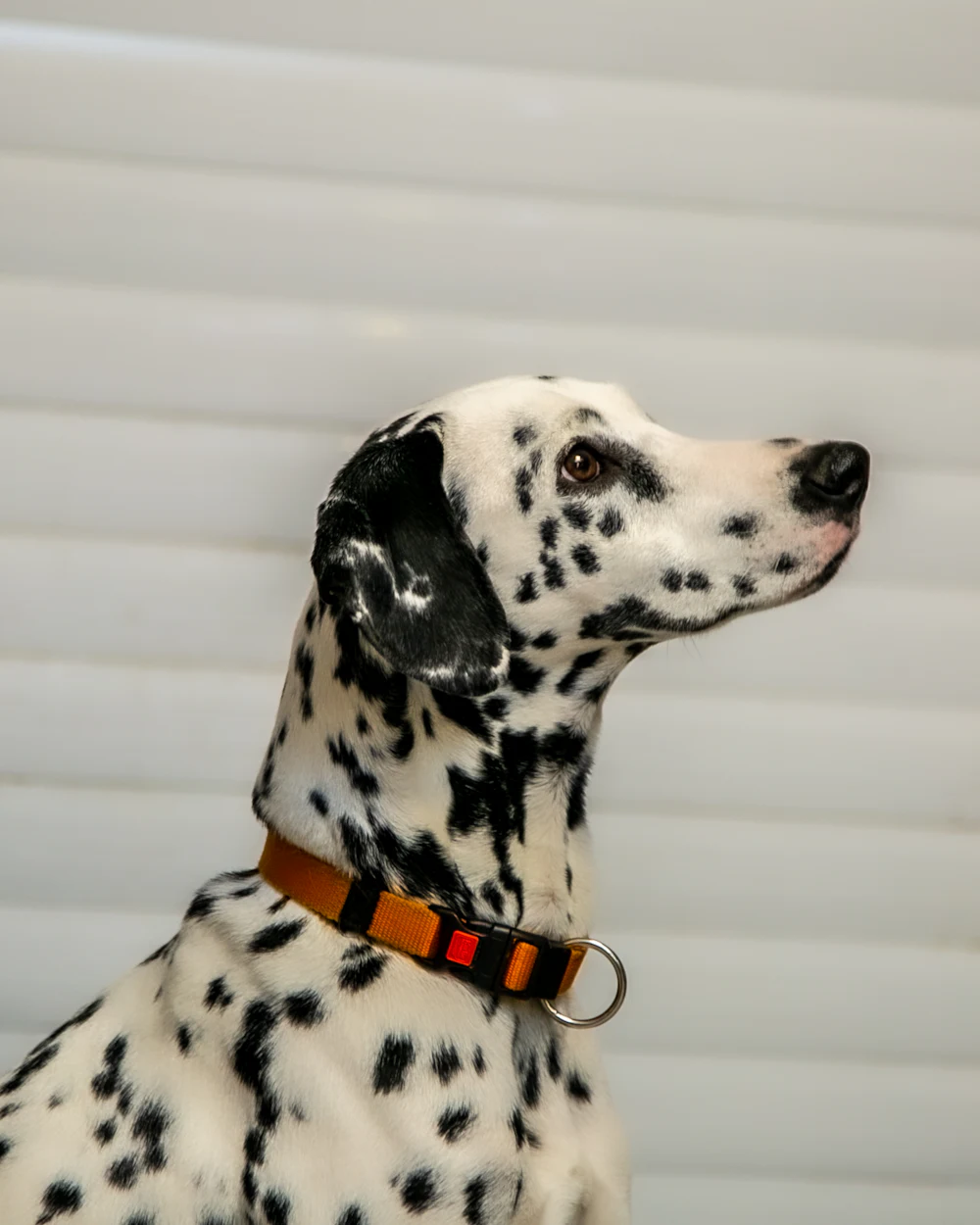
History
The FCI places the origins of the Dalmatian in Croatia and the region of Dalmatia, tracing the breed through paintings from the sixteenth to eighteenth centuries and church records. One early description appears in the chronicles of Bishop Petar Bakic in the diocese of Djakovo, dated 1719. The modern name was fixed in Thomas Pennant's work of 1771, and the first unofficial standard is documented in 1882. The FCI lists the country of origin simply as Croatia.
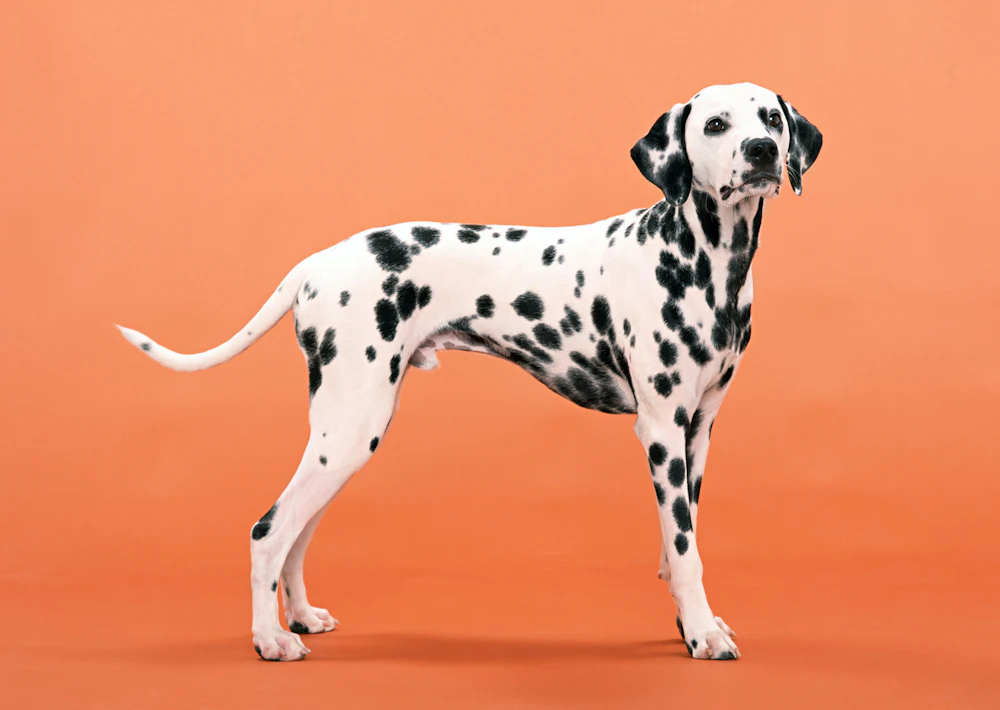
The breed is listed in FCI Group 6, Section 3, Related Breeds, and is judged without working trials. The standard describes a mesocephalic dog with a prismatic head and hanging ears, with a rectangular, strong, muscled body that is distinctively spotted. Males measure 56 to 62 cm and females 54 to 60 cm at the withers, and the standard gives no weight. Movement should be elegant, which fits a dog long associated with trotting alongside carriages.
Temperament
The standard asks for a pleasant temperament, friendly, not shy or hesitant, and free from nervousness and aggression. It describes a lively, loyal, independent and trainable dog with strong hound instincts. In practice that means a dog of real stamina and enthusiasm, who is affectionate with its family and a little dignified with strangers, and who does not enjoy being left out of the day.
Dalmatians are sensitive, which surprises owners who expect a robust sporting dog. They notice tone of voice, hold grudges about rough handling and can become anxious or destructive when under-exercised or lonely. They also have a long adolescence, with bursts of energy that last into their third year. Given work, company and calm direction, they settle into loyal, funny and expressive companions.
Children and other pets
Dalmatians can be excellent with older, active children, who match their energy and enjoy games. They are strong and bouncy, so young children may be knocked over, and supervision is wise. Most get on with other dogs if well socialised,. Some are wary of strangers and sensitive to noise. Cats and small pets need careful introduction, as the hound instinct may show.
Exercise and the daily walk
This is a high-energy breed that needs around two hours a day, including some running, not just walking. Dalmatians have remarkable endurance and were once expected to trot beside a carriage for hours, so a short stroll round the block does not satisfy them. Jogging, cycling alongside, hiking and games of fetch suit them well, once the joints have matured.
Mental work matters as much as miles. Without it a young Dalmatian digs, chews, barks and finds ways to open doors. Scent games, training classes and sports such as agility add structure. Be careful in hot weather, since the short, white coat gives little protection from sun, and avoid hard running on pavements for puppies. A tired Dalmatian is a lovely, affectionate house dog.
Training
Dalmatians are intelligent and keen to learn, but they respond best to calm, consistent and positive methods. Harsh corrections produce a sensitive dog who shuts down or becomes wary. Start early, use varied rewards, and keep sessions lively. They can be stubborn when bored, so change the game before the dog does. Boundaries matter, because an energetic dog without rules can be exhausting.
Socialise the puppy to people, traffic, lifts, other dogs and loud noises, as some are nervous. Teach a reliable recall, since the independent streak and stamina mean a loose Dalmatian can cover a lot of ground. Practise settling on a mat, a skill that helps in flats. If you want an active partner for sport, training in obedience or agility gives the dog a purpose.
Coat and grooming
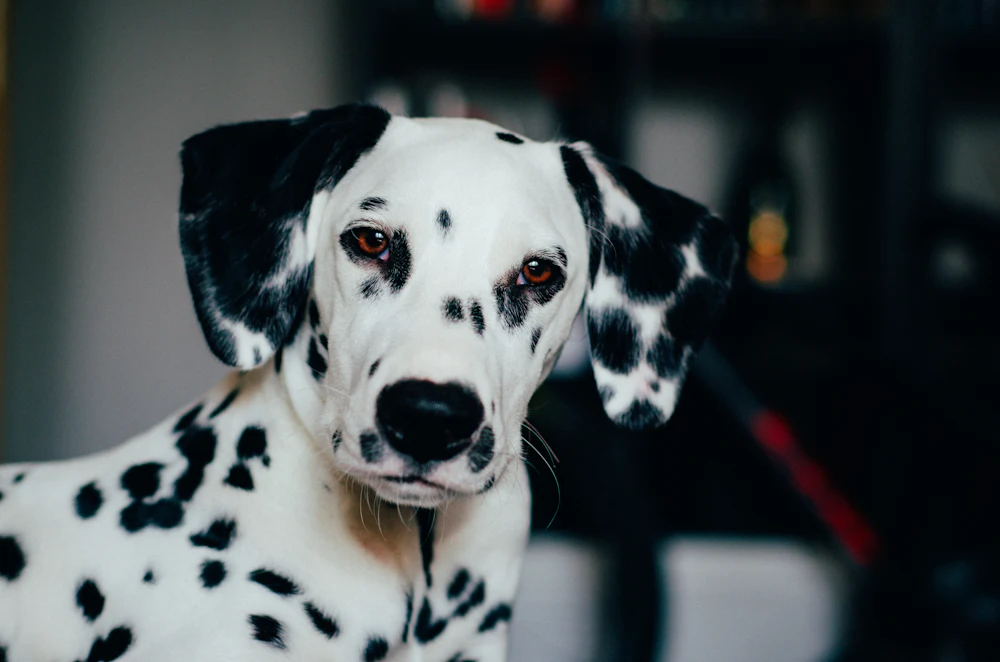
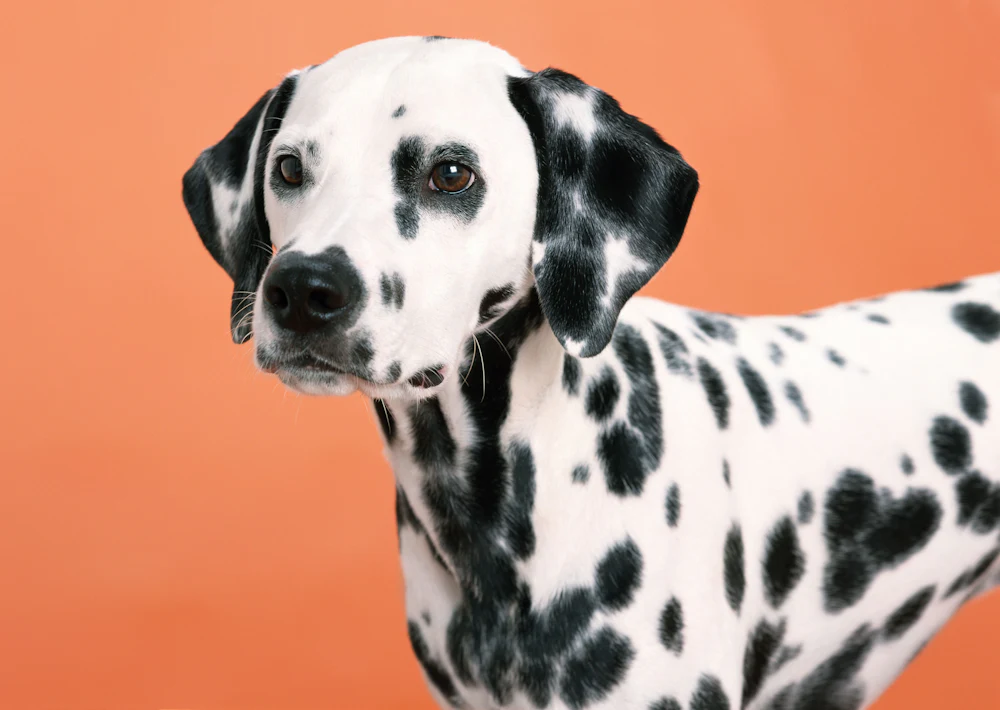
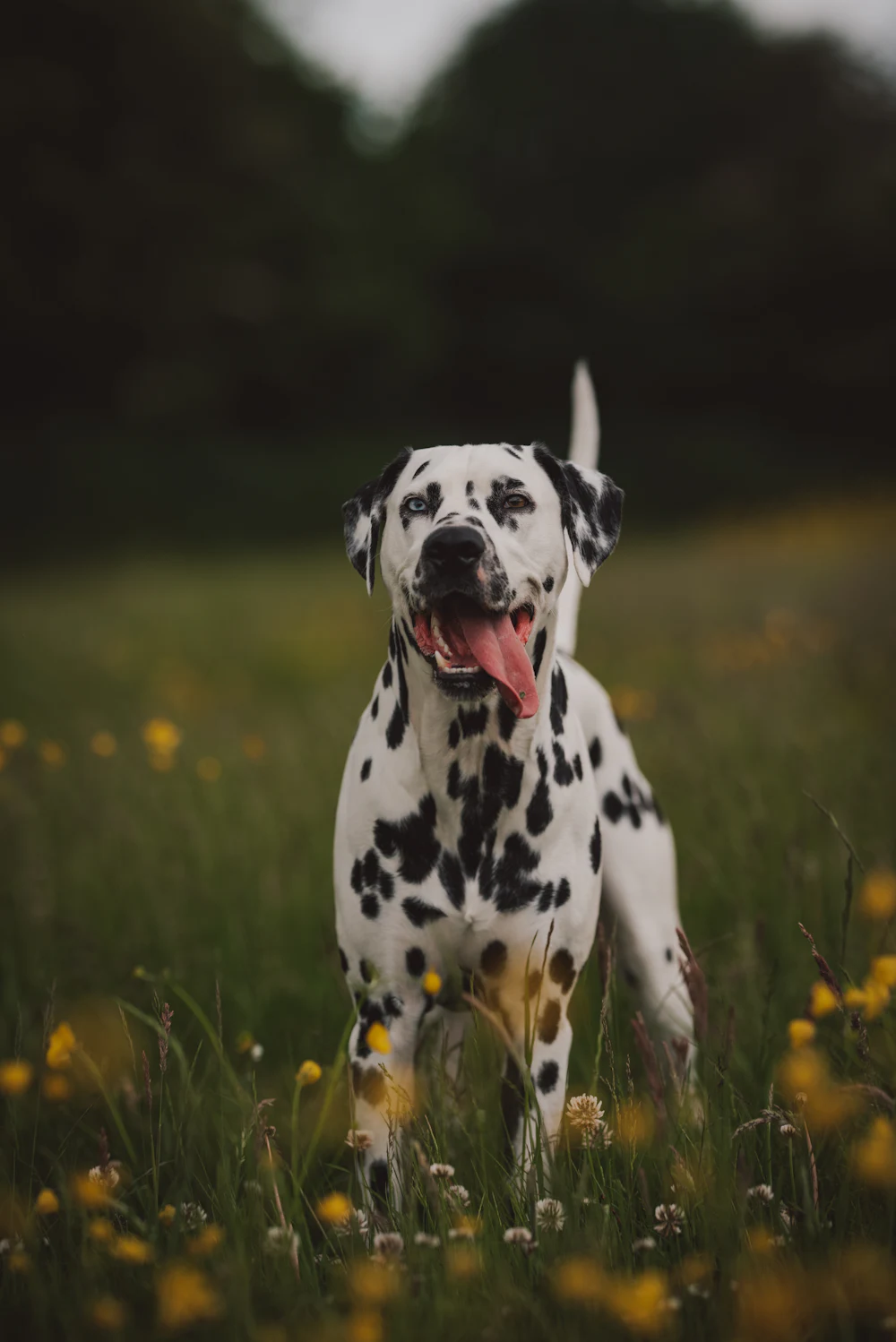
The coat is short, shiny and hard, with a pure white ground colour marked with round black or liver spots. The FCI asks for spots of 2 to 3 cm, symmetrical, clearly defined and not merging, and it disqualifies tricolour dogs. Brush weekly, or more in heavy shedding periods, with a rubber glove to remove loose hair. Dalmatians shed constantly, and the short white hairs weave into fabric, so a good vacuum is useful.
Feeding and weight
Feed a good quality, complete diet in two measured meals and keep the dog lean. The breed handles uric acid differently from most dogs, so many vets advise moderating purine-rich foods and always providing plenty of fresh water. Follow your vet's advice on diet, particularly if the dog has a history of stones. Avoid exercise straight after meals and keep treats modest.
Work out a starting calorie figure and food weight with the calorie calculator. Not sure this is the right breed? Take the quiz.
Health
Every breed carries predispositions. These are the conditions most often discussed for the Dalmatian, not a prediction for any individual dog.
- Deafness, which affects a significant share of Dalmatians in one or both ears, so a BAER hearing test is important
- Urate bladder stones, because the breed metabolises uric acid differently; diet and water intake matter
- Skin allergies and itchy skin
- Hip dysplasia, a joint malformation that can cause pain and arthritis
What to ask the breeder. Ask for BAER hearing test results for each puppy and the parents, hip scores and any history of urinary stones in the family, and ask how the breeder manages diet and water.
Choosing a puppy
Choose a breeder who tests every puppy's hearing with a BAER test and can show the parents' health results. Expect a bouncy, mouthy puppy with a lot of energy, so plan early training, a crate or safe room and short, frequent outings. Socialise widely and avoid hard running or jumping while the joints grow. A deaf puppy can live well but needs specialist handling.
In Luxembourg the national kennel club is the Fédération Cynologique Luxembourgeoise (FCL), a member of the FCI. Many owners also buy from breeders in Germany, France or Belgium; a puppy coming from another EU country must be microchipped and vaccinated against rabies, which in practice means it cannot travel before about fifteen weeks of age. Where to get a dog in Luxembourg.
The older Dalmatian
Older Dalmatians stay lively into their teens in spirit, if not in speed. Watch for stiffness, changes in urination, itching and loss of hearing or sight. Provide plenty of fresh water, keep weight steady, and keep exercising with shorter, regular walks. A soft bed, non-slip floors and regular vet checks, including urine problems, help keep an older dog comfortable.
A realistic day
A realistic weekday for a working household in Luxembourg City, with a midday visit. Adjust it to your dog, not the other way round.
Toilet break and a brisk 45 minute run or walk with some off-lead time in a safe space. Breakfast afterwards.
A food puzzle or chew, then rest. A well-exercised Dalmatian sleeps, and an under-exercised one patrols.
Midday visit: toilet break, plenty of water, a half hour of walking or fetch, then a calm rest in a cool room.
The main exercise of the day, about an hour in the forest or a large park, with training and recall practice, then dinner.
Last toilet break, a quick brush and a settle on a bed. The dog should be tired and affectionate by now.
A Dalmatian in Luxembourg
A Dalmatian is not an obvious flat dog, but it can manage in Luxembourg if the exercise is real. Early runs in the Pétrusse valley or Parc Merl, midday outings and an evening trip to the Bambësch or Grünewald forests give the dog both space and variety. A lift is helpful for a strong, bouncy dog, and the breed tends to be calm indoors once it has been properly exercised.
Heat and cold both matter. The short coat gives little protection against winter wind, so a coat is sensible, and in summer temperatures in the 30s can be dangerous for a white dog, with sunburn on pale skin. Many owners use free buses and trams to reach forest trails. Every dog needs a microchip, a declaration to the commune, third-party liability insurance and payment of the annual dog tax.
Every dog in Luxembourg must be identified, declared to the commune and covered by liability insurance. How registration works.
When you travel
A sitter must give this dog real exercise, not just garden time, and be calm, since a sensitive Dalmatian reacts to tension. Follow the feeding plan, offer fresh water throughout the day and note any change in urination. Keep it on a secure lead and harness, avoid hot hours, and be ready for destructive behaviour if it is left alone too long.
PAWLY's holiday and overnight care takes place in your home, so your dog keeps its own bed and routine.
Myths and facts
MythDalmatians are perfect for families with young children.
FactThey can be wonderful with active older children, but their strength and bounce can knock toddlers over, and some are sensitive and wary of rough handling.
MythEvery Dalmatian is deaf.
FactA significant share are deaf in one or both ears, but many hear normally. A BAER test on every puppy is the only reliable way to know.
MythThey only need a quick walk.
FactThis is an endurance breed. Two hours a day with running and mental work is realistic, and anything less often leads to destruction.
Is it the right dog for you?
Suits
- Active owners who run, cycle or hike regularly
- People who enjoy training and giving a dog a job
- Households with active older children and a secure routine
- Owners who accept shedding and constant brushing
Think twice if
- You are out for long hours with little exercise
- You want a dog that is calm and quick to settle as a puppy
- You dislike short white hairs on every surface
- You cannot manage a sensitive dog's emotional needs
Questions owners ask
Are Dalmatians good with children?
Often with older, active children, who enjoy their energy. They are strong and bouncy, so supervision is essential around toddlers, and they dislike being teased. Choose the household carefully, and do not buy on looks alone.
Are Dalmatians really deaf?
Many are deaf in one or both ears. A BAER hearing test, done by a vet, can tell whether a puppy hears. A deaf dog can live a good life with patient training.
How much exercise does a Dalmatian need?
About two hours daily, including free running and training. They have remarkable endurance, and without enough exercise they can become destructive and noisy. Start with a routine that suits your own pace, then build up gradually and add training.
Why do Dalmatians shed so much?
The short, hard coat sheds constantly all year, not only seasonally. Weekly brushing with a rubber glove removes loose hair, but expect some on clothes and furniture. Vacuum often. Vacuum often.
Sources
Photo: Unsplash (Unsplash License) · Photo: Unsplash (Unsplash License) · Photo: Unsplash (Unsplash License) · Photo: Unsplash (Unsplash License) · Photo: Unsplash (Unsplash License)
General information for dog owners in Luxembourg, not veterinary or legal advice. Official facts (origin, size, group, history and temperament as described by the breed standard) follow the FCI standard; health and care sections reflect breed-club and veterinary guidance and are typical ranges rather than rules. For your own dog, ask your vet, the breed club or your commune. How this guide is written and checked. Last reviewed 8 October 2026.
Need someone for your Dalmatian?
PAWLY offers an individual 45-minute walk or a home visit at your dog's pace, the same walker every time, and a written report with photos after every visit, across Luxembourg City.
Read next: the journal, for the Dalmatian
All articles
Working breeds in a city flat: the honest version
High-drive dogs like the Dalmatian can live in a flat, but it takes a plan.

The itchy dog: working through it in the right order
Skin trouble is among the conditions discussed for the Dalmatian; this is the order to work through it.

Building a recall you can actually rely on
Scent and movement can cancel a recall; this is the method for the Dalmatian.
Similar breeds
All 198 breeds
Hungarian Vizsla
A golden-rust pointer from Hungary, sensitive, affectionate and famously known as the velcro dog.
EnergyGroomingFlat life
Weimaraner
The silver-grey hunting dog of Weimar: elegant, athletic and so attached to its people that it shadows them from room to room.
EnergyGroomingFlat life
Boxer
A clown with a guardian's heart: playful, loyal and slow to grow up.
EnergyGroomingFlat life

