

History
The FCI standard describes the German Spitz as descending from the ancient Peat Dog and from the Spitz of the Lake Dwellings, and calls it the oldest breed of dog in Central Europe. Many other breeds, according to the standard, developed from this ancestral line. The breed is classified in Group 5, Section 4, European Spitz, without working trial, and its use is given as watch and companion dog.
The standard covers five size varieties under one name: the Wolfsspitz (Keeshond), the Giant Spitz, the Medium Spitz, the Miniature Spitz and the Toy Spitz, which is the Pomeranian. In this guide, the German Spitz means the Giant, Medium and Miniature types, since the Keeshond and the Pomeranian have their own entries. The farmyard watchdog role is plain in the dog's behaviour: a small, alert house guard with a loud voice, much valued on farms, barges and in villages.
Temperament
The standard sums up the breed as always attentive, lively and extraordinarily attached to its owner, very teachable and easy to train, and robust, long-lived and indifferent to weather. The Wolfsspitz is noted for its distrust of strangers and lack of hunting instinct. In the smaller varieties that translates into a vivacious little dog that is devoted to its household, curious about everything and ready to defend its territory vocally.
The voice is the main issue for modern life. A German Spitz is a natural alarm: it barks at knocks, steps, bicycles and passing dogs. With early training, the barking can be moderated, but it will never vanish. Dogs are usually confident and cheerful with people they know, aloof with strangers, and bold with larger dogs, a trait that can land small ones in trouble. They are not natural lap dogs, but they enjoy being near their people.
Children and other pets
The German Spitz is a lively companion for families with respectful older children. The smaller sizes are fragile, and a Miniature or Medium can be injured by a clumsy hug or a dropped toddler, so young children need supervision. Most get on with other dogs, if socialised, though they may bark at them. Many live peacefully with a cat introduced in puppyhood, as the standard notes little hunting instinct in the Wolfsspitz, but individual dogs vary.
Exercise and the daily walk
Exercise needs depend on size. A Miniature Spitz is content with about 45 minutes a day, a Medium Spitz around an hour, and a Giant Spitz needs slightly more. All of them are active and quick, and they enjoy lead walks, short runs in a safe place and games with a ball. They are sturdy, weather-proof little dogs and will go out in rain and cold without complaint.
Mental stimulation is as valuable as physical exercise. A German Spitz that has nothing to do uses its voice. Offer scent games, trick training and puzzle feeders. In public, keep the dog on a lead or a long line, as small dogs may be targeted by larger ones, and a bold Spitz will rarely back down. Avoid hot, midday exercise in summer, because the dense coat holds heat.
Training
The standard calls the breed very teachable and easy to train, and in practice the German Spitz is bright, quick and food-motivated. Short, upbeat sessions work well. Rewards, play and calm repetition are better than force, to which the dog responds by becoming stubborn or shrill. Housetraining can take patience in the smaller types, as it does in many small breeds.
The most useful lessons are controlled barking, calm greetings and being alone. Teach a quiet cue early, reward silence, and avoid shouting, which sounds to a Spitz like joining in. Socialise widely so that natural reserve with strangers does not become sharpness. Practice settling on a bed and alone time in small steps. Train recall in a safe place before trusting it in open spaces.
Coat and grooming
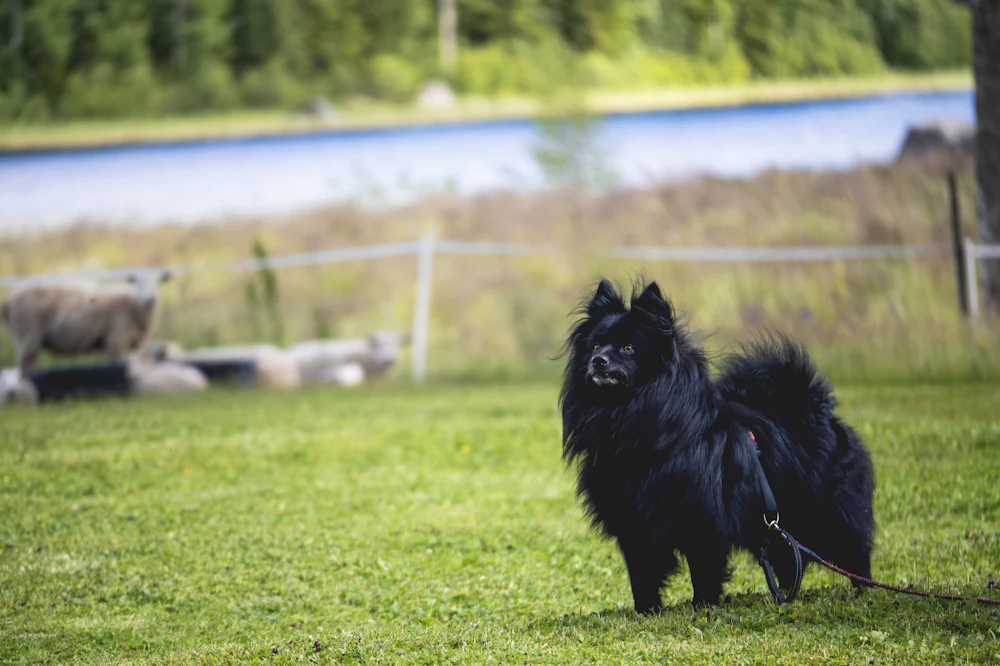
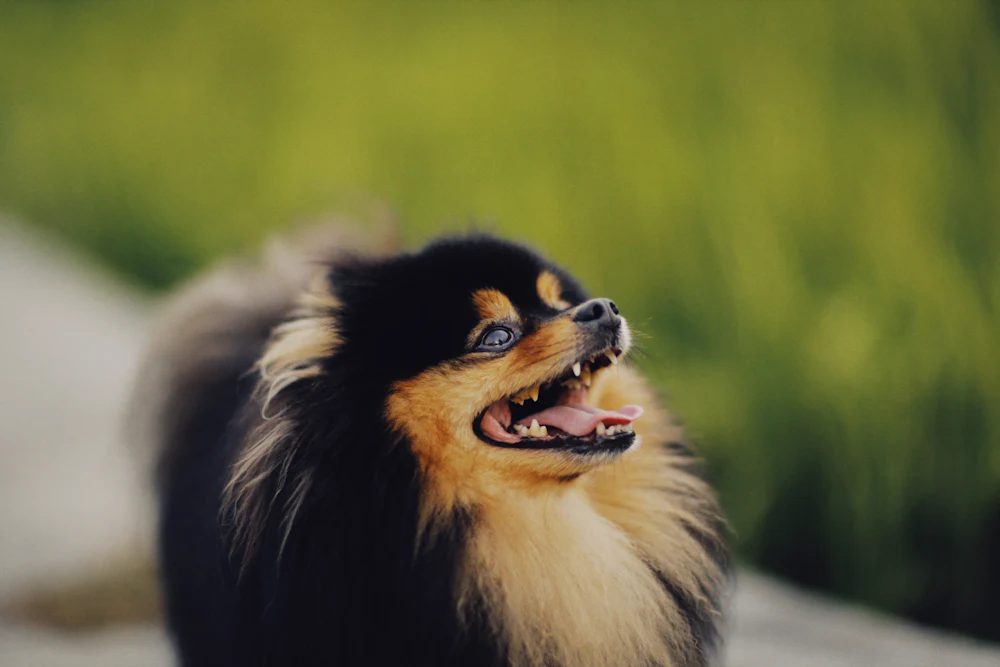
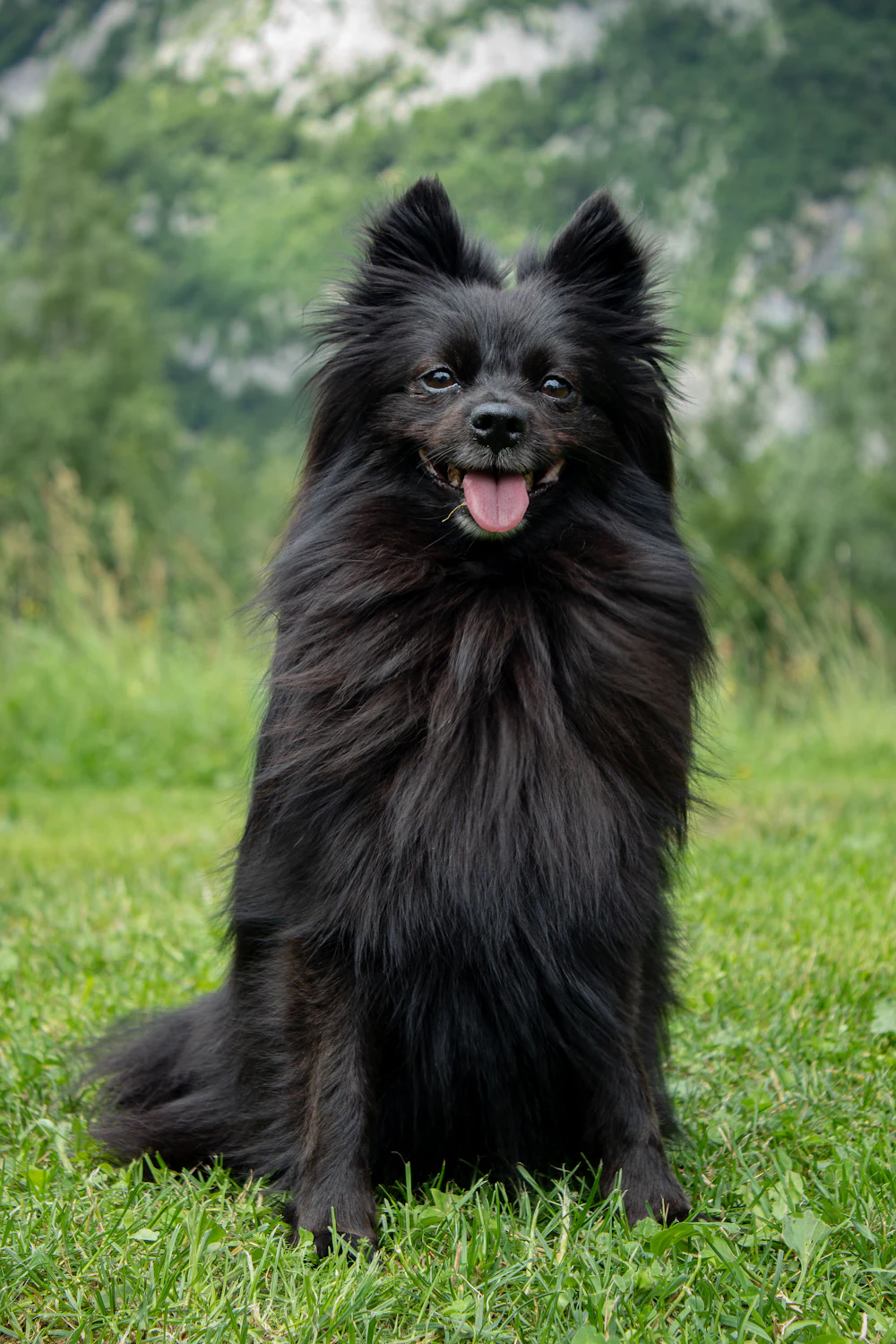
The standard describes a double coat, with long, straight, firmly standing-off top hair and a short, thick, cotton-wool-like undercoat, short velvety hair on the head, ears and front of the legs, and a thick mane around the neck. The tail rolls forward over the back and is bushy. Brush two or three times a week, and daily during the heavy seasonal moult. Colours depend on the size: for example white, black or brown in the Giant, and also orange or grey-shaded in the Medium and Miniature, and grey-shaded in the Wolfsspitz. Never shave the coat.
Feeding and weight
Feed a complete diet suited to a small or medium active dog, in two meals a day. Spitzes can become round if treats and table scraps are generous, and the thick coat hides extra weight, so check the waist by touch. Small dogs benefit from dental care, and dry food and a regular tooth routine help. Provide fresh water on every walk, and switch foods gradually.
Work out a starting calorie figure and food weight with the calorie calculator. Not sure this is the right breed? Take the quiz.
Health
Every breed carries predispositions. These are the conditions most often discussed for the German Spitz, not a prediction for any individual dog.
- Patellar luxation (slipping kneecaps), especially in smaller sizes
- Hip dysplasia (poor hip joint formation), more often in larger sizes
- Inherited eye diseases
- Epilepsy
- Dental crowding and tartar in small sizes
What to ask the breeder. Ask to see hip and patella results for the parents, a recent eye examination certificate, and ask about any history of epilepsy in the line.
Choosing a puppy
German Spitz puppies are fluffy, bold and noisy from the start. Begin teaching a quiet cue straight away, and expose the puppy to lifts, stairs, traffic, buses and visitors in a friendly way. Handle paws, ears, mouth and coat daily so that grooming is always welcome. Keep jumping off furniture to a minimum in the small sizes, to protect the knees. Short, regular periods alone prevent a lifelong habit of barking when left.
In Luxembourg the national kennel club is the Fédération Cynologique Luxembourgeoise (FCL), a member of the FCI. Many owners also buy from breeders in Germany, France or Belgium; a puppy coming from another EU country must be microchipped and vaccinated against rabies, which in practice means it cannot travel before about fifteen weeks of age. Where to get a dog in Luxembourg.
The older German Spitz
German Spitzes are long-lived and often remain bright and bossy into their teens. From about ten, expect slower walks, stiffer joints and more sleep. Check teeth, eyes and kneecaps with your vet at least yearly. Keep the dog lean, as extra weight strains small joints. A warm bed away from draughts and a quiet routine suit an older Spitz well, though it will still announce every visitor.
A realistic day
A realistic weekday for a working household in Luxembourg City, with a midday visit. Adjust it to your dog, not the other way round.
Quick 25-minute lead walk with sniffing time, then breakfast and a brush at moult.
Owner leaves for work; the dog has a chew toy and a view-free spot, to avoid barking at the window.
Midday visit: a 35-minute walk, a few training tricks, and fresh water.
Evening outing of about 40 minutes with a play session.
Short toilet break, a cuddle on the sofa, then bed.
A German Spitz in Luxembourg
A German Spitz of the smaller sizes is well suited to flat life in Luxembourg City, as it is clean, compact and happy with moderate exercise. The lift is a good place to practise calm behaviour, and the Pétrusse valley, Parc Merl and the Municipal Park give plenty of walking within reach. The Giant and Wolfsspitz sizes need more room and more exercise, and the Grünewald and Bambësch forests make good weekend outings. Free buses and trams are easy with a small dog in a carrier or on a short lead.
The challenge is noise. In a building with shared walls, a barking Spitz becomes a source of complaint, so work on quiet training from the first day. In summer, the thick coat makes midday walks in the 30s °C uncomfortable, so go out early and late. Remember the obligations: microchip, declaration to the commune, third-party liability insurance and the annual dog tax.
Every dog in Luxembourg must be identified, declared to the commune and covered by liability insurance. How registration works.
When you travel
A sitter needs to know that this is a vocal, alert dog and that the bark is part of its character, so keep it from windows and the stairwell where possible. Walk the dog on a lead, and keep small sizes away from bigger dogs. Brush daily in moult season. Do not shave the coat, and offer water and shade in warm weather. Leave the vet's number and the usual routine.
PAWLY's holiday and overnight care takes place in your home, so your dog keeps its own bed and routine.
Myths and facts
MythGerman Spitzes are all the same as Pomeranians.
FactThe Pomeranian is the Toy size of the German Spitz. The Giant, Medium and Miniature sizes are larger, with their own proportions and exercise needs.
MythSmall Spitzes are lap dogs that need little exercise.
FactThey are lively and sturdy and need daily walks and games, as well as mental stimulation.
MythA thick coat should be shaved in summer.
FactThe double coat insulates against heat as well as cold, and shaving can spoil its quality and expose the skin to sun.
Is it the right dog for you?
Suits
- Owners who enjoy a lively, watchful companion
- Flat dwellers who can manage a barking dog
- People who have time for brushing
- Families with respectful children
Think twice if
- You live with thin walls and neighbours who dislike noise
- The dog would be alone all day
- You want a quiet, fully silent dog
- You dislike regular grooming
Questions owners ask
Is a German Spitz a good flat dog?
Yes, particularly the Miniature and Medium sizes, if barking is addressed early. They are clean and adaptable, and need regular walks and games. Neighbours should be considered, as the alarm bark is one of the breed's defining features.
How many sizes of German Spitz are there?
The FCI standard lists five: the Wolfsspitz or Keeshond at 49 cm, Giant at 45 cm, Medium at 35 cm, Miniature at 27 cm and Toy or Pomeranian at 21 cm, each with a tolerance.
Is the German Spitz easy to train?
The standard describes it as very teachable and easy to train. It learns quickly, but it is also noisy and stubborn, so short, positive sessions and early work on barking and being alone are important.
How often should I groom a German Spitz?
Two or three times a week is enough most of the year, with daily brushing in the seasonal moult. Regular brushing prevents mats in the mane, trousers and tail.
Sources
Photo: Unsplash (Unsplash License) · Photo: Unsplash (Unsplash License) · Photo: Unsplash (Unsplash License) · Photo: Pexels (Pexels License)
General information for dog owners in Luxembourg, not veterinary or legal advice. Official facts (origin, size, group, history and temperament as described by the breed standard) follow the FCI standard; health and care sections reflect breed-club and veterinary guidance and are typical ranges rather than rules. For your own dog, ask your vet, the breed club or your commune. How this guide is written and checked. Last reviewed 8 October 2026.
Need someone for your German Spitz?
PAWLY offers an individual 45-minute walk or a home visit at your dog's pace, the same walker every time, and a written report with photos after every visit, across Luxembourg City.
Read next: the journal, for the German Spitz
All articles
Dogs in hot weather: the Luxembourg summer guide
The German Spitz carries a heavy coat or a heavy frame, which makes a Luxembourg summer the hard season.

Teeth: the problem owners find least interesting and vets see most
Teeth are a known weak point in the German Spitz; this is the routine that helps.

What a proper meet and greet actually involves
A reserved dog needs slow introductions to a new walker or sitter.
Similar breeds
All 198 breeds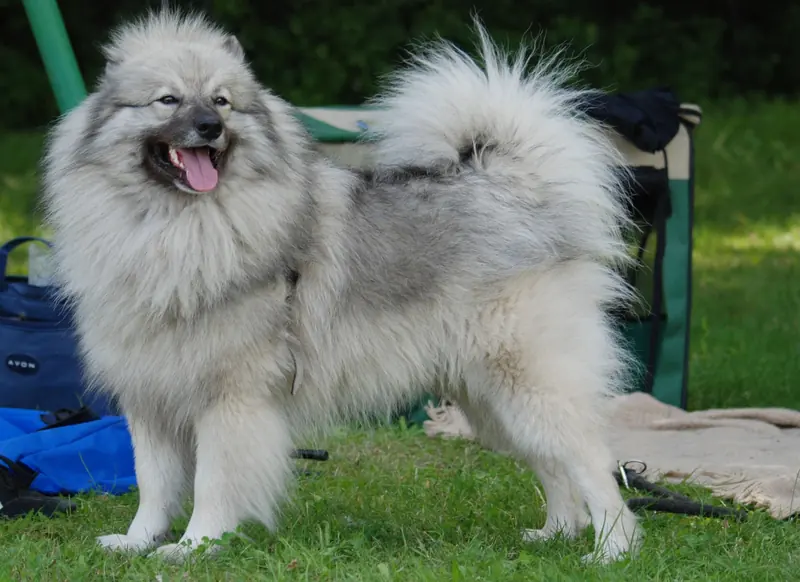
Keeshond
The grey, spectacled Spitz with a mane like a lion's collar, devoted to its household and convinced every doorbell is its business.
EnergyGroomingFlat life
Pomeranian
A tiny spitz with a lion's mane and a big voice.
EnergyGroomingFlat life
Japanese Spitz
A snow-white, fox-faced companion with a bright mind and a standard that expressly frowns on noisiness, which says a great deal.
EnergyGroomingFlat life

