


History
Despite the English name, the Great Dane is German: the Deutsche Dogge. The FCI standard traces it to the old Bullenbeisser and to hunting and boar hounds, large dogs kept for catching wild boar and later for guarding the households of the nobility. Regional types varied widely until 1878, when a committee meeting in Berlin united them under the name Deutsche Dogge.
The first standard followed in 1880, and the German Doggen Club has looked after the breed since 1888. The standard calls the Great Dane the Apollo amongst all breeds, an unusual compliment for a dog that was once a working hunter, and it asks for a harmonious, elegant outline as well as power. It is classed in Group 2, Section 2.1, the molossoid breeds of mastiff type, and is used as a companion, watch and guard dog.
Temperament
The standard asks for a dog that is friendly, loving and devoted to its owners, and for a confident, fearless, easily tractable and docile companion and family dog. It adds that the breed should be highly resistant to provocation, with no aggression, and that socially acceptable behaviour is of the utmost importance. That describes the best of them: calm, polite and affectionate.
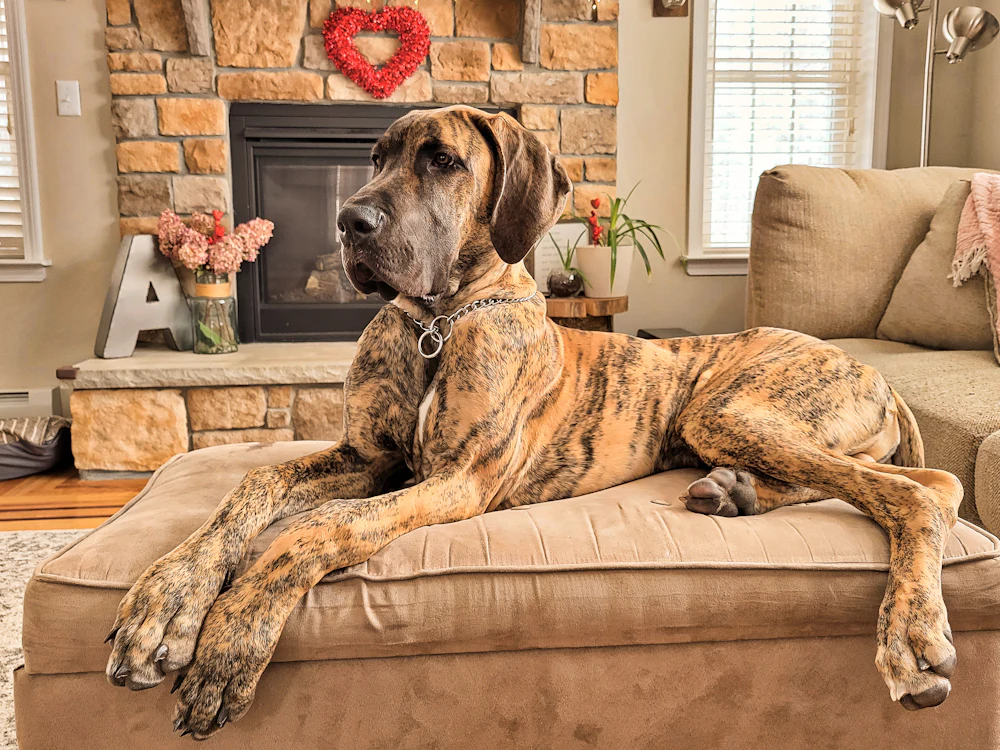
In practice, Great Danes are gentle, often sensitive and sometimes a little shy, and many believe they are lap dogs. Their size alone can knock people over, and a happy tail can clear a coffee table. They dislike being left, and they do poorly with harsh voices. A well raised Dane is a quiet housemate that sleeps for much of the day, usually on the nicest piece of furniture.
Children and other pets
Great Danes are usually gentle with children but can knock them over simply by turning round, so supervise toddlers and teach children not to climb on the dog. They generally live well with other dogs and with cats. A puppy that grows fast and clumsily needs the same calm supervision as an unruly toddler, and visitors should be warned about the dog's reach.
Exercise and the daily walk
Moderate exercise is enough. An adult Dane is usually content with one to one and a half hours a day, split into two or three walks at a relaxed pace, plus time to stretch out in a safe place. They are more relaxed than many medium sized breeds, and a Dane that has been walked will happily sleep through the afternoon.
Take care with the growing puppy. Fast growth puts pressure on joints, so avoid forced running, long hikes, stairs and jumping before about eighteen months. Free play on soft ground is better than a jogging partner. Do not exercise hard around mealtimes, because the deep chest makes bloat a real risk, and keep adult outings steady rather than frantic.
Training
Great Danes are gentle and responsive, and training has to start while they are still small enough to guide. Loose lead walking, polite greetings and a settle on a bed are the core skills. A sixty kilo dog that leans on people or jumps up is a real problem, however friendly it is. Teach a calm sit for every greeting, and ask visitors to help.
They are sensitive dogs and do best with kind, consistent, reward based methods. Shouting or force can make them anxious or stubborn. Socialise a puppy early with people, trams, lifts and other dogs, because a large dog that has not met the world can be hesitant. Short sessions, many repetitions, and plenty of patience pay off.
Coat and grooming
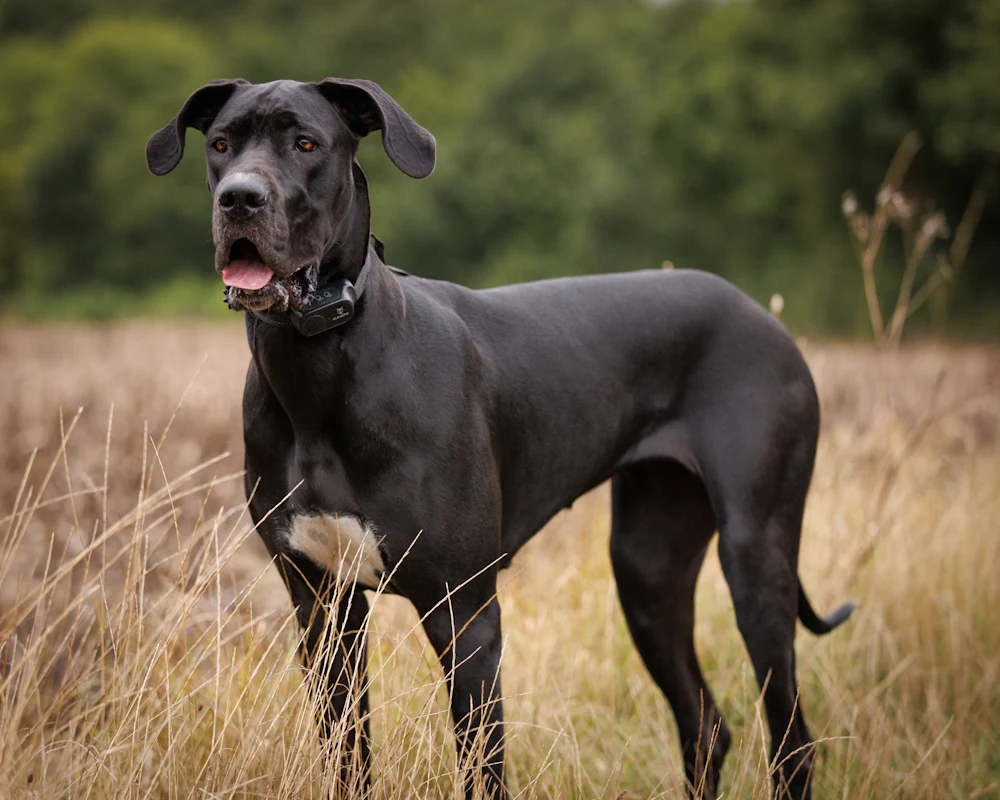
The standard asks for a very short, dense, smooth, close lying and glossy coat. It is easy to look after: a weekly brush with a rubber mitt, a wipe over and the occasional bath are enough, though a big dog sheds a lot of short hair. The FCI recognises three colour varieties: fawn and brindle, harlequin, merle and black, and blue. Check skin folds and ears regularly.
Feeding and weight
Controlled growth is crucial. Feed a large or giant breed puppy food and do not overfeed, because a fat puppy grows too fast. Split meals into two or three portions, let the dog rest after eating, and ask your vet about preventive gastropexy, often done at the same time as neutering, because the breed's bloat risk is so high.
Work out a starting calorie figure and food weight with the calorie calculator. Not sure this is the right breed? Take the quiz.
Health
Every breed carries predispositions. These are the conditions most often discussed for the Great Dane, not a prediction for any individual dog.
- Gastric dilatation-volvulus (bloat): the breed has one of the highest risks
- Dilated cardiomyopathy (a heart muscle disease)
- Osteosarcoma (bone cancer)
- Hip dysplasia (a malformed hip joint)
- Wobbler syndrome (a spinal condition affecting the neck)
- A short average lifespan compared with smaller breeds
What to ask the breeder. Ask for hip scores and heart screening for the parents, and how long the dogs in the lines have lived. Discuss preventive gastropexy with your vet.
Choosing a puppy
A Great Dane puppy is bigger than most adult dogs by six months. Plan for the adult size from day one: teach manners early, avoid stairs and jumping, and measure food carefully. Choose a breeder who health tests, keeps puppies lean and socialises them well. Expect rapid growth, large appetites and a clumsy, loving shadow.
In Luxembourg the national kennel club is the Fédération Cynologique Luxembourgeoise (FCL), a member of the FCI. Many owners also buy from breeders in Germany, France or Belgium; a puppy coming from another EU country must be microchipped and vaccinated against rabies, which in practice means it cannot travel before about fifteen weeks of age. Where to get a dog in Luxembourg.
The older Great Dane
Many Danes reach old age early, and from about six or seven they benefit from regular check-ups. Watch for stiffness, a slower gait, coughing, weight loss and lumps, and report them. Provide a thick orthopaedic bed, non slip floors and shorter walks. Keep the dog lean and the routine gentle.
A realistic day
A realistic weekday for a working household in Luxembourg City, with a midday visit. Adjust it to your dog, not the other way round.
A relaxed 30 to 40 minute walk, with a slow pace and plenty of sniffing.
A measured breakfast, followed by a quiet rest, with no running or play for an hour.
Midday visit from a walker for a toilet break and a calm 30 minute walk.
A second walk of about 45 minutes in a park, kept steady and unhurried.
A final toilet stroll, then settle on a large bed for the night.
A Great Dane in Luxembourg
A Great Dane can live in a flat, but not every flat suits a Great Dane. Check the lift size, the width of the stairwell and the floor, and think about how you would carry a sick dog of sixty kilos down several flights. A ground floor home with a garden is much easier. They need a big bed, a clear floor and a landlord who agrees to the dog.
Outdoors, the Pétrusse valley, Parc Merl and the Bambësch offer the space and soft ground a Dane enjoys, and the Grünewald is good for relaxed longer outings. Summers in the 30s are uncomfortable for a giant dog, so walk early and late and keep water available. Public transport is free, but a Dane on a crowded tram takes real preparation. Neighbours may need reassurance, because size alone alarms people.
Every dog in Luxembourg must be identified, declared to the commune and covered by liability insurance. How registration works.
When you travel
A sitter must be physically able to control a very large dog and understand bloat. Keep to the usual routine: measured meals, a rest afterwards, and no vigorous exercise around mealtimes. Give the sitter your vet's number and a clear plan for emergencies. Use a strong lead outside, and warn them that the dog may lean or pull.
PAWLY's holiday and overnight care takes place in your home, so your dog keeps its own bed and routine.
Myths and facts
MythGreat Danes need huge amounts of exercise.
FactThey need moderate exercise and are usually calm indoors. Too much, especially for a young dog, can harm growing joints.
MythGreat Danes are Danish.
FactThey are German. The English name probably comes from the French grand danois, and the Germans call the breed the Deutsche Dogge.
MythA big dog needs a big home.
FactA calm Dane can live in a flat, but it needs enough floor space, a lift it can fit into, and an owner who can handle its strength.
Is it the right dog for you?
Suits
- Owners who want a calm, affectionate companion
- People with space and easy access to a vet
- Households with time for a dog that hates being alone
- Patient trainers who start early
Think twice if
- You have a small flat, narrow stairs or no lift
- You cannot afford large dog food and vet bills
- You are away for long periods
- You are not prepared for a shorter lifespan
Questions owners ask
What is bloat?
Gastric dilatation-volvulus: the stomach fills with gas and can twist. Signs are a swollen belly, retching without producing anything, and restlessness. It is an emergency and needs a vet at once. Ask about preventive gastropexy.
Do Great Danes need a lot of exercise?
Moderate. An adult is content with one to one and a half hours a day, and most are more relaxed than many medium sized breeds. Puppies must not be over exercised.
How long do Great Danes live?
Typically about seven to ten years, which is short compared with smaller breeds. Careful feeding, a lean body and regular vet checks give the best chance of a good old age.
Are Great Danes good with children?
Usually gentle and patient, but their size can overwhelm small children without meaning to. Supervise all contact and teach children to respect the dog's space.
Sources
Photo: Unsplash (Unsplash License) · Photo: Unsplash (Unsplash License) · Photo: Unsplash (Unsplash License)
General information for dog owners in Luxembourg, not veterinary or legal advice. Official facts (origin, size, group, history and temperament as described by the breed standard) follow the FCI standard; health and care sections reflect breed-club and veterinary guidance and are typical ranges rather than rules. For your own dog, ask your vet, the breed club or your commune. How this guide is written and checked. Last reviewed 8 October 2026.
Need someone for your Great Dane?
PAWLY offers an individual 45-minute walk or a home visit at your dog's pace, the same walker every time, and a written report with photos after every visit, across Luxembourg City.
Read next: the journal, for the Great Dane
All articles
Arthritis: the pain owners file under old age
Giant breeds tend to have joint trouble early; this is what to look for.

Long-backed breeds, stairs and the spine
A long back makes stairs matter more than most owners think.

Growing a large-breed puppy without wrecking its joints
A giant puppy grows fast on soft bones; how it grows decides its joints for life.
Similar breeds
All 198 breeds
Irish Wolfhound
The tallest of the sighthounds, a rough-coated giant that is gentle, quiet and courteous at home, and still fast when it chooses to run.
EnergyGroomingFlat life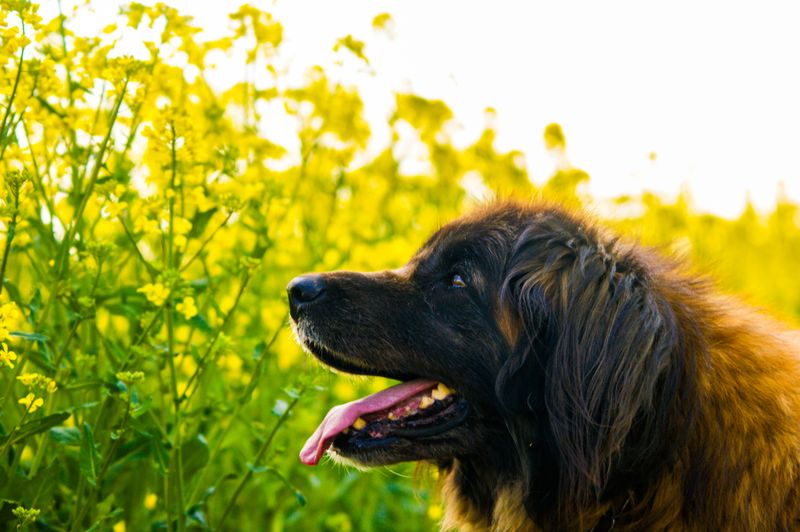
Leonberger
A lion-coloured giant with a black mask and a surprisingly gentle manner, happiest as an unhurried companion who is never left out of anything.
EnergyGroomingFlat life
Dobermann
An elegant, square-built German guard dog that is far more devoted, sensitive and people-minded than its fierce reputation suggests.
EnergyGroomingFlat life

