


History
According to the FCI standard, Irish Wolfhounds were already well established in Ireland in the first century AD, and the first written account of the breed dates from 391 AD. Until the end of the seventeenth century they were used to hunt wolves, wild boar and deer, and they appear throughout Irish history alongside its kings and legends. Hounds of this kind were prized gifts, and their size and courage became part of Irish folklore.
The breed's modern history began with the first show classes in Dublin in 1879, followed by the first breed standard and a breed club in 1885. The standard calls the Irish Wolfhound a living symbol of Irish culture and one of the five official symbols of Ireland. The current FCI standard, published in 2026, places the breed in Group 10, Section 2, the rough-haired sighthounds, without a working trial. It describes the Irish Wolfhound as the largest and tallest of the sighthounds, of great size and commanding appearance.
Temperament
The standard describes a gentle, kind, loyal hound with a friendly nature towards people and other dogs, quoting the old saying that it is a lamb in the home and a lion in the chase. Owners usually find exactly that: a calm, quiet, affectionate dog that wants to be with its family and dislikes conflict.
Wolfhounds are not guard dogs, though their size deters most visitors. They are sensitive, sometimes reserved with strangers, and need gentle, patient handling. Outdoors the sighthound instinct can switch on suddenly at the sight of a running animal, and a dog weighing more than its owner is hard to stop once it has decided to chase.
Children and other pets
Adult wolfhounds are typically gentle and patient with children, but size alone makes supervision essential: a playful puppy or a swinging tail can knock over small children. They usually live well with other dogs and often enjoy canine company. Many accept cats they are raised with, but small animals running outdoors may trigger the chase instinct, so introductions to new pets should be slow and supervised.
Exercise and the daily walk
Despite their size, adult wolfhounds need moderate exercise: about an hour of walking a day, plus the chance to gallop in a safe, enclosed area when possible. They enjoy steady walks and sniffing, and after exercise they are content to sleep for hours.
Puppies grow extremely quickly and should not be over-exercised. Short, free play on soft ground is far better than long walks, stairs or jumping. Never let a wolfhound run free near roads, since sighthounds react to movement and can cover distance very fast. Avoid hard exercise around meals because of the risk of bloat.
Training
Wolfhounds are intelligent and willing but not obedient by nature. Short, calm sessions with food rewards work best, and harsh handling can make them withdraw. Lead manners must be taught early, while the puppy is still manageable, because an adult can easily pull an owner off balance.
Practise recall, settling and polite greetings, and accept that recall may never be reliable when the dog sees something run. Socialise widely so that the dog is comfortable with lifts, traffic, children and visitors. Handling of feet, mouth and body should be routine from puppyhood, as vet visits with a giant dog are much easier when it is relaxed.
Coat and grooming
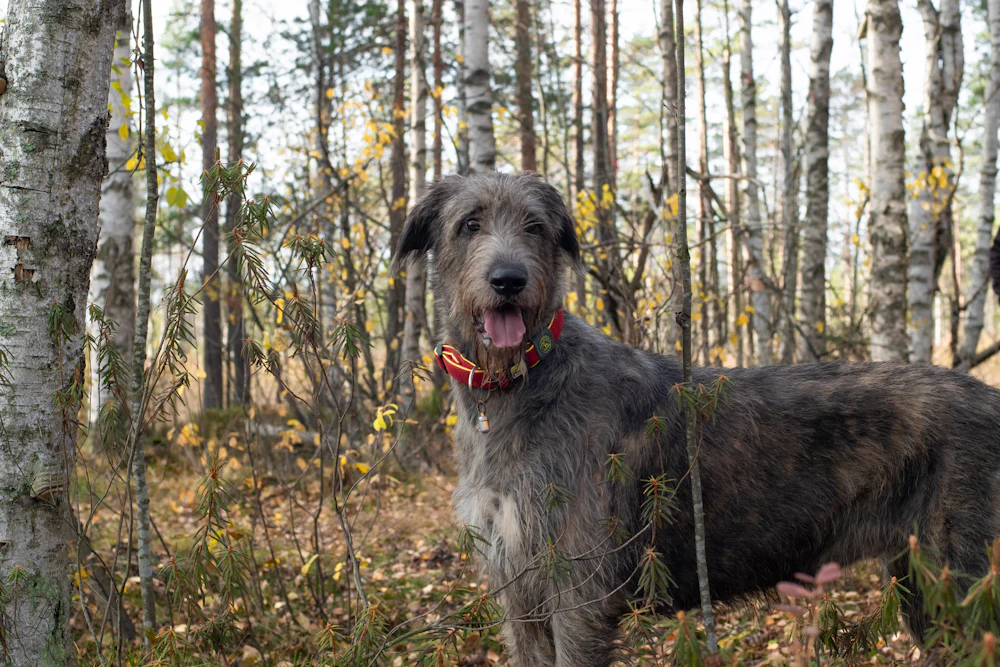
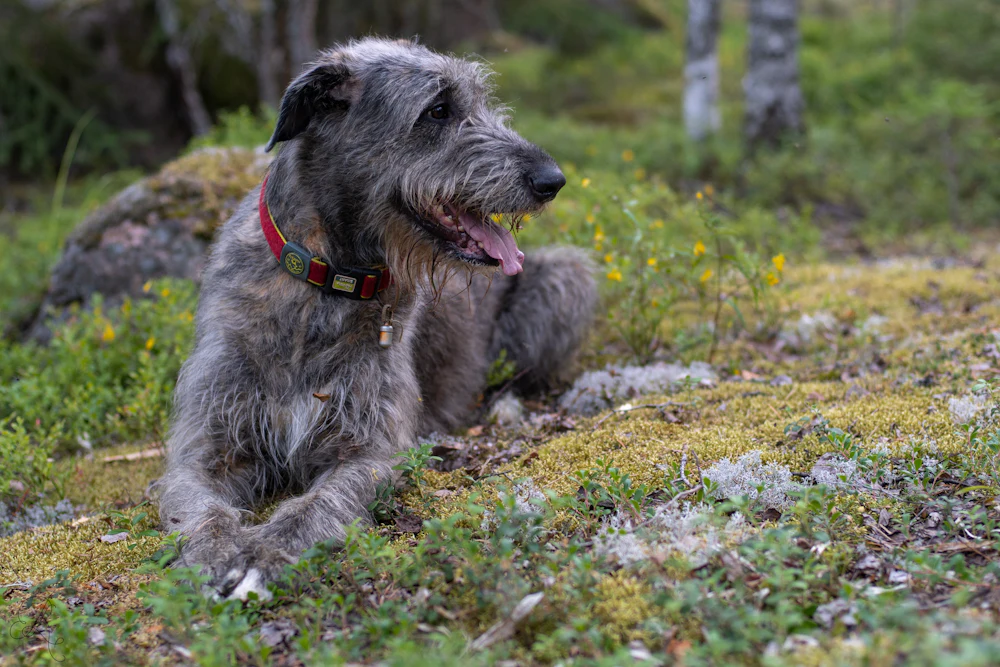
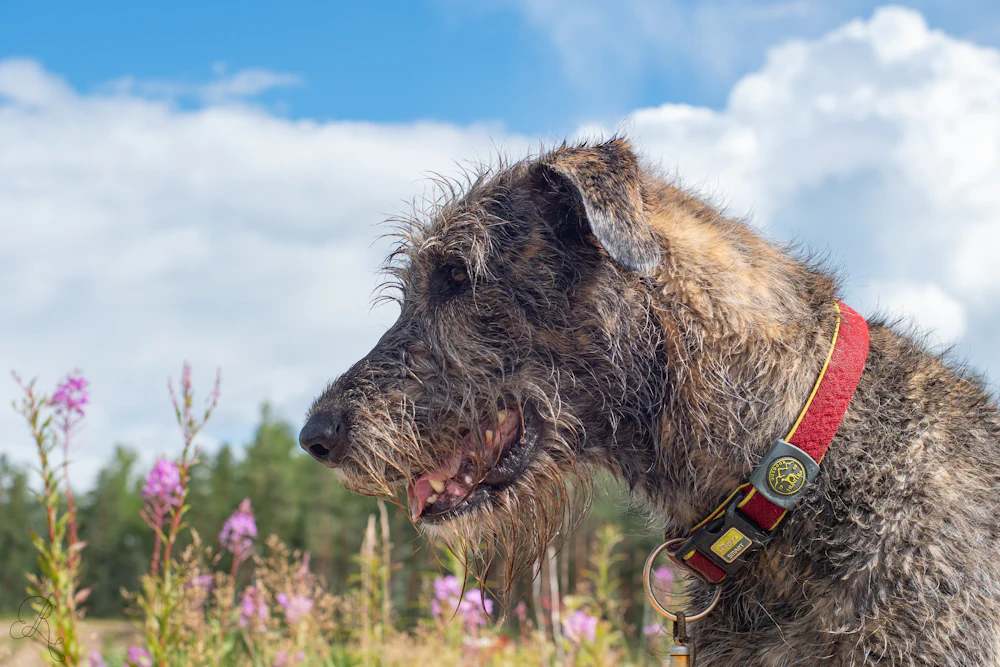
The coat is rough and hard on the body, legs and head, especially wiry over the eyes and under the jaw, giving the breed its rugged look. Brush once a week and remove dead hair by hand-stripping a few times a year to keep the coat tidy. Shedding is moderate. The FCI standard accepts grey, brindle, red, black, pure white, fawn and wheaten, with white markings allowed only on the fore-chest, toes and tip of the tail.
Feeding and weight
Feed a good-quality diet formulated for giant breeds, especially during growth, when too rapid weight gain can harm developing bones and joints. Divide food into at least two meals a day and allow rest before and after meals to reduce the risk of bloat. Keep the dog lean, and seek advice from a vet or breeder on puppy growth rates.
Work out a starting calorie figure and food weight with the calorie calculator. Not sure this is the right breed? Take the quiz.
Health
Every breed carries predispositions. These are the conditions most often discussed for the Irish Wolfhound, not a prediction for any individual dog.
- Dilated cardiomyopathy (heart disease)
- Gastric dilatation-volvulus (bloat)
- Osteosarcoma (bone cancer)
- Portosystemic shunt (liver shunt)
- Hip and elbow dysplasia
What to ask the breeder. Ask for heart examination results (ideally with echocardiography) for both parents, hip and elbow scores, an eye examination and confirmation that the puppies were tested for liver shunt, and ask about longevity in the lines.
Choosing a puppy
Wolfhound puppies are large, gentle and clumsy, and they grow at astonishing speed. Keep exercise free and short on soft ground, avoid stairs and jumping, and follow the breeder's advice on diet. Begin lead training and handling early, while the puppy is still small enough to manage. Socialise with people, children, other dogs, lifts and city noise to build a relaxed adult.
In Luxembourg the national kennel club is the Fédération Cynologique Luxembourgeoise (FCL), a member of the FCI. Many owners also buy from breeders in Germany, France or Belgium; a puppy coming from another EU country must be microchipped and vaccinated against rabies, which in practice means it cannot travel before about fifteen weeks of age. Where to get a dog in Luxembourg.
The older Irish Wolfhound
Wolfhounds age early, and many are considered seniors by six or seven. Shorter, gentle walks, a thick orthopaedic bed and non-slip flooring help. Watch for signs of heart disease such as tiring quickly or coughing, and report any lameness promptly, since bone cancer is a known risk. Getting up and lying down can become hard, so ramps or help may be needed.
A realistic day
A realistic weekday for a working household in Luxembourg City, with a midday visit. Adjust it to your dog, not the other way round.
Steady thirty-minute walk while the city is quiet
Breakfast, then a long rest on a large, soft bed
Midday visit: a calm walk, toilet break and fresh water
Evening walk or a gallop in a secure field, then dinner after a rest
Short final stroll and sleep
An Irish Wolfhound in Luxembourg
A wolfhound in a Luxembourg City flat is possible if there is a lift, enough floor space and a calm household, but stairs and small lifts are real obstacles for a dog of this size. Quiet by nature, wolfhounds are rarely a problem for neighbours. The Kinnekswiss, Parc Merl and the Pétrusse valley offer pleasant walks, while the Grünewald and Bambësch suit longer outings, always on lead given the deer.
Heat is a concern in summer, when temperatures can reach the 30s °C: walk early and late, keep the dog in a cool room and never leave it in a car. Taking such a large dog on a bus or tram requires planning around busy times. Luxembourg rules apply as usual: microchip, registration with the commune, liability insurance and the annual dog tax.
Every dog in Luxembourg must be identified, declared to the commune and covered by liability insurance. How registration works.
When you travel
A sitter must understand that a wolfhound is gentle but enormous, so lead handling should be confident and calm. Keep the dog on lead outside secure areas. Feed at least two meals with rest around them and act immediately on signs of bloat. Watch for tiredness, coughing or lameness, and know the location of the nearest emergency vet.
PAWLY's holiday and overnight care takes place in your home, so your dog keeps its own bed and routine.
Myths and facts
MythA giant dog needs a huge amount of exercise.
FactAdults need moderate daily walks plus safe running; puppies need less, not more.
MythWolfhounds make good guard dogs.
FactThe breed is gentle and friendly; its size deters people, but it is not a guarding breed.
MythA dog this big needs a house with land.
FactA spacious flat with a lift can work, provided walks and a soft bed are guaranteed.
Is it the right dog for you?
Suits
- Calm households with space for a very large dog
- Owners who want a gentle, quiet companion
- People with access to safe, enclosed areas for running
- Those prepared for a short lifespan and higher vet costs
Think twice if
- You live in a small flat or a building without a lift
- You need a dog that can be off lead near roads
- The cost of giant-breed food, equipment and vet care is a concern
- A breed with a short lifespan would be hard to bear
Questions owners ask
How long do Irish Wolfhounds live?
Their lifespan is short, commonly published as about six to eight years, and the Royal Kennel Club lists it as under ten years. Heart disease, bone cancer and bloat are among the known causes. Choosing a careful breeder and keeping the dog lean can help.
Is an Irish Wolfhound good in a flat?
It can be, with enough space, a lift and a calm household. Wolfhounds are quiet and sleep a lot indoors. Stairs, small lifts and tight corridors are the main difficulties, especially for puppies and older dogs.
Do Irish Wolfhounds bark much?
Not usually. They are among the quieter large breeds, and many bark only occasionally. That makes them easier neighbours than many guardian breeds, though every dog is an individual.
How big is an Irish Wolfhound?
The FCI standard gives a desired minimum height of 79 cm for males and 71 cm for females, with minimum weights of 54.5 kg and 40.5 kg. Many dogs are larger, and the standard calls the breed the largest and tallest of the sighthounds.
Sources
- FCI breed standard No. 160 (Irish Wolfhound)
- The Royal Kennel Club: Irish Wolfhound
- AKC hound group health testing requirements
Photo: Unsplash (Unsplash License) · Photo: Unsplash (Unsplash License) · Photo: Unsplash (Unsplash License) · Photo: Unsplash (Unsplash License)
General information for dog owners in Luxembourg, not veterinary or legal advice. Official facts (origin, size, group, history and temperament as described by the breed standard) follow the FCI standard; health and care sections reflect breed-club and veterinary guidance and are typical ranges rather than rules. For your own dog, ask your vet, the breed club or your commune. How this guide is written and checked. Last reviewed 8 October 2026.
Need someone for your Irish Wolfhound?
PAWLY offers an individual 45-minute walk or a home visit at your dog's pace, the same walker every time, and a written report with photos after every visit, across Luxembourg City.
Read next: the journal, for the Irish Wolfhound
All articles
Arthritis: the pain owners file under old age
Giant breeds tend to have joint trouble early; this is what to look for.

Growing a large-breed puppy without wrecking its joints
A giant puppy grows fast on soft bones; how it grows decides its joints for life.

Building a recall you can actually rely on
Sighthounds chase at speed and often cannot be recalled; the Irish Wolfhound needs a realistic plan.
Similar breeds
All 198 breeds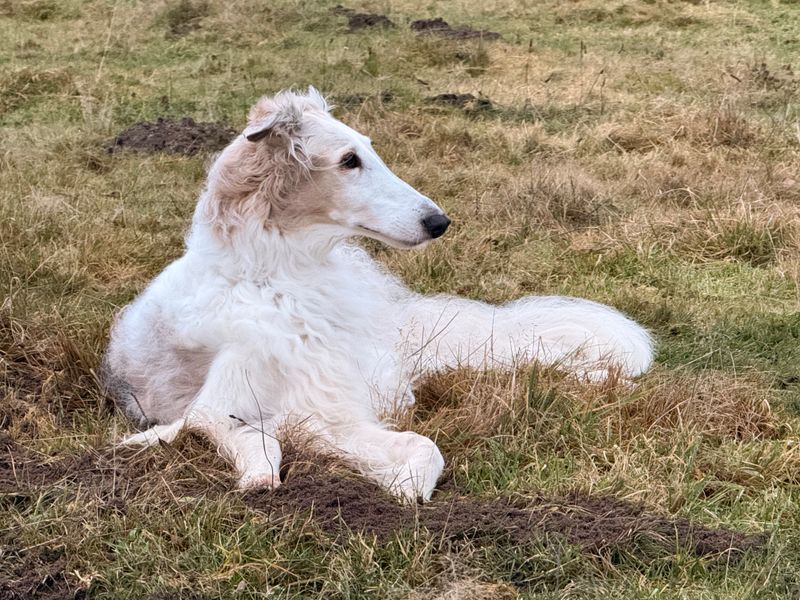
Borzoi
The Russian wolfhound: elegant, quiet and reserved, and built to sprint after anything that runs.
EnergyGroomingFlat life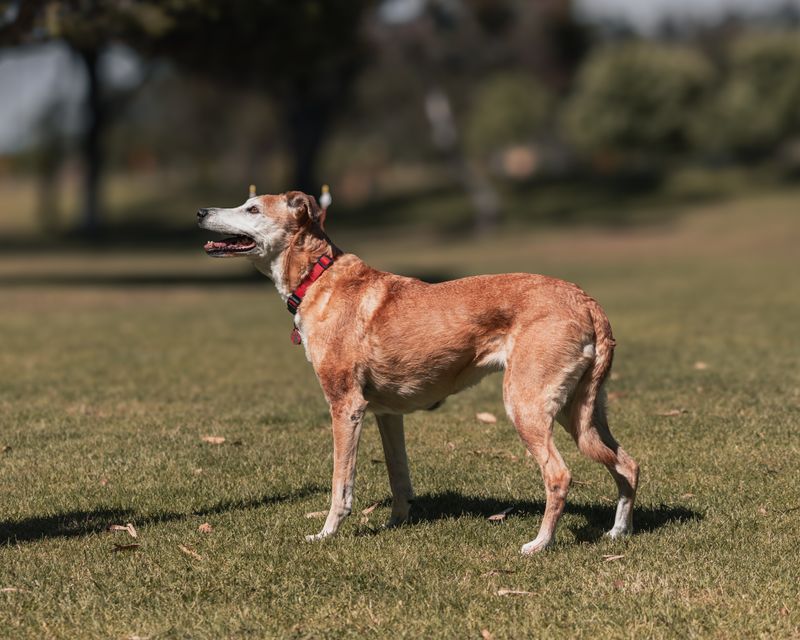
Greyhound
The fastest dog on earth is also one of the laziest at home, and many are retired racers looking for a sofa.
EnergyGroomingFlat life
Great Dane
The gentle giant of the dog world, far calmer indoors than its size suggests, and far bigger than most flats expect.
EnergyGroomingFlat life

