


History
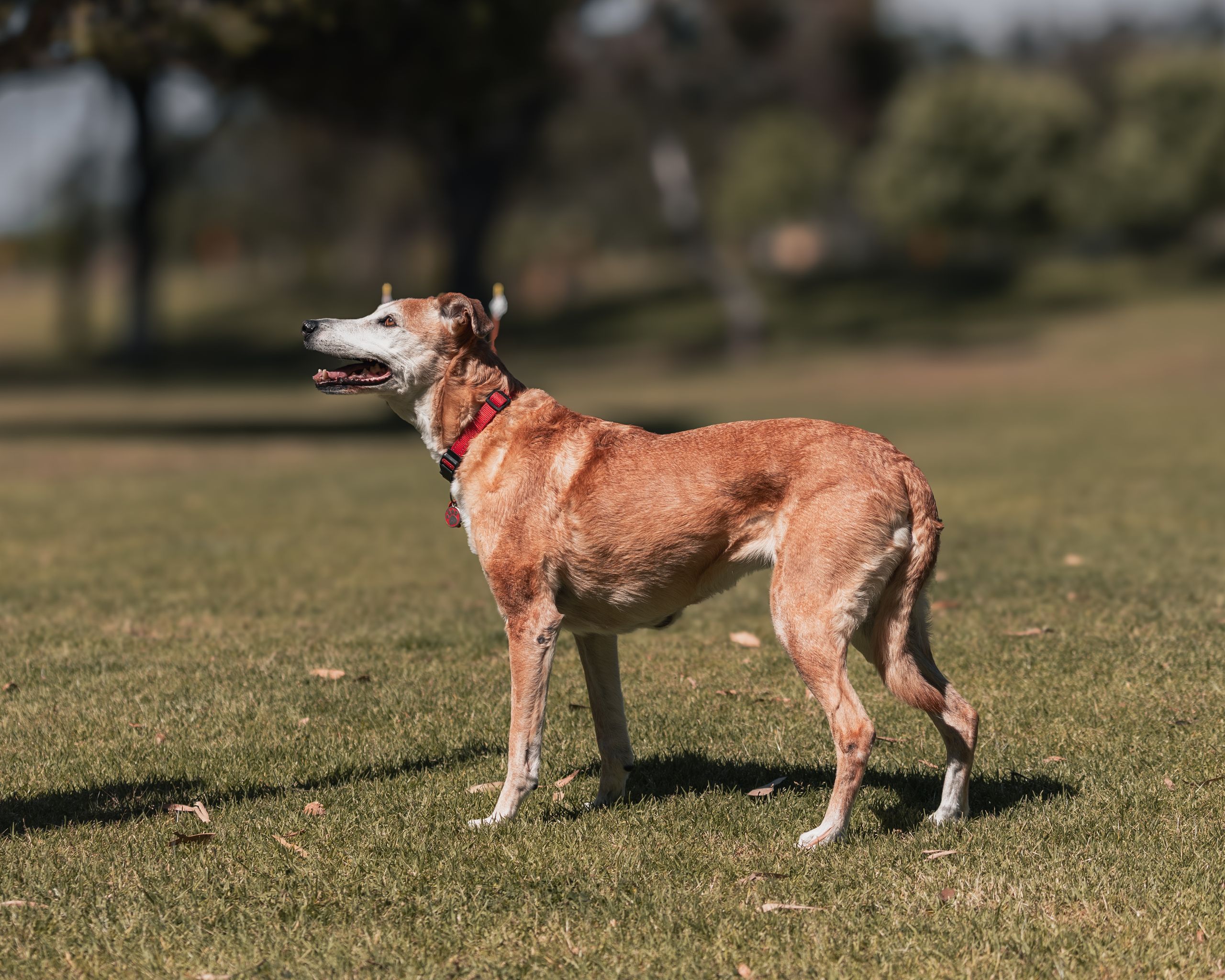
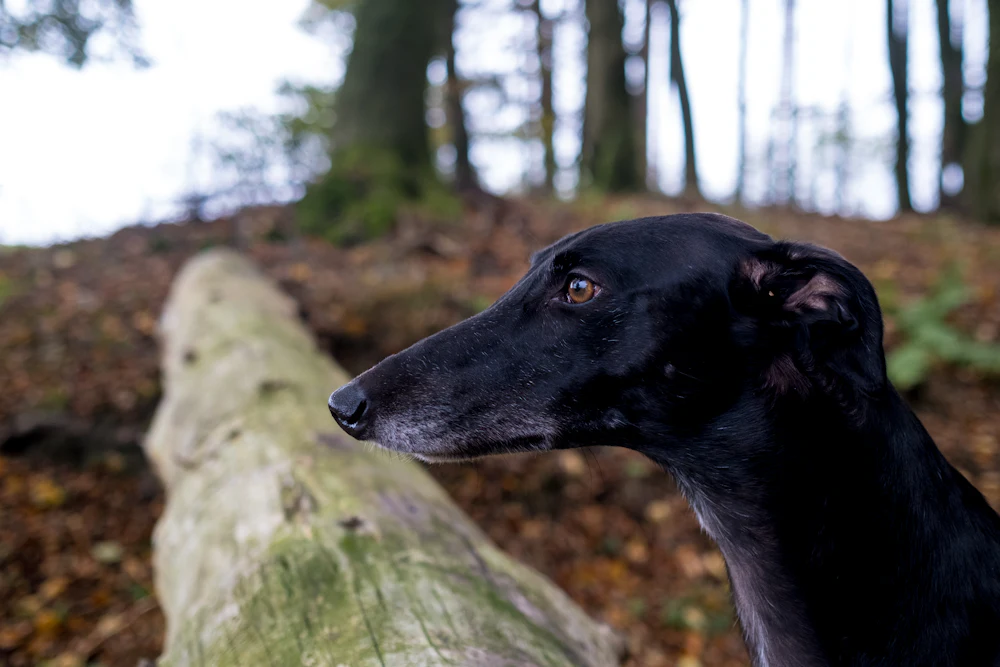
The FCI standard places the Greyhound in Britain, while noting that experts suggest a possible Middle Eastern origin, with greyhound type dogs drawn on the walls of ancient Egyptian tombs. The breed developed in Britain as a prototype sighthound, a coursing hound that hunted live hares by sight and speed. The standard remarks that only the cheetah tops the Greyhound for speed.
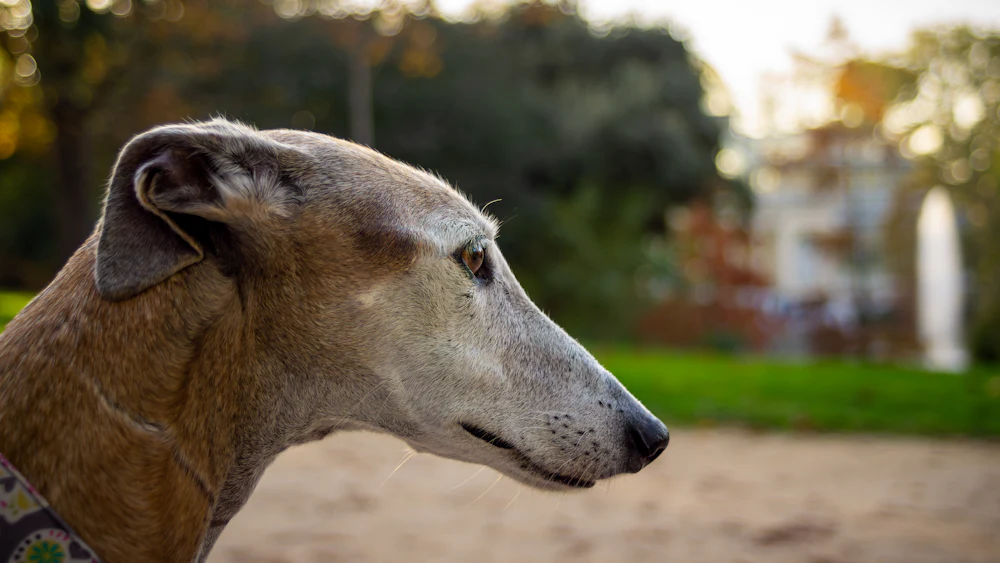
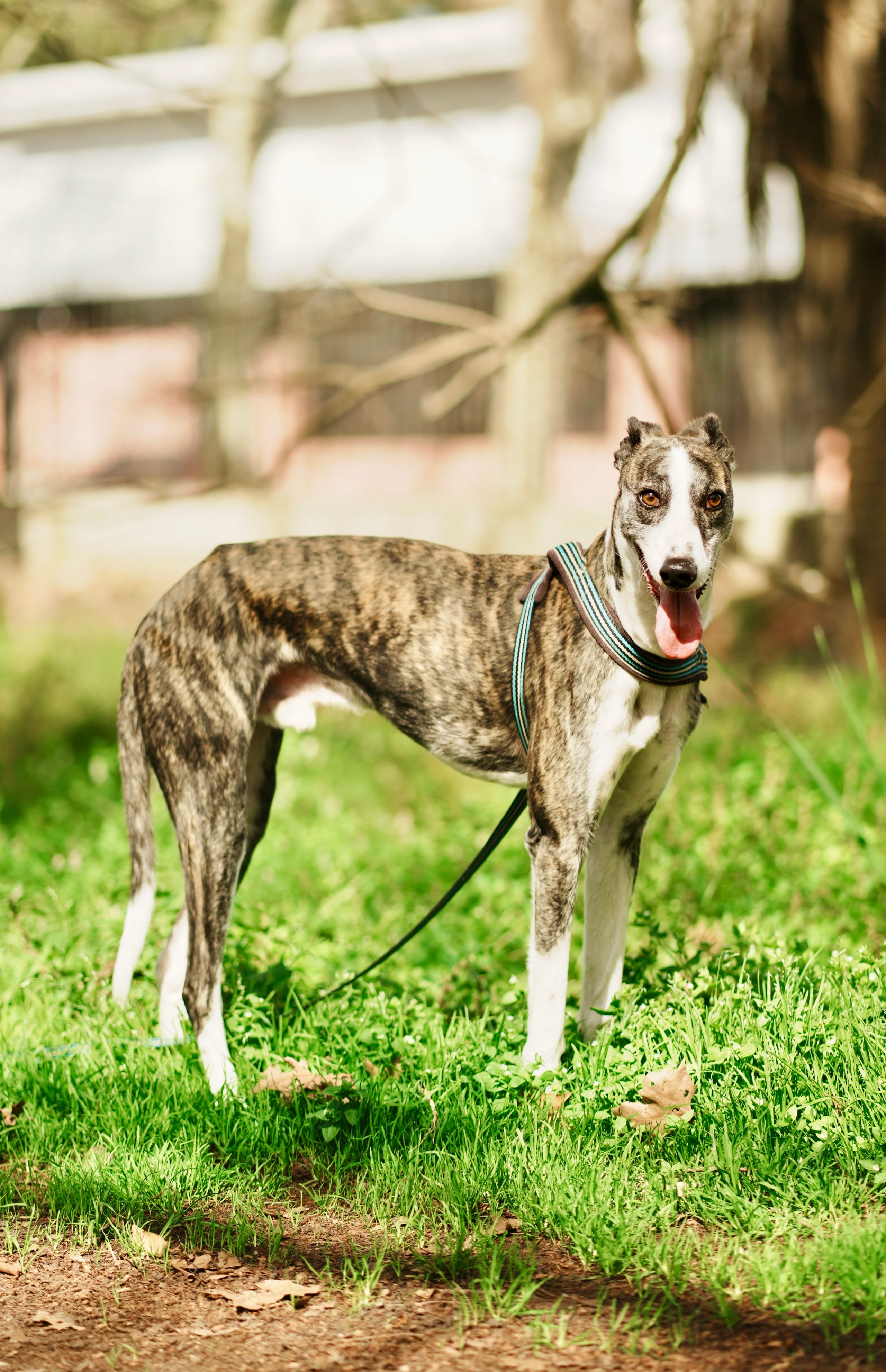
The racing Greyhound descends from those hunting dogs. A racer has been clocked at more than 45 miles an hour, roughly 70 km/h, and the breed's build shows why: a long head and neck, a deep chest, clean shoulders, powerful hindquarters and a tucked up waist. The standard stresses stamina and endurance, and many retire young from the track. Adoption organisations in Ireland and the United Kingdom rehome large numbers every year.
Temperament
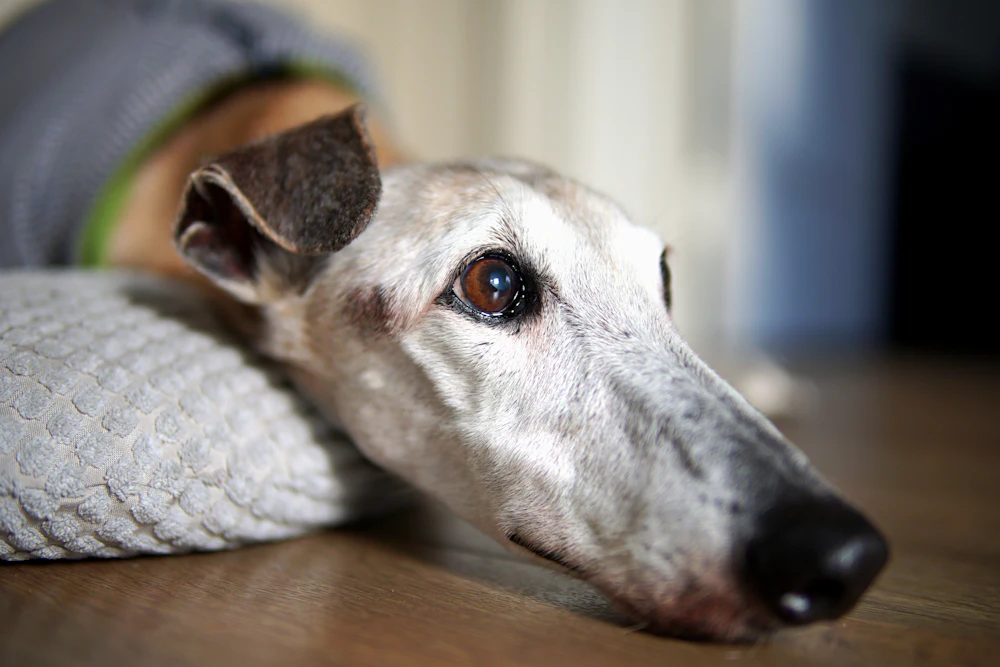
The FCI standard calls the Greyhound intelligent, gentle, affectionate and even tempered, with remarkable stamina and endurance. At home that becomes a quiet, tidy, undemanding companion, often reserved with strangers and unfailingly polite. Greyhounds sleep a great deal, most of the day, and they like a soft bed and a warm spot.
The chase instinct is strong, and a Greyhound will pursue anything that moves fast, from a cat to a plastic bag. Some ex-racers cannot live with cats or small dogs, and rehoming organisations test for this. Many former racers have never lived in a house and need time to learn about stairs, glass doors, televisions and household noise. They are sensitive dogs and respond to kindness.
Children and other pets
Many Greyhounds are gentle and patient with children, but they are thin skinned and bony, so teach children not to tackle or lean on them. Whether a Greyhound can live with cats or small dogs depends on the individual, and rehoming organisations test for this. Most are fine with other dogs, especially other sighthounds, and many enjoy company.
Exercise and the daily walk
Greyhounds are sprinters, not endurance dogs. About an hour a day suffices, ideally a lead walk plus a short burst of free running in a secure area. An adult that has stretched its legs for a few minutes is usually happy to lie on the sofa for the rest of the day, which is why the breed suits many flat dwellers.
Safe space is the issue. A Greyhound off the lead will chase a rabbit or a cyclist across a field without a thought for roads, and its recall is unreliable once something runs. Use a fully fenced area for free runs, keep a long line in reserve, and walk on a lead elsewhere. In cold or wet weather, a coat is not a luxury, because they have little body fat.
Training
Many adopted Greyhounds have never lived in a house. The first weeks are about learning a new world: stairs, glass doors, slippery floors, televisions, the lift. Calm routines, non slip rugs and patience teach them quickly. They are sensitive dogs and respond to soft voices and rewards, and they quickly stop trying if scolded.
Recall is unreliable in most sighthounds, so walk on a lead outside secure areas. Some ex-racers need help learning to be alone, because they have always lived in kennels surrounded by other dogs. Build absences gradually and use a comfortable bed.
Coat and grooming
Short, fine and close, the coat takes very little care: a quick rub with a rubber mitt or soft brush once a week removes loose hair. The FCI standard permits black, white, red, blue, fawn, fallow, brindle, or any of these broken with white. Thin skin can tear easily, and the dogs feel the cold, so a coat is useful in winter. Check the skin after walks in rough ground.
Feeding and weight
Greyhounds carry little body fat, and a lean outline with visible hip bones is normal. Feed good quality food in two meals, and avoid vigorous exercise straight afterwards because of bloat. Dental disease is common in retired racers, so a vet dental check soon after adoption is a good idea. Fresh water should always be available.
Work out a starting calorie figure and food weight with the calorie calculator. Not sure this is the right breed? Take the quiz.
Health
Every breed carries predispositions. These are the conditions most often discussed for the Greyhound, not a prediction for any individual dog.
- Osteosarcoma (bone cancer)
- Dental disease, common in retired racers
- Skin tears, because the skin is thin
- Corns on the paws
- Sensitivity to some anaesthetics: make sure your vet knows the breed
What to ask the breeder. For adopted racers, ask for a full vet check, dental assessment and a cat test from the rehoming organisation. For puppies, ask for health records of both parents.
Choosing a puppy
Most Greyhounds join a household as adults from racing or rehoming, but puppies from breeders are growing fast and clumsy. Protect their joints from rough play, give a soft bed and begin gentle training. Socialise them with people, noises and lifts, and teach a calm lead walk early. Choose a breeder who raises puppies indoors and shares health records.
In Luxembourg the national kennel club is the Fédération Cynologique Luxembourgeoise (FCL), a member of the FCI. Many owners also buy from breeders in Germany, France or Belgium; a puppy coming from another EU country must be microchipped and vaccinated against rabies, which in practice means it cannot travel before about fifteen weeks of age. Where to get a dog in Luxembourg.
The older Greyhound
Many Greyhounds stay fit well into old age, but they do slow down. Watch for stiffness, lumps, weight loss and bad breath, which may mean dental trouble. Provide a thick bed, a warm coat in cold weather and shorter walks. Regular senior check-ups are sensible, and lumps on a leg need prompt attention.
A realistic day
A realistic weekday for a working household in Luxembourg City, with a midday visit. Adjust it to your dog, not the other way round.
A calm 30 minute lead walk, with a coat on if it is cold.
Breakfast, then a doze on the sofa while you get ready.
Midday visit from a walker for a toilet break and a short, gentle lead walk.
A 40 minute walk, with a few minutes of free running in a fenced area if possible.
A final toilet break, then settle on a soft bed for the night.
A Greyhound in Luxembourg
Greyhounds suit flat life better than almost any large breed. They are quiet, clean and calm indoors, and many sleep most of the day. A lift is a new experience for an ex-racer, so introduce it gently. Slippery floors need rugs, and a thin coated dog needs a soft bed away from draughts. Neighbours are rarely troubled, since Greyhounds seldom bark.
Outdoors, safe space is the question. A secure, fenced field for sprinting is more valuable than any park, so ask local clubs or rehoming groups where owners go. The Pétrusse valley and Parc Merl are best on a lead. In winter, a coat is a must, because a Greyhound feels the cold, and in summer it needs shade and water at temperatures in the 30s. Trams and buses are free.
Every dog in Luxembourg must be identified, declared to the commune and covered by liability insurance. How registration works.
When you travel
The sitter should understand the chase instinct: always use a secure lead, a well fitted collar or harness and a firmly closed door and gate. Provide a coat in cold weather and a warm bed. Ex-racers may find separation difficult, so keep visits regular and the routine calm. Make sure the sitter knows where the vet is.
PAWLY's holiday and overnight care takes place in your home, so your dog keeps its own bed and routine.
Myths and facts
MythGreyhounds need a lot of exercise.
FactThey are sprinters, not endurance dogs, and are among the calmest breeds at home. A short run and a daily walk are enough.
MythA muzzled Greyhound is dangerous.
FactMuzzles are a precaution around small animals and a habit from racing, not a sign of aggression. Greyhounds are known for gentleness.
MythRetired racers are damaged dogs.
FactMost adapt well to home life with patience. They need to learn stairs, glass and household noises, but many become relaxed companions within weeks.
Is it the right dog for you?
Suits
- Owners who want a quiet, gentle dog
- Flat dwellers with access to safe running space
- People willing to adopt a retired racer
- Calm households without cats or small pets
Think twice if
- You have a cat or small pets and cannot test compatibility
- You want a dog that can be trusted off the lead
- You are away all day with no midday visit
- You live where winters are cold and cannot provide coats
Questions owners ask
Do Greyhounds need lots of exercise?
No. They are sprinters, not endurance dogs, and are content with moderate walks and a short run in a secure area. Most then spend the day asleep.
Why do adopted Greyhounds wear muzzles?
Mostly as a precaution around small animals because of their chase instinct, and because racing dogs are used to them. Many rehoming organisations suggest keeping a muzzle on for walks until the dog is known.
Can a Greyhound live with a cat?
Some can, some cannot. It depends on the individual dog's prey drive. Rehoming organisations test ex-racers with cats, and a gradual, supervised introduction is essential.
Are Greyhounds good in flats?
Very often. They are quiet and clean, and sleep for much of the day. They need a soft bed, non slip floors and daily walks, and a safe place to run now and then.
Sources
Photo: Pexels (Pexels License) · Photo: Unsplash (Unsplash License) · Photo: Unsplash (Unsplash License) · Photo: Pexels (Pexels License) · Photo: Unsplash (Unsplash License)
General information for dog owners in Luxembourg, not veterinary or legal advice. Official facts (origin, size, group, history and temperament as described by the breed standard) follow the FCI standard; health and care sections reflect breed-club and veterinary guidance and are typical ranges rather than rules. For your own dog, ask your vet, the breed club or your commune. How this guide is written and checked. Last reviewed 8 October 2026.
Need someone for your Greyhound?
PAWLY offers an individual 45-minute walk or a home visit at your dog's pace, the same walker every time, and a written report with photos after every visit, across Luxembourg City.
Read next: the journal, for the Greyhound
All articles
Building a recall you can actually rely on
Sighthounds chase at speed and often cannot be recalled; the Greyhound needs a realistic plan.

Harness, lead and collar: what to buy and what to avoid
A secure harness matters for a dog that can bolt in a second.
The dog that is afraid of people
The Greyhound is often reserved with strangers; early, patient handling of that matters.
Similar breeds
All 198 breeds
Whippet
A sprinter who sleeps most of the day: one of the best city dogs you have never considered.
EnergyGroomingFlat life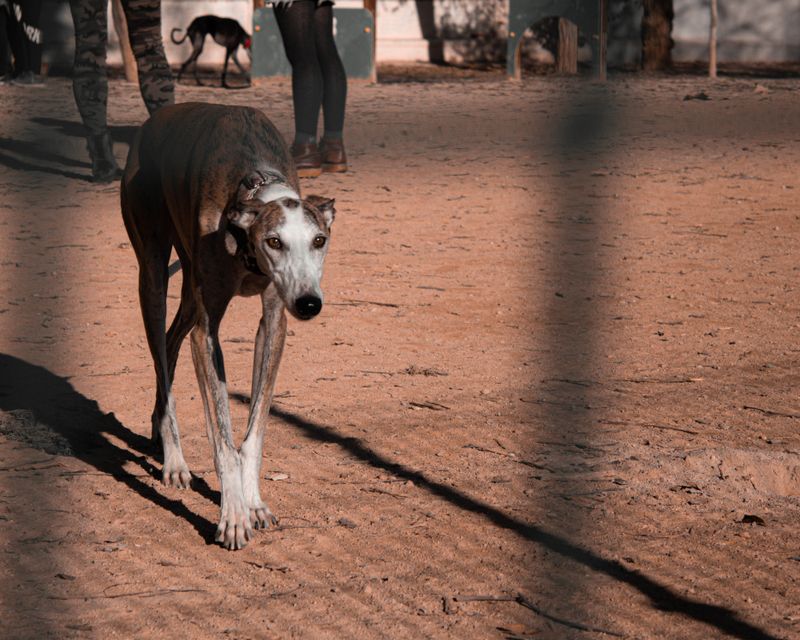
Galgo Español
A lean, quiet Spanish greyhound that sleeps like a cat all day and runs like a missile when it sees a hare.
EnergyGroomingFlat life
Italian Greyhound
A miniature sighthound of Renaissance courts: elegant, affectionate, fond of warm laps and rather more fragile than it looks.
EnergyGroomingFlat life

