


History
The Hovawart is a German breed, and the FCI standard describes it as a very old working dog in the original sense. The name comes from Middle High German: Hova meant a yard or farm, and wart a guardian, so the word means roughly farmyard keeper.
The modern breed was rebuilt from 1922, using dogs of the old type still found on farms, with careful outcrosses that included German Shepherds, Newfoundlands and Leonbergers among others. The Hovawart was recognised as a breed in 1937 and as a working dog breed in 1964. According to the standard, selective breeding from the 1960s substantially reduced hip dysplasia. The FCI lists the breed in Group 2, among molossoid mountain types, and classes it as a working dog with a working trial.
Temperament
The FCI standard calls for a good-natured, even disposition combined with protectiveness, self-confidence and the ability to take stress, with a medium temperament and a very good nose. At home it is usually calm, devoted and quietly attached to one household, often choosing a favourite person to follow. With strangers it is typically reserved, watching before it decides, which makes it a natural guard without any need for training in aggression.
A well socialised Hovawart is polite and steady, but one that has met few people or places can become wary or overprotective, and its size makes that a genuine responsibility. It matures slowly and can be a tricky adolescent, testing rules until about three. Hovawarts are happiest with a clear role, a family that includes them, and a firm, fair leader.
Children and other pets
Hovawarts are usually loyal and gentle with the children of their own household, and many enjoy acting as a watchful guardian in the garden. They are less suited to households with a stream of visiting children, because their protective instinct can lead them to intervene in rough games. Early socialisation with other dogs is important, as some males dislike unfamiliar males. Living with a cat from puppyhood is often fine, while a strange cat outdoors may be chased.
Exercise and the daily walk
An adult needs about an hour and a half to two hours of activity every day, and a Hovawart is much happier if some of it has a purpose. Long walks, hiking, tracking, a bit of obedience or trailing games, and carrying a small pack all use the breed's nose, stamina and wish to work.
In hot weather, walk early and late, because the long coat and large frame cope poorly with the heat. Off-lead time is possible with a reliable recall, but the breed's guarding instincts mean care is needed near other dogs and strangers.
Training
Hovawarts are intelligent and capable of learning almost anything, but they are not eager to please in the manner of a Labrador. They want a reason, and they respond best to calm, consistent guidance, fair rules and rewards that matter to them. Harsh methods tend to produce a dog that shuts down or resists, while patient, varied training keeps it engaged.
Start socialisation before the dog is sixteen weeks old and keep it going through adolescence: people in hats and uniforms, trams, lifts, delivery staff, other dogs, children on scooters. Teach a reliable recall, a calm greeting at the door and a settle on a mat. Because the breed has real guarding instinct, owners who are new to dogs should seek a good trainer early and not wait for problems.
Coat and grooming
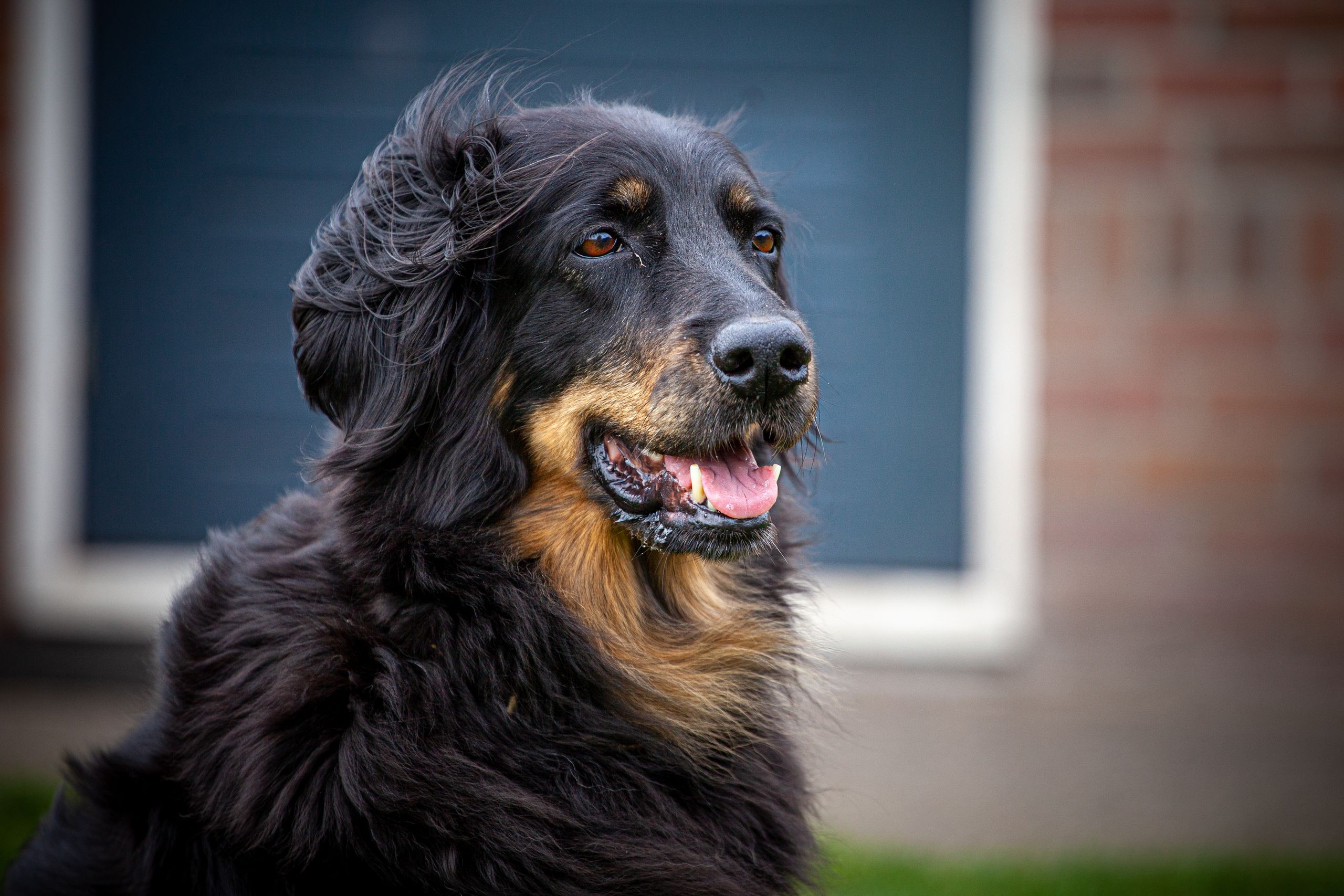
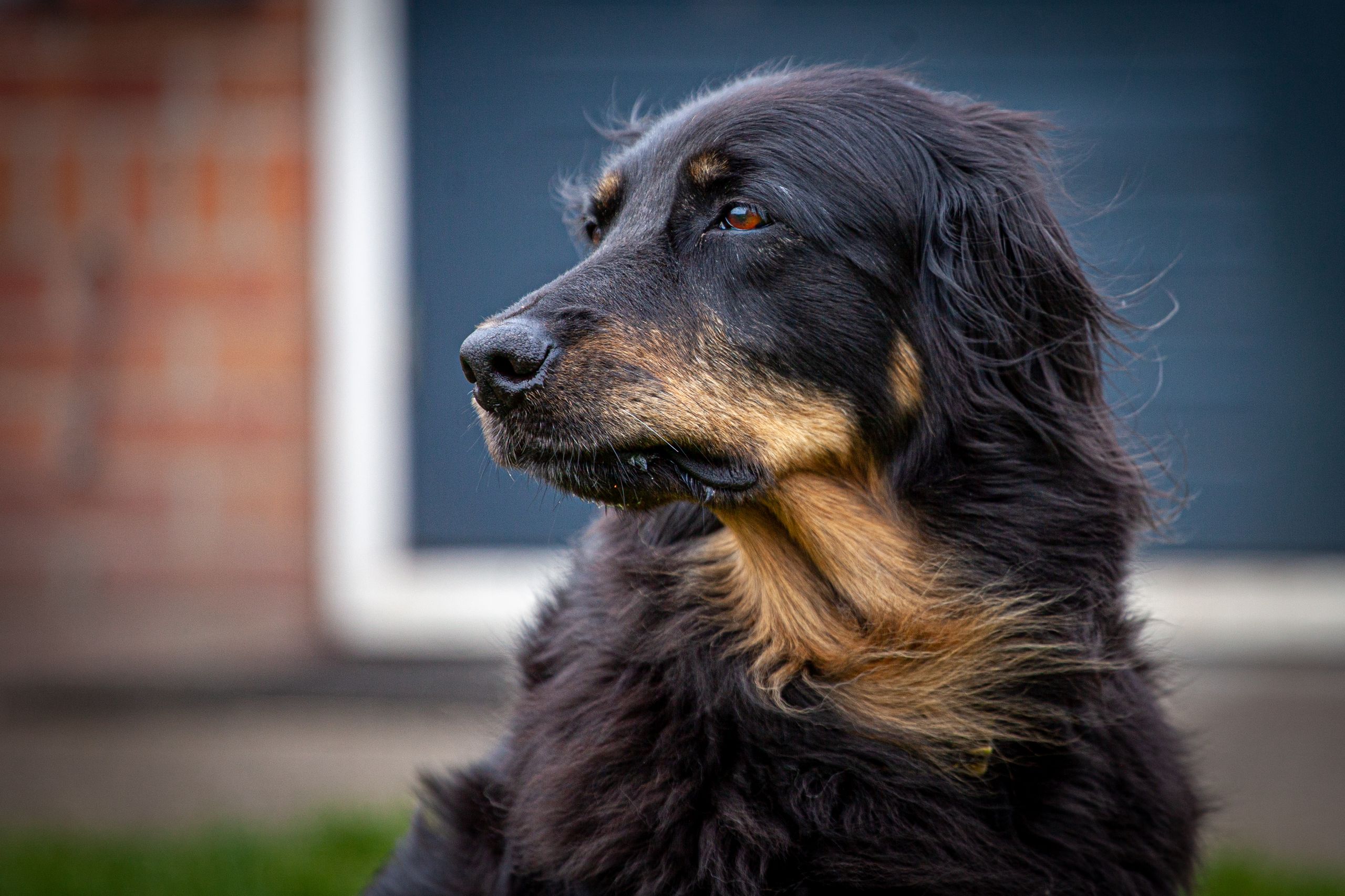
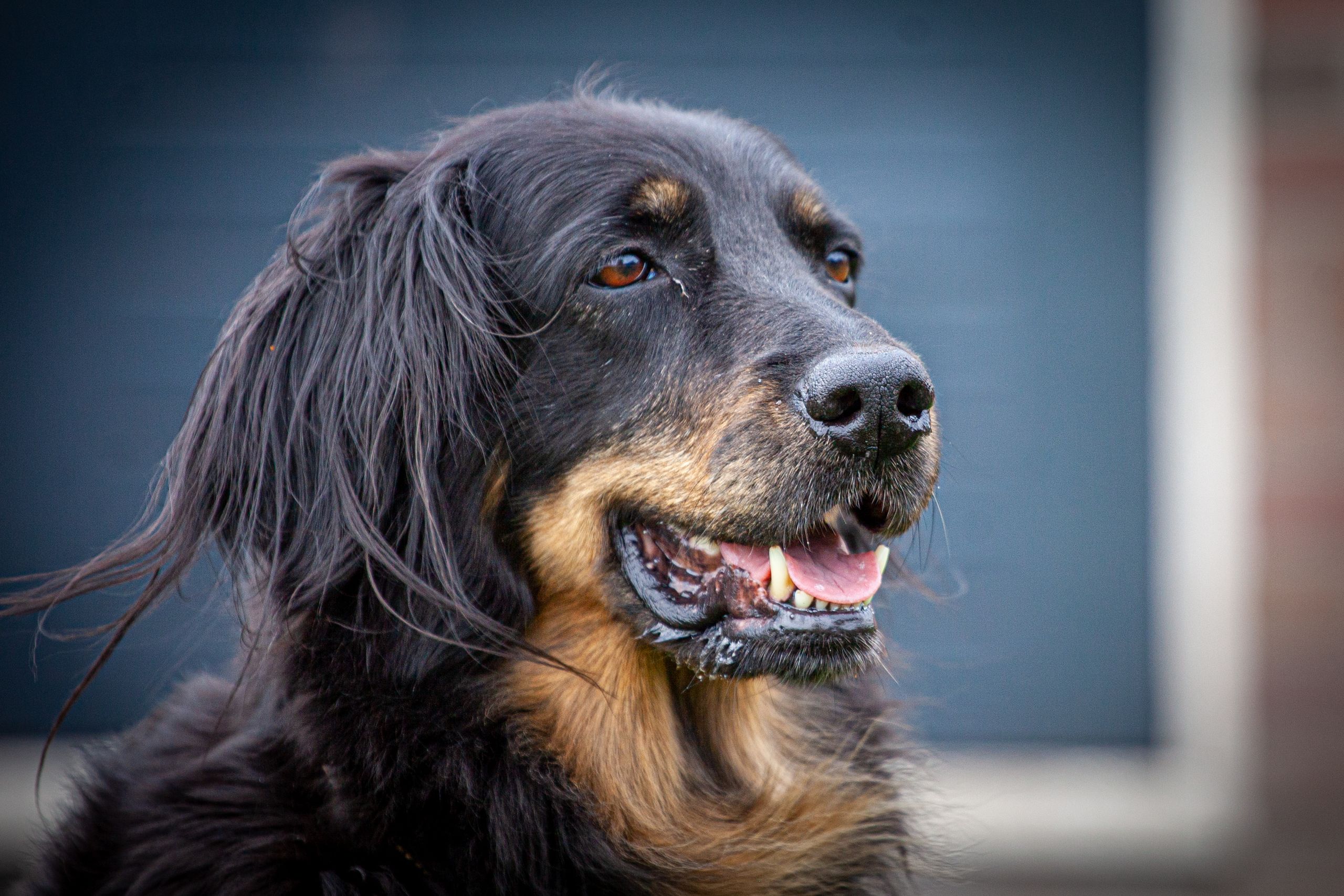
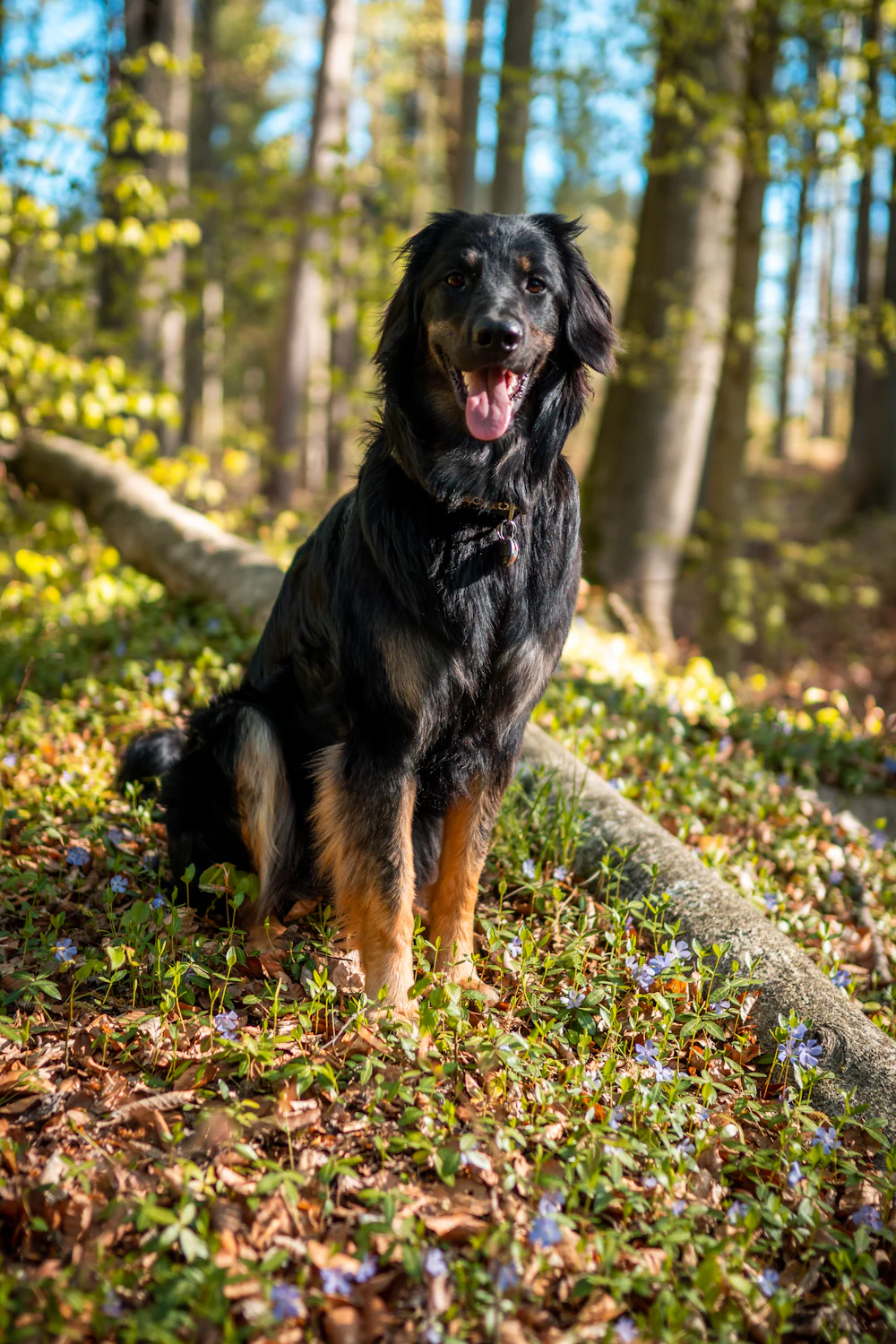
The FCI standard describes a long-haired, thick coat that is slightly wavy and lies flat, with longer hair on the chest, belly, tail and the back of the legs. Three colour varieties are recognised: black and tan, black, and blond. The coat is fairly easy to care for, with brushing two or three times a week to prevent tangles behind the ears and in the feathering.
Feeding and weight
A large breed puppy should be fed a diet suited to its size, in measured portions, so that it grows steadily rather than quickly. Adults do well on a good quality complete food, split into two meals to help reduce the risk of bloat. Keep the dog lean and visible at the ribs, as extra weight stresses the joints.
Work out a starting calorie figure and food weight with the calorie calculator. Not sure this is the right breed? Take the quiz.
Health
Every breed carries predispositions. These are the conditions most often discussed for the Hovawart, not a prediction for any individual dog.
- Hip dysplasia and elbow dysplasia, though responsible breeding has reduced hip problems
- Gastric dilatation and volvulus (bloat and stomach torsion)
- Hypothyroidism (underactive thyroid)
- Cancers, which breed clubs monitor
- Eye conditions such as cataracts
- Allergies and skin problems in some lines
What to ask the breeder. Ask for hip and elbow scores for both parents from an official scheme, ask whether the breeder belongs to a recognised Hovawart club, and ask about temperament, working titles and the causes of death in the relatives.
Choosing a puppy
It matures slowly, both physically and mentally, so you are raising the dog for two or three years rather than twelve months. Keep exercise short while the joints form, and avoid jumping and long stairs. Start socialisation immediately, with plenty of calm exposure to strangers, noises and other dogs.
In Luxembourg the national kennel club is the Fédération Cynologique Luxembourgeoise (FCL), a member of the FCI. Many owners also buy from breeders in Germany, France or Belgium; a puppy coming from another EU country must be microchipped and vaccinated against rabies, which in practice means it cannot travel before about fifteen weeks of age. Where to get a dog in Luxembourg.
The older Hovawart
Many Hovawarts stay active into their early teens, and a life of ten to fourteen years is commonly cited. In later years, expect stiffness in the hips, a slower pace and a greater need for rest. Keep up gentle daily walks, keep the dog lean, and use a non-slip floor and a supportive bed.
A realistic day
A realistic weekday for a working household in Luxembourg City, with a midday visit. Adjust it to your dog, not the other way round.
Toilet break and a calm 20 minute walk, then breakfast. Wait before any harder play.
Owner leaves for work. The dog settles by the window or the door with a chew toy and a puzzle feeder.
Midday visit from a walker: toilet break, a 40 minute walk with sniffing and a few training exercises, fresh water.
Main walk of the day, up to an hour in the park or forest, followed by training, tracking or a game in the evening.
Last toilet break, a brush if needed, and bed in the room where the family is, which this breed prefers.
A Hovawart in Luxembourg
A Hovawart can adapt to flat life only if its daily exercise and company are secure. A big, quiet dog in a lift is fine, but a bored one will bark at every footstep in the corridor, and the breed's watchful nature means it notices everything. Flats with a lift, quiet neighbours and a short walk to open green space are much more realistic than a top floor walk-up.
The countryside around the city suits the breed well. The Grünewald and Bambësch forests are ideal for long, varied walks, and the Pétrusse valley and Parc Merl give a calm, urban alternative. In summer, with temperatures in the 30s, walk early and late, as the long coat makes heat a problem. Meeting strangers, cyclists and other dogs on narrow city paths is part of daily life, so careful socialisation pays off.
Every dog in Luxembourg must be identified, declared to the commune and covered by liability insurance. How registration works.
When you travel
A sitter must be someone the dog can come to trust, so arrange a meeting before the first booking, and ideally a trial visit with the owner present. The dog may be reserved with strangers at first, so a sitter should approach calmly and not force contact. Keep to the usual routine of two meals, two or three walks and some training. Make sure the dog cannot slip out of the gate or garden, and leave the vet's details and written instructions about the dog's guarding habits.
PAWLY's holiday and overnight care takes place in your home, so your dog keeps its own bed and routine.
Myths and facts
MythA Hovawart is a guard dog, so it will protect the house on its own.
FactIt is watchful and protective by nature, but a well bred and well socialised dog is calm and discriminating. Training aggression is neither needed nor wise, and the standard calls for a good-natured, even disposition.
MythIt is just a golden Labrador with a longer coat.
FactThe Hovawart is a guardian breed, more reserved with strangers, slower to mature and less eager to please. It suits experienced owners better than a first-time owner who wants a friendly greeter.
MythHovawarts are rare because they are difficult.
FactThey are less common outside Germany and neighbouring countries, but they are not difficult for someone willing to train and socialise carefully. They simply need an owner who takes the job seriously.
Is it the right dog for you?
Suits
- Active owners who enjoy hiking and training with their dog
- Experienced owners who want a loyal, watchful family dog
- Households with a garden or easy access to forest walks
- People who can give the dog company for most of the day
Think twice if
- You want a dog that greets every stranger with enthusiasm
- You live in a small flat or have a busy shared stairwell
- You are away from home for long hours without a dog visit
- You are a first-time owner unwilling to invest in training
Questions owners ask
How big is a Hovawart?
The FCI standard gives a height of 63 to 70 centimetres for males and 58 to 65 centimetres for females. The current standard does not state a weight, but the dog is a strong, medium heavy large breed with a lot of coat.
Is a Hovawart good with children?
Usually very good with children it knows, and protective of them. It can be less patient with unfamiliar children and their noisy games, so supervise and teach children to respect the dog.
Do Hovawarts need a lot of exercise?
Yes, about an hour and a half to two hours a day, with some mental work. Walks, hiking, tracking and obedience all suit them. A bored Hovawart will invent its own entertainment.
Is the Hovawart a first-time dog?
It can be, but only for an owner who is willing to take training seriously, and to start socialisation early. Its reserve with strangers and slow maturing make it more demanding than the average family dog.
Sources
Photo: Pexels (Pexels License) · Photo: Pexels (Pexels License) · Photo: Pexels (Pexels License) · Photo: Unsplash (Unsplash License)
General information for dog owners in Luxembourg, not veterinary or legal advice. Official facts (origin, size, group, history and temperament as described by the breed standard) follow the FCI standard; health and care sections reflect breed-club and veterinary guidance and are typical ranges rather than rules. For your own dog, ask your vet, the breed club or your commune. How this guide is written and checked. Last reviewed 8 October 2026.
Need someone for your Hovawart?
PAWLY offers an individual 45-minute walk or a home visit at your dog's pace, the same walker every time, and a written report with photos after every visit, across Luxembourg City.
Read next: the journal, for the Hovawart
All articles
Dogs in hot weather: the Luxembourg summer guide
The Hovawart carries a heavy coat or a heavy frame, which makes a Luxembourg summer the hard season.

The front door: barking, deliveries and escapes
A watchful breed reacts at the door; this is how to manage it.

Dog first aid: the six emergencies and what to do first
Bloat is an emergency in deep-chested breeds like the Hovawart; this covers what cannot wait.
Similar breeds
All 198 breeds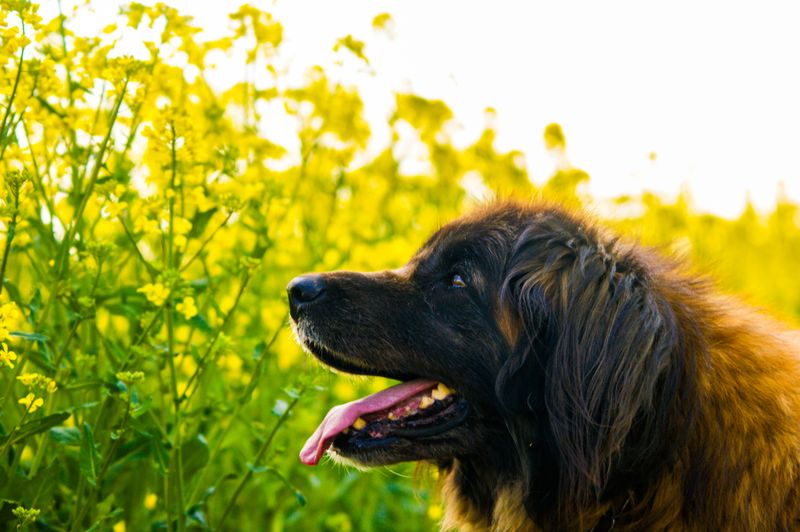
Leonberger
A lion-coloured giant with a black mask and a surprisingly gentle manner, happiest as an unhurried companion who is never left out of anything.
EnergyGroomingFlat life
German Shepherd
Intelligent, loyal and built to work. In the right hands one of the finest dogs there is; without a job, a handful.
EnergyGroomingFlat life
Bernese Mountain Dog
A gentle Swiss giant, beautiful and good-natured, with a sadly short life expectancy.
EnergyGroomingFlat life

