
History
The FCI standard traces the breed's ancestors to dogs said to have been given by Korean rulers of the Silla dynasty to the Japanese court in 732. It also records that envoys returning from China under the Tang dynasty and from the Po H'ai dynasty brought back dogs of this type. So the Chin is Japanese in development, but its roots are continental. The standard places the breed's origin in Japan, and lists it in FCI Group 9, Section 8, together with the Pekingese.
The breed was refined as an indoor toy dog at Edo Castle during the time of the shogun Tsunayoshi Tokugawa, who ruled from 1680 to 1709. The standard says that Commodore Perry brought several dogs to America in 1853 and presented two to Queen Victoria, which is how the breed reached the West. It adds that since 1868 the Chin has been favoured as a companion by upper-class women, a role that still suits it well. The Chin was never a working dog, and that history shows in every line.
Temperament
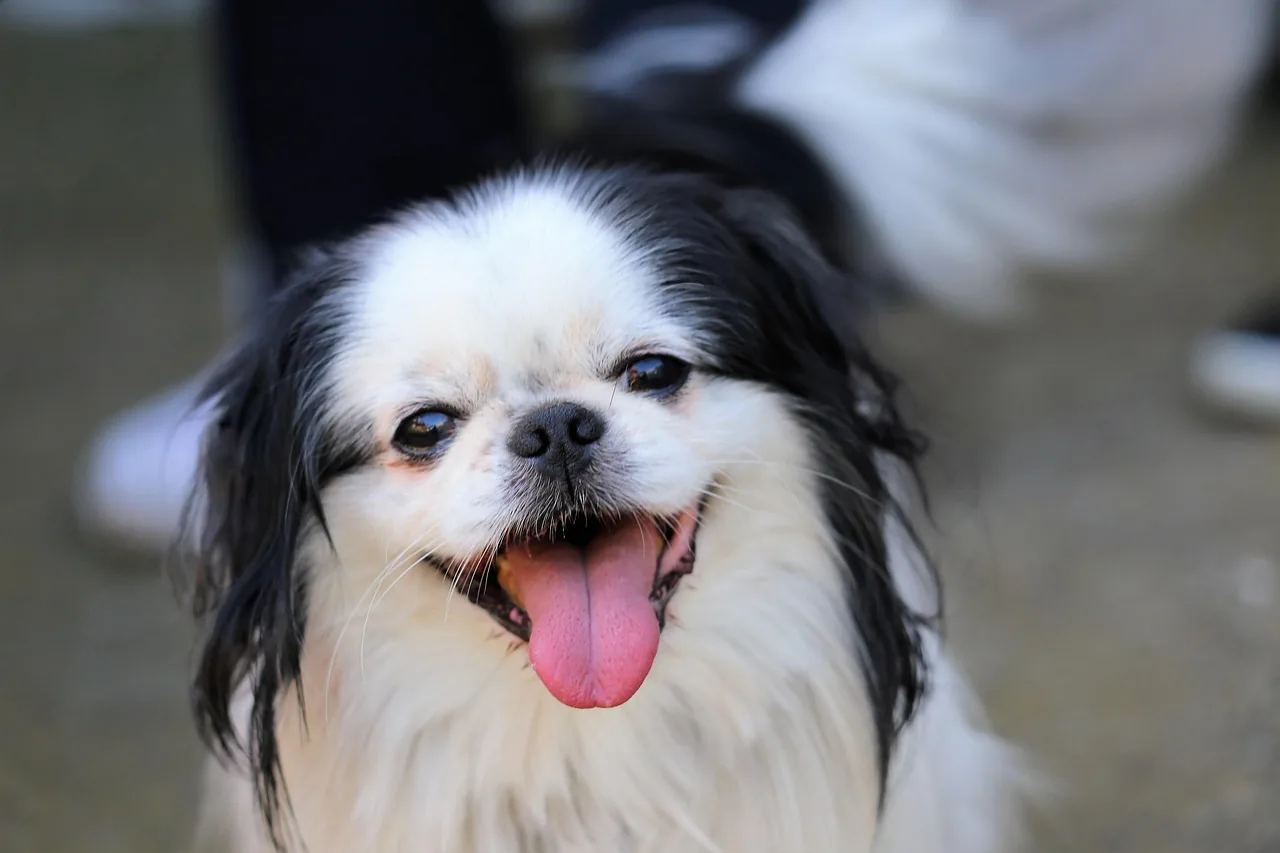
The FCI sums up the breed's character in three words: clever, mild and lovely. Anyone who has lived with one will add independent. Chins are often described as cat-like, and the comparison is fair: they wash their faces with a paw, perch on the back of the sofa to watch the room and choose their moments for affection. They are reserved with strangers, dislike rough handling and shrink from noisy, chaotic households.
With their own people they are devoted, and many follow the owner from room to room. They are alert and will bark at a ring of the doorbell, but they are not yappy by nature. The standard also lists excessive shyness as a disqualifying fault, a reminder that this is a gentle dog, not a timid one, and that good early socialisation matters. A Chin is happiest in a calm home with a routine that rarely changes.
Children and other pets
Japanese Chins suit homes with adults or considerate older children who are gentle and quiet. Their small body and sensitivity make them unsuitable for toddlers, who may grab, squeeze or drop them, and a nervous dog will withdraw or snap if cornered. With other dogs they are usually peaceful, and many live happily with a cat. They are not hunters, and prey drive is low. The best companion is often a calm dog or cat that does not bully.
Exercise and the daily walk
Half an hour a day is generally sufficient, split into two short walks and a few minutes of play indoors. The Chin is not built for endurance, and the short, broad face makes breathing harder in heat or effort. Keep walks gentle, slow down when the dog slows down and never ask a Chin to jog beside a bicycle or run for long periods on a warm day.
Indoor games are valuable. Roll a ball along the floor, hide treats, practise tricks and let the dog supervise from a perch. Use a harness rather than a collar, because pressure on the neck is unwelcome for a short-nosed toy dog. In summer, walk in the cool of early morning or late evening, carry water and avoid hot pavements. In cold weather a coat helps for the short outing.
Training
Chins are clever, but they are not eager to please in the way of some breeds, and they react poorly to loud voices or force. Use small treats, brief sessions and a calm tone. They enjoy learning tricks and often pick up commands quickly if they see a reason. Be consistent about house rules, and avoid making sessions repetitive or tiring, since the dog may simply walk away.
House training can be slow for a small dog, so use a regular schedule and plenty of rewards. Accustom the puppy early to handling of the feet, face, ears and teeth, since grooming and veterinary care are part of life. Socialise to lifts, buses and people in gentle steps and let the dog set the pace. Never force contact on a shy Chin.
Coat and grooming
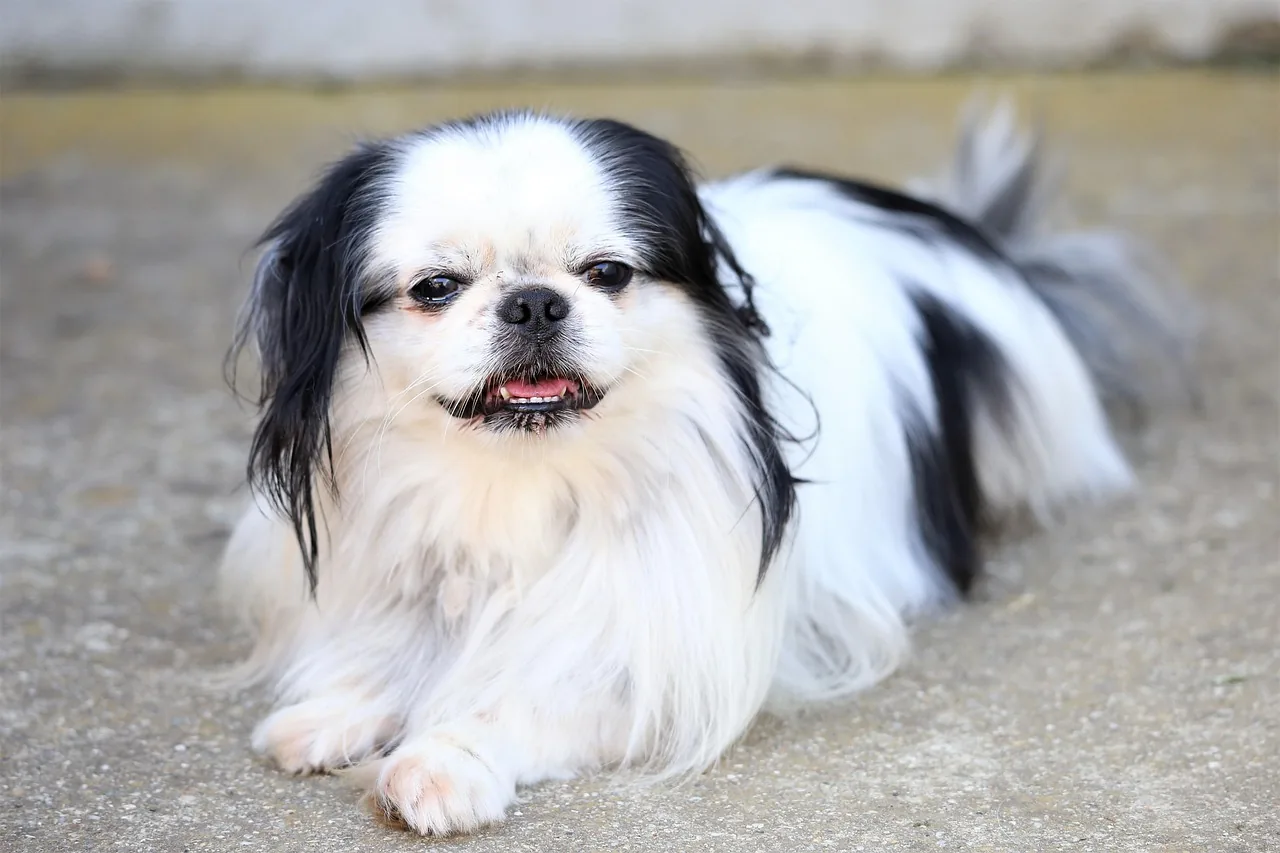
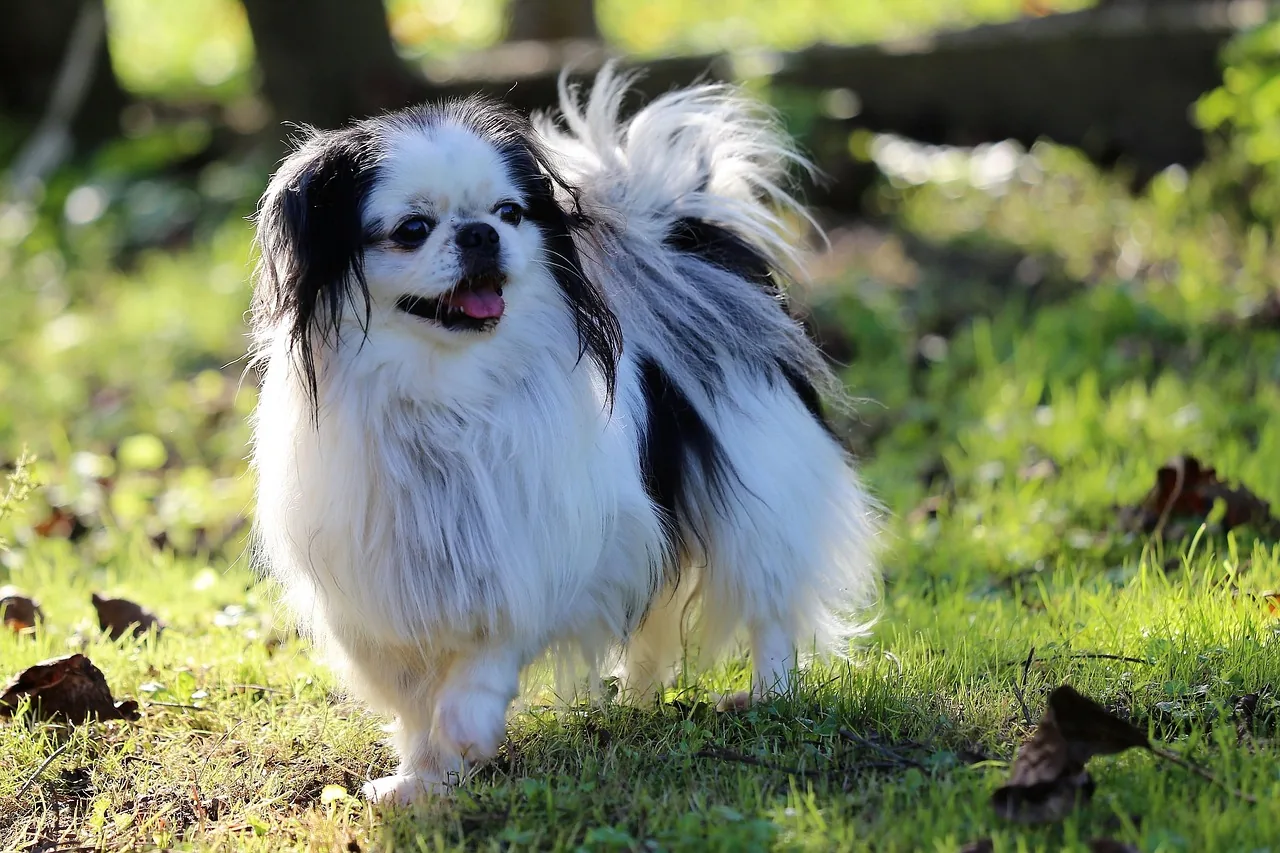
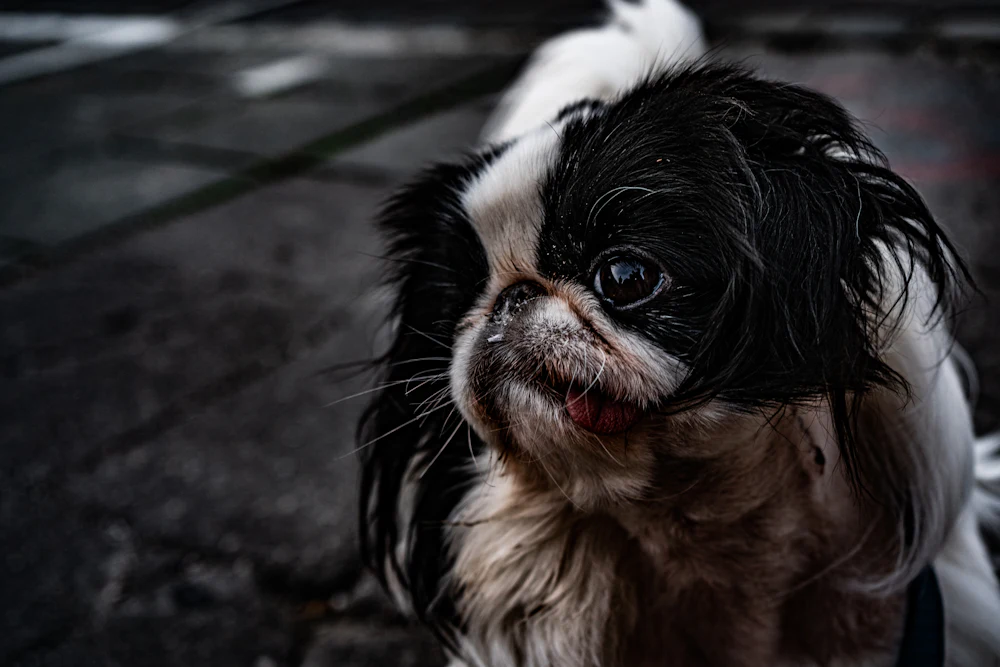
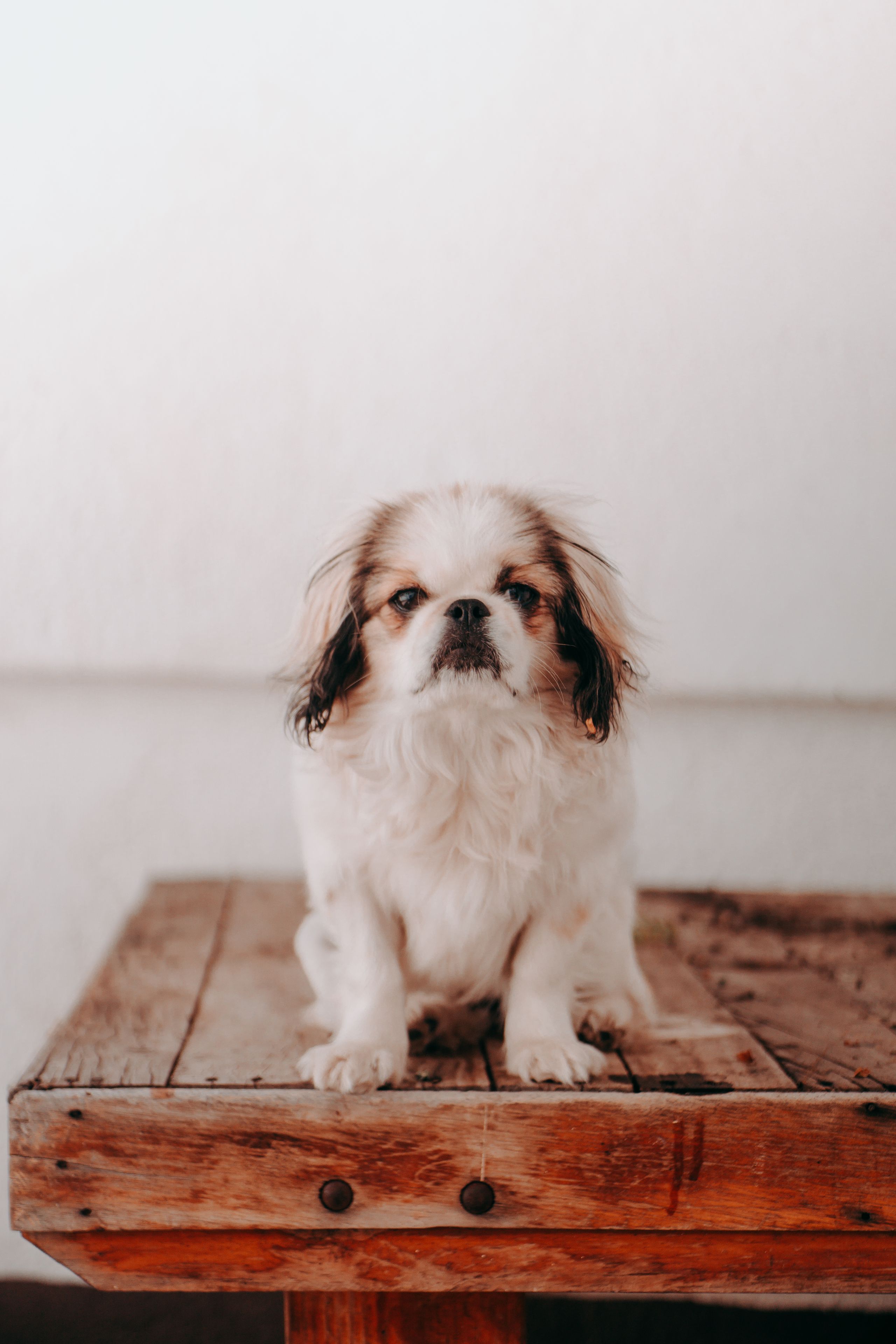
The FCI standard asks for silky, straight, long hair covering the whole body except the face, with profuse feathering on the ears, neck, thighs and tail. The colour is white with markings of black or red, evenly distributed, and a white blaze running from the muzzle to the crown is preferred. The coat sheds moderately, and it tangles behind the ears and in the feathering, so brush two or three times a week. Keep the eyes, face folds and nails clean, and bathe only occasionally.
Feeding and weight
Japanese Chins are small and can gain weight easily, so measure meals and avoid free feeding. Offer a good quality complete food in two or three small meals, which suits a tiny stomach, and count treats as part of the ration. Choose kibble sized for toy breeds, and keep fresh water available, especially in warm weather. Dental care matters, so ask the vet about chews or brushing. An overweight Chin struggles to breathe.
Work out a starting calorie figure and food weight with the calorie calculator. Not sure this is the right breed? Take the quiz.
Health
Every breed carries predispositions. These are the conditions most often discussed for the Japanese Chin, not a prediction for any individual dog.
- Brachycephalic airway problems (noisy or laboured breathing, especially in heat)
- Mitral valve disease, a heart condition that becomes more common with age
- Corneal ulcers and eye injuries, as the eyes are prominent
- Patellar luxation (a slipping kneecap)
- Sensitivity to anaesthetics and to heat
What to ask the breeder. Ask for heart checks and kneecap results for both parents, whether any dogs in the line have breathing or eye problems, and how long the breeder's dogs have lived.
Choosing a puppy
Choose a puppy with open nostrils, clear eyes and an easy, quiet manner, and check that it can breathe comfortably after play. Meet the mother and look at her face and eyes. Ask about heart and kneecap tests. At home, protect the puppy from falls off furniture and from larger dogs, use a harness and make introductions to people gentle and short. Start grooming and tooth care in the first weeks.
In Luxembourg the national kennel club is the Fédération Cynologique Luxembourgeoise (FCL), a member of the FCI. Many owners also buy from breeders in Germany, France or Belgium; a puppy coming from another EU country must be microchipped and vaccinated against rabies, which in practice means it cannot travel before about fifteen weeks of age. Where to get a dog in Luxembourg.
The older Japanese Chin
Older Chins slow down gently but remain fond of warmth and company. A yearly heart check is wise, as mitral valve disease is common in small breeds, and the vet may listen for a murmur. Watch for coughing, tiring on walks and changes in breathing. Clean the eyes, keep the dog cool in summer and offer soft steps to the sofa. Dental care becomes more important with age.
A realistic day
A realistic weekday for a working household in Luxembourg City, with a midday visit. Adjust it to your dog, not the other way round.
A short, gentle walk before the day warms up, then a toilet stop.
Breakfast, then a quick brush and a rest on a favourite cushion.
Midday visit: a toilet break, a little play and fresh water.
A second gentle walk in a park, with time to sniff at the dog's own pace.
Final toilet trip, a wipe of the face and bed.
A Japanese Chin in Luxembourg
A Japanese Chin is among the best breeds for a flat in Luxembourg City. It is small, quiet, clean and content with short walks, and it travels easily in lifts. Neighbours seldom complain. The main concern is heat: apartments with sun-facing windows can become uncomfortable in summer, so keep a shaded spot, fresh water and a cooling mat, and never leave the dog in a closed room or a parked car.
Gentle outings suit the breed. Parc Merl, Kinnekswiss and the quieter paths of the Pétrusse valley are all within reach, and walks are better in the early morning or after sunset when temperatures reach the thirties. Rain and cold are less of a worry than heat, though a small coat is useful in damp winters. Buses and trams are free, which makes short trips easy, and a carrier bag is useful on busy platforms.
Every dog in Luxembourg must be identified, declared to the commune and covered by liability insurance. How registration works.
When you travel
Chins are devoted and can be unsettled by an absence, so a sitter should be calm, quiet and consistent. Tell the sitter about the dog's heat sensitivity, its need for a harness and its dislike of rough handling. Keep to the usual schedule, protect the dog from falls and larger dogs, and provide a cool resting place in summer. Leave vet details and ask the sitter to watch breathing and eyes.
PAWLY's holiday and overnight care takes place in your home, so your dog keeps its own bed and routine.
Myths and facts
MythJapanese Chins are the same as Pekingese.
FactThey are related in appearance and share an FCI section, but they are separate breeds, each with its own FCI standard, and the Chin has its own history in Japan.
MythToy dogs do not need walks.
FactA Chin needs daily gentle exercise and mental stimulation, even if the distance is short.
MythThey are bad tempered.
FactThe standard calls them clever, mild and lovely. Problems tend to come from rough handling or poor socialisation.
Is it the right dog for you?
Suits
- Quiet households and older owners
- Flat dwellers who like a calm companion
- Adults or considerate older children
- People who enjoy a cat-like, watchful dog
Think twice if
- You have toddlers or a noisy household
- You like long runs or jogging with a dog
- You cannot keep a home cool in summer
- You want a dog that greets every stranger
Questions owners ask
Is a Japanese Chin good for a flat?
Very good. It is small, quiet and happy with modest exercise. Keep the home cool in summer and take the dog out for short, regular toilet trips. A quiet hallway helps.
How much does a Japanese Chin weigh?
The FCI standard does not give a weight, only a height of about 25 cm for males, with females slightly smaller. Published breed figures are typically around 1.8 to 3.5 kg.
Do Chins shed?
Moderately. The long, silky coat tangles behind the ears and in the feathering, so brushing two or three times a week is advisable. It does not need clipping. Check the ears and eyes weekly too.
Why do Chins struggle in hot weather?
The short, broad face limits cooling by panting, and the long coat adds warmth. Walk early and late, offer water and shade and stop at the first sign of heavy breathing.
Sources
Photo: Unsplash (Unsplash License) · Photo: GoranH / Pixabay (Pixabay Content License) · Photo: GoranH / Pixabay (Pixabay Content License) · Photo: GoranH / Pixabay (Pixabay Content License) · Photo: Pexels (Pexels License)
General information for dog owners in Luxembourg, not veterinary or legal advice. Official facts (origin, size, group, history and temperament as described by the breed standard) follow the FCI standard; health and care sections reflect breed-club and veterinary guidance and are typical ranges rather than rules. For your own dog, ask your vet, the breed club or your commune. How this guide is written and checked. Last reviewed 8 October 2026.
Need someone for your Japanese Chin?
PAWLY offers an individual 45-minute walk or a home visit at your dog's pace, the same walker every time, and a written report with photos after every visit, across Luxembourg City.
Read next: the journal, for the Japanese Chin
All articles
Dogs in hot weather: the Luxembourg summer guide
Flat-faced and short-nosed breeds like the Japanese Chin overheat quickly, which matters in a Luxembourg summer.

Dogs in apartment buildings: the rules, the neighbours and the noise
Flat life is one of the Japanese Chin's strengths, but building rules and neighbours still count.

Small dogs, and the training they never get
Small dogs are often the least trained; worth reading before habits set in.
Similar breeds
All 198 breeds
Pekingese
The Chinese palace lion dog: dignified, stubborn, devoted, and much sturdier in spirit than in size.
EnergyGroomingFlat life
Papillon
A toy dog with the brain of a working breed, quick to learn, keen to join in, and far tougher than its butterfly ears suggest.
EnergyGroomingFlat life
Cavalier King Charles Spaniel
One of the sweetest companion dogs there is, and a breed where choosing the breeder matters more than almost anywhere else.
EnergyGroomingFlat life

