
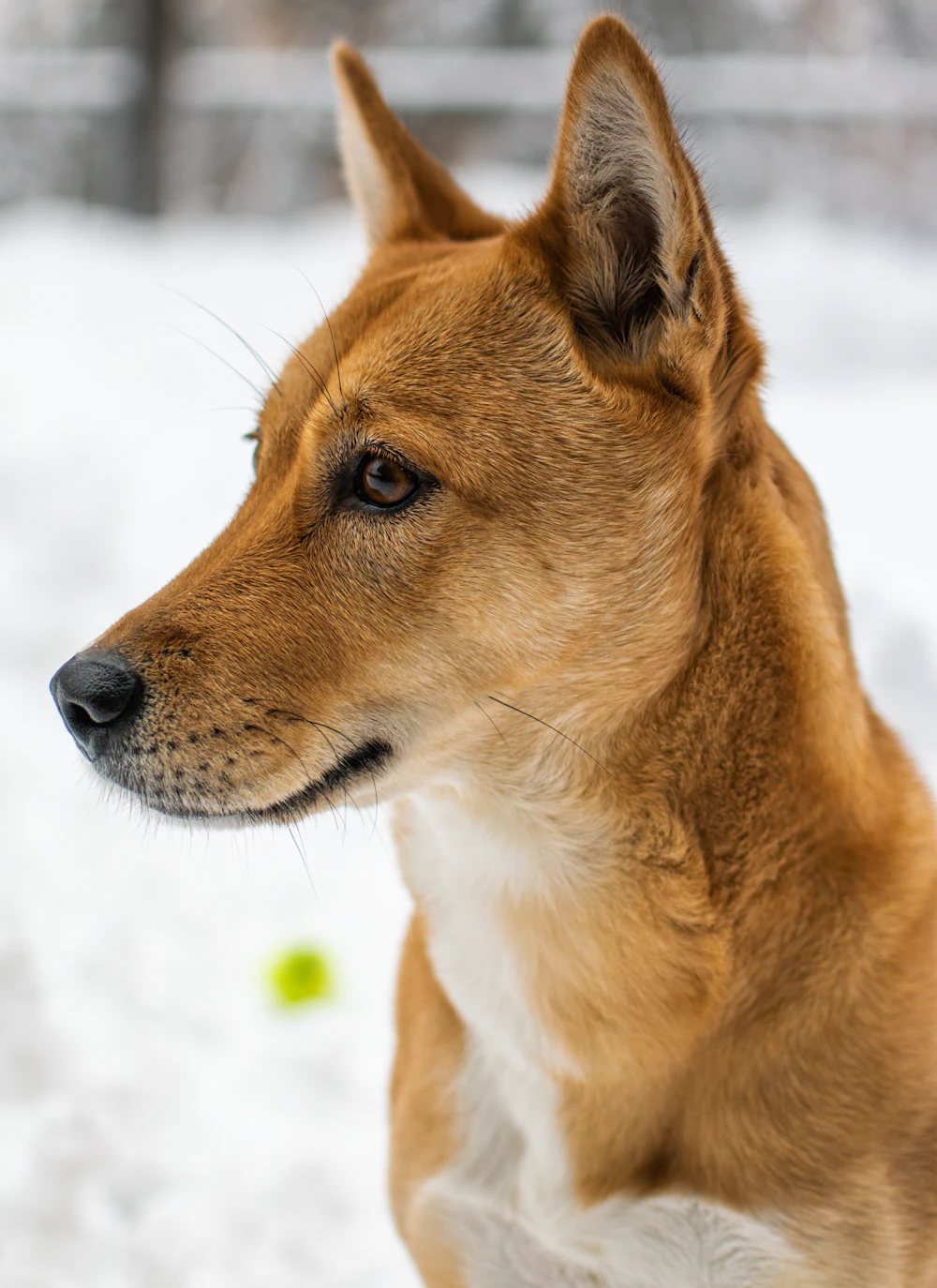
History
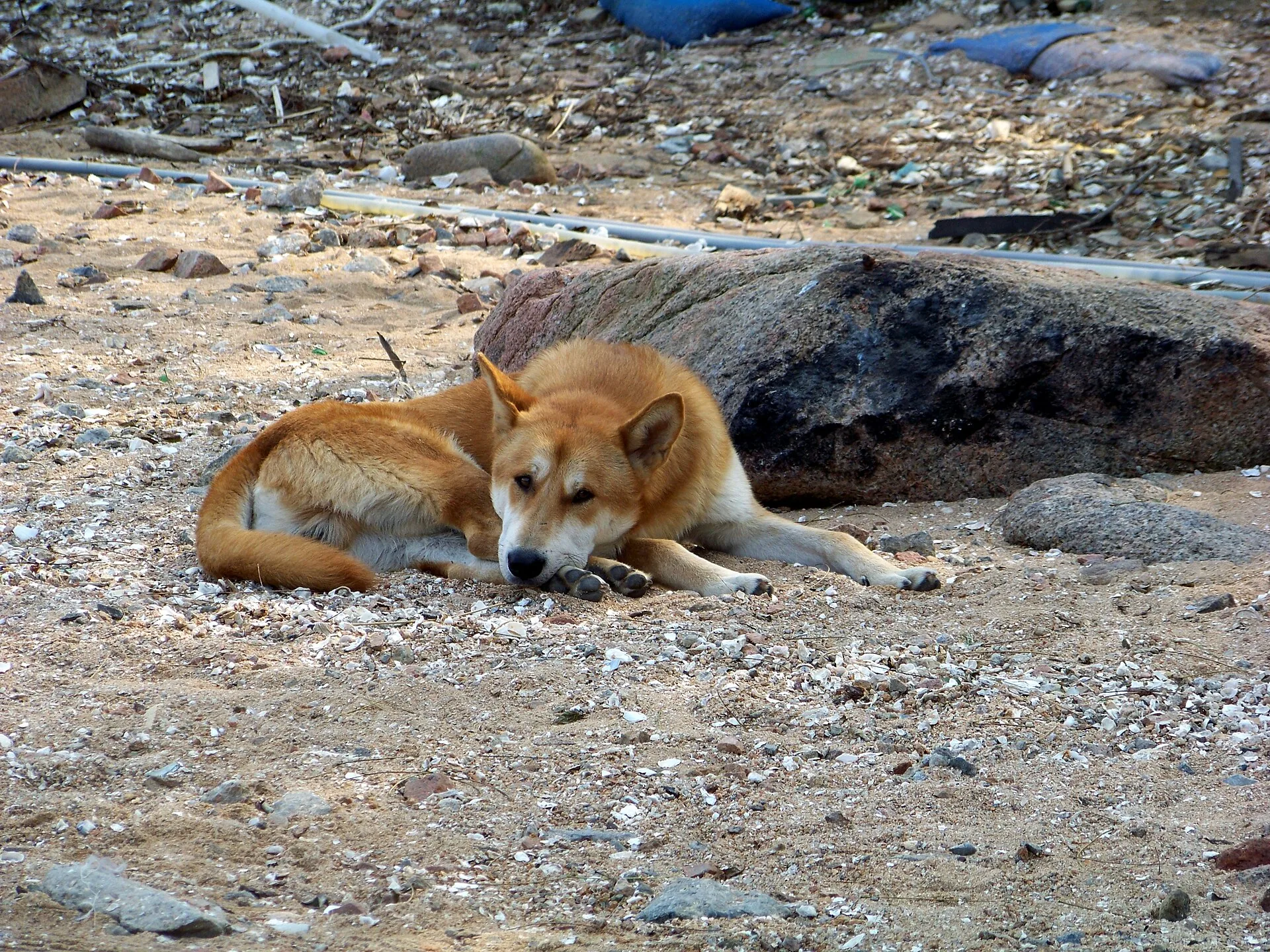
The FCI standard, in Group 5, Section 5, Asian spitz and related breeds, gives Korea as the country of origin and lists the Korea Jindo Dog as a hunting dog. It states that there is no written record of the breed's origin, but that many authorities agree it has existed for several thousand years on Jindo Island, at the south-western tip of the Korean peninsula.
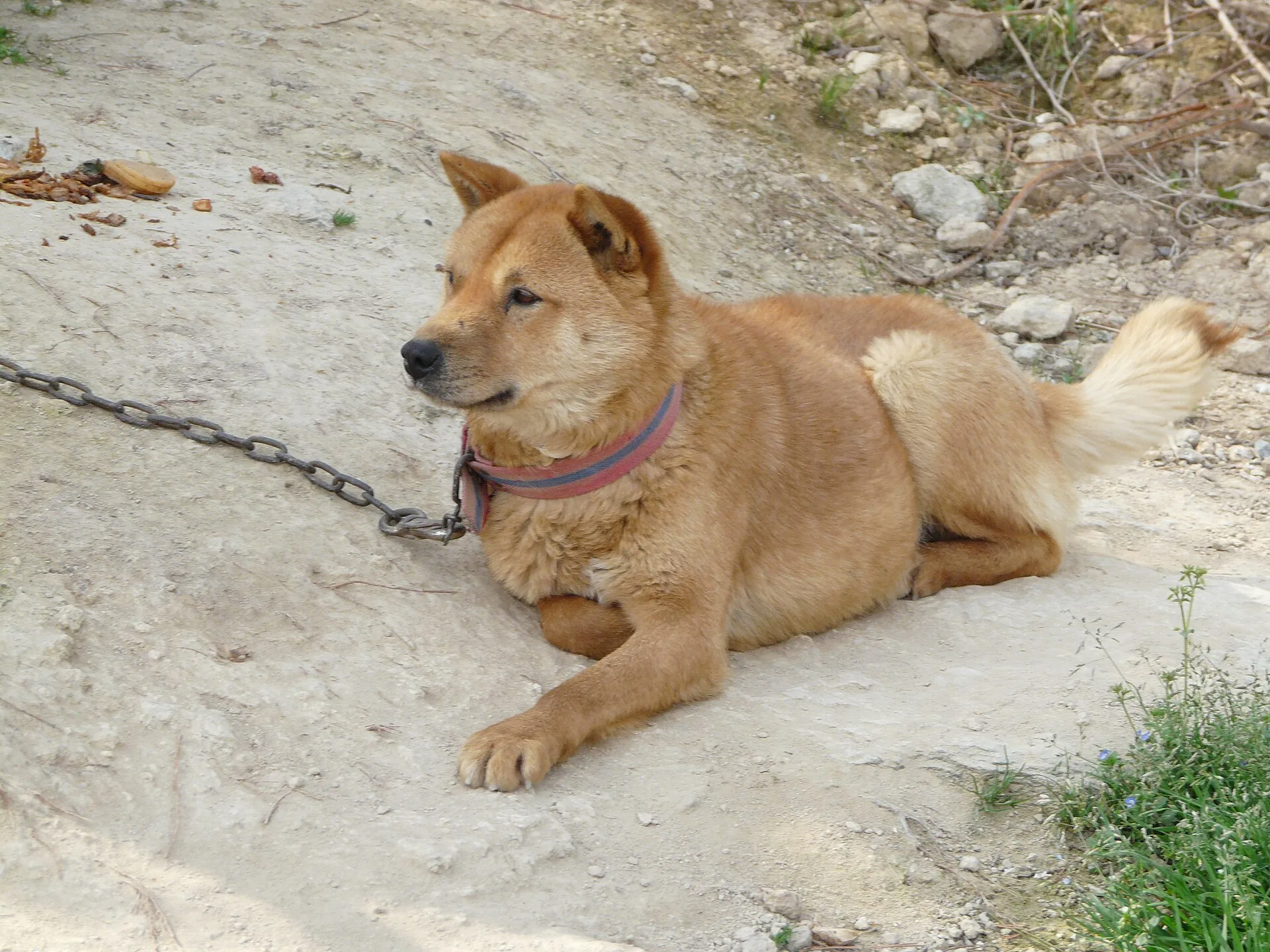
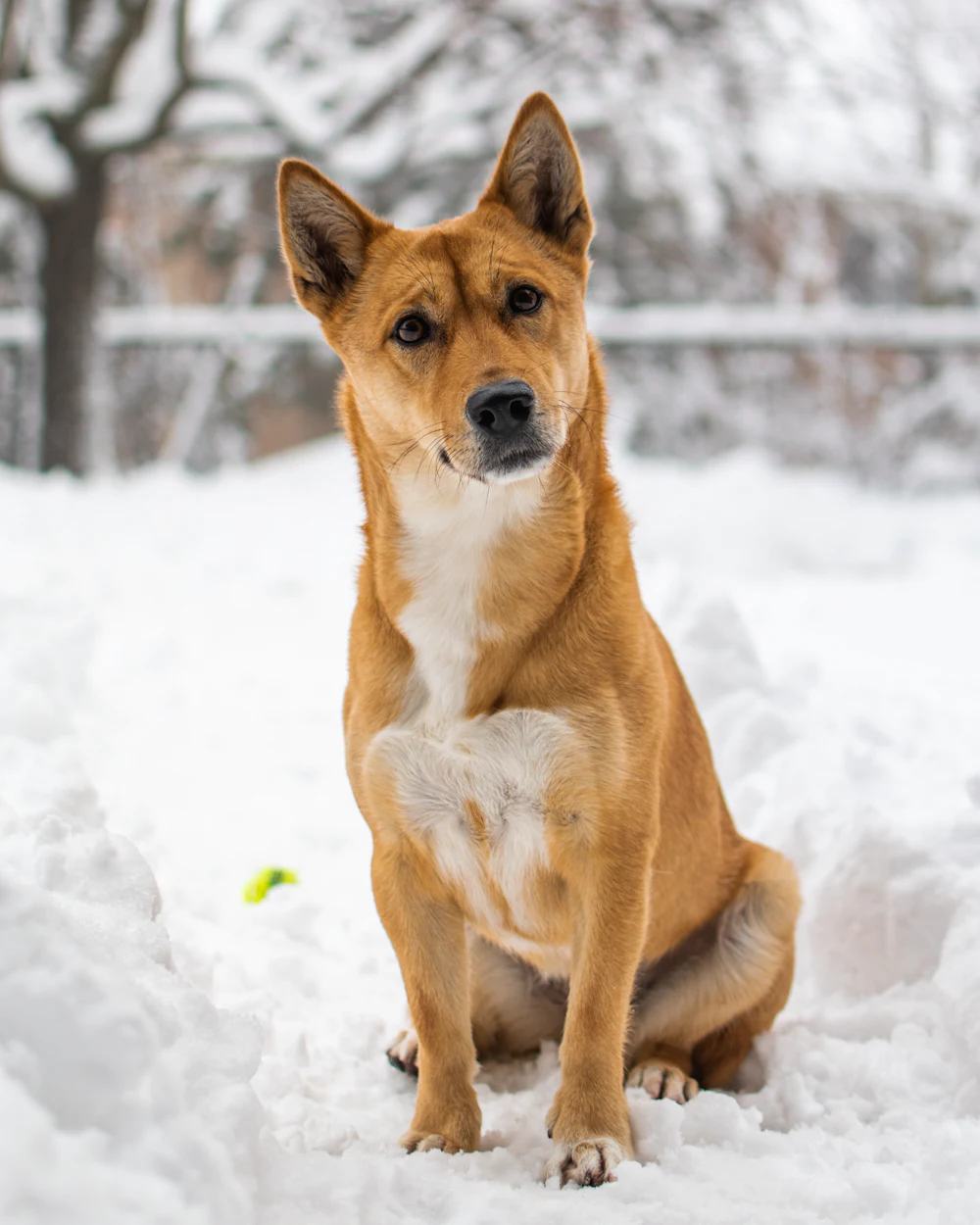
The island's isolation preserved the type, which the standard describes as a well-proportioned, medium-sized dog used for hunting and guarding, with erect ears and a rolled or sickle-shaped tail. Jindos are protected in Korea as a natural monument, and the breed is still strongly identified with the island. Outside Korea it is uncommon, and anyone seeking one in Europe should expect a long search and an import, and should be wary of unverified offers.
Temperament
The standard describes a dog with a very strong hunting instinct, bold, brave, alert and careful, extremely faithful to its master, and a one-man dog. It adds that the Jindo is not fond of other animals, especially males, and has an excellent sense of direction.
With its own people the Jindo is clean, quiet and dignified, cat-like in grooming and fastidious indoors. Outdoors it is sharp and quick. It will chase a squirrel or cat without hesitation, patrol a fence line, and test every gap. Many Jindos become dominant with unfamiliar dogs, particularly males, so they need careful introductions.
Children and other pets
A Jindo bonds closely with its own household, and it can be devoted to children it has grown up with, but it is not a tolerant dog for boisterous visiting youngsters. It dislikes rough handling and may guard resources, so teach children to leave it alone when it eats or rests. The FCI notes that the breed is not fond of other animals, and in practice other dogs of the same sex may be a problem. Cats outside the household are likely to be chased, and small pets are at risk.
Exercise and the daily walk
This is an active, athletic dog that needs at least an hour and a half of purposeful exercise daily, and many need two hours. A fenced garden is helpful but not a substitute for walks, since the Jindo's curiosity and sense of direction will lead it to explore beyond the garden if it can.
The hunting instinct means the dog should rarely be off-lead outside a secure area. A long line, a well-fitting harness and a secure double-clip lead are essential, and many Jindos are best kept on lead for life. Mental work such as scent games, tracking, obedience and agility keeps the dog engaged.
Training
The Jindo is intelligent, quick to learn and independent. It responds well to calm, consistent training that treats it as a partner, and it dislikes harsh methods and repetition. Establish rules early, particularly around doors, gates, resource guarding and lead behaviour, because an uncorrected habit in a clever, strong-willed dog can become a lasting problem.
Socialisation in the first year is crucial. Introduce the puppy to many people, places, dogs and noises gently, and reward calm behaviour. Do not expect to achieve full off-lead reliability, however good the training. Teach the dog to be comfortable on its own for short periods from the start, as a Jindo that is left alone too long may become destructive or vocal.
Coat and grooming
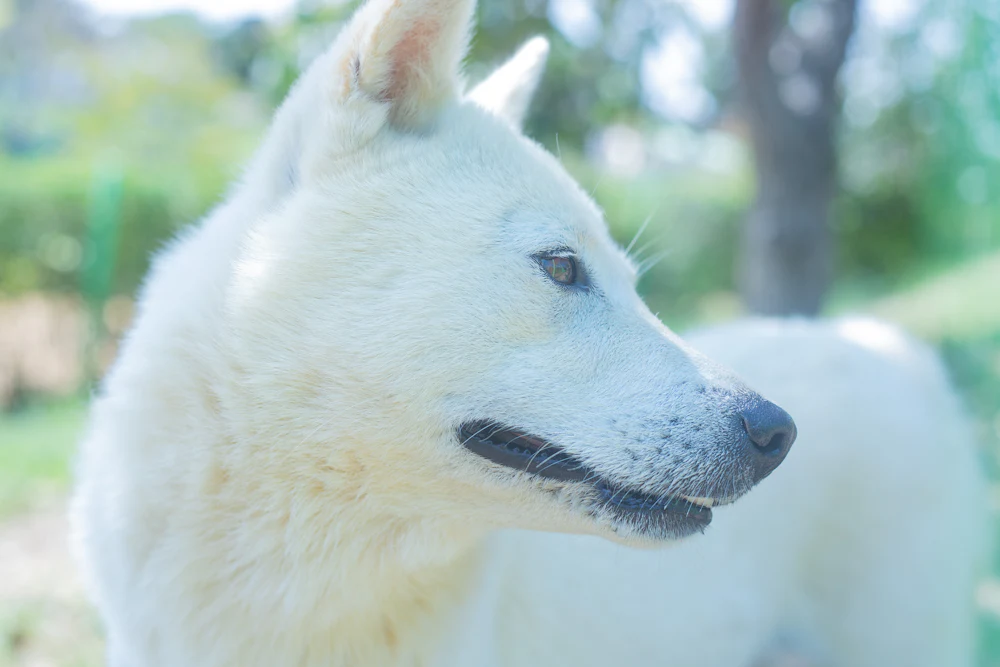
The coat is double, with a soft, dense, light undercoat and a stiff outer coat that stands off the body, shorter on the head and legs and longer over the neck, withers and back. Weekly brushing is usually sufficient, but the Jindo sheds heavily twice a year, when daily brushing is needed. The FCI permits red fawn, white, black, black and tan, wolf grey and brindle.
Feeding and weight
A medium, athletic dog needs a balanced, good-quality complete food in controlled portions that match its age and activity. Treats used in training should be counted in the daily ration, and rich or fatty foods avoided. Keep the dog lean, as the breed's athletic frame suffers from extra weight.
Work out a starting calorie figure and food weight with the calorie calculator. Not sure this is the right breed? Take the quiz.
Health
Every breed carries predispositions. These are the conditions most often discussed for the Korean Jindo, not a prediction for any individual dog.
- Hip dysplasia, a malformation of the hip joint that can cause lameness
- Allergic skin disease, with itching and recurrent skin or ear infections
- Inherited eye conditions, so regular eye checks are sensible
- Joint injuries from hard running, jumping and escaping over fences
- Limited breed-specific health data outside Korea, so ask carefully about family history
What to ask the breeder. Ask for hip scores and eye examination results for both parents, and what the breeder knows about longevity and temperament in the line. Because the breed is rare in Europe, also ask about pedigree, import history and registration, and be cautious of anyone who cannot document these.
Choosing a puppy
A Jindo puppy is clever, clean and quick, and it soon learns what the household does. Puppy-proof the home, secure the garden and prepare for chewing. Begin socialisation from the first week, with calm introductions to strangers, dogs, lifts and traffic. Keep play and walks short while the joints develop, avoiding stairs and jumping. Start training and gradual periods alone early, handle paws, ears and mouth daily and teach a calm settle. Early, positive experiences are particularly important in a breed that tends towards reserve.
In Luxembourg the national kennel club is the Fédération Cynologique Luxembourgeoise (FCL), a member of the FCI. Many owners also buy from breeders in Germany, France or Belgium; a puppy coming from another EU country must be microchipped and vaccinated against rabies, which in practice means it cannot travel before about fifteen weeks of age. Where to get a dog in Luxembourg.
The older Korean Jindo
Healthy Jindos often stay sharp and active into their teens. As they age, hips, joints, eyes and teeth deserve closer attention. Replace long runs with steady walks, supply a firm bed and keep the dog lean. Report stiffness, cloudy eyes, lumps or changes in appetite and thirst promptly. A twice-yearly vet check is sensible for senior dogs. Mental games and gentle routine help keep the dog engaged, though it may become even more reserved with strangers.
A realistic day
A realistic weekday for a working household in Luxembourg City, with a midday visit. Adjust it to your dog, not the other way round.
Toilet break and a brisk 30 to 40 minute walk before breakfast, on a harness and secure lead.
Breakfast and a chew or puzzle feeder while the household leaves; the dog usually settles and watches the street.
Midday visit: a proper 30 minute walk with scent games, a short training session and fresh water.
Main exercise of 60 to 90 minutes in the Grünewald or along the Pétrusse valley, on a long line.
Final toilet break, a calm settle and a quick brush during the moult season.
A Korean Jindo in Luxembourg
A Jindo can live in a Luxembourg flat if its owner is committed, because it is clean, quiet and fairly calm indoors once exercised. Without hard daily exercise and mental work, it becomes restless and may bark or destroy things. Lifts and busy entrances are not usually an issue, but meetings with neighbours' dogs need care, as the breed can be reactive in confined spaces. Free buses and trams help to reach forests and parks for proper outings.
The real challenge is escaping. A Jindo is a fast, agile climber and jumper that will exploit any gap in a gate, balcony or garden fence, so use secure fencing, double-check doors and keep it on lead near roads. In the Grünewald and Bambësch, wildlife is a constant temptation, so use a long line. The double coat is comfortable in winter but heavy in the 30s of summer, so walk early and late, offer shade and water, and brush daily in the moult.
Every dog in Luxembourg must be identified, declared to the commune and covered by liability insurance. How registration works.
When you travel
A sitter needs to know that a Jindo is devoted to one person and may be reserved or even uneasy with a stranger at first. Allow it to approach in its own time, keep strictly to its routine and use a secure harness with a double-clipped lead. Check every door, gate and window, as it is an excellent escape artist. Give it long walks and mental work, keep it away from unfamiliar dogs, and keep the vet's number to hand.
PAWLY's holiday and overnight care takes place in your home, so your dog keeps its own bed and routine.
Myths and facts
MythA Jindo is just a Korean Akita or Shiba.
FactIt is a distinct, ancient breed from Jindo Island, lighter and more agile than an Akita and larger and more athletic than a Shiba, with its own temperament and history.
MythA loyal dog will always come back.
FactLoyalty does not override the hunting instinct. The Jindo has a strong sense of direction and a powerful chase drive, and can disappear quickly if off-lead.
MythA one-man dog cannot be socialised.
FactEarly, careful socialisation matters even more with this breed. A Jindo can learn to be calm and polite with strangers, though it will usually remain reserved.
Is it the right dog for you?
Suits
- Experienced owners who enjoy active, independent breeds
- People who can provide secure fencing and long daily exercise
- Households with one main handler and calm routines
- Owners prepared for regular brushing during moult
Think twice if
- You have cats, rabbits or other small pets
- You want a dog that is friendly with every stranger and dog
- You expect reliable off-lead recall
- You are away at work for long hours every day
Questions owners ask
Is the Korean Jindo a good family dog?
It can be devoted to its own family and older children who respect it, but it is a one-person dog with a strong hunting instinct and not a tolerant dog for rough play or chaotic households.
Can a Jindo live in a flat?
Yes, if it receives long daily exercise and mental work and the owner is experienced. It is clean and quiet indoors, but it can become restless and destructive without enough activity.
Do Jindos escape?
Frequently. The breed is agile, clever and driven by scent and curiosity, so secure fencing, double-checked doors and a lead near roads are essential.
How big is a Korean Jindo?
The FCI standard gives males 50 to 55 cm and 18 to 23 kg, and females 45 to 50 cm and 15 to 19 kg, making it a medium-sized, athletic dog.
Sources
Photo: Unsplash (Unsplash License) · Photo: bein_korean, CC BY 2.0, via Wikimedia Commons · Photo: User:Piotrus, CC BY-SA 3.0, via Wikimedia Commons · Photo: Unsplash (Unsplash License) · Photo: Unsplash (Unsplash License)
General information for dog owners in Luxembourg, not veterinary or legal advice. Official facts (origin, size, group, history and temperament as described by the breed standard) follow the FCI standard; health and care sections reflect breed-club and veterinary guidance and are typical ranges rather than rules. For your own dog, ask your vet, the breed club or your commune. How this guide is written and checked. Last reviewed 8 October 2026.
Need someone for your Korean Jindo?
PAWLY offers an individual 45-minute walk or a home visit at your dog's pace, the same walker every time, and a written report with photos after every visit, across Luxembourg City.
Read next: the journal, for the Korean Jindo
All articles
Building a recall you can actually rely on
Scent and movement can cancel a recall; this is the method for the Korean Jindo.

Ears: the three signs that mean an appointment
Ear trouble is common in the Korean Jindo; these are the three signs that mean an appointment.

What a proper meet and greet actually involves
A reserved dog needs slow introductions to a new walker or sitter.
Similar breeds
All 198 breeds
Shikoku
A lean, sesame-coated Japanese hunter with a sickle tail and a boar-hunter's stamina, affectionate with its own person and relentless on a scent.
EnergyGroomingFlat life
Akita Inu
A dignified, loyal Japanese spitz, made famous by Hachikō, and a serious dog for experienced owners.
EnergyGroomingFlat life
Shiba Inu
Japan's ancient little hunting dog, clean and dignified, with a cat-like habit of deciding for itself when to listen.
EnergyGroomingFlat life

