History
The FCI lists the Kromfohrländer in Group 9, Companion and Toy Dogs, in a Section of its own, with Germany as its country of origin. According to the standard it is one of the most recent German breeds, internationally recognised since 1955. It was developed by Ilse Schleifenbaum, who lived near Siegen in North Rhine-Westphalia, and the name comes from the local district, called krom Fohr, meaning crooked furrow.
The standard traces its temperament to ancestral wire-haired Fox Terrier and Grand Griffon Vendéen lines. It is classified as a companion and house dog, not a working breed, which explains much about it: a dog bred to share a home, with a trace of hunting instinct left over. It comes in two coat varieties, rough and smooth, and remains uncommon outside Germany, where it has a small but devoted following.
Temperament
The FCI describes the Kromfohrländer as an adaptable, docile and high-spirited companion and house dog, somewhat reserved about strangers, with a little hunting instinct. Aggressiveness and timidity are both undesirable. In practice it is a people-oriented dog that likes to be involved, follows its family from room to room and is cheerful, lively and surprisingly sensitive to mood.
It can be reserved with visitors, and some individuals bark at unfamiliar sounds, so early socialisation matters. It does not enjoy being left alone for long hours and may become anxious or noisy. That said, it is not a demanding dog, and it adapts well to a household routine as long as it has company, exercise and something to think about. A touch of terrier stubbornness appears now and then.
Children and other pets
The Kromfohrländer is usually a good family dog, playful with children and sturdy enough for family life, though a small child should always be supervised with any dog. It tends to be sociable with other dogs when properly introduced. Because the standard mentions a little hunting instinct, small animals such as rodents may attract attention, while cats are usually accepted if introduced early. It does best in a home where someone is around for much of the day.
Exercise and the daily walk
An adult needs about an hour to an hour and a half of activity a day, including a proper walk, some play and some training. It is quick and willing, and it enjoys the same activities as many terrier and companion dogs: ball games, hide and seek, scent games and short hikes. It is not an extreme athlete, and a missed day is not a disaster, though a regularly under-exercised dog becomes bored and vocal.
Dog sports such as agility, obedience, rally and tracking suit the breed's intelligence and eagerness. Because of the hunting instinct, use a lead or a secure area until recall is reliable, as a rabbit or squirrel may be too tempting. Puppies need short walks and gentle play while the joints develop, avoiding hard jumping or long runs until about a year old.
Training
Training a Kromfohrländer is usually a pleasure, as it is clever, sociable and keen to please. Reward-based methods with short, varied sessions work best, while harsh handling can make a sensitive dog withdraw. Start early with socialisation to people, lifts, trams and other dogs, since the standard notes a certain reserve with strangers. Calm confidence and consistency bring out the best.
Focus on the areas where the dog needs help: a reliable recall, loose-lead walking and calm alone-time training from the first weeks, so that separation does not become a problem. Teach a quiet cue for barking at the door. Because of a little terrier stubbornness, keep sessions fun and rewarding. This is a good breed for a thoughtful first-time owner who is willing to attend classes.
Coat and grooming
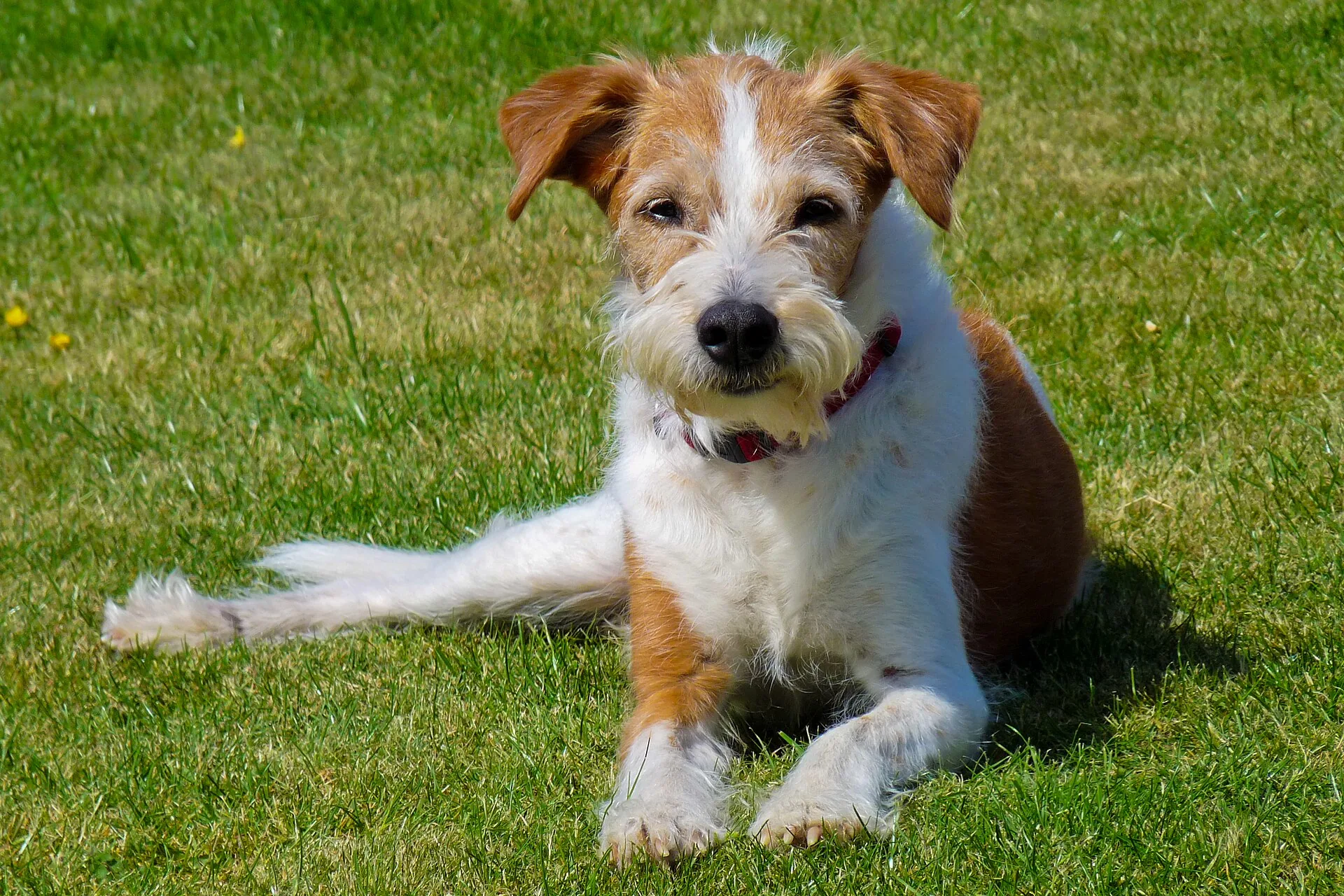
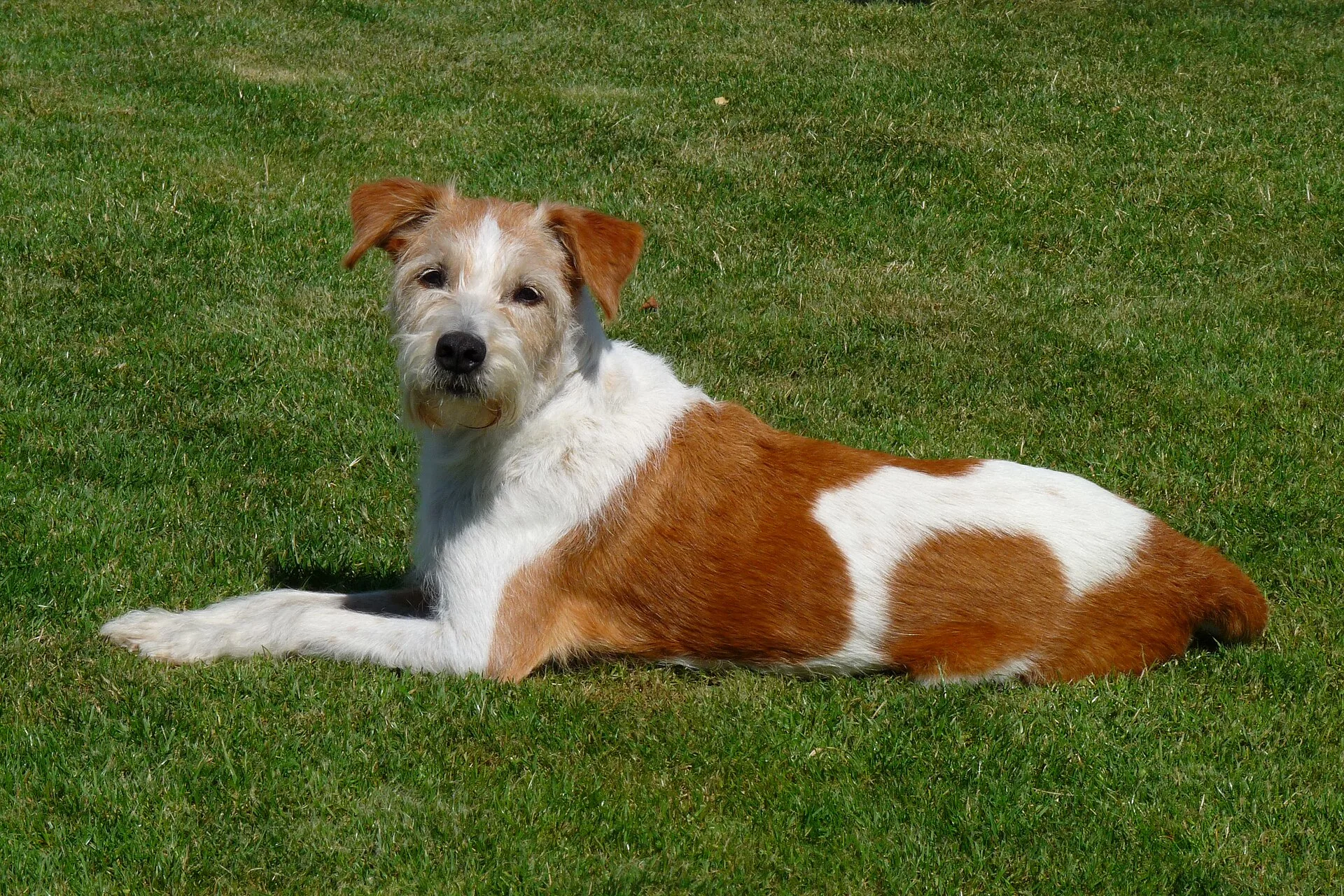
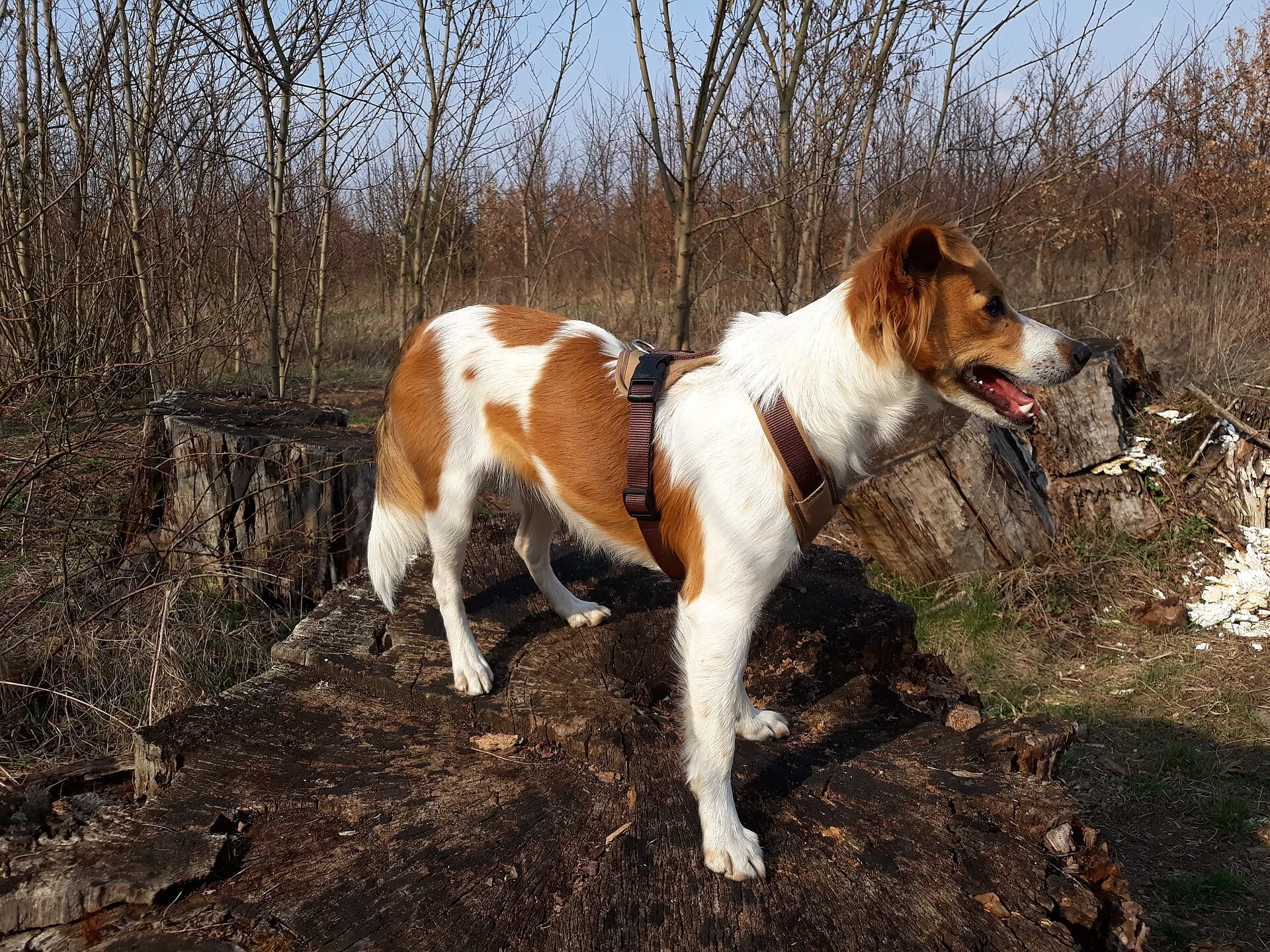
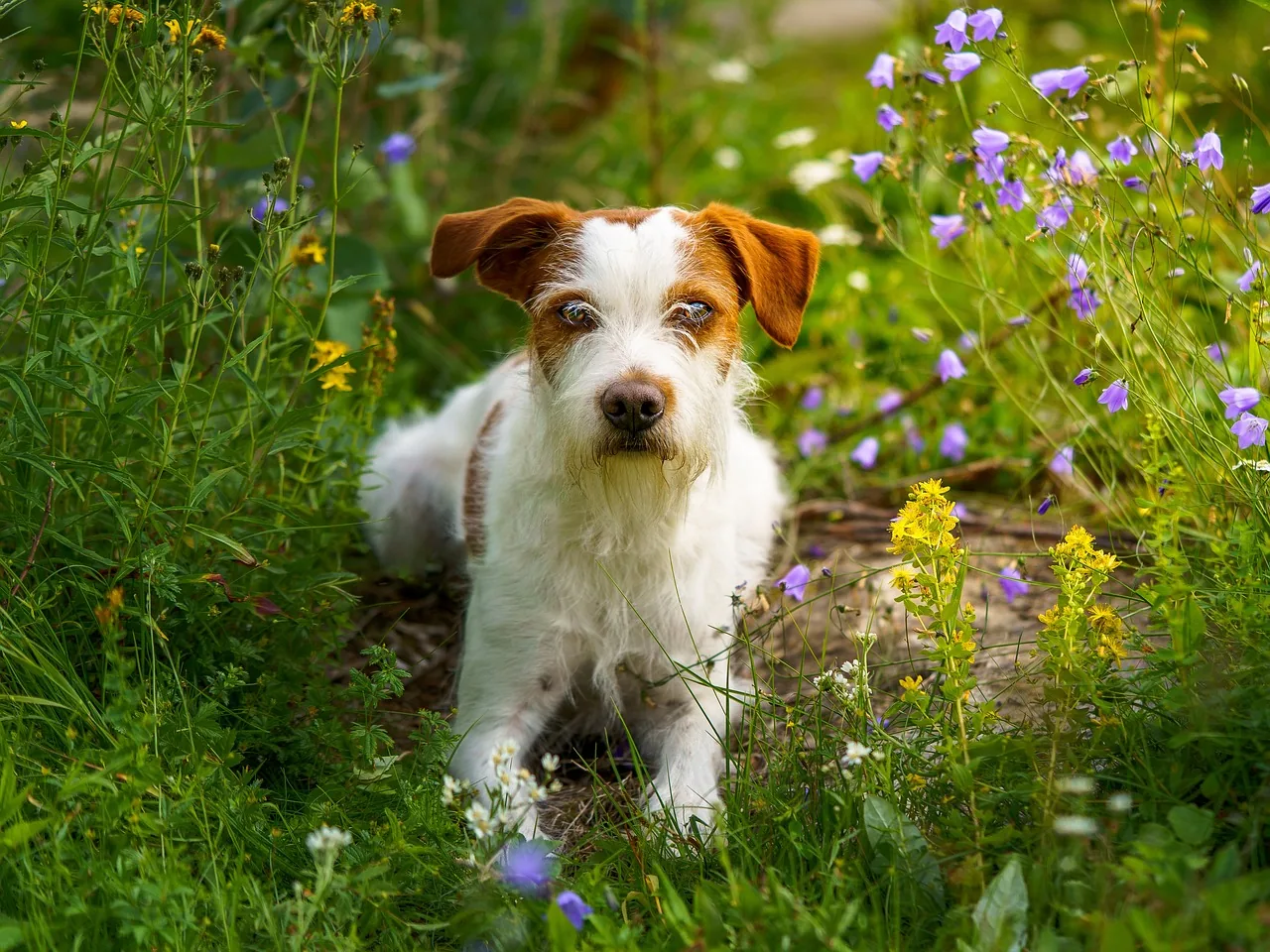
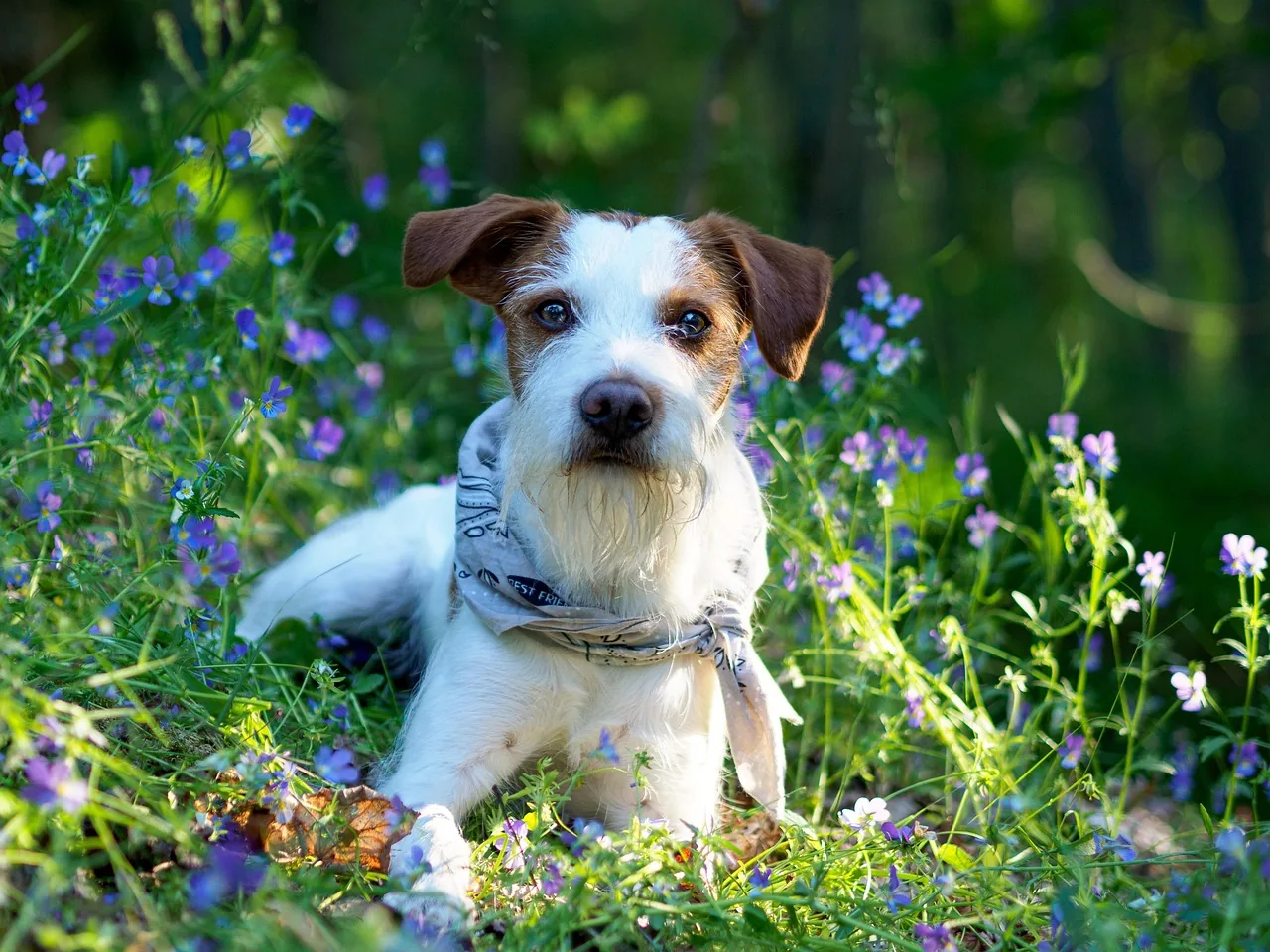
The FCI recognises two coat varieties, rough and smooth. Both are white with light brown, tan to very dark brown markings, forming patches or a saddle, and the face has symmetrical markings divided by a white blaze. The rough coat has a harsher texture and a beard, while the smooth coat is shorter. Brushing once or twice a week is usually enough, with occasional trimming for the rough variety. Shedding is moderate and bathing is rarely needed.
Feeding and weight
A complete, good-quality diet suited to a medium, moderately active dog works well, usually in two meals a day. The Kromfohrländer is sociable and enjoys food, so watch portions and training treats, and check body condition regularly by feeling the ribs. Fresh water should always be available. Avoid feeding table scraps, and adjust the amount as the dog ages and becomes less active.
Work out a starting calorie figure and food weight with the calorie calculator. Not sure this is the right breed? Take the quiz.
Health
Every breed carries predispositions. These are the conditions most often discussed for the Kromfohrländer, not a prediction for any individual dog.
- Patellar luxation (slipping kneecaps)
- Hip dysplasia
- Eye conditions such as cataract and progressive retinal atrophy
- Allergies and skin irritation
What to ask the breeder. Ask to see health results for both parents, including hip and patella examinations and eye certificates, and ask which breed club health programme the breeder follows.
Choosing a puppy
Kromfohrländer puppies are lively, affectionate and quick to learn. Socialise them widely with people, lifts, trams, traffic and other dogs before about sixteen weeks. Practise short periods alone from the first week, so that independence develops gradually. Provide chew toys, keep exercise gentle and avoid repeated jumping while the joints grow. Begin handling of paws, ears and coat early, and teach a quiet cue before barking becomes a habit.
In Luxembourg the national kennel club is the Fédération Cynologique Luxembourgeoise (FCL), a member of the FCI. Many owners also buy from breeders in Germany, France or Belgium; a puppy coming from another EU country must be microchipped and vaccinated against rabies, which in practice means it cannot travel before about fifteen weeks of age. Where to get a dog in Luxembourg.
The older Kromfohrländer
Many Kromfohrländer dogs stay active well into their teens, but from about ten expect a slower pace. Shorter, more frequent walks and a warm, supportive bed help joints and muscles. Watch weight and teeth, check eyes and hearing at the vet and mention any cough or breathlessness. Older dogs still enjoy company and gentle mental games, and many become even more attached to their families.
A realistic day
A realistic weekday for a working household in Luxembourg City, with a midday visit. Adjust it to your dog, not the other way round.
30-minute walk with a short training game, then breakfast.
Owner leaves; the dog settles on a bed with a chew toy.
Midday visit: 40-minute walk with ball or scent games, fresh water and a cuddle.
Evening outing of about 45 minutes with play and training, then dinner.
Calm toilet break, a quick brush and bed.
A Kromfohrländer in Luxembourg
A Kromfohrländer fits a Luxembourg flat well, provided it gets daily walks and company. It is medium sized, tidy, and adaptable, and it copes with lifts, stairs and busy pavements once socialised. Parc Merl, the Pétrusse valley and the Kinnekswiss park suit everyday outings, while the Bambësch and Grünewald forests are good for weekend walks. Free buses and trams make these easy to reach with a compact dog.
Its coat is moderate, so summer days in the 30s °C call for early and late walks and plenty of water, but it is not as heat-sensitive as heavy-coated breeds. Winter rain means wiping paws and legs. Being sociable, it dislikes long hours alone, so working households should plan a midday visitor. As everywhere in Luxembourg, the dog must be microchipped, declared to the commune and insured for third-party liability, and the commune charges an annual dog tax.
Every dog in Luxembourg must be identified, declared to the commune and covered by liability insurance. How registration works.
When you travel
A sitter must give this companionable dog plenty of attention, because it dislikes being left alone for long. Plan regular walks, a midday visit and play, and keep the dog on a lead or in a secure area, as it may chase small animals. Expect some barking at unfamiliar sounds, and reward calm behaviour. Leave the usual routine, feeding details and vet contacts in writing.
PAWLY's holiday and overnight care takes place in your home, so your dog keeps its own bed and routine.
Myths and facts
MythA Kromfohrländer is a type of terrier.
FactIt has terrier and griffon ancestry, but the FCI classes it as a companion and house dog in Group 9.
MythIt is a rare working dog that needs a job all day.
FactThe standard describes a companion and house dog, though it needs regular exercise and mental stimulation.
MythThe two coat types are different breeds.
FactRough and smooth coats are two varieties of one breed, with the same colours and temperament.
Is it the right dog for you?
Suits
- Families and singles who want a companion dog
- People who work partly from home
- Flat dwellers who walk every day
- Owners who enjoy gentle training and dog sports
Think twice if
- You are away from home for long hours
- You want a guard dog or a very independent dog
- You have small pets that are prey for terriers
- You dislike a dog that follows you around
Questions owners ask
Is a Kromfohrländer a good flat dog?
Yes, if it has daily walks and company. It is medium sized, adaptable and not excessively noisy, though it may bark at unfamiliar sounds and dislikes long periods alone.
What is the difference between rough and smooth coats?
Both are white with brown markings, but the rough coat is harsher with a beard, while the smooth coat is shorter. They are varieties of one breed with the same temperament, and both can appear in one litter.
Is it good with children?
Generally yes. It is playful, adaptable and sociable, though any dog needs supervision with small children, and the child should learn to respect the dog's space.
Does it shed a lot?
Moderately. Weekly brushing keeps the coat in order, and the rough variety may need occasional trimming. It is not hypoallergenic, as no dog is.
Sources
Photo: Marc Rünger, CC BY 3.0, via Wikimedia Commons · Photo: Marc Rünger, CC BY-SA 3.0, via Wikimedia Commons · Photo: Krominchen, CC BY-SA 4.0, via Wikimedia Commons · Photo: tjuusitalo / Pixabay (Pixabay Content License) · Photo: tjuusitalo / Pixabay (Pixabay Content License)
General information for dog owners in Luxembourg, not veterinary or legal advice. Official facts (origin, size, group, history and temperament as described by the breed standard) follow the FCI standard; health and care sections reflect breed-club and veterinary guidance and are typical ranges rather than rules. For your own dog, ask your vet, the breed club or your commune. How this guide is written and checked. Last reviewed 8 October 2026.
Need someone for your Kromfohrländer?
PAWLY offers an individual 45-minute walk or a home visit at your dog's pace, the same walker every time, and a written report with photos after every visit, across Luxembourg City.
Read next: the journal, for the Kromfohrländer
All articles
Separation anxiety: the signs owners miss and what actually helps
The Kromfohrländer bonds closely with its people; this covers the signs owners miss.

The itchy dog: working through it in the right order
Skin trouble is among the conditions discussed for the Kromfohrländer; this is the order to work through it.

The front door: barking, deliveries and escapes
A watchful breed reacts at the door; this is how to manage it.
Similar breeds
All 198 breeds
Jack Russell Terrier
A big dog in a small body: fearless, clever, endlessly busy and permanently looking for something to hunt.
EnergyGroomingFlat life
Wire Fox Terrier
Bright-eyed and permanently on tiptoe, a small working terrier with a big opinion of itself and a remarkable talent for entertaining a household.
EnergyGroomingFlat life
Petit Basset Griffon Vendéen
A shaggy, happy French scenthound with a big voice, a good nose and endless optimism.
EnergyGroomingFlat life

