

History
The Landseer takes its name from the English painter Sir Edwin Landseer, who painted black-and-white Newfoundland dogs in the 19th century. The FCI lists the breed under Germany and Switzerland as its countries of origin, and places it in Group 2, Section 2.2, among molossoid dogs of mountain type. The standard dates from 1997, and its working use is given as guard dog and companion.
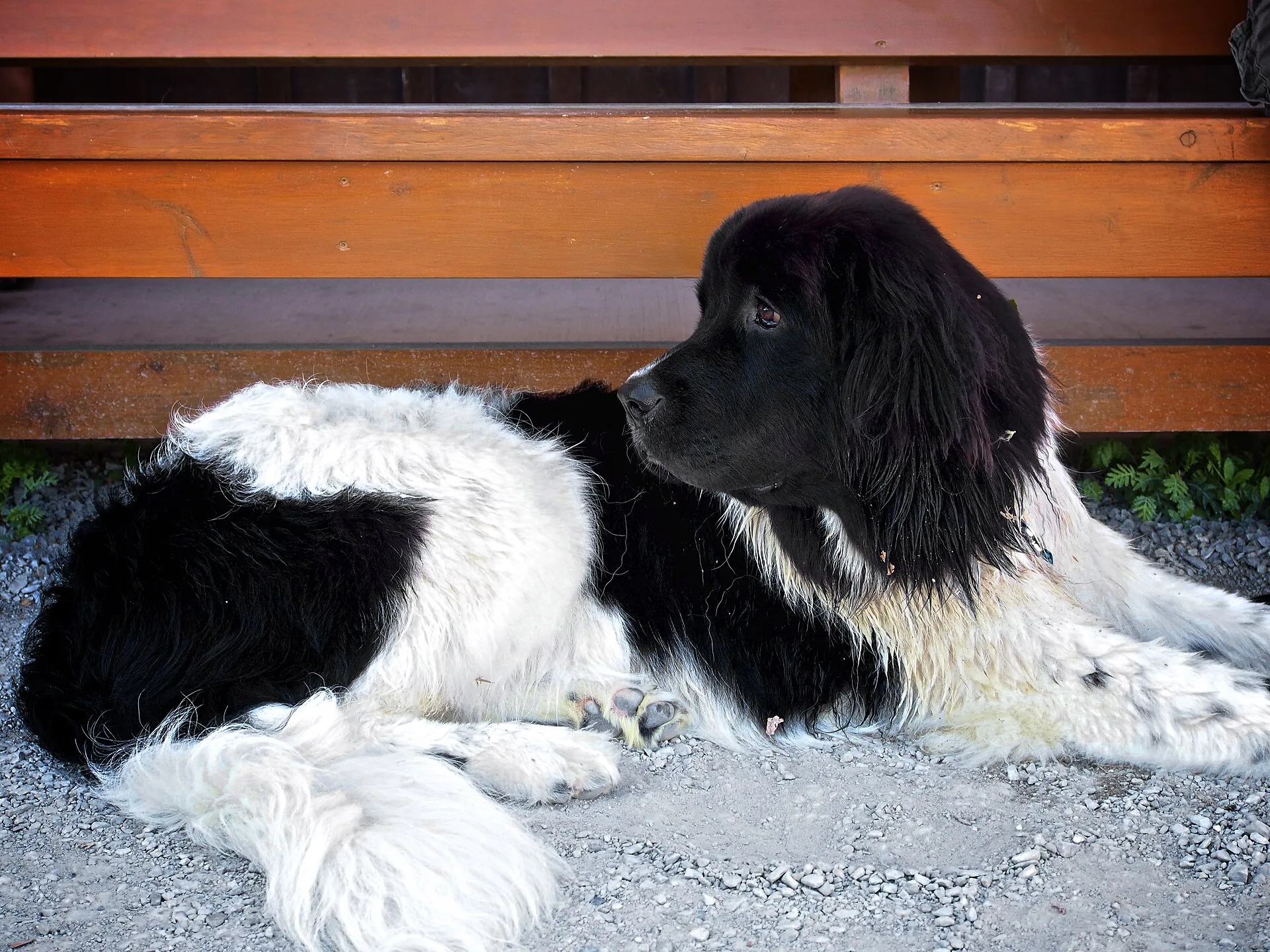
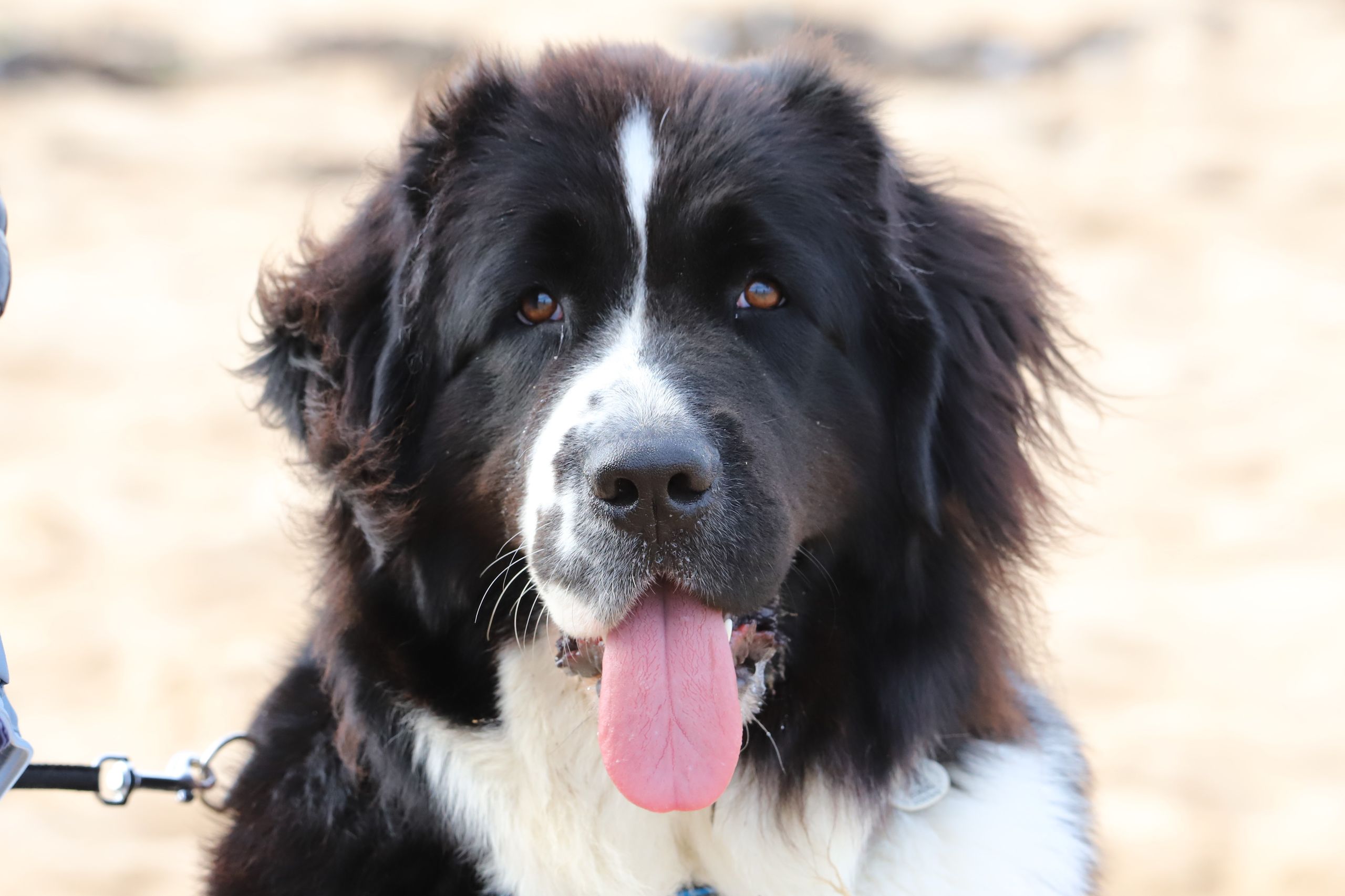
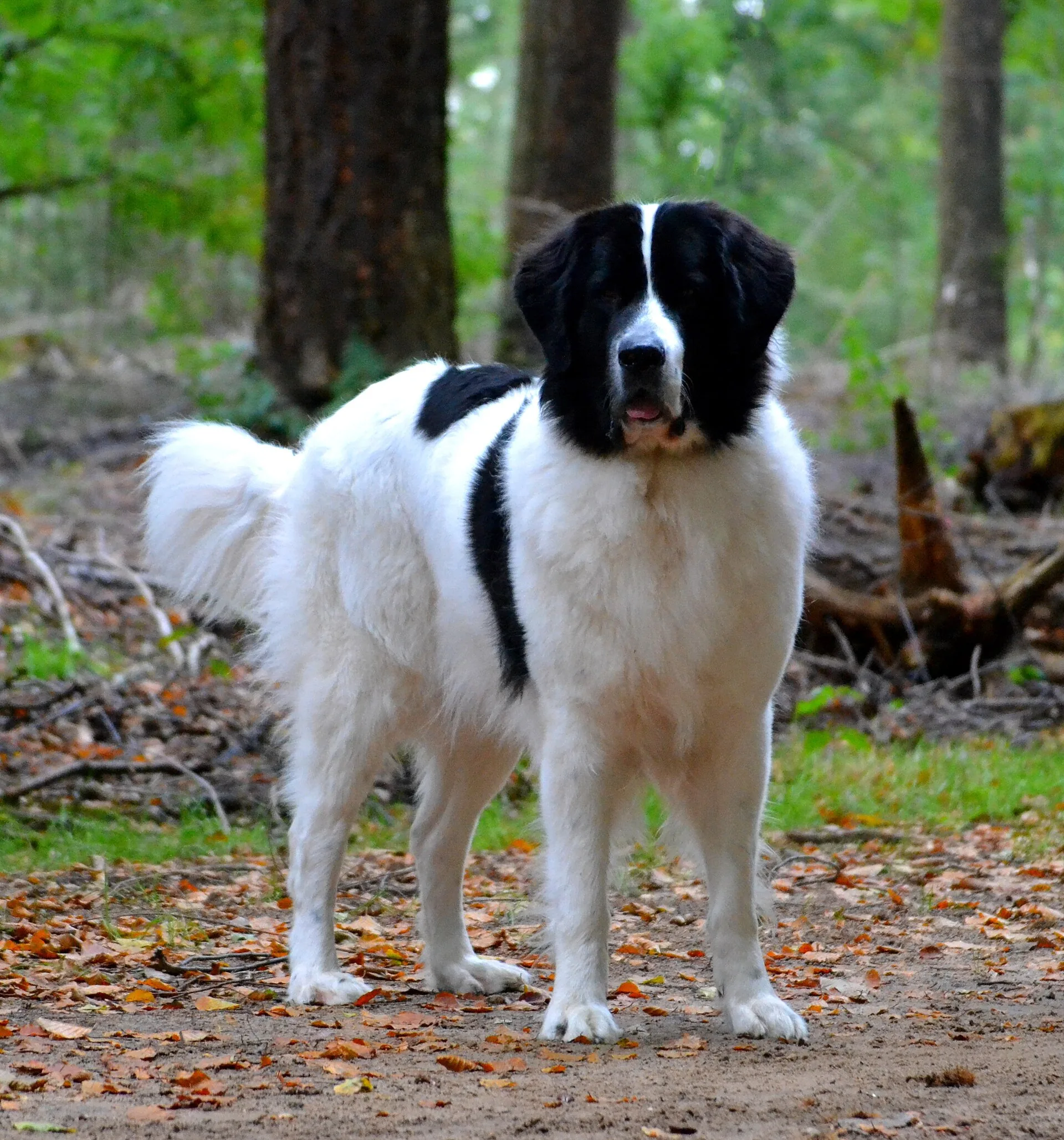
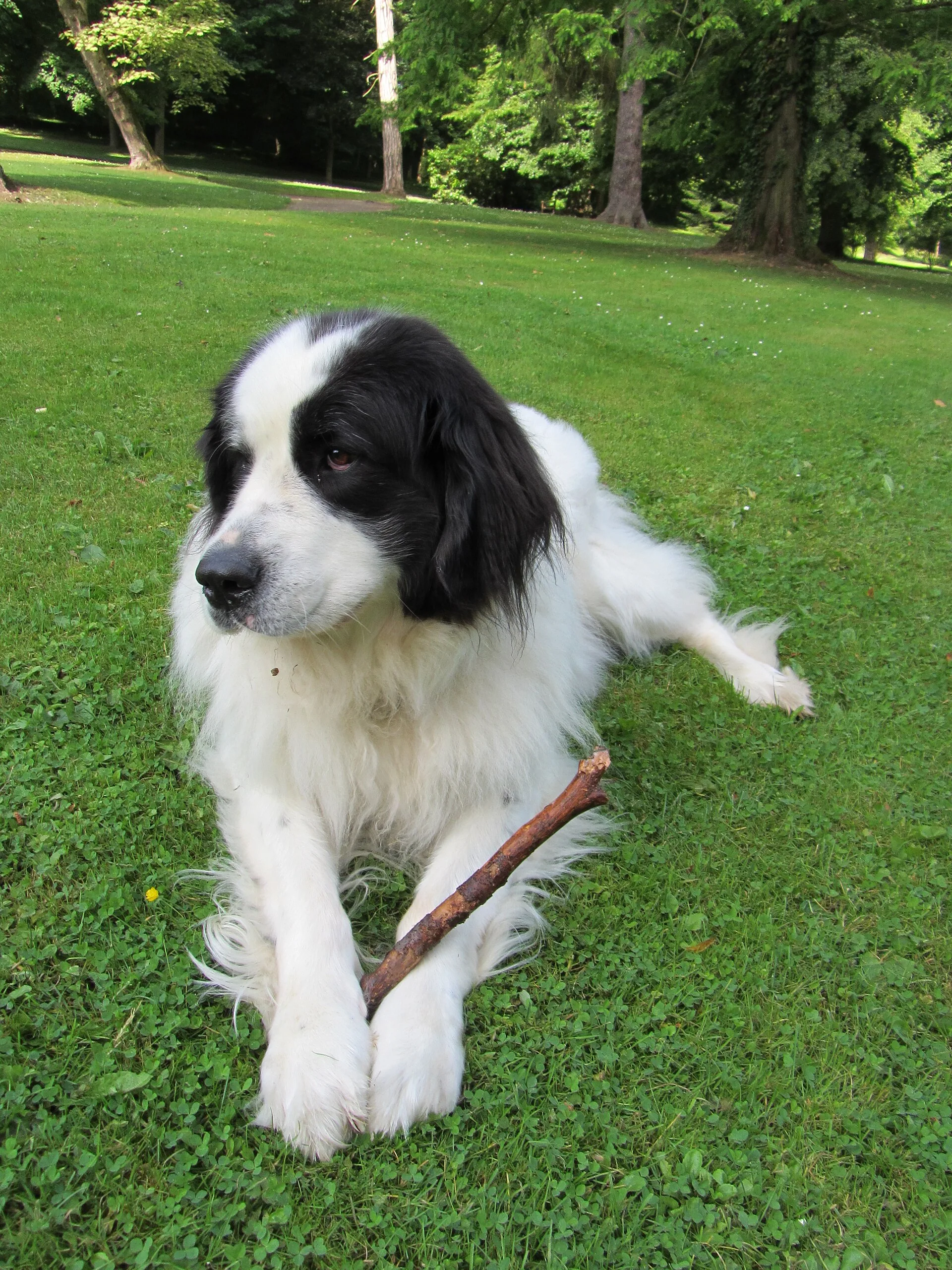
The standard is explicit that the Landseer is a separate breed from the black Newfoundland, and it describes a taller, more powerful dog with longer legs than the Newfoundland, especially in males. Its coat is white with distinct black patches on the body and croup, with a black head, white muzzle and symmetrical white blaze. Today the breed is rare, and a puppy usually means a waiting list and a breeder in Germany, Switzerland or elsewhere in Europe.
Temperament
The standard gives few words to temperament, noting a friendly expression and listing aggression and over-shyness as faults. Breed clubs and owners agree on the character: a calm, gentle, sociable dog, very patient and attached to its family. Most Landseers greet strangers with a wagging tail and a lean, not a growl, so they make poor guard dogs in practice, though their size alone deters most visitors.
They are sensitive giants. A Landseer wants to be near people, resents being shut away and may follow you from room to room, dropping into a heap on your feet. Many love water and will wade into any pond or puddle. Expect shedding, drool in some lines and a dog that moves at its own pace. Treat that with patience rather than force, since heavy-handed training makes a soft dog stubborn or sad.
Children and other pets
A well-bred Landseer is usually kind and patient with children, which is why it has a reputation as a nanny dog. The risk lies in size: a wagging tail clears a coffee table and a playful lean knocks over a small child. Supervise toddlers, and never let children ride or climb on the dog. It generally gets on well with other dogs and with cats it has grown up with, and has little prey drive.
Exercise and the daily walk
An adult needs around an hour to an hour and a half of walking a day, taken at a steady pace and divided in two. A Landseer is built for power and endurance, not for sprinting, and it can walk for hours at a relaxed speed. Swimming is excellent exercise when safe water is available, since it spares the joints.
Puppies and adolescents grow fast and are vulnerable to joint problems, so avoid forced running, long stairs and ball games on hard ground until growth has finished at around eighteen months to two years. Use short outings and free play on grass. In hot weather exercise early or late, because a thick coat on a giant dog overheats easily. Rest after meals to reduce the risk of bloat.
Training
Landseers are willing and eager to please, but slow to mature and big enough that any bad habit becomes a problem. Teach the basics from the first day: walking on a loose lead, no jumping up, waiting at doors and lifts, and calm greetings. Reward-based training works, and with a soft temperament harsh methods are especially damaging.
Socialisation should be thorough and gentle, covering traffic, children, other dogs and slippery floors. Teach the dog to accept handling of paws, ears and mouth, because grooming and vet care are lifelong tasks with a dog of 60 kg or more. Recall can be good but is rarely quick. Train for a settled, quiet life indoors, since a large bored puppy can destroy a room.
Coat and grooming
The top coat is long, as straight and dense as possible, soft to the touch, with a good undercoat, and slight waviness on the back and hindquarters is accepted. The colour is clear white with distinct black patches on the body and croup, a black head with a white muzzle and a white blaze. Brush three or four times a week, daily during the heavy moults in spring and autumn, and expect hair on every surface. Check ears, skin folds and feathering after walks and wet weather.
Feeding and weight
A giant breed needs a complete food suited to large breeds, in controlled amounts. Puppies should grow steadily, not quickly, as excess weight and rapid growth strain developing joints. Adults are best fed two small meals rather than one large one, to reduce bloat risk, with rest around feeding times. Keep the dog lean, since extra weight shortens life and worsens joint disease. Measure treats, and avoid exercise right after eating.
Work out a starting calorie figure and food weight with the calorie calculator. Not sure this is the right breed? Take the quiz.
Health
Every breed carries predispositions. These are the conditions most often discussed for the Landseer, not a prediction for any individual dog.
- Hip and elbow dysplasia (malformed joints)
- Gastric dilatation and volvulus (bloat, a life-threatening twisting of the stomach)
- Heart disease, including subaortic stenosis, which is also seen in Newfoundlands
- Cystinuria (a metabolic condition affecting the kidneys and bladder), reported in the breed
- Ear infections and skin problems in warm, damp conditions
What to ask the breeder. Ask for hip and elbow scores for both parents, heart screening results and any testing for cystinuria, plus the ages and causes of death of close relatives. A responsible breeder will discuss longevity openly.
Choosing a puppy
A Landseer puppy looks like a toy and will weigh 30 kg or more within months, so train as for the adult dog from week one. Keep exercise gentle and on soft ground, and avoid stairs where possible while the joints form. Teach lead manners, calm greetings and handling early. Feed a large-breed puppy food in measured meals. Socialise widely, with children, noises, lifts, cars and water, always with positive experiences. Plan for the cost of a big dog: food, insurance and a car or a patient taxi.
In Luxembourg the national kennel club is the Fédération Cynologique Luxembourgeoise (FCL), a member of the FCI. Many owners also buy from breeders in Germany, France or Belgium; a puppy coming from another EU country must be microchipped and vaccinated against rabies, which in practice means it cannot travel before about fifteen weeks of age. Where to get a dog in Luxembourg.
The older Landseer
Giant breeds age earlier. A Landseer in its seventh or eighth year may slow down, stiffen on waking and find stairs hard. Keep the dog lean, provide an orthopaedic bed, use non-slip rugs and shorten the walks while keeping them regular. Ask the vet for six-monthly checks of the heart, joints, teeth and weight. Appetite, breathing or a swollen abdomen that changes suddenly needs prompt veterinary attention.
A realistic day
A realistic weekday for a working household in Luxembourg City, with a midday visit. Adjust it to your dog, not the other way round.
Slow lead walk of 30 minutes, then breakfast eaten calmly and a rest.
Owner leaves for work; the dog flops on a big bed in a cool room with water.
Midday visit: a gentle 45-minute walk on grass, in shade in summer, fresh water and a short brush.
Longer evening outing of about an hour, with sniffing and perhaps a safe swim in warm weather.
Short toilet break, a wipe of the paws and bed.
A Landseer in Luxembourg
A Landseer in a Luxembourg flat is a real commitment. A lift is essential, and it must be large enough to take the dog comfortably, because a 60 kg dog that struggles on stairs is a serious problem for you and your neighbours. Wide corridors, a ground-floor flat or a house with a garden are far better. Slippery tiled floors can be hard on young and old joints, so lay rugs.
Space for walking is not the issue. The Pétrusse valley, Parc Merl and the Municipal Park are good for steady lead walks, and the Bambësch and Grünewald forests offer shade and soft ground. The difficulty is summer: temperatures can reach the 30s °C, and a thick-coated giant should walk at dawn or late evening and rest in a cool room. Buses and trams are free nationwide, but a dog this size is difficult on crowded services, so a car is practical.
Every dog in Luxembourg must be identified, declared to the commune and covered by liability insurance. How registration works.
When you travel
A sitter must be physically able to manage a very large dog on a lead and should know the lift and flat routine. Feed two small meals, keep strictly to the usual routine, and watch for signs of bloat such as a swollen belly, retching and restlessness, which need a vet at once. Avoid exercise in heat and ensure cool, shaded rest. Landseers dislike being alone, so offer company and gentle, regular visits.
PAWLY's holiday and overnight care takes place in your home, so your dog keeps its own bed and routine.
Myths and facts
MythThe Landseer is just a black-and-white Newfoundland.
FactThe FCI recognises it as a separate breed, and the standard describes a taller dog with longer legs than the black Newfoundland.
MythA giant dog needs huge amounts of exercise.
FactIt needs regular, steady walks, not endless running. Too much hard exercise in growth is harmful.
MythBig dogs are good guard dogs.
FactMost Landseers are friendly to strangers. Their size deters people, but the temperament is gentle.
Is it the right dog for you?
Suits
- Families with a large car, a lift or a ground-floor home
- Owners who enjoy a calm, affectionate dog and accept hair and drool
- People with water nearby and time for daily walks
- Households with experience of or willingness to learn about giant breeds
Think twice if
- You live in a small flat without a lift
- You dislike fur on clothes and floors
- You cannot lift or control a dog of 60 kg or more
- You want a long-lived dog or must keep to a tight budget
Questions owners ask
How big does a Landseer get?
The FCI standard gives 72 to 80 cm at the shoulder for males and 67 to 72 cm for females. Weight is not given, but expect a very heavy dog, often well over 50 kg.
How is it different from a Newfoundland?
The Landseer is taller and longer in the leg, with a white coat and black patches. The standard treats it as its own breed. Temperament and water love are similar.
Does it need a garden?
Not strictly, but it helps. A Landseer can live in a flat with a lift if it gets daily walks, comfort in warm weather and company.
Is it hard to find a Landseer?
Yes. The breed is rare, and responsible breeders have few litters. Be prepared to wait, to travel and to ask about health tests.
Sources
Photo: Unsplash (Unsplash License) · Photo: Pexels (Pexels License) · Photo: Terry Ozon, CC BY 2.0, via Wikimedia Commons · Photo: Elevage des Pandas Des Terres Rouges, CC BY-SA 3.0, via Wikimedia Commons · Photo: Stefan Bellini, CC BY-SA 3.0, via Wikimedia Commons
General information for dog owners in Luxembourg, not veterinary or legal advice. Official facts (origin, size, group, history and temperament as described by the breed standard) follow the FCI standard; health and care sections reflect breed-club and veterinary guidance and are typical ranges rather than rules. For your own dog, ask your vet, the breed club or your commune. How this guide is written and checked. Last reviewed 8 October 2026.
Need someone for your Landseer?
PAWLY offers an individual 45-minute walk or a home visit at your dog's pace, the same walker every time, and a written report with photos after every visit, across Luxembourg City.
Read next: the journal, for the Landseer
All articles
Dogs in hot weather: the Luxembourg summer guide
The Landseer carries a heavy coat or a heavy frame, which makes a Luxembourg summer the hard season.

Arthritis: the pain owners file under old age
Giant breeds tend to have joint trouble early; this is what to look for.

Growing a large-breed puppy without wrecking its joints
A giant puppy grows fast on soft bones; how it grows decides its joints for life.
Similar breeds
All 198 breeds
Newfoundland
A giant water dog with a famously sweet nature, and a lot of drool.
EnergyGroomingFlat life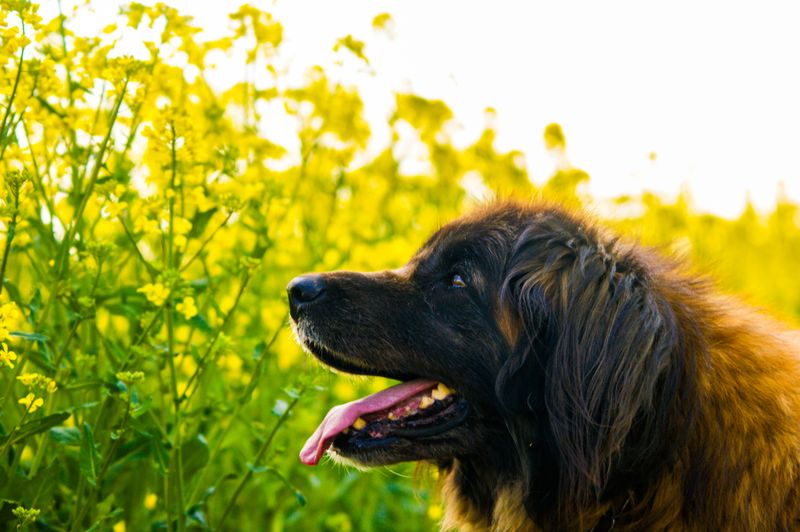
Leonberger
A lion-coloured giant with a black mask and a surprisingly gentle manner, happiest as an unhurried companion who is never left out of anything.
EnergyGroomingFlat life
Saint Bernard
The legendary Alpine rescue dog: gentle, calm and enormous.
EnergyGroomingFlat life

