History
The FCI standard is for the Löwchen, also called the Little Lion Dog or Petit Chien Lion, and lists France as the country of origin, in Group 9 (companion and toy dogs), Section 1.3, Bichons and related breeds. It records stone carvings of such a dog in Amiens Cathedral from the 13th century, and says that the breed appears in tapestries of the 15th century. It was cherished by the ladies of the court of Burgundy and features in paintings of the 17th century.
The standard adds that the naturalists Buffon and Linnaeus described the breed, with Buffon remarking on its rarity. That rarity persisted for a long time, and the Löwchen has remained one of the least numerous of the companion breeds. The French breed club was founded on 18 November 1947. The FCI classes the dog purely as a companion, and that is exactly the work it does today. The standard is dated 24 March 2004, and the traditional lion clip is obligatory in the show ring.
Temperament
According to the FCI standard the Löwchen is a gay dog with a lively, alert expression, very affectionate and obedient with its owners, attentive, receptive and at ease in all circumstances. In practice it is a cheerful, people-focused dog that likes being in whatever room you are in and takes an interest in visitors without being nervous about them.
The Löwchen will bark to announce a caller, and some will voice opinions about the neighbours, so it is worth teaching a 'thank you, enough' cue early. It is also sensitive, and shouting or harshness will make it withdraw.
Children and other pets
A well-socialised Löwchen is usually friendly and playful with children, but its small size means it should not be carried around, squeezed or dropped by young ones, and toddlers need clear supervision. It mixes well with other dogs when properly introduced, and with a cat when raised together. The hunting drive is low, though a small pet that runs may still be chased in play, so introductions should be calm and always supervised.
Exercise and the daily walk
This is a lively small dog with more stamina than the lap-dog image suggests. Plan for around 45 minutes to an hour of activity a day, divided into two or three outings, with a little play indoors to top it up.
Short training games, hide-and-seek with treats, and simple tricks keep the Löwchen content on days when the weather is poor. It copes well in cold weather for its size, but in a Luxembourg downpour a wet clip needs drying afterwards.
Training
Intelligent, receptive and obedient, as the standard puts it, the Löwchen picks up lessons quickly and enjoys the attention involved. Reward-based training with small treats, praise and games gives the best results, because the dog does not respond well to harshness.
Common challenges are barking at noises, pulling on the lead when excited, and a tendency to decide the rules itself if you let it. Teach calm greetings, a reliable recall in a safe place, and the habit of being handled for grooming and nail trims from the first weeks. Social experience with busy streets, trams, lifts and other dogs in the early months will pay off throughout a life lived in a city.
Coat and grooming
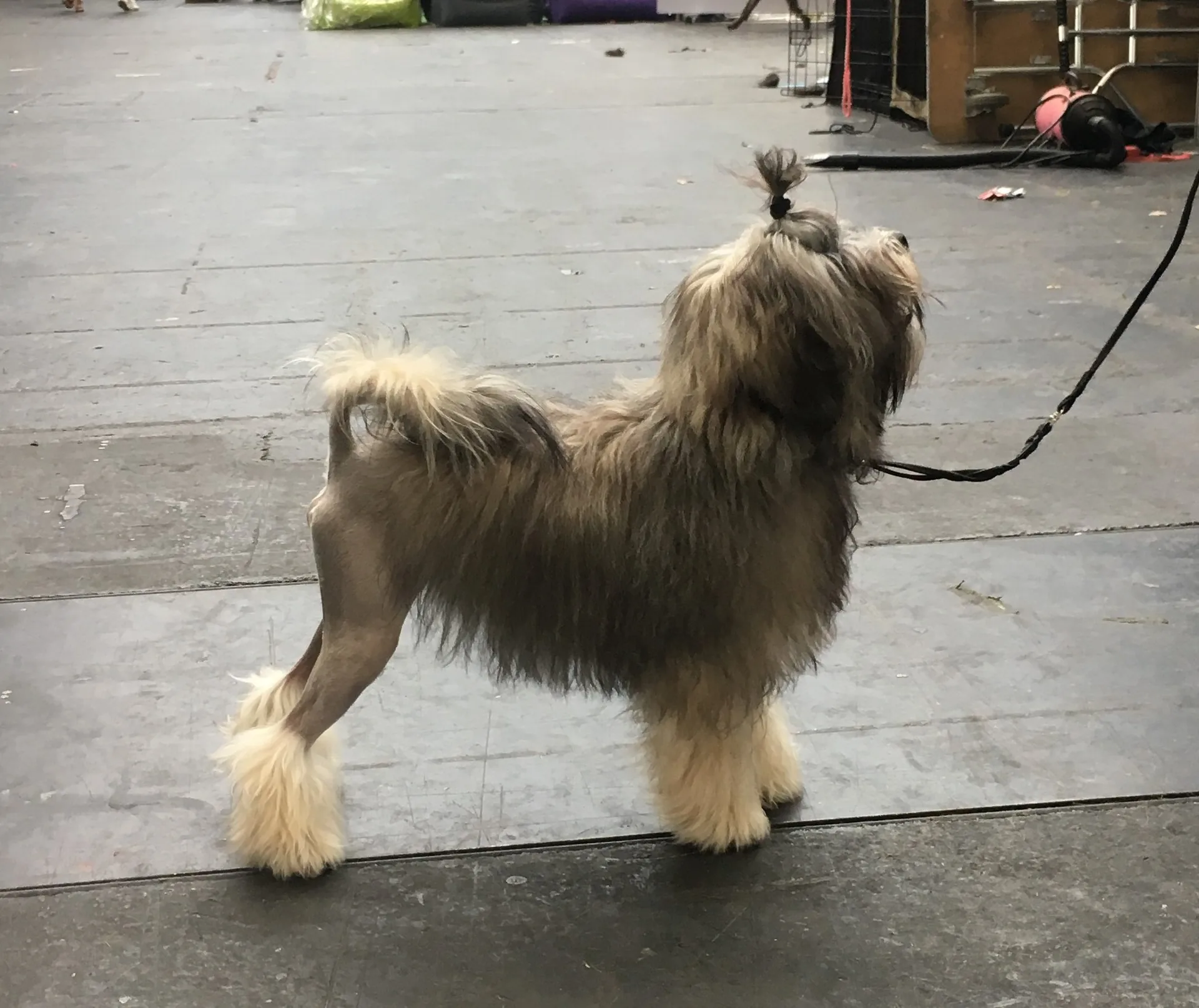
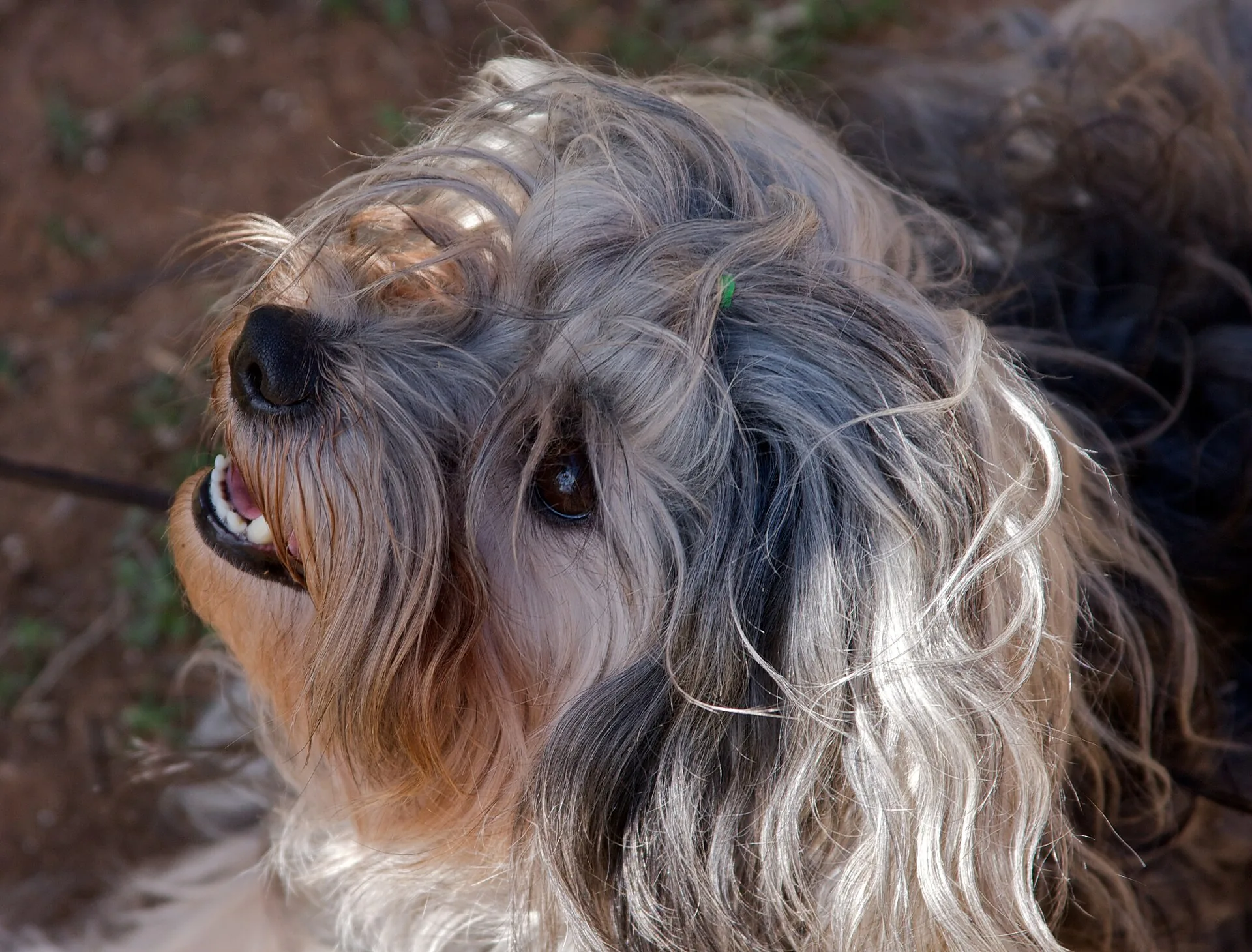
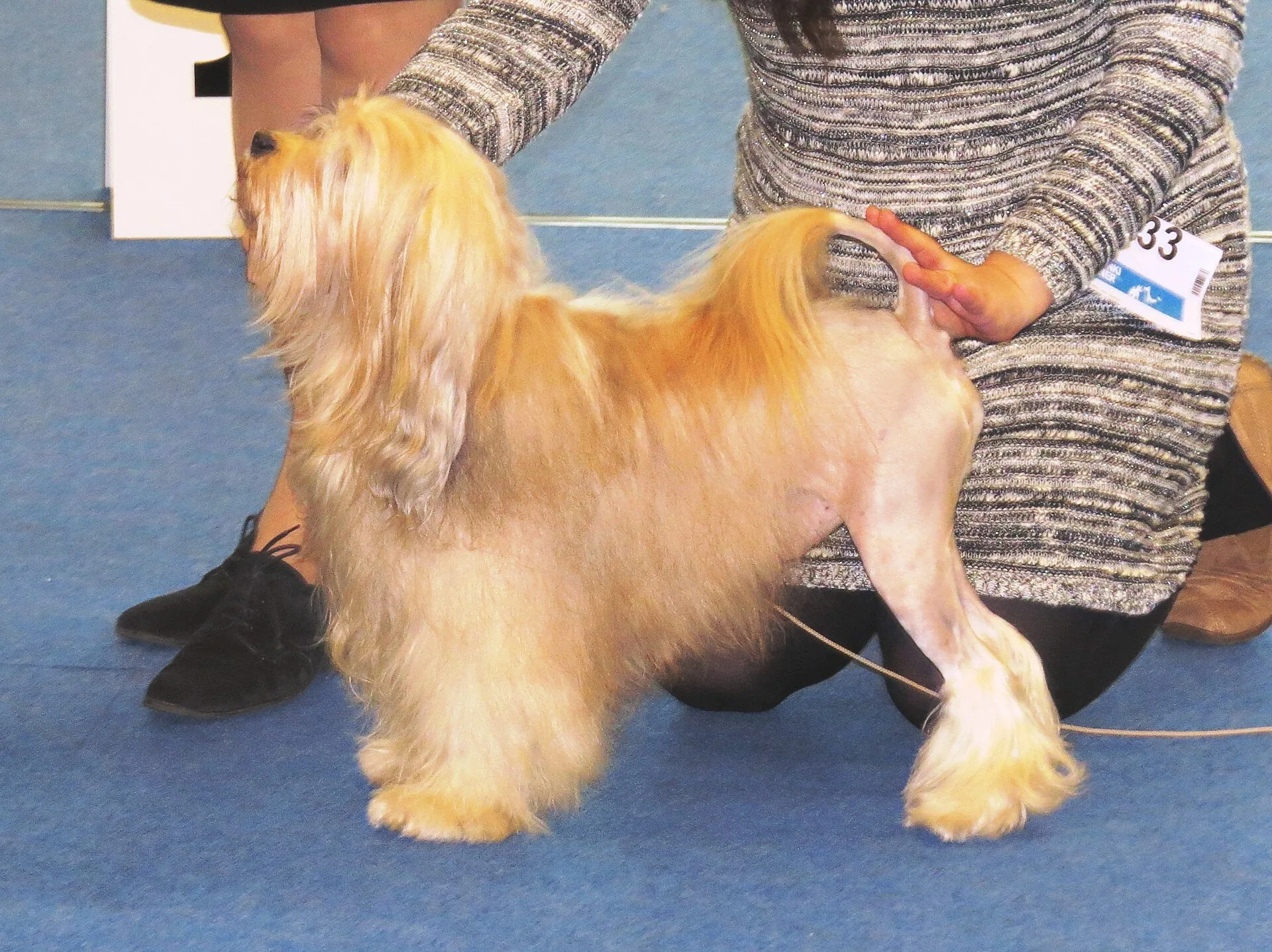
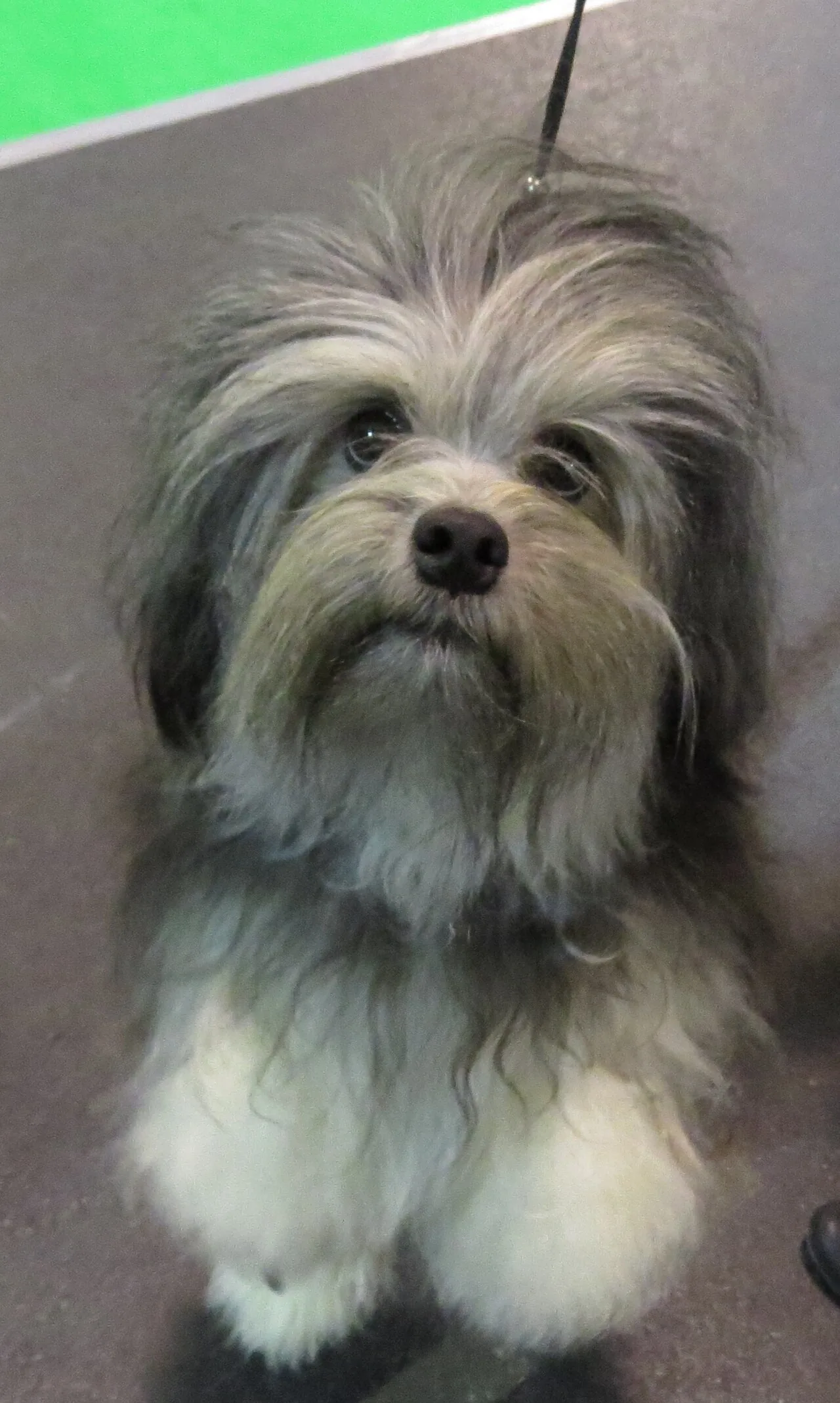
The coat is long, wavy, dense and silky, with no undercoat, and short, curly or any harsh hair is a fault. All colours and combinations are permitted by the FCI. The traditional lion clip, with the hindquarters and the tail except for a plume at the tip clipped, and the forequarters and chest left in a mane, is obligatory for showing. Brush several times a week, as the coat tangles, and plan professional grooming every few weeks. Shedding is light.
Feeding and weight
A small dog with a fine frame does best on a measured diet of a complete food suited to small breeds, usually in two meals. Do not free-feed. Weight gain places strain on knees and the heart, so use treats sparingly and count them in the daily total. Dental health matters in small dogs, and a food or chew recommended by your vet can help, together with regular tooth brushing.
Work out a starting calorie figure and food weight with the calorie calculator. Not sure this is the right breed? Take the quiz.
Health
Every breed carries predispositions. These are the conditions most often discussed for the Löwchen, not a prediction for any individual dog.
- Luxating patella (kneecap that slips out of place, causing a skip in the stride)
- Inherited eye conditions, including progressive retinal atrophy and cataract
- Dental crowding and gum disease, common in small breeds
- Hip dysplasia, less common than in large breeds but recorded
- Skin and coat problems, if mats and moisture are not kept in check
What to ask the breeder. Ask for evidence of patella and eye examinations for both parents, and ask whether the breeder is part of a breed club health programme. In a numerically small breed also ask how the breeder avoids close inbreeding.
Choosing a puppy
A Löwchen puppy is a bundle of cheerful energy that sleeps deeply between bursts. Toilet training takes patience and a regular schedule, with frequent trips out and praise. Start grooming from the first week with a soft brush so that it becomes pleasant, and handle paws, ears and mouth daily. Socialise with different people, dogs, noises and the lift, in positive small doses, and teach short periods of being alone. Protect small bones: no jumping off sofas and no long walks.
In Luxembourg the national kennel club is the Fédération Cynologique Luxembourgeoise (FCL), a member of the FCI. Many owners also buy from breeders in Germany, France or Belgium; a puppy coming from another EU country must be microchipped and vaccinated against rabies, which in practice means it cannot travel before about fifteen weeks of age. Where to get a dog in Luxembourg.
The older Löwchen
Many Löwchen live into their mid-teens and remain playful for most of it. Older dogs need shorter walks, a warm bed, and regular checks for dental disease, eyesight and kneecaps. Keep the weight lean, as extra kilos aggravate joints. Coat care becomes more important because stiffness can make self-grooming harder, and mats can form quickly. Offer a ramp or steps for the sofa, and a quiet routine, which most seniors greatly appreciate.
A realistic day
A realistic weekday for a working household in Luxembourg City, with a midday visit. Adjust it to your dog, not the other way round.
Short toilet walk and a sniff in the nearest green space, followed by a brisk 20 minute loop and a quick brush of the mane.
Breakfast and a drink; the dog settles in a favourite bed with a chew or a snuffle mat while the household leaves.
A PAWLY visit with a toilet break, a 30 minute walk in the sunshine or a game indoors on a rainy day, and a photo update to the owner.
A longer evening walk of 40 minutes, perhaps in Parc Merl or Kinnekswiss, with some training practice and time to meet other dogs.
Last toilet trip, a gentle comb through the coat where it tangles, and bed in the bedroom or the usual quiet corner.
A Löwchen in Luxembourg
A Löwchen is a good fit for Luxembourg City flats. It is compact, travels easily in a lift, and can be carried onto buses and trams if needed, and its exercise needs are met comfortably with walks in the Pétrusse valley or the local park. Its relatively low shedding is an advantage in a small home. Barking should be managed so that neighbours in shared buildings are not disturbed.
Summer heat in the 30s is manageable if walks are early or late and the dog has shade and water, but the clipped hindquarters and long mane mean you should not keep it out in strong sun for long. Rainy and cold months require a quick dry-off and sometimes a coat. As the breed is rare, finding a breeder may need patience or travel, and the Fédération Cynologique Luxembourgeoise can point to clubs. Every dog must be microchipped, declared to the commune and insured.
Every dog in Luxembourg must be identified, declared to the commune and covered by liability insurance. How registration works.
When you travel
A sitter should expect a sociable dog that dislikes being alone and may bark if left. Follow the usual routine of meals, short walks and play, and do not skip grooming for long, since the coat tangles. Keep the dog on a lead outdoors, as small dogs can slip out of collars, and use a well-fitted harness. Check eyes, ears and teeth, and tell the owner if appetite falls or the dog limps or skips a step.
PAWLY's holiday and overnight care takes place in your home, so your dog keeps its own bed and routine.
Myths and facts
MythThe Löwchen is a lion-sized personality in a toy body, so it is hard to train.
FactIt is described in its standard as obedient and receptive, and most learn quickly with gentle, consistent, reward-based training.
MythThe lion clip is only for the show ring and the dog must be shaved.
FactThe clip is only compulsory for showing. Pet owners can choose a more practical trim, though the long coat still needs regular care.
MythSmall dogs do not need real exercise.
FactA healthy Löwchen needs an hour or so of walks and games a day, and is happier and calmer for it.
Is it the right dog for you?
Suits
- Flat dwellers who want a small, sociable companion
- People who enjoy grooming and a regular trim routine
- Households with considerate older children
- Owners home for much of the day, or able to arrange a midday visit
Think twice if
- You are away from home all day with no help
- You do not want to manage a coat or pay for grooming
- You have toddlers who may handle a small dog roughly
- You want an easy-to-find breed, as litters are few
Questions owners ask
Does the Löwchen shed?
Very little. The coat has no undercoat and sheds lightly, but it tangles easily, so regular brushing and professional trimming matter more than vacuuming.
Is the Löwchen good for first-time owners?
Yes, if the owner is prepared to train patiently and keep up with grooming. It is intelligent, affectionate and adaptable, with moderate exercise needs.
Is it a barky dog?
It will alert you to callers and noises, and some bark more than others. Early training in a calm response and enough exercise keep it manageable in a shared building.
How big is a Löwchen?
The FCI standard gives 26 to 32 cm at the withers and a weight of about 6 kg. It is a compact, sturdy small dog rather than a fragile toy.
Sources
Photo: Jk9dat, CC BY-SA 4.0, via Wikimedia Commons · Photo: Томасина, CC BY-SA 3.0, via Wikimedia Commons · Photo: John M. P. Knox from Austin, USA, CC BY-SA 2.0, via Wikimedia Commons · Photo: Томасина, CC BY-SA 3.0, via Wikimedia Commons
General information for dog owners in Luxembourg, not veterinary or legal advice. Official facts (origin, size, group, history and temperament as described by the breed standard) follow the FCI standard; health and care sections reflect breed-club and veterinary guidance and are typical ranges rather than rules. For your own dog, ask your vet, the breed club or your commune. How this guide is written and checked. Last reviewed 8 October 2026.
Need someone for your Löwchen?
PAWLY offers an individual 45-minute walk or a home visit at your dog's pace, the same walker every time, and a written report with photos after every visit, across Luxembourg City.
Read next: the journal, for the Löwchen
All articles
Teeth: the problem owners find least interesting and vets see most
Teeth are a known weak point in the Löwchen; this is the routine that helps.

Grooming and coat care through the Luxembourg year
The Löwchen has a coat that needs a routine that holds through the Luxembourg seasons.

Separation anxiety: the signs owners miss and what actually helps
The Löwchen bonds closely with its people; this covers the signs owners miss.
Similar breeds
All 198 breeds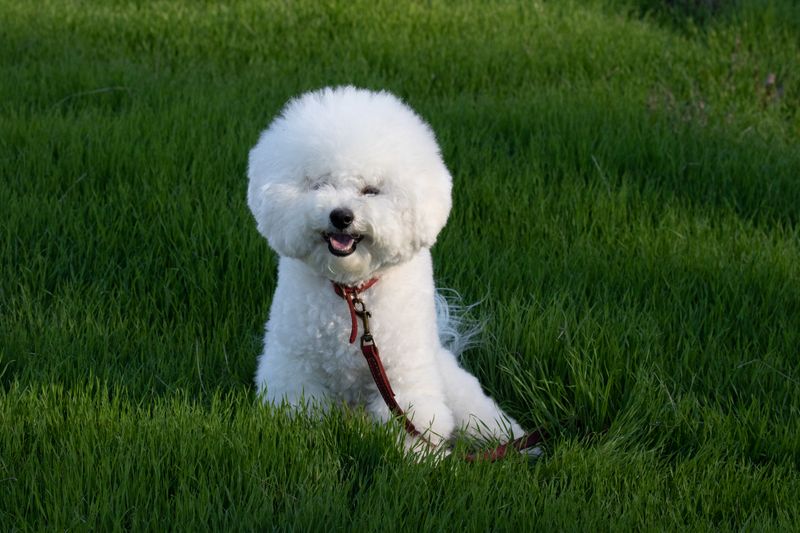
Bichon Frisé
A cheerful white powder puff with a sense of humour and a serious grooming requirement.
EnergyGroomingFlat life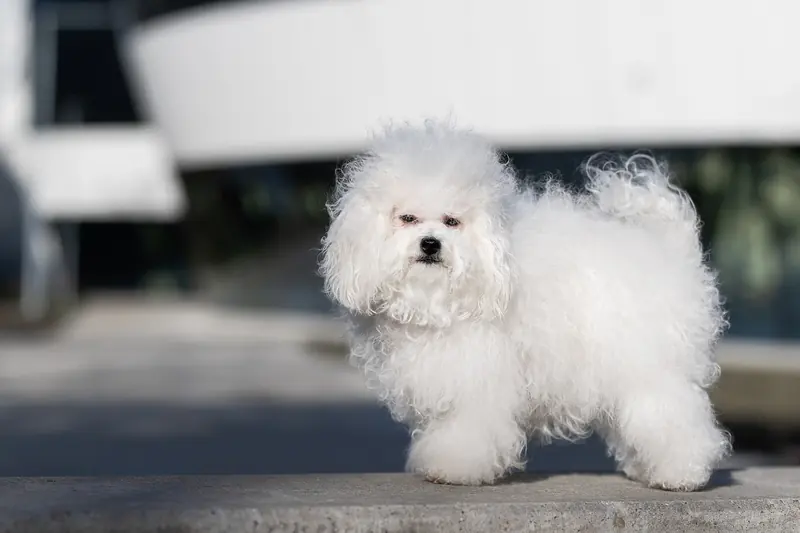
Bolognese
A white, cloud-like Italian companion dog: gentle, devoted and happiest when glued to its person.
EnergyGroomingFlat life
Havanese
Cuba's national dog: a cheerful, sociable little bichon that loves people, learns tricks quickly and hates being left alone.
EnergyGroomingFlat life

