
History
The FCI standard traces the Norfolk Terrier to East Anglia, in eastern England, where unnamed farm dogs from the counties of Norfolk and Norwich were used to bolt foxes and control rats. It lists Glen of Imaal, red Cairn Terrier and Dandie Dinmont ancestry, and says the dogs emerged as distinct types in the early to middle nineteenth century. Great Britain is the country of origin.
The Norwich Terrier was registered by the Kennel Club in 1932, in drop-eared and prick-eared varieties. The two were treated as one breed for decades, until they were formally separated in 1964, when the drop-eared variety became the Norfolk Terrier. The standard calls it one of the smallest terriers, low, keen, compact and strong, with a short back, good substance and bone. Honourable scars from work are not penalised.
Temperament
The FCI standard calls the Norfolk a demon for its size, with a lovable disposition, not quarrelsome, with a hardy constitution, alert and fearless. In daily life it is cheerful, sociable and affectionate, less sharp-tempered than many terriers. It enjoys company, loves to play and likes to follow its owner from room to room.
A Norfolk is still a terrier, with a love of digging, sniffing and investigating anything that moves in the undergrowth. Some will bark at visitors, though less than many terriers, and a few are wilful. Aggression and excessive shyness are disqualifying faults, so a good Norfolk should be sturdy and confident, and ready to greet strangers with a wag.
Children and other pets
Norfolks are good with children who are gentle and respectful, and they are usually friendly with other dogs. Small pets that run may be chased. They do not like being left alone for long, and they enjoy being included in family plans. Supervise toddlers, because a small dog can be hurt by clumsy handling and may snap if it is frightened.
Exercise and the daily walk
About 45 minutes to an hour a day is right for most Norfolks, with time to explore, plus play. They have plenty of stamina for their size and enjoy walks in the countryside, but they are also happy with shorter city routes on a lazy day. Sniffing is as important as distance.
A secure garden is essential, because they dig, and a terrier that has found a scent will go underground if it can. Keep the lead on near roads and wildlife. A few minutes of scent games, hidden treats or a game of tug at home help use up energy on wet days. Growing puppies need short, gentle outings.
Training
Norfolks are clever and eager to please, and they respond well to short, cheerful, reward-based training. They can be stubborn but are rarely difficult. Food and play are good motivators, and they enjoy learning tricks. Keep sessions brief and varied, and finish while the dog is still keen.
Recall is reasonable in a well-trained Norfolk but always be cautious near wildlife. Teach a quiet cue and calm greetings early, and practise being alone in small stages. Lead manners matter, since small dogs that pull are often allowed to do so. Handle the feet, ears and mouth gently every day so grooming and vet visits are easy.
Coat and grooming
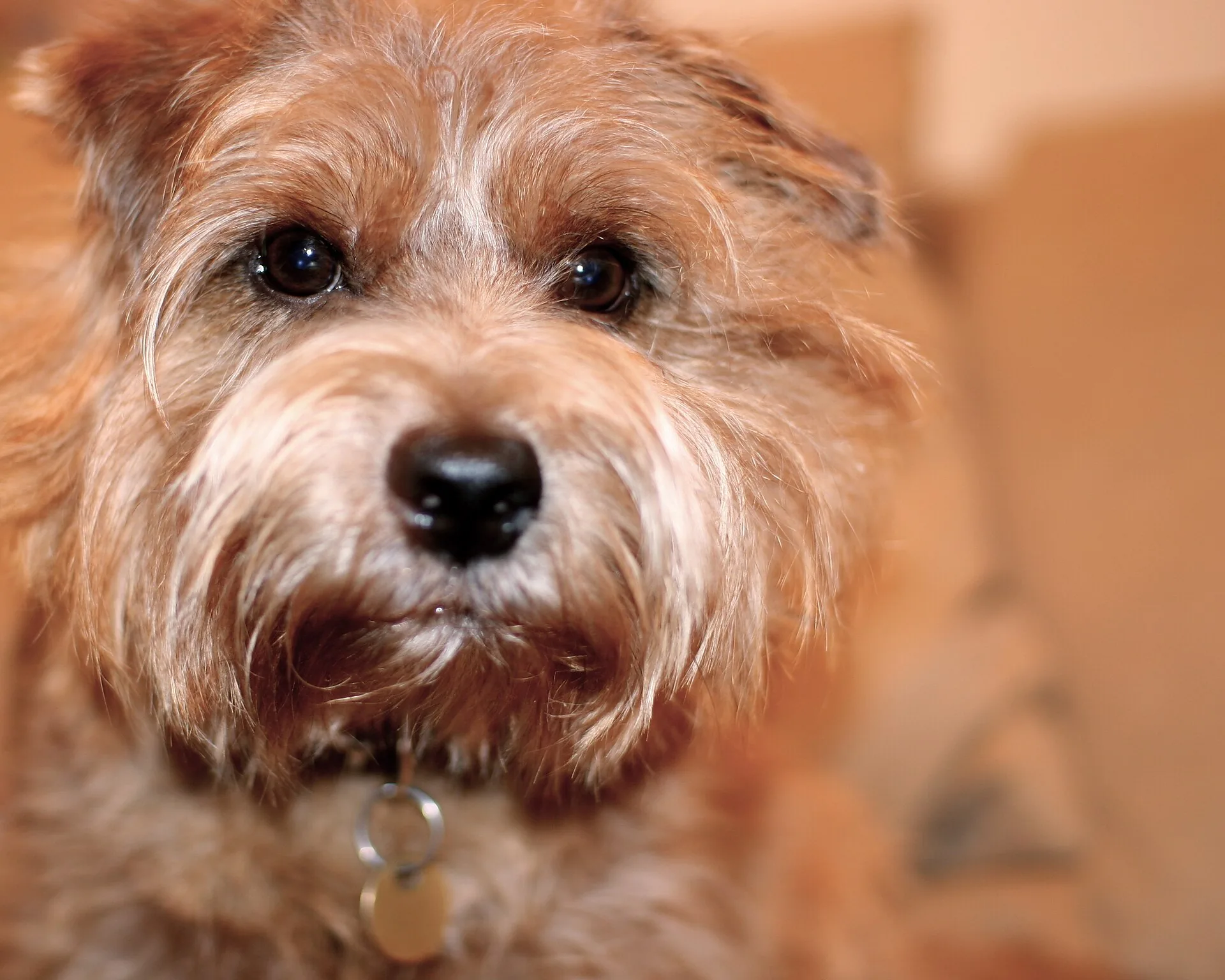
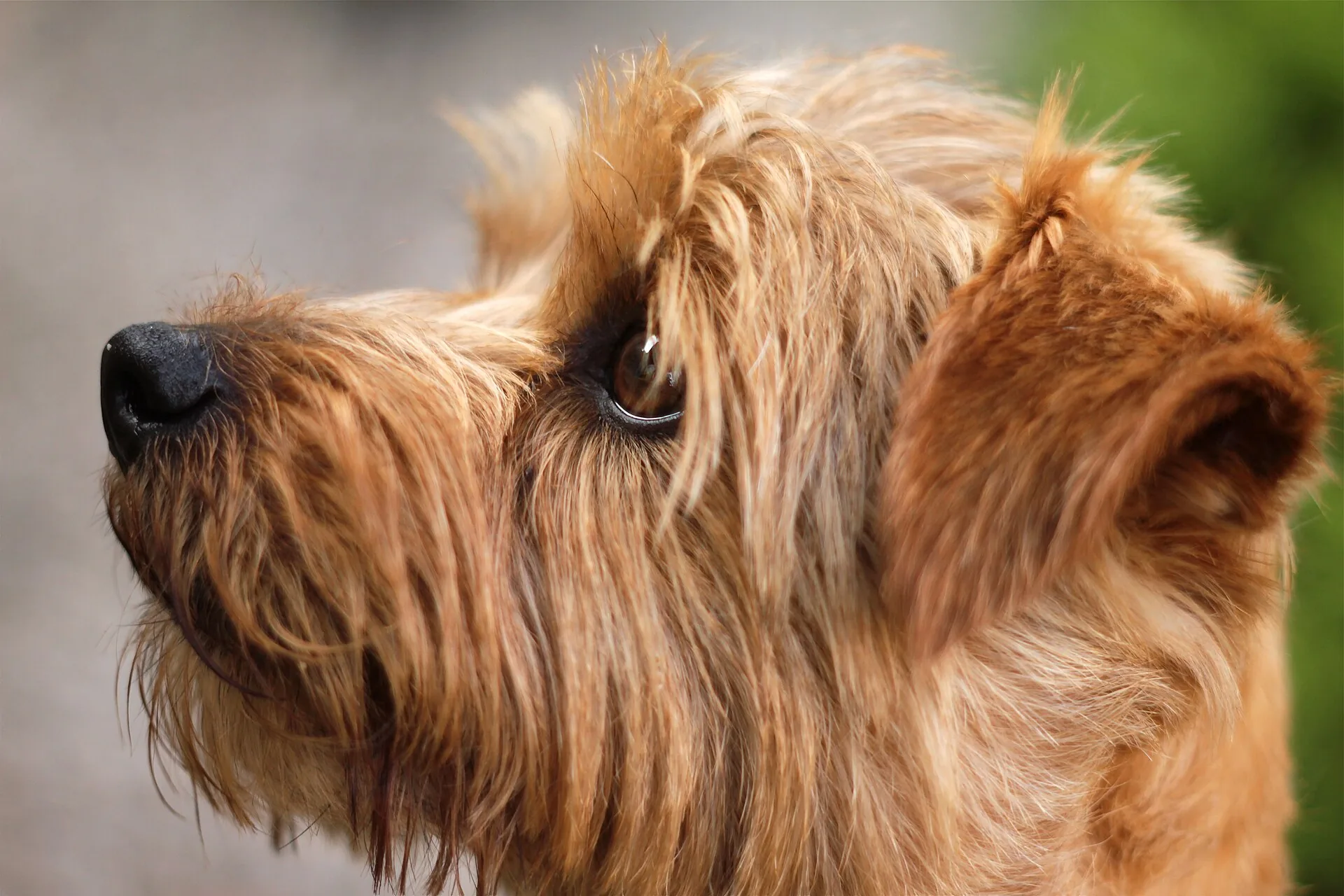
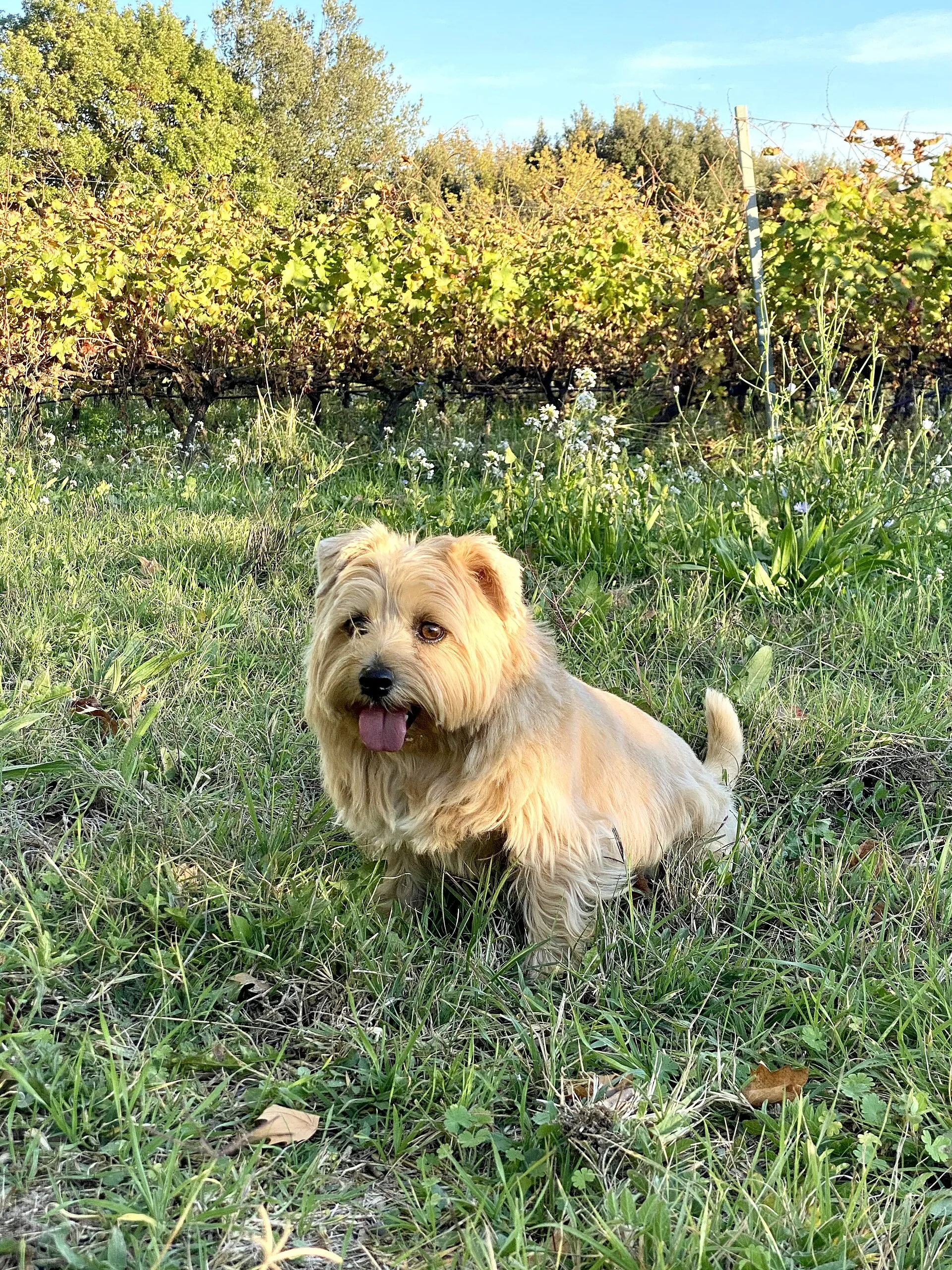
The FCI standard describes a hard, wiry, straight coat that lies close to the body, with longer, rougher hair on the neck and shoulders. It needs weekly brushing and hand-stripping a couple of times a year, and it sheds little. Norfolks should look naturally rough and tousled, not trimmed into a shape. Permitted colours are all shades of red, wheaten, black and tan, and grizzle.
Feeding and weight
Norfolks love food and gain weight easily, which affects breathing and joints. Measure portions, keep treats small and adjust with exercise. A lean Norfolk lives longer and breathes more easily. Use part of the daily ration for training, avoid table scraps, and weigh the dog regularly. A quick check of the waist from above and the ribs by touch tells you more than a scale alone.
Work out a starting calorie figure and food weight with the calorie calculator. Not sure this is the right breed? Take the quiz.
Health
Every breed carries predispositions. These are the conditions most often discussed for the Norfolk Terrier, not a prediction for any individual dog.
- Upper airway problems in some dogs
- Patellar luxation (slipping kneecaps)
- Mitral valve disease (a heart condition)
- Skin allergies
- Dental crowding
What to ask the breeder. Kneecap and heart checks for the parents, and whether breathing noise or exercise problems occur in the lines.
Choosing a puppy
Ask for kneecap and heart checks for the parents and about noisy breathing in the lines. Meet the mother and look for a friendly, bold puppy. Practise handling and grooming early, and introduce lifts, stairs and busy pavements gently. Puppy-proof the garden against digging escapes, and begin short spells alone from the first days so that the habit is easy to keep.
In Luxembourg the national kennel club is the Fédération Cynologique Luxembourgeoise (FCL), a member of the FCI. Many owners also buy from breeders in Germany, France or Belgium; a puppy coming from another EU country must be microchipped and vaccinated against rabies, which in practice means it cannot travel before about fifteen weeks of age. Where to get a dog in Luxembourg.
The older Norfolk Terrier
Watch for coughing, tiring quickly, stiffness and dental problems. Regular vet checks and dental care help keep older Norfolks comfortable. Shorter, gentler walks, a warm bed and a steady weight are the main adjustments. Many remain playful into old age, and mental games keep them engaged when the legs slow down.
A realistic day
A realistic weekday for a working household in Luxembourg City, with a midday visit. Adjust it to your dog, not the other way round.
A brisk walk with sniffing time.
Breakfast, measured, with a short training game.
Midday visit with a toilet break, play and a treat toy.
Longer walk or a game in the park.
Final short walk, then bed.
A Norfolk Terrier in Luxembourg
A Norfolk is ideal for flat life: small, adaptable and friendly, with a moderate exercise need. It copes with stairs and lifts easily, and it fits into a busy office routine if a midday visit is arranged. The Pétrusse valley and Parc Merl are good for daily walks, and the Bambësch and Grünewald forests suit weekend outings.
Many like long walks in the forest but are equally happy with short city routes. Keep the lead on near woodland edges, as a terrier will follow a scent. In summer, when temperatures reach the thirties, walk early and late, and watch any dog with noisy breathing. Free buses and trams make travel easy. Every dog must be microchipped, declared to the commune and insured, and the commune charges an annual dog tax.
Every dog in Luxembourg must be identified, declared to the commune and covered by liability insurance. How registration works.
When you travel
Norfolks are sociable and usually settle well with a sitter who provides company and play. Ask for a daily outing with sniffing time, a consistent feeding routine, and no extra treats. Keep them on a lead outdoors and secure any garden, because a bored terrier will dig. Tell the sitter about any noisy breathing or coughing, and leave the vet's details.
PAWLY's holiday and overnight care takes place in your home, so your dog keeps its own bed and routine.
Myths and facts
MythNorfolk and Norwich Terriers are the same.
FactThey are separate breeds: the Norfolk has drop ears, the Norwich has prick ears. They were officially separated in 1964.
MythSmall terriers are yappy.
FactNorfolks are generally quieter than many terriers, though they will still warn of visitors.
MythA wiry coat should be clipped short.
FactThe standard asks for a natural, rough, tousled look. Hand-stripping keeps the texture, while clipping softens it.
Is it the right dog for you?
Suits
- Flat-dwellers
- Families with older children
- People wanting a cheerful small dog
- Owners who enjoy walks and company
Think twice if
- You are out all day
- You keep small pets
- You dislike digging
- You want a dog with no appetite for food
Questions owners ask
Do Norfolk Terriers bark a lot?
Less than many terriers, but they will announce visitors and sounds in the corridor. Teach a quiet cue early and make sure the dog gets enough exercise and company, because boredom produces barking.
Are Norfolk Terriers good for first-time owners?
Often, yes: they are friendly and adaptable, though they need training and exercise. A terrier's independence and digging habit are the usual surprises, not aggression or fragility.
How big is a Norfolk Terrier?
The FCI standard gives an ideal height of 25 cm at the withers and gives no weight. Published breed figures are usually about 5 to 5.5 kg. It is one of the smallest terriers, with a short back and good bone.
What is the difference between a Norfolk and a Norwich?
The ears. The Norfolk has drop ears and the Norwich prick ears. They were one breed until 1964, and today they have separate standards, with similar characters and sizes.
Sources
Photo: /kallu, CC BY-SA 2.0, via Wikimedia Commons · Photo: Franco Lautieri, CC BY 2.0, via Wikimedia Commons · Photo: Pexels (Pexels License) · Photo: Pingugu, CC0, via Wikimedia Commons
General information for dog owners in Luxembourg, not veterinary or legal advice. Official facts (origin, size, group, history and temperament as described by the breed standard) follow the FCI standard; health and care sections reflect breed-club and veterinary guidance and are typical ranges rather than rules. For your own dog, ask your vet, the breed club or your commune. How this guide is written and checked. Last reviewed 8 October 2026.
Need someone for your Norfolk Terrier?
PAWLY offers an individual 45-minute walk or a home visit at your dog's pace, the same walker every time, and a written report with photos after every visit, across Luxembourg City.
Read next: the journal, for the Norfolk Terrier
All articles
Dogs in hot weather: the Luxembourg summer guide
Flat-faced and short-nosed breeds like the Norfolk Terrier overheat quickly, which matters in a Luxembourg summer.

Teeth: the problem owners find least interesting and vets see most
Teeth are a known weak point in the Norfolk Terrier; this is the routine that helps.

Barking in an apartment: six causes, six different answers
Terriers are quick to sound the alarm; this sorts out the causes and the answers.
Similar breeds
All 198 breeds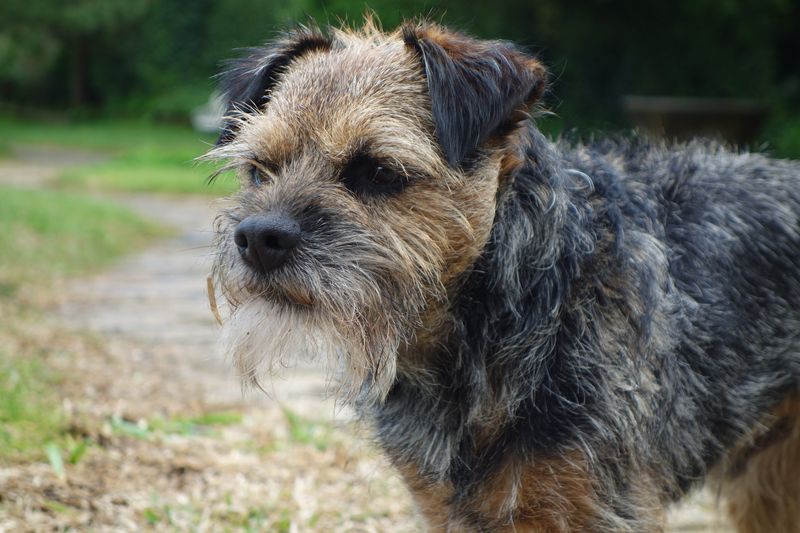
Border Terrier
The terrier for people who find terriers too much: tough, cheerful and easy-going.
EnergyGroomingFlat life
Cairn Terrier
A small, scruffy Highland terrier, bred to bolt foxes from the rocks and still cheerful, busy and unimpressed by its size.
EnergyGroomingFlat life
West Highland White Terrier
A cheerful, confident little Scottish terrier, white by design, with a big opinion of itself and a worker's stamina.
EnergyGroomingFlat life

