
History
The Schipperke's story begins in seventeenth-century Flanders, where small black sheepdogs, descended from the Leuvenaar, lived among ordinary working people. The FCI standard records that around 1690 it was the favourite dog of the workers and cobblers of the St Géry quarter of Brussels, who held competitions to show off the intricately worked brass collars they put on their dogs. The name is Flemish for little shepherd. Many people translate it as little boatman, but the standard gives the shepherd reading, and the breed also won a reputation as a hunter of vermin around workshops and houses.
The breed's profile rose in the nineteenth century. It was first shown to the public at Spa in 1882, and Queen Marie-Henriette of Belgium took an interest in it, which helped its fashion spread. By 1887 Schipperkes had reached both Britain and America. Today the FCI places the breed in Group 1, Section 1, with the sheepdogs, without a working trial, yet its own wording calls it an excellent small guard dog and an exceptional alarm. The standard also accepts dogs born tailless or with a short tail, and says they should not be penalised.
Temperament
The FCI describes the Schipperke as bubbling with vitality, active and busy, agile, tireless and perpetually interested in what is going on around it. That last phrase is the key to living with one. It notices the neighbour's key in the lock, the lift arriving, a parcel on the landing, and it will report all three. The standard also calls it aloof with strangers, so expect a dog that watches visitors carefully before deciding they are acceptable.
With its own people the picture softens. The standard says the breed is very gentle with children, and in practice a well-raised Schipperke is affectionate, funny and curious, with the self-assurance of a dog three times its size. It can be bossy with other dogs and opinionated about routine. Intelligent and quick, it is also the sort of dog that learns how to open a gate or squeeze beneath a fence while you are still admiring its coat.
Children and other pets
The standard calls the breed very gentle with children, and most Schipperkes enjoy a busy household if the children are calm and kind. They do not like being grabbed or carried about, and a small, quick dog can nip if it is cornered. With other dogs they are usually fine but can be bossy. Cats in the same home are often tolerated; unfamiliar cats and small animals outdoors are another matter, because the vermin hunter is still in there.
Exercise and the daily walk
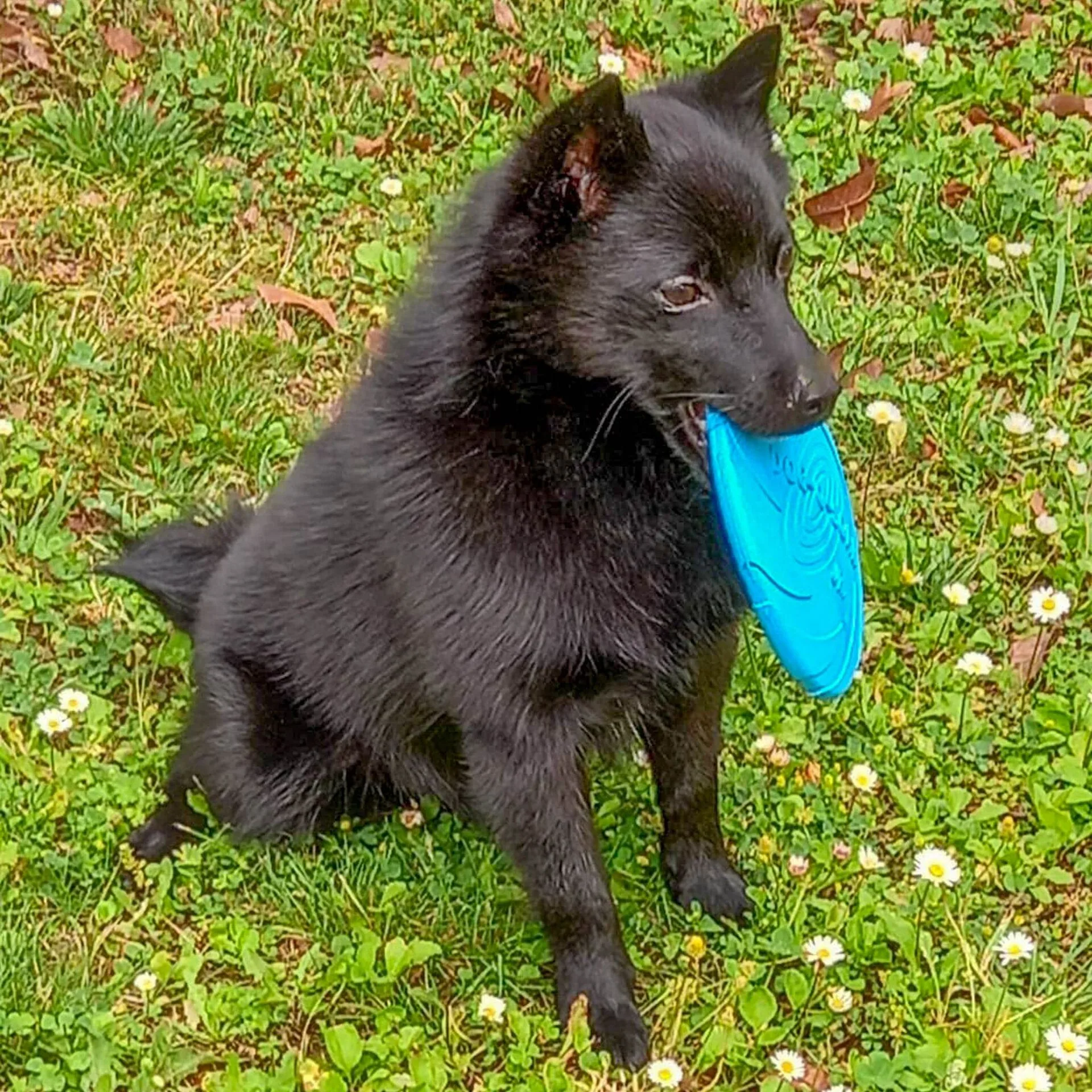
An hour a day is a fair target, and it should not be one dull stroll. The Schipperke is built for activity, so mix a brisk walk with games of fetch, scent searches in the flat and a few minutes of trick training. A dog that has been used mentally is much easier to live with than one that has simply been walked round the block.
Secure surroundings matter more than distance. This is a quick, inventive dog that will use any gap, so keep it on a lead in open areas and check gates and fences thoroughly. A long line gives freedom without risk. On wet days a short, lively session indoors with a puzzle feeder or a hide and seek game takes the edge off its energy.
Training
Schipperkes are clever and quick, and many are also independent, so training works best when it is short, varied and rewarded with food or play. Repetition bores them and harshness makes them stubborn. Treat the dog as a partner rather than a subordinate, and keep a sense of humour: the breed will test whether a rule is really a rule, and it enjoys the answer.
Barking is part of the job description, so teach a quiet cue in the first weeks and reward silence after one or two warning barks. Socialise widely and gently, because the aloofness the standard mentions can turn into suspicion if a young dog meets few people. Practise calm greetings at the door, and teach a reliable recall in a secure space before trying it anywhere else.
Coat and grooming
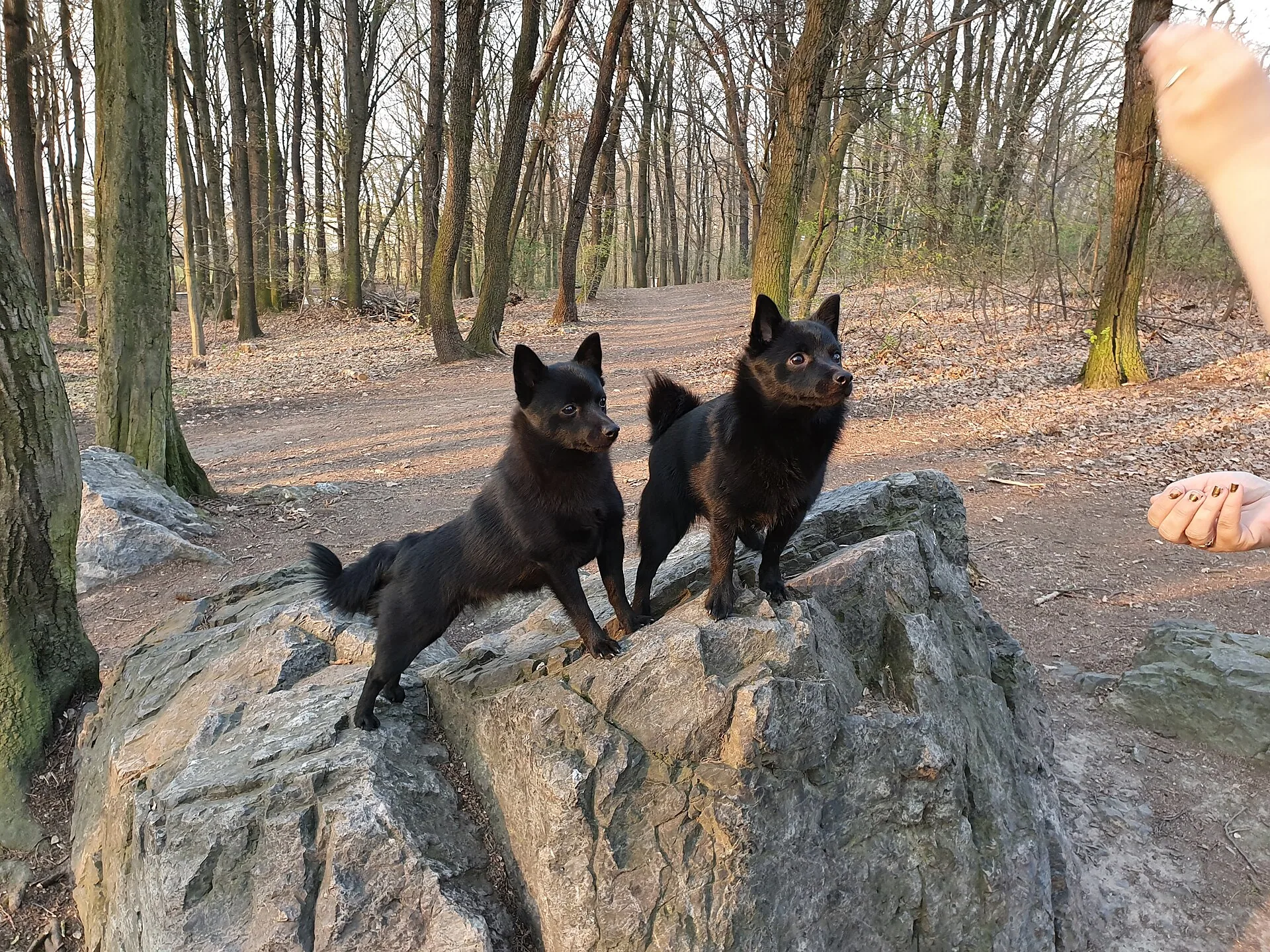
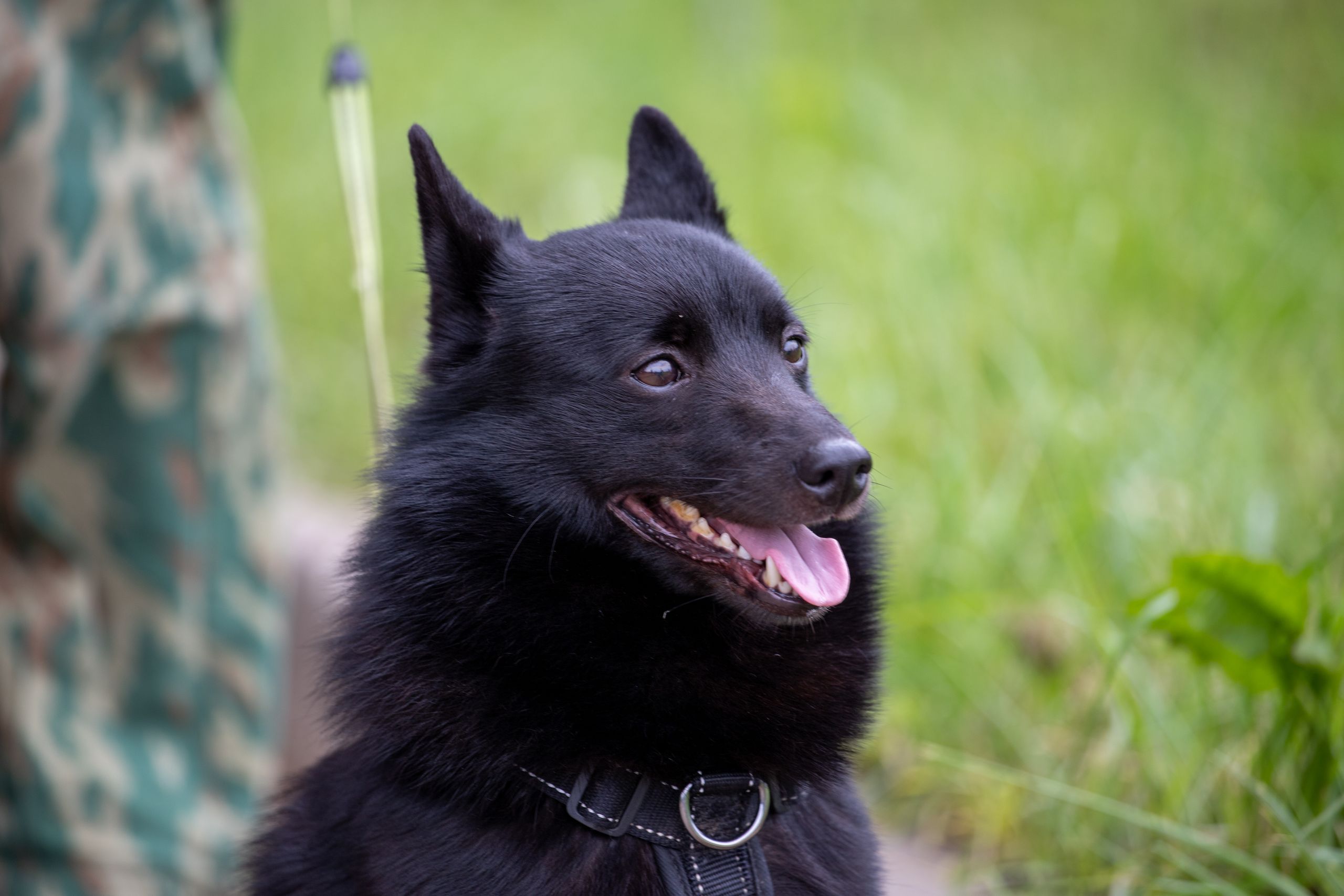
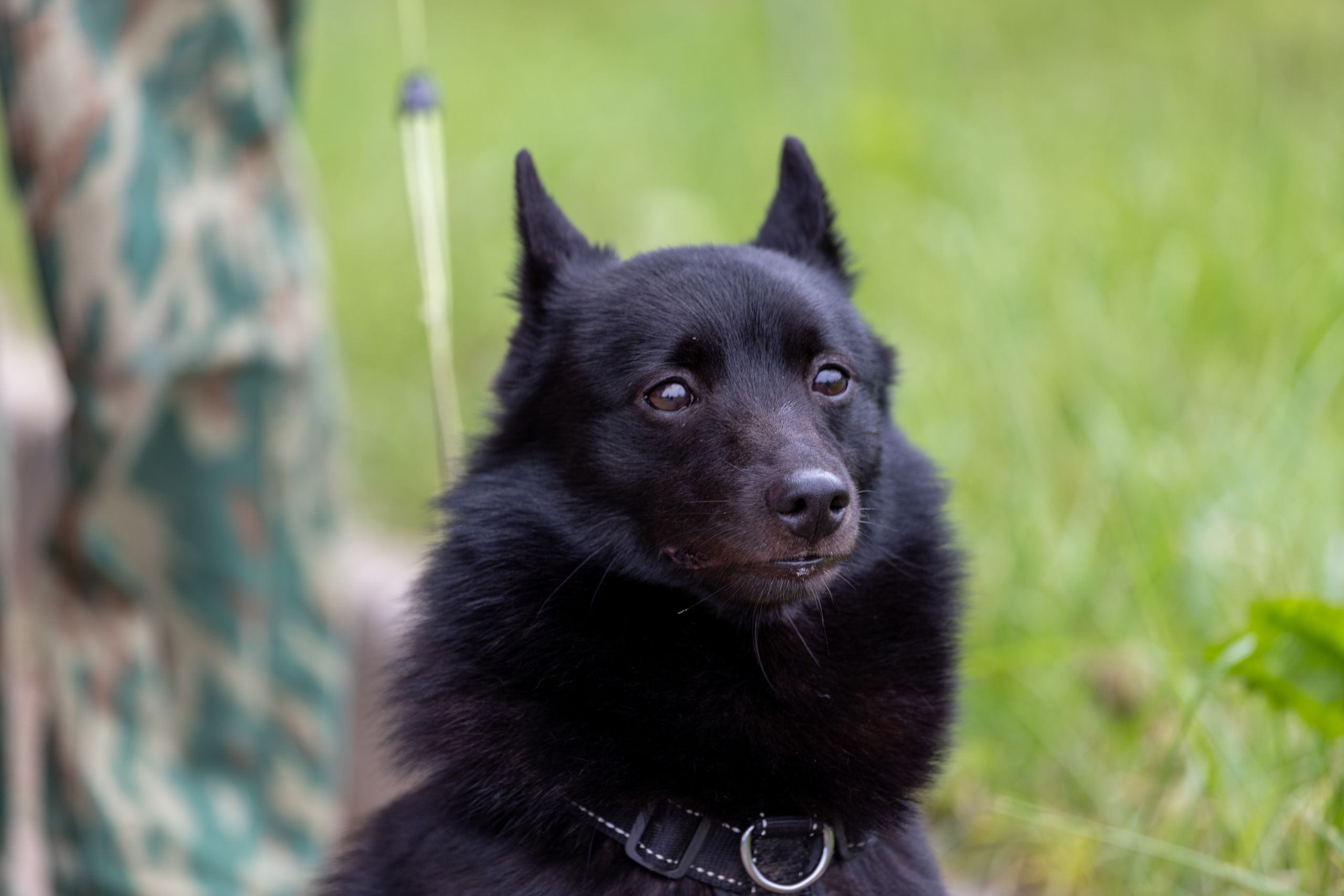
The standard asks for abundant, thick, straight and sufficiently harsh hair over a soft thick undercoat, with a ruff, mane, frill and culottes giving the breed its unique outline. The only permitted colour is totally black. Brush weekly to remove loose hair, and daily during the heavy shed once or twice a year, when the ruff and trousers come out in clumps. Bathing is rarely needed, since the coat sheds dirt well once it dries.
Feeding and weight
Schipperkes are small and can put on weight quietly beneath that dense coat. Weigh portions, count training treats as part of the daily food, and check the waist by touch rather than by sight. Two meals a day suit most adults. A lean Schipperke moves better, keeps its knees and back under less strain, and usually lives longer, so resist the appeal of those bright, hopeful eyes.
Work out a starting calorie figure and food weight with the calorie calculator. Not sure this is the right breed? Take the quiz.
Health
Every breed carries predispositions. These are the conditions most often discussed for the Schipperke, not a prediction for any individual dog.
- Mucopolysaccharidosis type IIIB (a rare inherited storage disease, with a DNA test)
- Hypothyroidism (underactive thyroid)
- Epilepsy
- Patellar luxation (slipping kneecaps)
- Hip dysplasia
- Eye conditions such as cataract
What to ask the breeder. Ask for the DNA test result for mucopolysaccharidosis IIIB in both parents, and for thyroid, kneecap and eye checks. A good breeder will share them without being pressed.
Choosing a puppy
Meet the mother and look for a confident, curious puppy rather than a nervous one. Ask for the mucopolysaccharidosis IIIB result and the parents' health checks. Start socialisation straight away, with different people, surfaces, lifts and noises, and begin a quiet cue and gate manners at once. Puppyhood is the best moment to teach that visitors are normal, not an emergency.
In Luxembourg the national kennel club is the Fédération Cynologique Luxembourgeoise (FCL), a member of the FCI. Many owners also buy from breeders in Germany, France or Belgium; a puppy coming from another EU country must be microchipped and vaccinated against rabies, which in practice means it cannot travel before about fifteen weeks of age. Where to get a dog in Luxembourg.
The older Schipperke
Schipperkes often stay lively into their mid-teens, so do not assume slowing down is simply age. Watch for weight gain, stiffness after rest, cloudy eyes, and changes in drinking or behaviour, and mention them to the vet. Keep walks regular but shorter, add traction to slippery floors, and continue the mental games, which keep an older dog bright.
A realistic day
A realistic weekday for a working household in Luxembourg City, with a midday visit. Adjust it to your dog, not the other way round.
Brisk walk with a few games of fetch before the working day starts.
Breakfast, then a quiet cue practised at the door as the neighbours leave.
Midday visit with a toilet break, a short walk and a puzzle toy.
Longer walk in a park with training and some off-line sniffing time on a long line.
Final short walk, a brush if the coat is shedding, then bed.
A Schipperke in Luxembourg
A Schipperke suits flat life if it gets real exercise and a job to do, but it will announce every sound on the stairs and every lift that stops on your floor. Teach a quiet cue early and tell the neighbours you are working on it. Compact and easy to carry, it is well suited to lifts, and a harness is useful for crowded pavements. Belgium is next door, so vets and trainers here know the breed.
The Pétrusse valley and Parc Merl give good morning loops, and Bambësch or the Grünewald forest suit longer weekend walks on a lead or long line. Free buses and trams make it easy to get out to green space without a car. The black coat warms quickly in sun, so on 30 degree summer days walk early or late and provide shade and water.
Every dog in Luxembourg must be identified, declared to the commune and covered by liability insurance. How registration works.
When you travel
Schipperkes are wary of strangers, so introduce the sitter beforehand and let the dog decide the pace. Keep gates, doors and windows secure, because escape is a talent of the breed. Leave the routine unchanged, with chews or a puzzle for quiet time, and warn the sitter about the alarm barking so that it does not cause concern.
PAWLY's holiday and overnight care takes place in your home, so your dog keeps its own bed and routine.
Myths and facts
MythSchipperkes are just yappy.
FactThey are alert and vocal, but exercise, mental work and a taught quiet cue reduce the barking a great deal.
MythThey are always born without a tail.
FactThe FCI standard accepts dogs born completely tailless or with a short tail, but many have a full natural tail.
MythThe name means little boatman.
FactThat is a popular translation, but the FCI standard gives the Flemish name as little shepherd, and places the breed with the sheepdogs.
Is it the right dog for you?
Suits
- Active flat-dwellers who enjoy a clever dog
- People who like a watchful, characterful companion
- Owners with a sense of humour and secure outdoor routines
- Families with calm, respectful children
Think twice if
- You are sensitive to barking or live in a thin-walled building
- You have small pets such as rabbits or hamsters
- You want an easygoing, obedient dog without effort
- You cannot offer secure fencing or lead walking
Questions owners ask
Is a Schipperke a good watchdog?
Yes, sometimes too good. The FCI calls it an excellent small guard dog and an exceptional alarm, so it will report every sound. Training a quiet cue early and giving it enough exercise keeps the alerts to a reasonable level.
Does a Schipperke shed a lot?
Lightly for most of the year and heavily once or twice a year, when the ruff and trousers come out in clumps. Weekly brushing, daily in the shed, keeps the flat manageable. Bathing is rarely needed.
Can a Schipperke be left alone at work?
With enough exercise and a midday visit, many cope well. They are lively and independent, but also bored easily, so give puzzle toys and build time alone gradually from puppyhood.
Are Schipperkes good with children?
The FCI standard calls them very gentle with children. Choose calm, kind children and teach them to respect the dog's space, because a cornered or grabbed Schipperke may nip, as any small, quick dog might.
Sources
Photo: Pexels (Pexels License) · Photo: JezevecStendencíLouhovatČaj, CC BY-SA 4.0, via Wikimedia Commons · Photo: Cinvic, CC BY-SA 4.0, via Wikimedia Commons · Photo: Pexels (Pexels License)
General information for dog owners in Luxembourg, not veterinary or legal advice. Official facts (origin, size, group, history and temperament as described by the breed standard) follow the FCI standard; health and care sections reflect breed-club and veterinary guidance and are typical ranges rather than rules. For your own dog, ask your vet, the breed club or your commune. How this guide is written and checked. Last reviewed 8 October 2026.
Need someone for your Schipperke?
PAWLY offers an individual 45-minute walk or a home visit at your dog's pace, the same walker every time, and a written report with photos after every visit, across Luxembourg City.
Read next: the journal, for the Schipperke
All articles
The dog that barks and lunges on the lead
Some Schipperke dogs are selective with other dogs; this is the plan for lunging and barking on the lead.

What a proper meet and greet actually involves
A reserved dog needs slow introductions to a new walker or sitter.

Dogs and cats in the same flat
The Schipperke can see small animals as prey; this covers living with a cat in a flat.
Similar breeds
All 198 breeds
Belgian Groenendael
The black, long-haired Belgian shepherd: elegant, sensitive and intense, and made for close work with one person.
EnergyGroomingFlat life
Pomeranian
A tiny spitz with a lion's mane and a big voice.
EnergyGroomingFlat life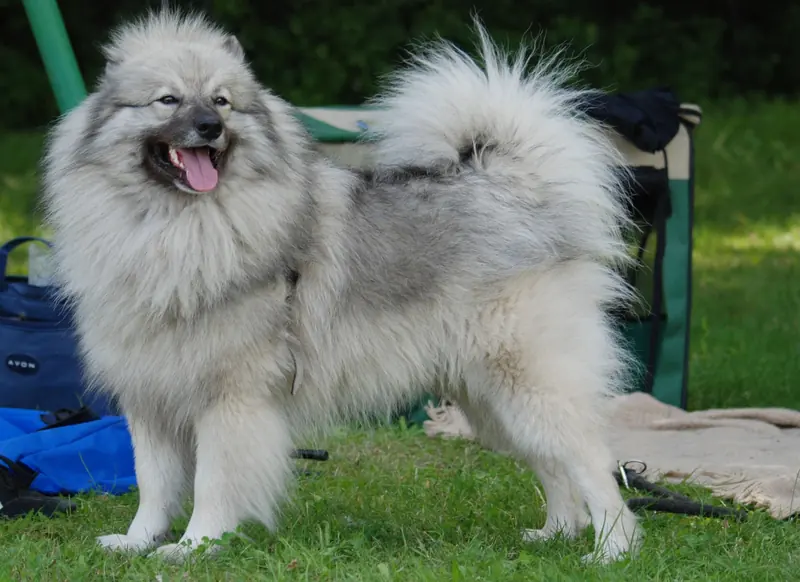
Keeshond
The grey, spectacled Spitz with a mane like a lion's collar, devoted to its household and convinced every doorbell is its business.
EnergyGroomingFlat life

