History
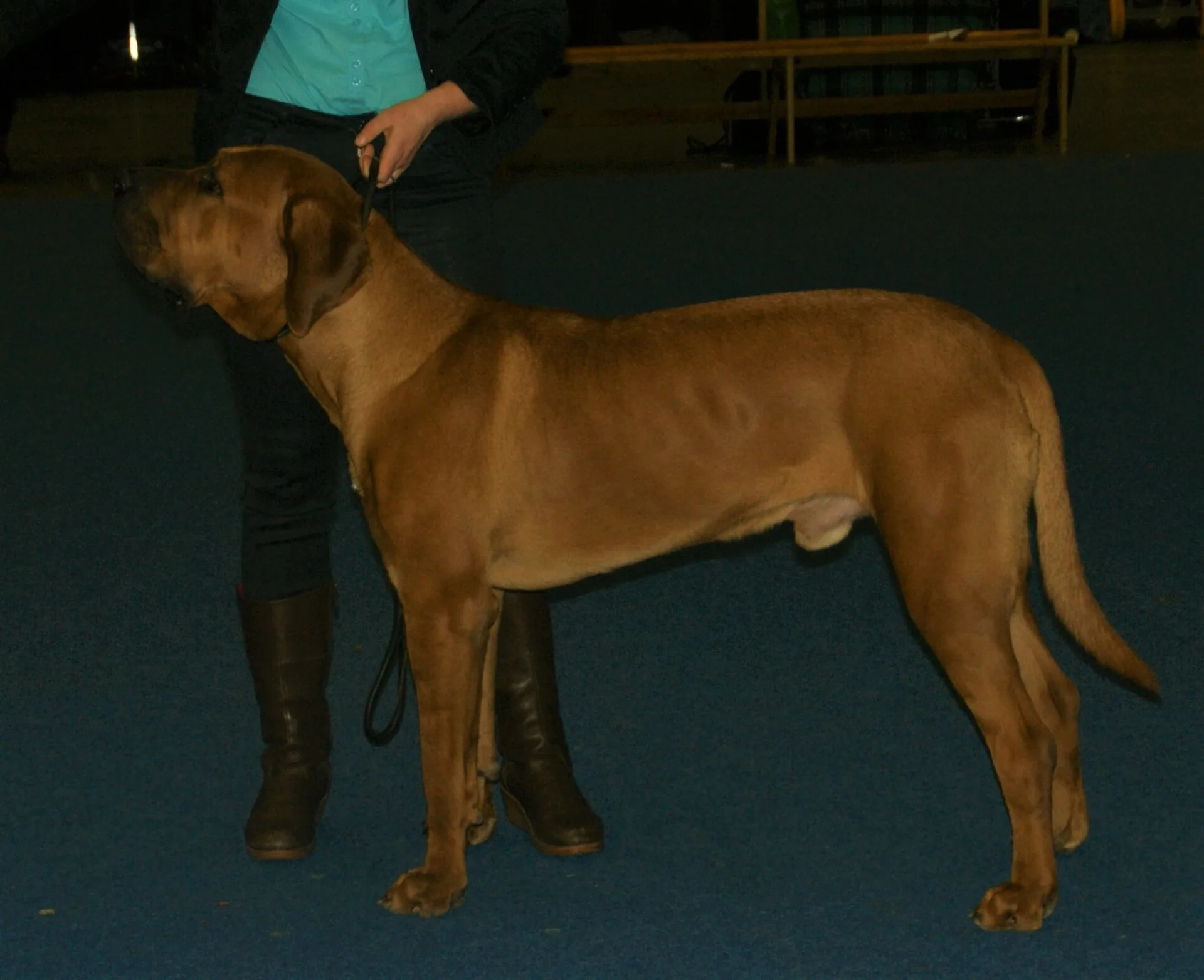
The FCI standard places the Tosa in Group 2, Section 2.1, Molossoid breeds of mastiff type, with Japan as the country of origin and the use given as formerly a fighting dog, nowadays a watchdog. The standard notes that Japan has a long history of dog fighting beginning in the 14th century, and that against this background the Tosa was produced as a cross between the native Shikoku and Western breeds. It is named after the Tosa area, now Kochi prefecture, and is sometimes called the Japanese Mastiff.
According to the standard, the Western breeds were introduced by sequential mating: Bulldogs in 1872, Mastiffs in 1874, German Pointers in 1876 and Great Danes in 1924. The standard attributes the Tosa's stamina and mastiff-type fighting instinct to these crossings. The current FCI text is dated 09.12.1997.
Temperament
The FCI standard describes a temperament marked by patience, composure, boldness and courage, and lists aggressive or overly shy behaviour among the disqualifying faults. The Tosa that most owners describe is a quiet, dignified dog, undemonstrative with strangers, deeply attached to the household and slow to react. That calm, however, rests on a very strong, heavy body and a history of selection for fighting, so any behavioural fault becomes a serious matter.
A Tosa does not need to be provoked to become a problem; it needs to be taught from the first weeks that strangers, children passing, other dogs and city noises are normal and not worth a reaction. Many are tolerant of their own household animals but can be intolerant of unfamiliar dogs, particularly of the same sex, so meetings on lead need to be managed rather than left to chance.
Children and other pets
A well-raised Tosa can be gentle and steady with the children of its own family, but its sheer mass makes even a friendly lean dangerous to a toddler, and no child should be left alone with a dog of this size and history. With other dogs, early introductions are essential, and an adult Tosa is best kept away from unknown dogs. Cats and small pets can sometimes be accepted if raised together, but this cannot be assumed.
Exercise and the daily walk
A Tosa needs about an hour of exercise a day, taken at a steady walking pace on a short, strong lead with a well-fitted harness or collar chosen with a trainer. Calm, structured walks, some sniffing time and a little controlled play suit it better than hard running, and the owner must be able to physically control the dog in any situation.
Avoid vigorous exercise in hot weather, and rest the dog for an hour around meals because of the risk of bloat in deep-chested breeds. Puppies grow very fast and heavy, so long walks, stairs and jumping should be limited until the joints have matured, in the second year.
Training
The Tosa is intelligent and can be trained, but it is not a breed for a beginner. It responds to calm, fair, consistent handling and does badly with force, which can provoke a dog this strong and proud. Reward-based training from the first day, with absolutely reliable lead manners, a solid sit and down, a leave-it and a calm greeting, is the foundation. Class training with an instructor who knows molossoid breeds is strongly advised.
Socialisation is part of training, not an extra. Visit busy streets, lifts, buses and cafes in quiet hours, always at a distance from which the dog stays relaxed, and reward calm.
Coat and grooming
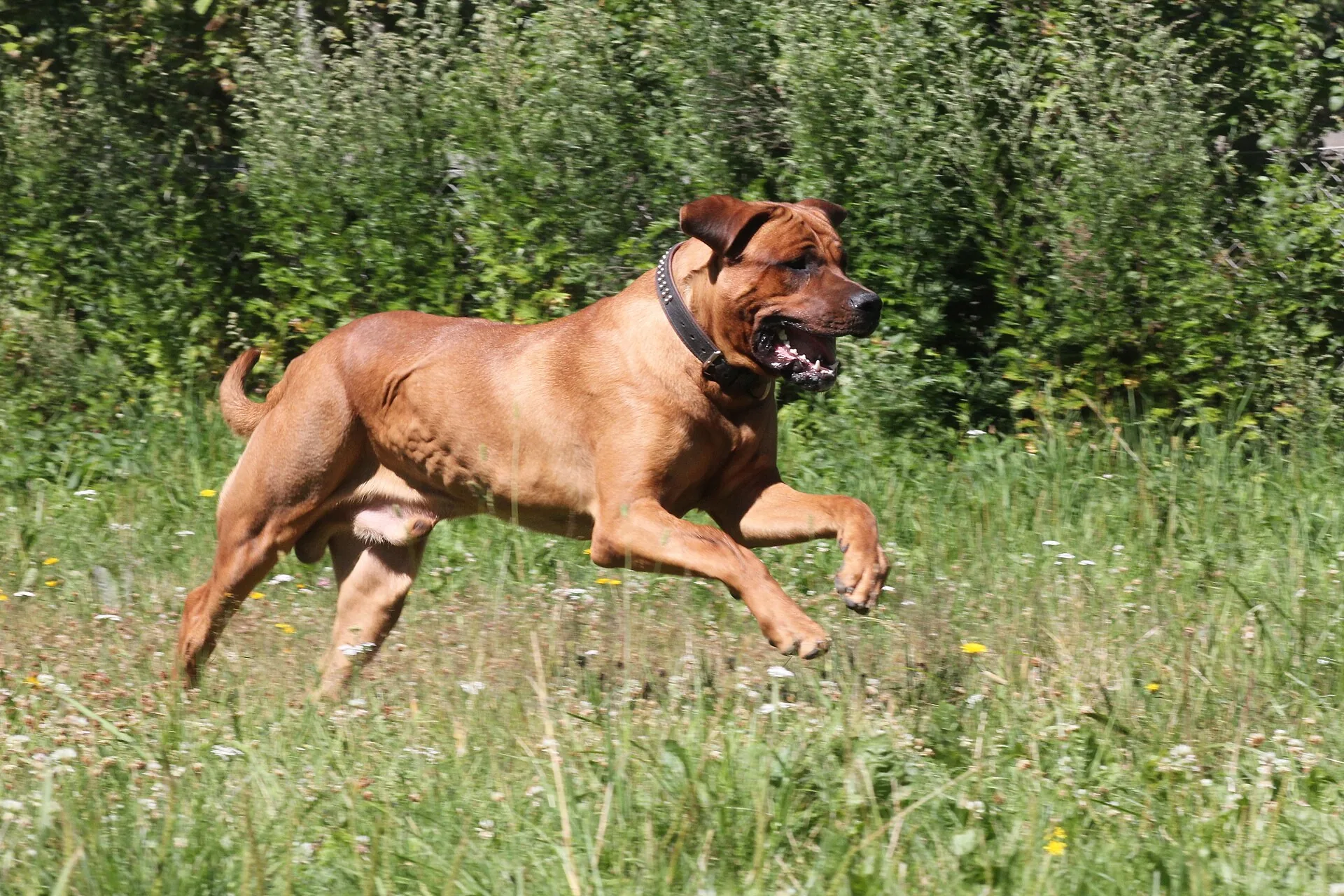
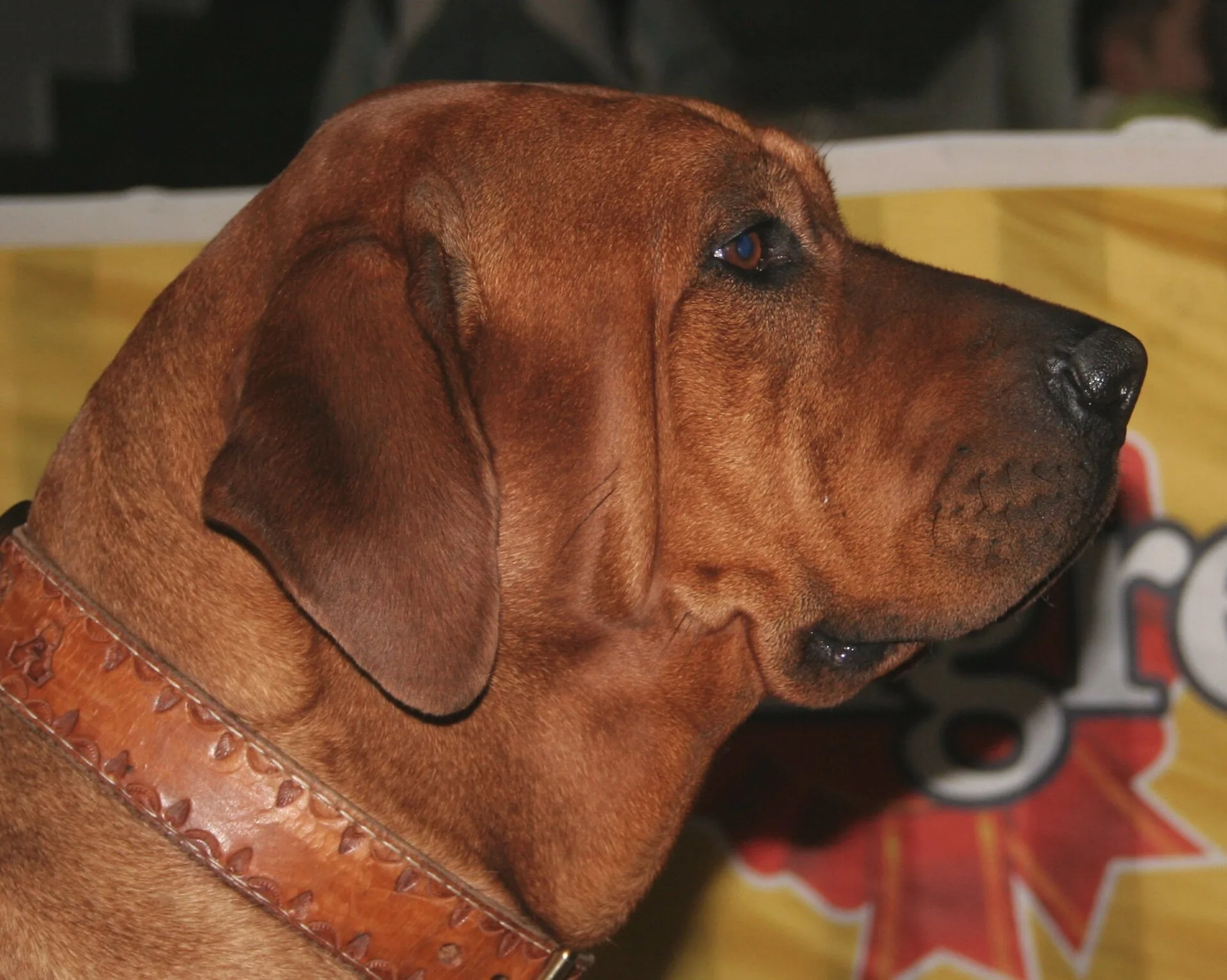
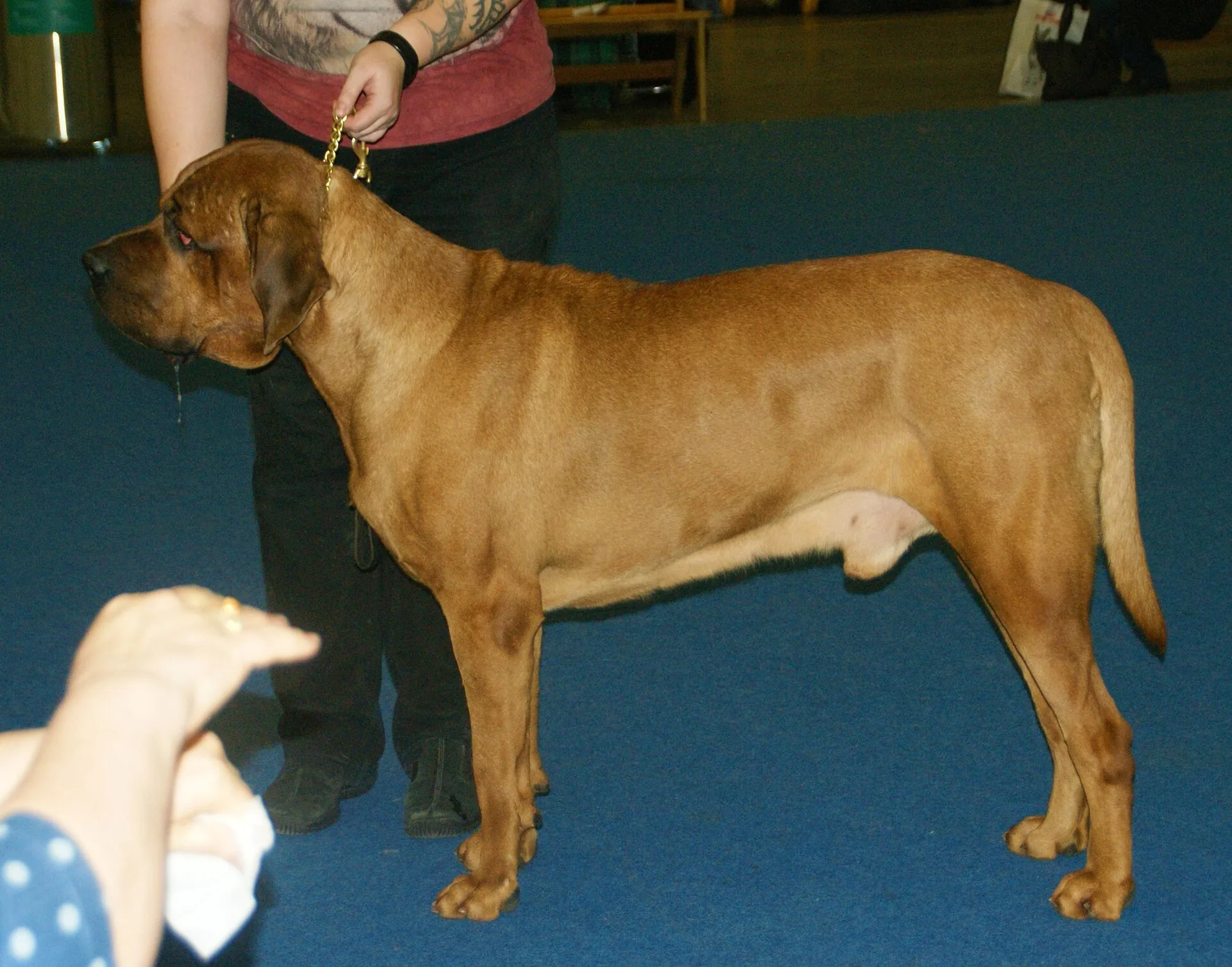
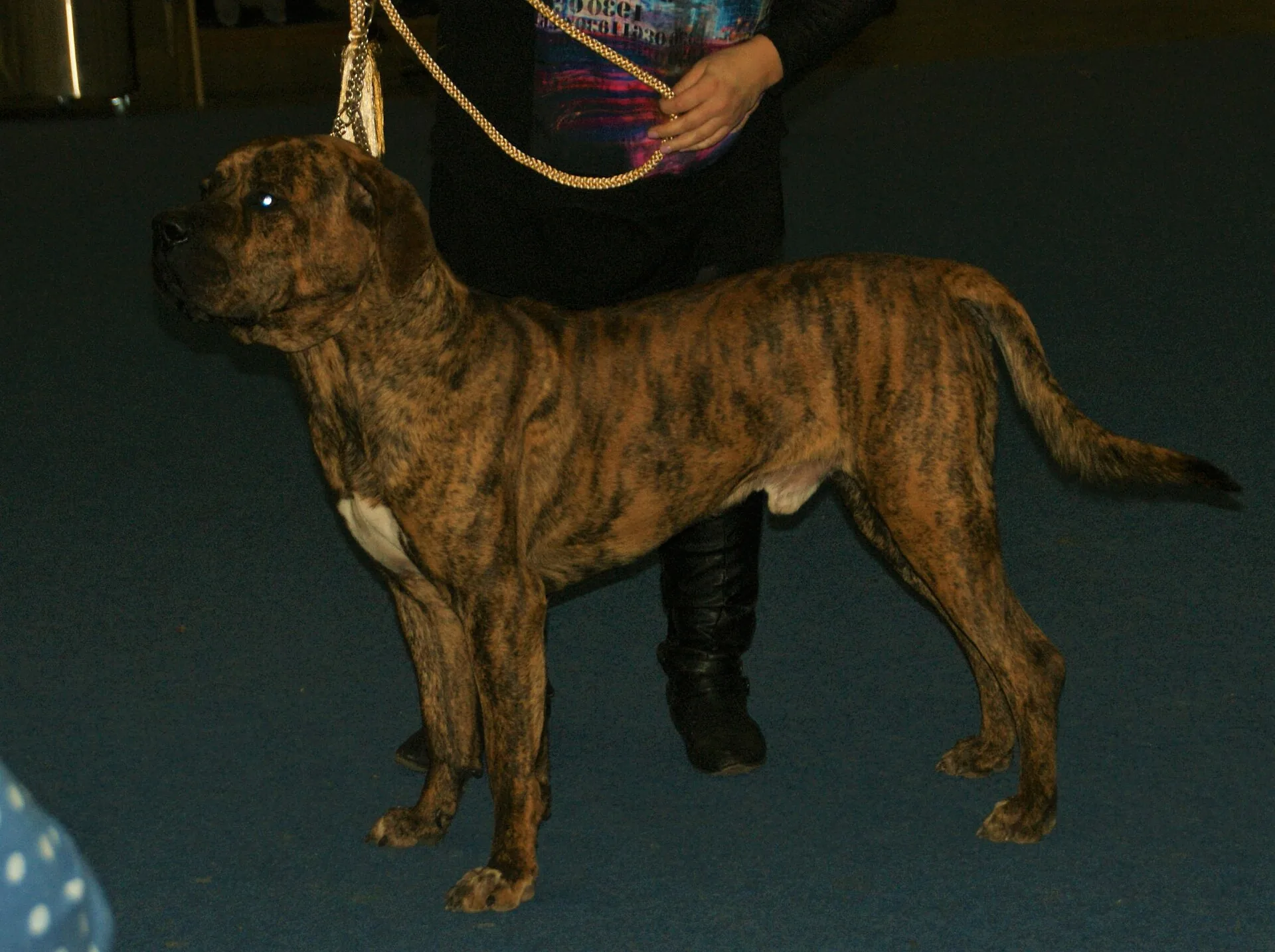
The FCI describes a short, hard and dense coat. Permitted colours are red, fawn, apricot, black and brindle, with slight white markings on the chest and feet allowed. Care is easy: a weekly brush with a rubber mitt removes dead hair, and shedding is moderate. Check skin folds around the face and neck if present, clean the ears regularly, and keep nails short.
Feeding and weight
Feed a complete diet suited to a large, heavy, slow-maturing breed, divided into two meals rather than one, to lower the risk of bloat. Control growth in puppyhood, avoiding rapid weight gain that stresses joints, and keep an adult lean so the hips and elbows carry less load. Keep food, bins and counters out of reach.
Work out a starting calorie figure and food weight with the calorie calculator. Not sure this is the right breed? Take the quiz.
Health
Every breed carries predispositions. These are the conditions most often discussed for the Tosa, not a prediction for any individual dog.
- Gastric dilatation-volvulus (bloat), a risk in deep-chested breeds
- Hip and elbow dysplasia
- Joint and growth problems in rapidly growing puppies
- Skin allergies and pressure sores on hard floors
- Heat intolerance in warm weather
What to ask the breeder. Ask for hip and elbow scores for both parents and any history of bloat in the line. Meet the parents and judge their temperament, and check that the breeder understands the legal position of the breed where you live.
Choosing a puppy
A Tosa puppy is a big, clumsy baby that will be a very large dog within a year. Start lead manners, handling and gentle socialisation immediately, with positive experiences of people, children, other dogs, lifts and traffic. Avoid long walks, stairs and jumping from the car while the joints are growing. Use non-slip mats on smooth floors. Because of the legal requirements in Luxembourg, enrol early with a trainer and ask the commune about the formalities before the puppy arrives.
In Luxembourg the national kennel club is the Fédération Cynologique Luxembourgeoise (FCL), a member of the FCI. Many owners also buy from breeders in Germany, France or Belgium; a puppy coming from another EU country must be microchipped and vaccinated against rabies, which in practice means it cannot travel before about fifteen weeks of age. Where to get a dog in Luxembourg.
The older Tosa
From about seven or eight years a Tosa slows down, and joints, heart and weight need more attention. Shorter, calmer walks, an orthopaedic bed and non-slip floors help. Keep the dog lean, and see the vet about joint support and regular checks. The risk of bloat remains at any age, so keep to small meals and a quiet period around them. Do not allow the dog to become isolated, as it keeps its attachment to the household.
A realistic day
A realistic weekday for a working household in Luxembourg City, with a midday visit. Adjust it to your dog, not the other way round.
Calm lead walk on a quiet route, then breakfast and a rest.
Owner leaves; the dog settles on a large orthopaedic bed in a cool room.
Midday visit: a controlled 40 minute walk on a short lead in a quiet area, fresh water, a calm check of the dog.
Evening walk of about 45 minutes, with practice of basic commands, then dinner after a rest.
Short toilet break, a quiet settle and bedtime.
A Tosa in Luxembourg
The Tosa is named in the Luxembourg law of 9 May 2008 on dogs, together with the Staffordshire Bull Terrier, American Staffordshire Terrier and Mastiff and dogs of similar morphology. Owners need a training certificate and ministerial authorisation. Anyone considering the breed should deal with this before buying, in addition to the usual obligations: microchip, declaration to the commune, third-party liability insurance and the annual dog tax. The owner should check with the authorities how the rules apply to anyone else who handles the dog.
On the practical side, a Tosa is a very large dog for a flat. It can be calm indoors, but the lift, stairwell and neighbours require steady manners and good control. Quiet green areas such as the Bambësch forest and the Pétrusse valley at off-peak hours suit it better than busy parks. Summer days in the 30s °C are risky for a heavy dog, so walk very early and late, and keep the flat cool. Free buses and trams are only useful if the dog is comfortable and well controlled in public.
Every dog in Luxembourg must be identified, declared to the commune and covered by liability insurance. How registration works.
Luxembourg dog law. This breed is named in the law of 9 May 2008 on dogs, which requires a training certificate and a ministerial authorisation before you acquire the dog. Read the rules before you commit.
When you travel
A sitter must be experienced with powerful molossoid dogs and physically able to hold the dog on a lead in all circumstances. The owner should confirm the legal position of anyone who will handle the dog in Luxembourg. Keep the routine unchanged, avoid dog parks and unfamiliar dogs, and keep exercise calm in hot weather. Leave clear instructions on feeding, rest around meals and signs of bloat, with the vet's details.
PAWLY's holiday and overnight care takes place in your home, so your dog keeps its own bed and routine.
Myths and facts
MythA Tosa is a fighting dog and cannot be a family pet.
FactThe FCI describes it as formerly a fighting dog and today a watchdog, with patience and composure. Good dogs can be steady family members, but only with expert handling and early socialisation.
MythBanned or listed dogs are all the same.
FactEach country's rules differ. In Luxembourg the Tosa is named in the law of 9 May 2008 and requires a training certificate and ministerial authorisation, which is different from a ban.
MythA quiet dog does not need training.
FactCalm temperament does not replace obedience. For a dog of this size, reliable control is a safety and legal responsibility.
Is it the right dog for you?
Suits
- Experienced handlers of large molossoid breeds
- Owners prepared for the legal formalities in Luxembourg
- Calm, consistent households with time for socialisation
- People with space and the strength to control a powerful dog
Think twice if
- This would be your first dog
- You cannot or will not complete the required certificate and authorisation
- You live somewhere you cannot easily keep a very large dog
- Children or other dogs are often unsupervised around the dog
Questions owners ask
Is the Tosa allowed in Luxembourg?
Yes, but it is one of the types named in the law of 9 May 2008, so the owner needs a training certificate and ministerial authorisation. Check the current procedure with the competent authorities before acquiring a dog.
How big is a Tosa?
The FCI standard gives minimum heights only: 60 cm for males and 55 cm for females at the withers. It does not specify weight, but this is a large, heavy, powerful dog.
Is the Tosa aggressive?
The FCI standard describes a patient, composed, bold and courageous dog, and treats aggression as a disqualifying fault. Its background as a fighting dog means socialisation and expert handling matter a great deal.
Can a Tosa live in a flat?
It can be calm indoors, but it is a very large dog, and lifts, stairs and neighbours make life harder. It needs a spacious home, daily controlled exercise and strict heat management.
Sources
Photo: Susihurtan, CC BY-SA 3.0, via Wikimedia Commons · Photo: Pleple2000, CC BY-SA 3.0, via Wikimedia Commons · Photo: Canarian, CC BY-SA 4.0, via Wikimedia Commons · Photo: Canarian, CC BY-SA 4.0, via Wikimedia Commons · Photo: Canarian, CC BY-SA 4.0, via Wikimedia Commons
General information for dog owners in Luxembourg, not veterinary or legal advice. Official facts (origin, size, group, history and temperament as described by the breed standard) follow the FCI standard; health and care sections reflect breed-club and veterinary guidance and are typical ranges rather than rules. For your own dog, ask your vet, the breed club or your commune. How this guide is written and checked. Last reviewed 8 October 2026.
Need someone for your Tosa?
PAWLY offers an individual 45-minute walk or a home visit at your dog's pace, the same walker every time, and a written report with photos after every visit, across Luxembourg City.
Read next: the journal, for the Tosa
All articles
Feeding, portions and how to tell if your dog is the right weight
Large dogs suffer more from extra weight; this is how to judge the right one.

Dogs and cats in the same flat
The Tosa can see small animals as prey; this covers living with a cat in a flat.

Dogs in hot weather: the Luxembourg summer guide
The Tosa carries a heavy coat or a heavy frame, which makes a Luxembourg summer the hard season.
Similar breeds
All 198 breeds
English Mastiff
A vast, gentle English guardian: calm, dignified and big enough to change the shape of your home.
EnergyGroomingFlat life
Dogo Argentino
A white, muscular big-game hunter from Córdoba, loyal and affectionate with its family and demanding of anyone who takes it on.
EnergyGroomingFlat life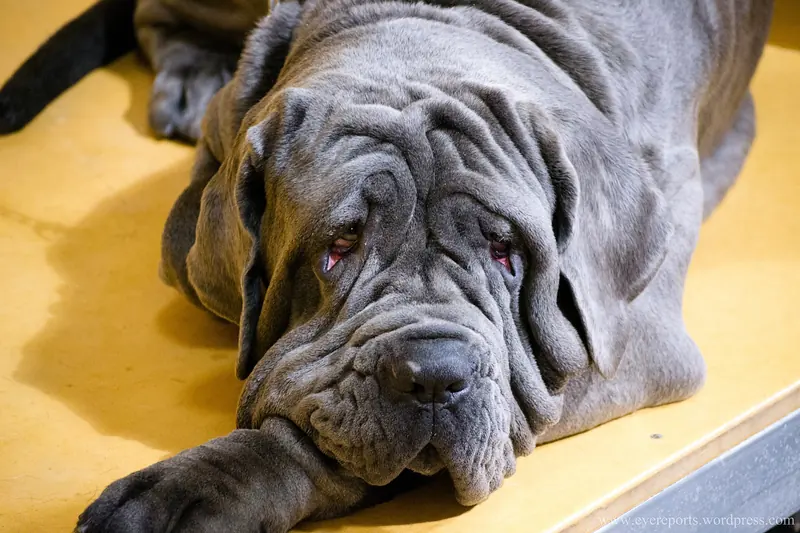
Neapolitan Mastiff
A heavy, loose-skinned guardian from the Naples hinterland, calm and devoted at home and imposing enough to end most arguments at the door.
EnergyGroomingFlat life

