History
The Volpino Italiano is, in the words of the FCI standard, a small Spitz of ancient Italian lineage. The standard places its roots in the European Spitz family that goes back to the Bronze Age, and notes that it shares ancestry with the German Spitz without being descended from it. Italy is the country of origin, and the FCI classes the dog in Group 5, Section 4, European Spitz, with the use given as guard and companion dog.
The standard recalls that the breed was cherished in noble and humble households alike for its instinct of guard and vigilance. A dog of this type appears in a painting by Vittore Carpaccio dated 1502, and Michelangelo is said in the standard to have owned one. In the eighteenth century cart drivers in Tuscany and Latium valued it as a watchful companion. The standard was first written in 1913, popularity then faded, and the breed re-emerged from 1968 with white dogs, with registration resuming in 1972. The current FCI standard is dated 21.09.2023.
Temperament
The FCI describes an exuberant, lively, happy and playful dog, strongly attached to its home and family. In practice that means a small dog with a large sense of duty. A Volpino notices the lift doors opening, the neighbour on the landing and the parcel courier long before you do, and will say so. It is quick, bright and affectionate with its own people, and often a little reserved with strangers until they have been vetted.
Because the breed was shaped as a guard and companion, barking is the main thing to manage. It is rarely aggressive, and the standard lists aggressive or overly shy behaviour as a fault, but it is vocal. Dogs that are left bored or cannot see the street through a window tend to invent their own alarms. Plenty of company, regular walks and a clear routine produce a cheerful, confident small dog that follows you from room to room.
Children and other pets
A Volpino generally enjoys family life and is playful enough for sensible older children. It is small and light, so toddlers who grab, carry or squeeze are a poor match, and a child should always be taught to sit down to stroke it. With other dogs it is usually friendly if properly introduced, though it can be bossy for its size. Cats in the household are normally accepted, but the dog may chase a running squirrel or a strange cat outdoors, so keep it on a lead near wildlife.
Exercise and the daily walk
This is a small dog with a surprising amount of stamina, and about 45 minutes to an hour of daily activity suits most adults, split into two or three outings. It enjoys a brisk walk, a game of fetch with a soft toy and sniffing around a quiet park. Mental work counts as much as distance: a short training session or a food puzzle before you leave for work calms a dog that otherwise patrols the flat.
Puppies should have short outings and plenty of rest while the joints develop, and they should not jump repeatedly from sofas or stairs. Keep a lead on in open ground, since the guard instinct and chase drive can send a small dog after a bird in seconds. In hot weather, walk early or late, as the dense double coat holds heat.
Training
The Volpino is intelligent and keen to please, which makes basic training pleasant. Short, cheerful sessions with small treats work well, and it learns names, tricks and routines quickly. Start early with the things that matter in a building: calm greetings at the door, a reliable quiet cue, and walking politely beside you past other dogs. A small dog that is allowed to pull or lunge on the lead often goes on doing so for life, and the habit is easier to prevent than to cure.
Barking deserves a plan from the first week. Reward quiet, teach the dog to go to a mat when the bell rings, and never shout, which the dog hears as joining in. Recall can be good in a puppy and slip in adolescence, so practise in safe places before trusting it. Gentle handling of paws, ears and coat while young makes future grooming and vet visits easy. Harsh corrections tend to produce a nervous dog, not an obedient one.
Coat and grooming
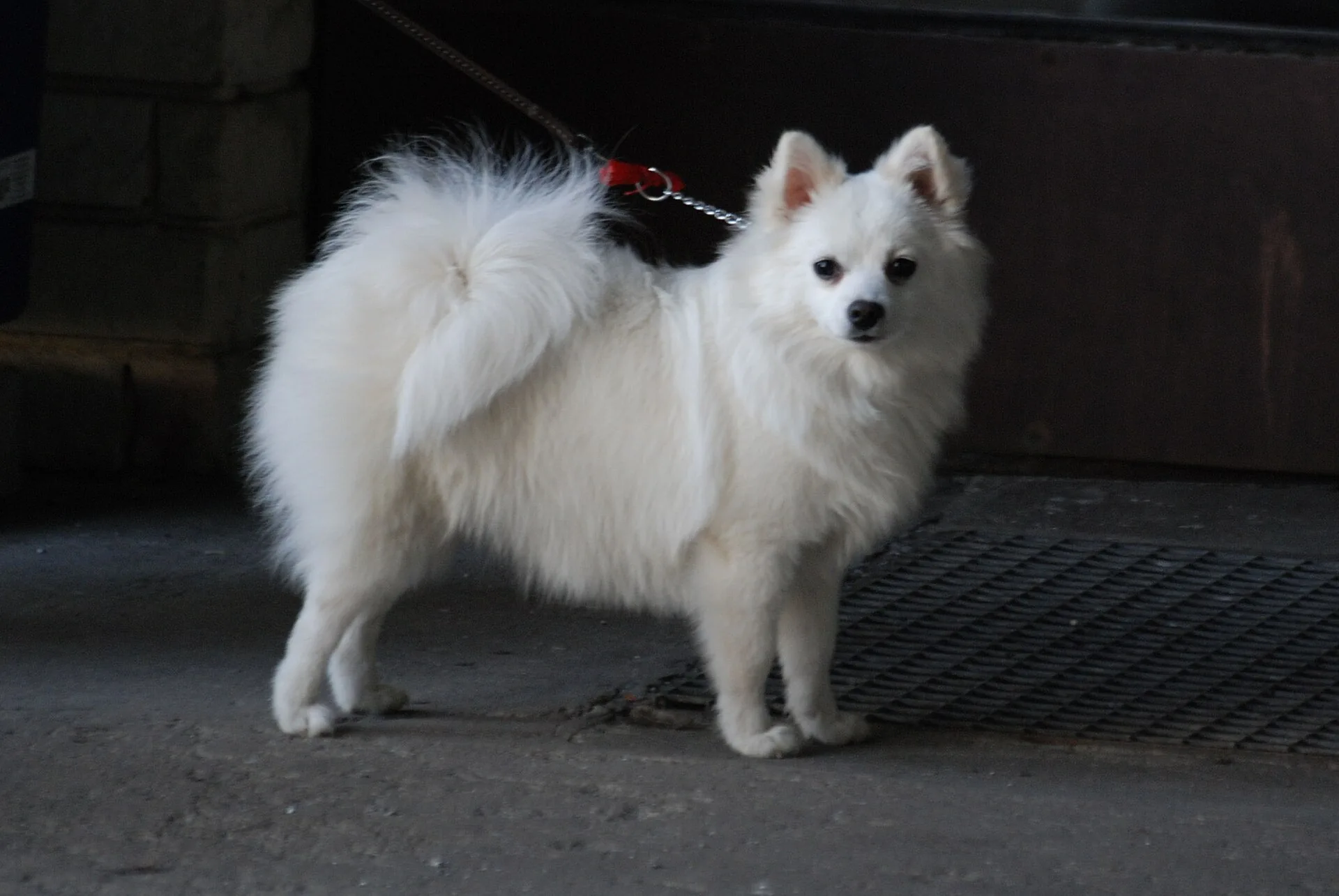
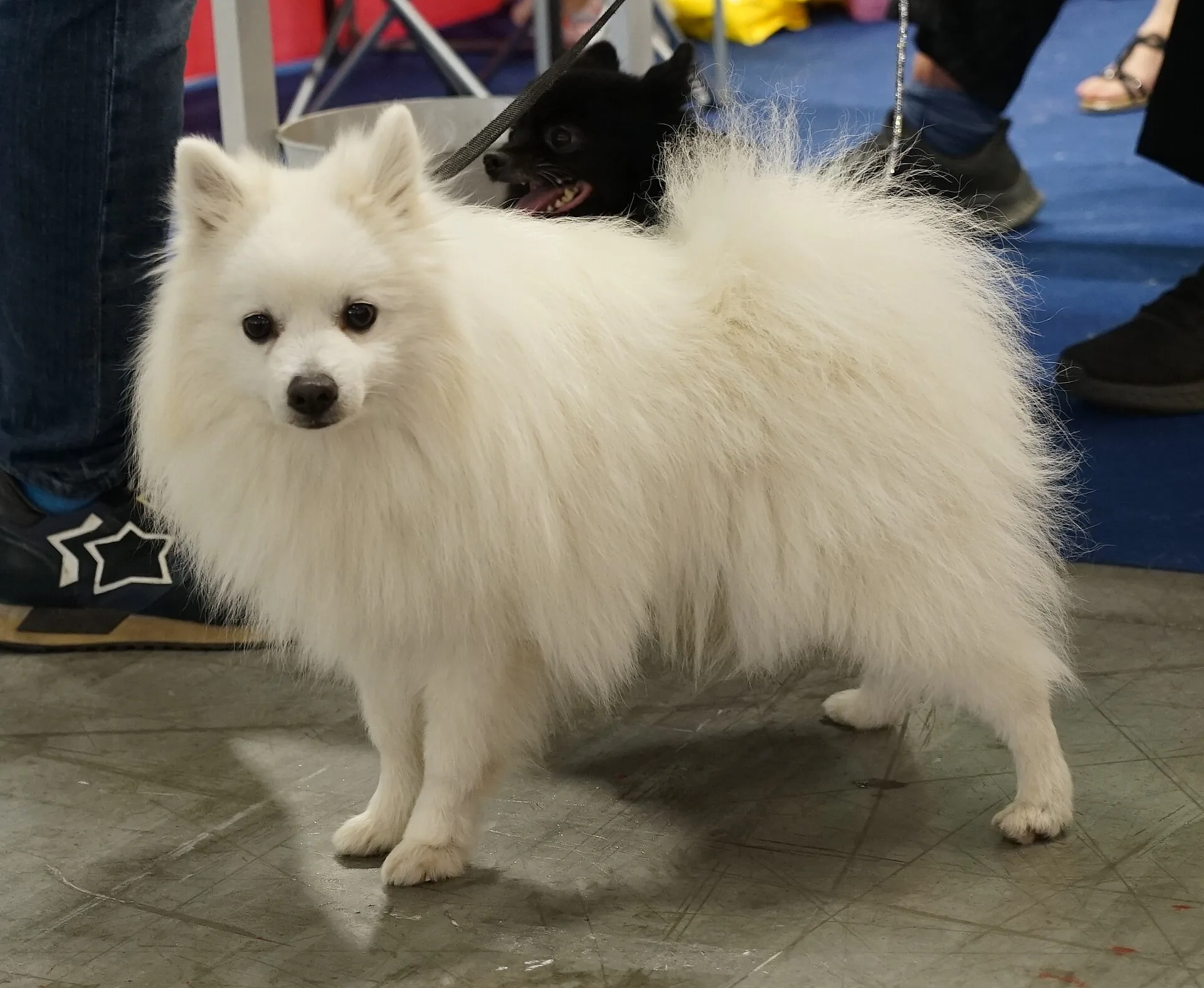
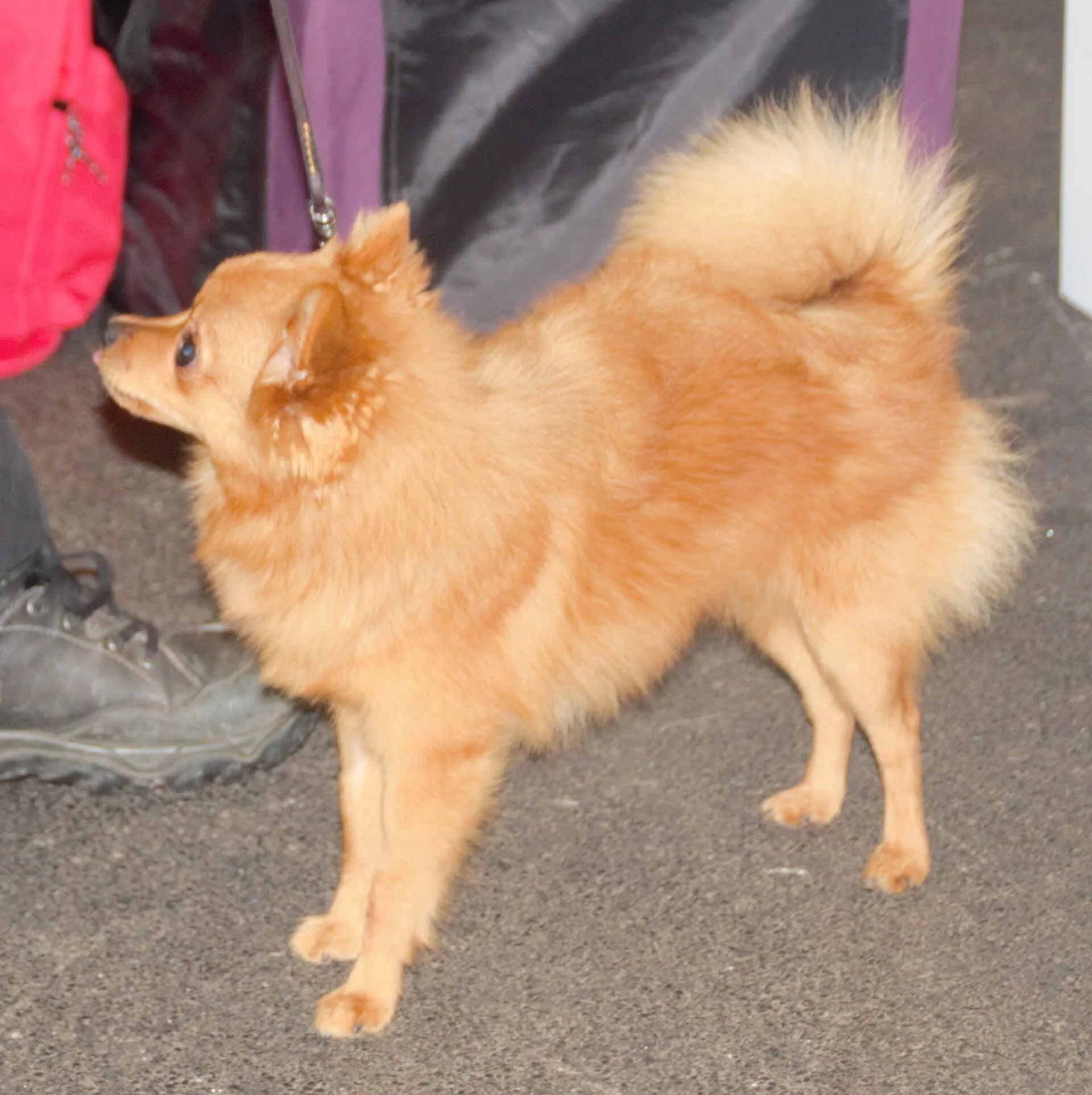
The FCI describes a dense coat of straight, harsh, stand-off guard hair, short on the muzzle, semi-long on the skull, fine on the ears, with a full tail and trousers on the hindquarters, giving a muff-like look. Colours permitted are self-colour white, red or black, with minor white on the feet acceptable in solid colours. Brush two or three times a week with a pin brush and comb, and daily during the heavy seasonal moult. Bathe only when needed. The coat should not be clipped to shape.
Feeding and weight
A small, active dog does well on a complete diet measured carefully by weight, with portions adjusted to body condition. Two meals a day suit most adults. Treats used in training should be counted as part of the daily ration, as small dogs gain weight easily. Fresh water must always be available, and hard chews or dental products can help limit tartar, a common issue in small breeds. Check with your vet before changing food.
Work out a starting calorie figure and food weight with the calorie calculator. Not sure this is the right breed? Take the quiz.
Health
Every breed carries predispositions. These are the conditions most often discussed for the Volpino Italiano, not a prediction for any individual dog.
- Patellar luxation (slipping kneecaps)
- Dental disease and tartar build up, common in small breeds
- Skin and coat problems when the dense coat is matted or damp
- Eye irritation and watery eyes
- Weight gain, which strains small joints
What to ask the breeder. Ask the breeder for the parents' knee (patella) examination results and dental check, and ask whether eye examinations have been done. Meet the mother and see how she behaves with visitors.
Choosing a puppy
Volpino puppies are fluffy, bold and noisy in equal measure. Begin crate and alone-time training in the first days, rewarding calm behaviour rather than rescuing every whimper, so that barking does not become a habit. Socialise carefully with different people, children, lifts, buses and the sounds of the street, without overwhelming the puppy. Short play sessions and soft handling are better than long walks. Start brushing from the first week, even when the coat is short, so that grooming becomes routine.
In Luxembourg the national kennel club is the Fédération Cynologique Luxembourgeoise (FCL), a member of the FCI. Many owners also buy from breeders in Germany, France or Belgium; a puppy coming from another EU country must be microchipped and vaccinated against rabies, which in practice means it cannot travel before about fifteen weeks of age. Where to get a dog in Luxembourg.
The older Volpino Italiano
Many Volpini stay lively into their teens. From about ten years, check the teeth more often, watch for stiffness in the back legs, and keep weight under control. Shorter, gentler walks twice or three times a day suit older dogs, and non-slip rugs help on parquet. Hearing and sight may dull, so approach calmly and avoid sudden surprises. Regular vet checks, ideally every six months, catch gradual problems early.
A realistic day
A realistic weekday for a working household in Luxembourg City, with a midday visit. Adjust it to your dog, not the other way round.
Short toilet walk, then a light breakfast and a quick brush of the coat.
Owner leaves for work; the dog settles on a bed by the window with a food puzzle.
Midday visit: a lively 30 minute walk in a nearby park, water and a short training game.
Evening walk of about 45 minutes with sniffing time, followed by dinner.
Final toilet break, a few minutes of brushing and then bedtime.
A Volpino Italiano in Luxembourg
A Volpino fits a Luxembourg City flat well, as it is small enough to carry in the lift and does not need a garden. The challenge is noise. Thin walls, a shared corridor and a lift that opens constantly give the dog plenty to report, so practise quiet from puppyhood and consider covering low windows. Parc Merl, the Pétrusse valley and the Municipal Park are ideal for daily outings, and buses and trams are free, so a calm dog can come along almost anywhere.
Summers in the 30s °C are hard on a dense coat, so walk early and late and keep the flat cool. In the Grünewald and Bambësch forests, keep a lead on near wildlife, as the breed's alertness can turn into a chase. Every dog in Luxembourg must be microchipped, declared to the commune and covered by third-party liability insurance, and the commune charges an annual dog tax.
Every dog in Luxembourg must be identified, declared to the commune and covered by liability insurance. How registration works.
When you travel
A sitter should know that this dog barks at noises and needs a steady routine to stay calm. Keep to the usual walk times, and give a little company, as the Volpino is strongly attached to its people and may fret. Brush the coat every couple of days, keep the lead on outside, and leave the vet's contact details and feeding amounts written down. A sitter staying in the home suits the dog far better than long absences.
PAWLY's holiday and overnight care takes place in your home, so your dog keeps its own bed and routine.
Myths and facts
MythA small spitz is just a yappy ornament.
FactThe Volpino was a working watchdog and cart companion. It barks because it was bred to give warning, and training can channel this.
MythThe Volpino is a type of Pomeranian.
FactIt is a separate Italian breed with its own FCI standard, though both belong to the Spitz family.
MythThe thick coat should be clipped for summer.
FactThe coat protects the skin from sun and heat. Brush out dead undercoat, and avoid shaving, which ruins the coat's texture.
Is it the right dog for you?
Suits
- Owners who want a lively, affectionate small dog
- People at home or with a midday visitor
- Flat dwellers who will train quiet behaviour early
- Families with considerate older children
Think twice if
- You need a dog that stays silent in a thin walled building
- You dislike regular brushing
- The dog would be alone for long hours daily
- You have toddlers who grab and carry
Questions owners ask
Do Volpino Italiano dogs bark a lot?
They are alert watchdogs and tend to bark at sounds and visitors. Early training, enough exercise and company reduce it, but expect a vocal dog compared with many other small breeds.
How big does a Volpino get?
The FCI standard gives 27 to 30 cm at the withers for males and 25 to 28 cm for females. The standard gives weight only as in proportion to height; many are around 4 to 5 kg.
Can a Volpino stay alone while I work?
It can learn to manage a few hours with gradual training, but it is a companion breed and may bark or fret if left too long. A midday visit or walker helps a great deal.
Is the Volpino hard to groom?
Not hard, but regular. Brush two or three times a week and daily during moulting. The coat naturally stands off the body, so no clipping or styling is needed.
Sources
Photo: Lilly M real name: Małgorzata Miłaszewska, CC BY-SA 3.0, via Wikimedia Commons · Photo: Canarian, CC BY 4.0, via Wikimedia Commons · Photo: Canarian, CC BY 4.0, via Wikimedia Commons
General information for dog owners in Luxembourg, not veterinary or legal advice. Official facts (origin, size, group, history and temperament as described by the breed standard) follow the FCI standard; health and care sections reflect breed-club and veterinary guidance and are typical ranges rather than rules. For your own dog, ask your vet, the breed club or your commune. How this guide is written and checked. Last reviewed 8 October 2026.
Need someone for your Volpino Italiano?
PAWLY offers an individual 45-minute walk or a home visit at your dog's pace, the same walker every time, and a written report with photos after every visit, across Luxembourg City.
Read next: the journal, for the Volpino Italiano
All articles
Teeth: the problem owners find least interesting and vets see most
Teeth are a known weak point in the Volpino Italiano; this is the routine that helps.

What a proper meet and greet actually involves
A reserved dog needs slow introductions to a new walker or sitter.

House training in an apartment, without a garden door
Small dogs can be slow to house-train; this is the flat routine.
Similar breeds
All 198 breeds
German Spitz
One of Central Europe's oldest breeds, a fox-faced, ruff-necked house guard that announces every visitor with great sincerity.
EnergyGroomingFlat life
Pomeranian
A tiny spitz with a lion's mane and a big voice.
EnergyGroomingFlat life
Japanese Spitz
A snow-white, fox-faced companion with a bright mind and a standard that expressly frowns on noisiness, which says a great deal.
EnergyGroomingFlat life

