

History
The Afghan Hound comes, as its name says, from the mountains of Afghanistan, where it was kept as a hunting dog able to course game across rough and varied ground. The FCI standard calls it one of the typical sighthounds of the world: a dog that hunts by sight, combining speed with real power, and one that will still give chase if given the opportunity. The long coat that looks so decorative today protected it from cold nights and harsh terrain at altitude.
Afghans reached Britain around the beginning of the twentieth century and quickly made their name in the show ring. Great Britain holds patronage of the breed within the FCI, and the current standard, published in 2021, places it in Group 10, Section 1, among the long-haired or fringed sighthounds.
Temperament
The FCI standard describes the expression as Eastern or Oriental and the character as dignified and aloof, with a certain keen fierceness. In daily life that usually means a dog that is gentle and affectionate with its own people but reserved with strangers, rarely the type to greet every passer-by in the lobby.
Independence is the trait owners mention most. An Afghan is not unfriendly, it simply decides for itself whether a request is worth answering. It can be sensitive to harsh handling and to loud, chaotic households, and it may sulk rather than comply. Above all, the hunting instinct is intact: a hare, a cat or a plastic bag blowing across a field can trigger a sprint that no recall will interrupt.
Children and other pets
With considerate older children an Afghan is usually tolerant and gentle, though it does not enjoy being chased, hugged or used as a climbing frame, and a large hound running indoors can knock over a toddler. It tends to get on well with other dogs, especially other sighthounds of similar size. Cats raised alongside it may be accepted at home, but outdoor cats, rabbits and small pets are at real risk, and that rarely changes with training.
Exercise and the daily walk
An adult Afghan needs about an hour and a half to two hours a day, ideally split between steady lead walks and at least a few chances each week to gallop at full speed in a securely fenced area. Walks on lead can be calm and pleasant once the dog is mature, but the lead should never be dropped near roads or open fields.
Recall is the weak point of the breed, not because of poor intelligence but because the chase instinct overrides everything. Experienced owners use enclosed dog fields, rented secure paddocks or lure coursing clubs for free running.
Training
Training an Afghan works best in short sessions with food rewards and plenty of patience. Repetition bores it quickly, and pressure or raised voices tend to make it shut down. Teach the basics early: a reliable sit, waiting at doors, walking politely on lead, standing still for grooming and handling of feet and ears.
Socialisation should begin as soon as the puppy arrives, with calm exposure to lifts, trams, traffic, visitors and other dogs. A shy or nervous Afghan can become difficult to handle on busy streets. Expect a long adolescence, during which the dog may forget everything it knew; consistency and a sense of humour help far more than strict obedience methods.
Coat and grooming
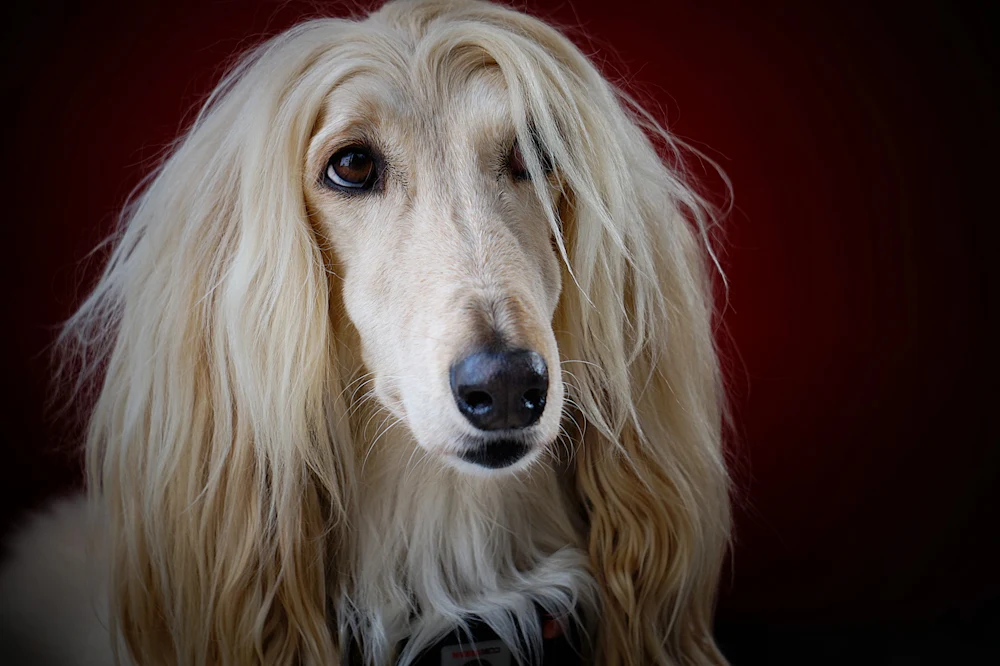
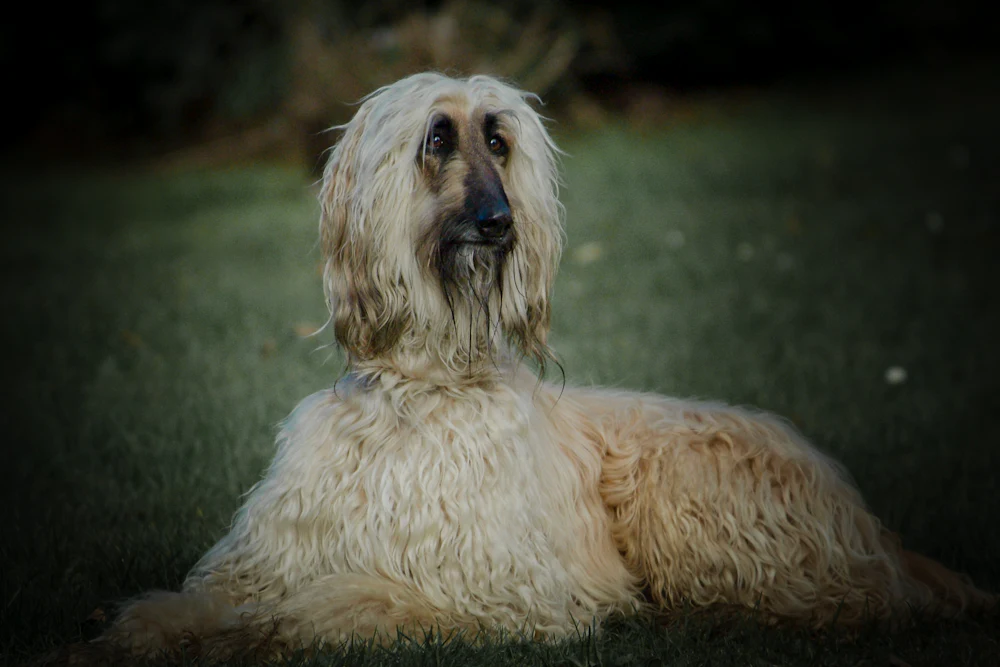
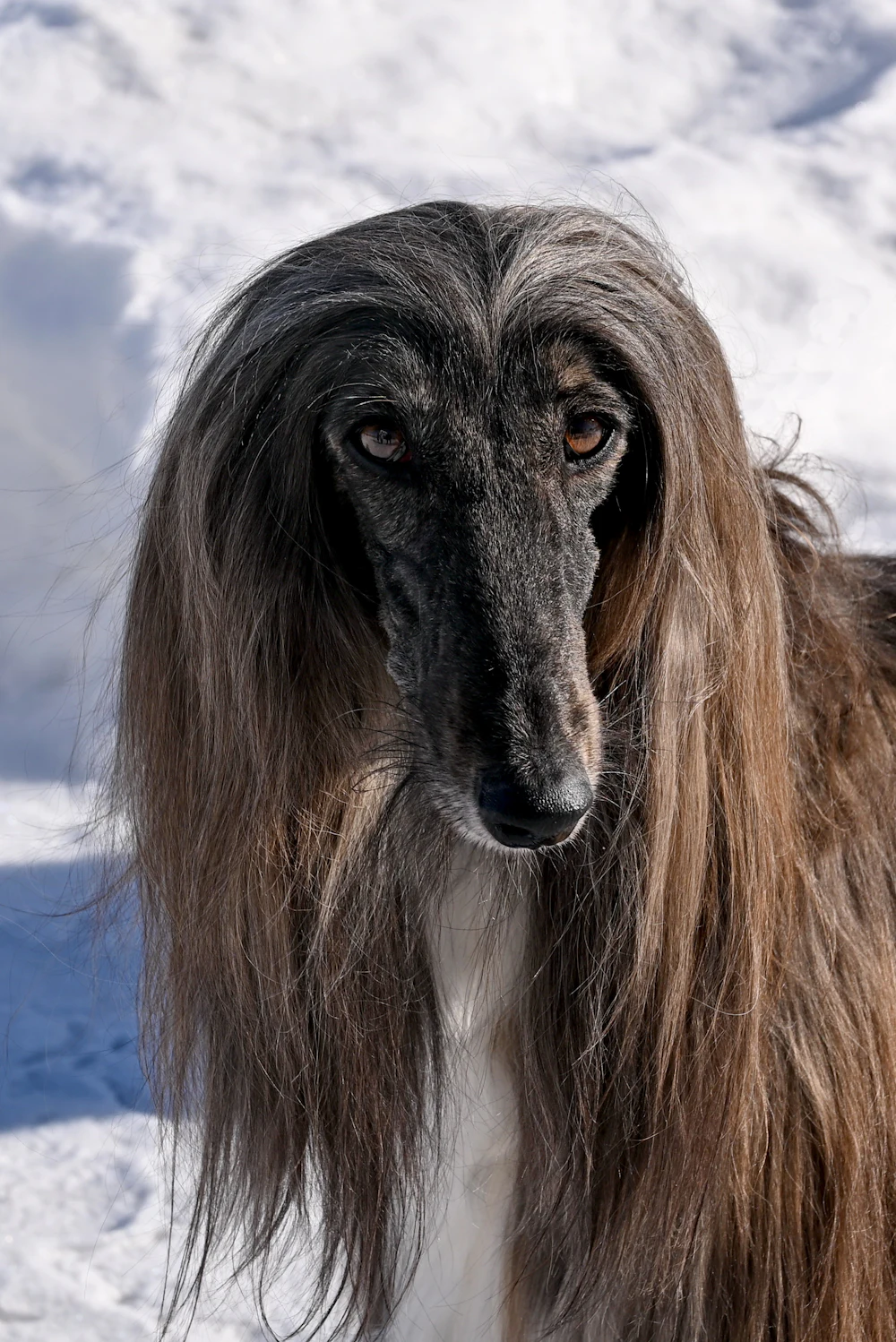
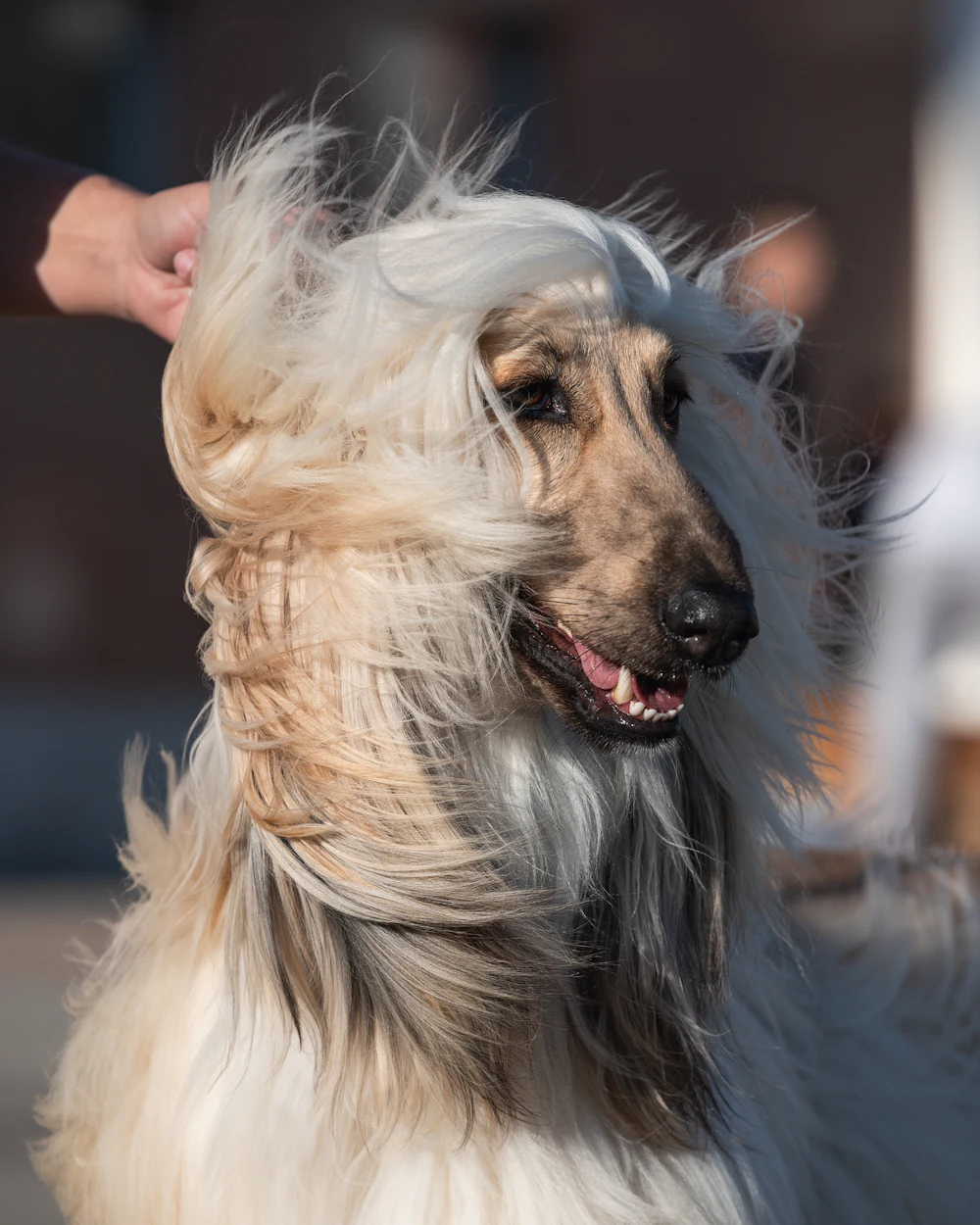
The coat is long and very fine on the ribs, quarters and flanks, while mature dogs develop short, close hair along the saddle from the shoulders backwards. The standard asks for the coat to develop naturally, with a silky topknot. All colours are accepted, although white markings on the head or collar are highly undesirable. Shedding is modest, but the coat mats easily, especially during the change from puppy to adult coat. Owners should plan on thorough brushing several times a week, regular baths and conditioner, and a snood at mealtimes to keep the ears clean.
Feeding and weight
Afghans are lean by design and many are fussy eaters, so the challenge is often to keep weight on rather than off. Feed a complete diet suited to a large, active dog, divided into two meals, and avoid hard exercise for an hour or so before and after eating because deep-chested breeds are at risk of bloat. Check body condition with your hands rather than your eyes, since the coat hides both ribs and extra weight.
Work out a starting calorie figure and food weight with the calorie calculator. Not sure this is the right breed? Take the quiz.
Health
Every breed carries predispositions. These are the conditions most often discussed for the Afghan Hound, not a prediction for any individual dog.
- Hip dysplasia
- Cataracts (including early-onset forms)
- Hypothyroidism
- Gastric dilatation-volvulus (bloat)
- Sensitivity to anaesthesia, as in many sighthounds
What to ask the breeder. Ask to see hip scores and recent eye examination results for both parents, plus thyroid testing, and how the breeder socialises puppies to household noise and handling.
Choosing a puppy
Puppies and adolescents are bouncy, mischievous and clumsy on their long legs, so keep exercise moderate and free play on soft ground during the growth phase. Start grooming on day one with short, pleasant sessions on a table or mat, and get the puppy used to the hairdryer early. The coat changes over a long period and the adult coat may only settle once the dog is fully mature, often between two and three years.
In Luxembourg the national kennel club is the Fédération Cynologique Luxembourgeoise (FCL), a member of the FCI. Many owners also buy from breeders in Germany, France or Belgium; a puppy coming from another EU country must be microchipped and vaccinated against rabies, which in practice means it cannot travel before about fifteen weeks of age. Where to get a dog in Luxembourg.
The older Afghan Hound
Older Afghans usually stay elegant and active well into their senior years, though they may prefer two shorter walks to one long outing. Keep them lean, check teeth and joints regularly and watch for changes in the eyes. Many owners trim the coat shorter for an older pet to make care easier on both dog and human. Soft bedding matters, because a thin, bony hound feels hard floors more than most.
A realistic day
A realistic weekday for a working household in Luxembourg City, with a midday visit. Adjust it to your dog, not the other way round.
Calm lead walk of 30 to 40 minutes along quiet streets or the Pétrusse valley, then breakfast once the dog has settled.
Quick brush of the ears and legs, then the Afghan usually sleeps on the sofa while the owner leaves for work.
PAWLY midday visit: a 45-minute walk on a long line in a quiet green area, fresh water and a check that the coat has not picked up burrs.
Main exercise of the day: a sprint in a secure fenced field at the weekend, or a brisk hour-long walk on lead on weekdays, followed by dinner.
Short last walk around the block, then quiet time on a soft bed.
An Afghan Hound in Luxembourg
In a Luxembourg City flat an adult Afghan can be surprisingly easy to live with, quiet and largely inactive indoors, provided it has had proper exercise. The real issues are space for a long body to stretch out, slippery floors that a sighthound can slide on, and the sheer amount of hair, mud and leaves that a long coat brings back from a wet November walk. A towel and a hairdryer by the door are part of the routine.
Parks such as Parc Merl, Kinnekswiss and the Pétrusse valley suit lead walks, while Bambësch and the Grünewald forest offer longer outings, but the forests are full of deer and hares, so a long line is essential. In summer, walk early and late, as heat in the 30s °C is tiring under a long coat. Remember that every dog must be microchipped, declared to the commune and insured for third-party liability.
Every dog in Luxembourg must be identified, declared to the commune and covered by liability insurance. How registration works.
When you travel
A sitter for an Afghan needs to know the grooming routine, which brushes to use, and how the dog reacts to being handled by someone new. The most important rule is never to let it off lead outside a fully secure area, and to check that doors, gates and balcony access are closed. Keep the feeding routine identical, since a stressed Afghan may refuse food for a day or two. Daily photos help reassure owners that the coat has not become matted.
PAWLY's holiday and overnight care takes place in your home, so your dog keeps its own bed and routine.
Myths and facts
MythAfghans are not intelligent.
FactThey are independent rather than slow. The breed was developed to make decisions alone during a chase, which looks like stubbornness in an obedience class.
MythAn Afghan needs huge amounts of space indoors.
FactIndoors most adults are calm and sleep a lot. What they need is regular safe running outdoors, not a large flat.
MythThe coat sheds everywhere.
FactShedding is fairly low. The real work is preventing mats, not vacuuming hair.
Is it the right dog for you?
Suits
- Experienced owners who enjoy grooming as part of the routine
- Calm households without very young children
- People with access to secure fenced areas for free running
- Owners who appreciate an independent, dignified companion
Think twice if
- Think twice if you want a dog that comes back every time it is called
- Think twice if you share your home with cats or small pets you cannot keep separate
- Think twice if you have no time for several grooming sessions a week
- Think twice if you want a dog for obedience or agility competition
Questions owners ask
Can an Afghan Hound ever be let off the lead?
Only in a securely fenced area. Even well-trained Afghans can bolt after a moving animal and reach a speed no owner can match. Enclosed dog fields, lure coursing clubs and rented paddocks give the dog the chance to run without risk.
How long does grooming take each week?
For a full show coat, plan on several hours a week including brushing, bathing and drying. A pet owner who keeps the coat a little shorter can reduce this, but regular brushing is still needed to prevent mats behind the ears, under the legs and on the flanks.
Is an Afghan good with children?
Usually gentle with calm, respectful older children. It is not a breed that enjoys rough play, and a large, fast dog moving through a small flat can knock over a toddler. Supervision and a quiet retreat for the dog are important.
Does an Afghan bark a lot?
Most are fairly quiet indoors and are not known as nuisance barkers. They may alert to visitors and some can be vocal when bored or left too long, which is why regular exercise and a midday walk matter.
Sources
- FCI breed standard No. 228 (Afghan Hound)
- AKC Hound Group health testing requirements
- The Royal Kennel Club, Afghan Hound
Photo: Unsplash (Unsplash License) · Photo: Unsplash (Unsplash License) · Photo: Unsplash (Unsplash License) · Photo: Unsplash (Unsplash License)
General information for dog owners in Luxembourg, not veterinary or legal advice. Official facts (origin, size, group, history and temperament as described by the breed standard) follow the FCI standard; health and care sections reflect breed-club and veterinary guidance and are typical ranges rather than rules. For your own dog, ask your vet, the breed club or your commune. How this guide is written and checked. Last reviewed 8 October 2026.
Need someone for your Afghan Hound?
PAWLY offers an individual 45-minute walk or a home visit at your dog's pace, the same walker every time, and a written report with photos after every visit, across Luxembourg City.
Read next: the journal, for the Afghan Hound
All articles
Building a recall you can actually rely on
Sighthounds chase at speed and often cannot be recalled; the Afghan Hound needs a realistic plan.

Grooming and coat care through the Luxembourg year
The Afghan Hound has a coat that needs a routine that holds through the Luxembourg seasons.

Feeding, portions and how to tell if your dog is the right weight
Large dogs suffer more from extra weight; this is how to judge the right one.
Similar breeds
All 198 breeds
Saluki
An ancient desert hunter of great speed and stamina, gentle and reserved at home, and utterly single-minded once it spots something running.
EnergyGroomingFlat life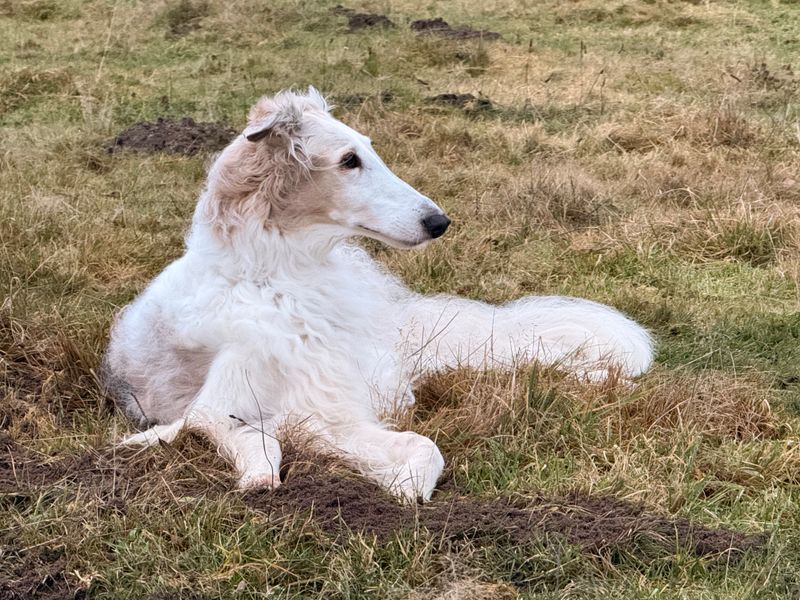
Borzoi
The Russian wolfhound: elegant, quiet and reserved, and built to sprint after anything that runs.
EnergyGroomingFlat life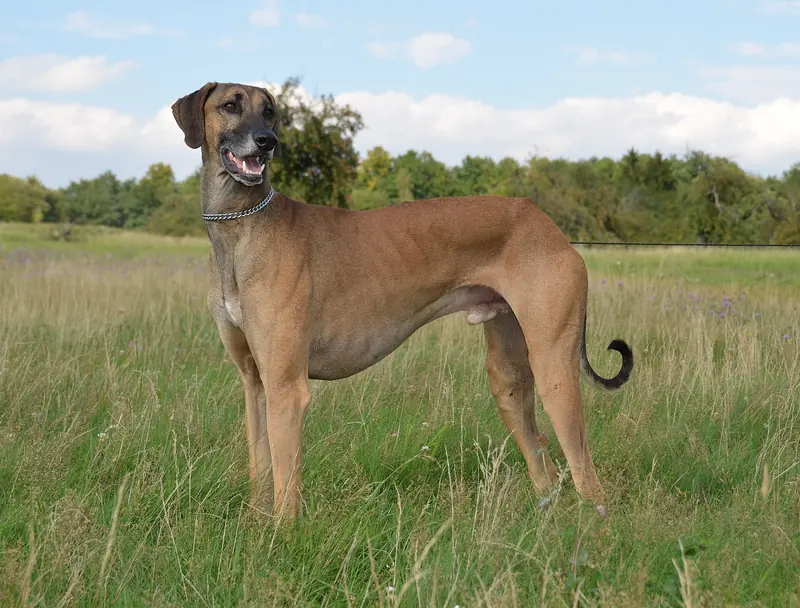
Sloughi
A lean North African sighthound that is aloof with strangers, devoted to its family and happiest asleep on a soft bed between sprints.
EnergyGroomingFlat life

