


History
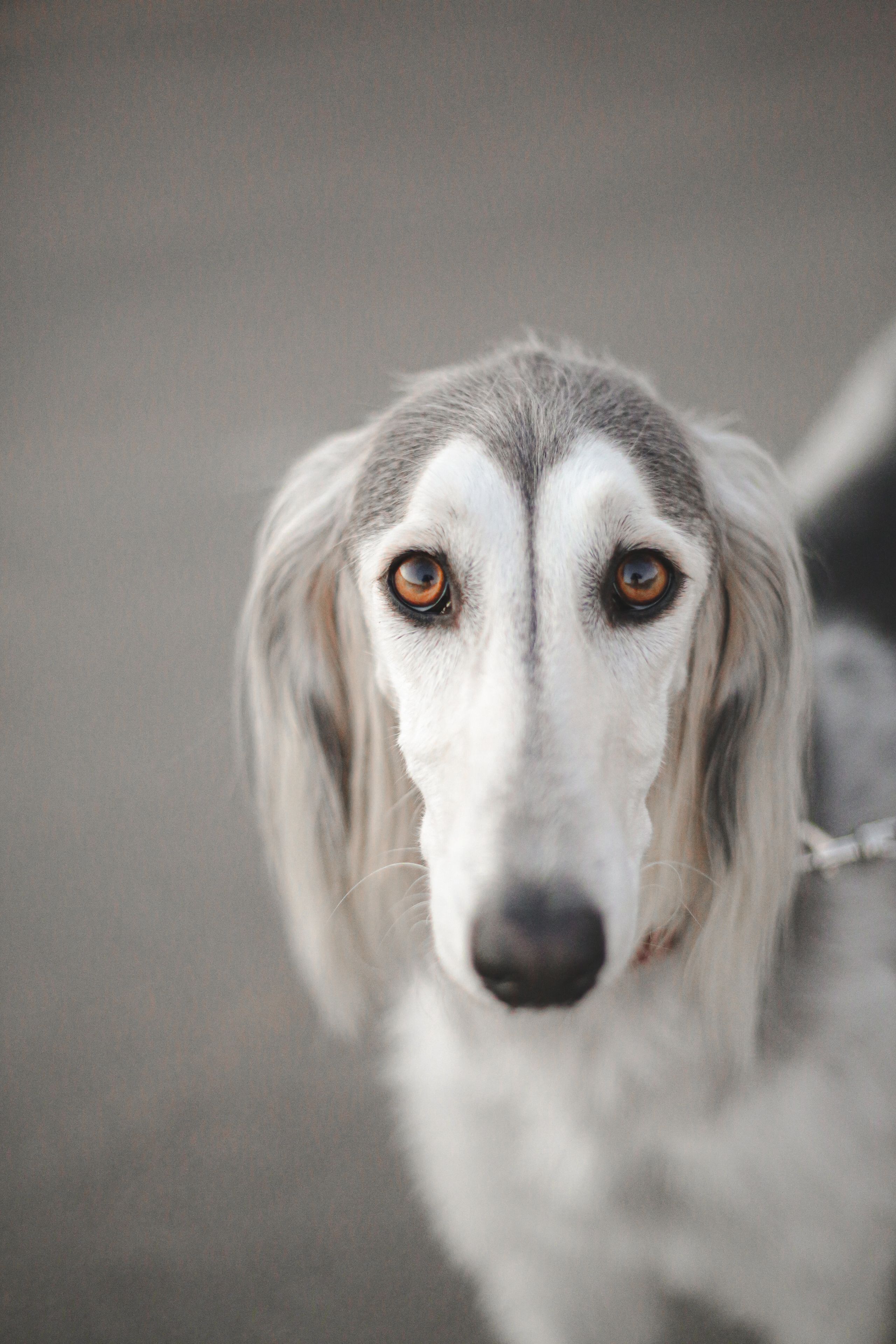
The Saluki is a hunting and coursing hound of the Middle East, and the FCI holds patronage of the breed rather than assigning a single country of origin. The standard explains why the breed varies so much: each tribe kept Salukis suited to its own hunting needs and terrain, and the dogs were traditionally given as a mark of honour rather than sold. When Salukis were brought to Europe they arrived in a range of types from different regions and climates.
The current FCI standard, dated 25 October 2000, places the breed in Group 10, Section 1, among the long-haired or fringed sighthounds, without a working trial. It asks for an impression of grace and symmetry, great speed and endurance coupled with strength and activity, so that the dog can kill or course gazelle and other quarry over deep sand or rocky ground. A smooth variety without feathering is recognised and is otherwise identical.
Temperament
The standard describes the Saluki as reserved with strangers but not nervous or aggressive, dignified, intelligent and independent. At home that usually means a quiet, gentle dog that enjoys comfort and close contact with its own people while keeping a polite distance from visitors. Many are surprisingly sensitive and do best in calm households.
Independence is the key trait. A Saluki is not unfriendly, but it decides for itself whether to respond, and the chase instinct is very strong. A cat, hare or deer can trigger a sprint that no recall will stop. Owners who accept this and plan around it, with secure fencing and safe running spaces, find the Saluki a loyal, graceful and undemanding companion indoors.
Children and other pets
With considerate older children a Saluki is usually gentle and tolerant, but it does not enjoy rough play or noisy chaos and may simply walk away. Young children can be knocked over by a fast-moving hound. Salukis often enjoy the company of other dogs, especially other sighthounds. Cats raised with them may be accepted indoors, but outdoor cats, rabbits and small pets are at serious risk.
Exercise and the daily walk
An adult Saluki needs about an hour and a half of exercise a day, combining lead walks with regular opportunities to gallop in a securely fenced area. The breed was built for endurance as well as speed, and many enjoy long walks. Without a chance to run, a Saluki may become restless.
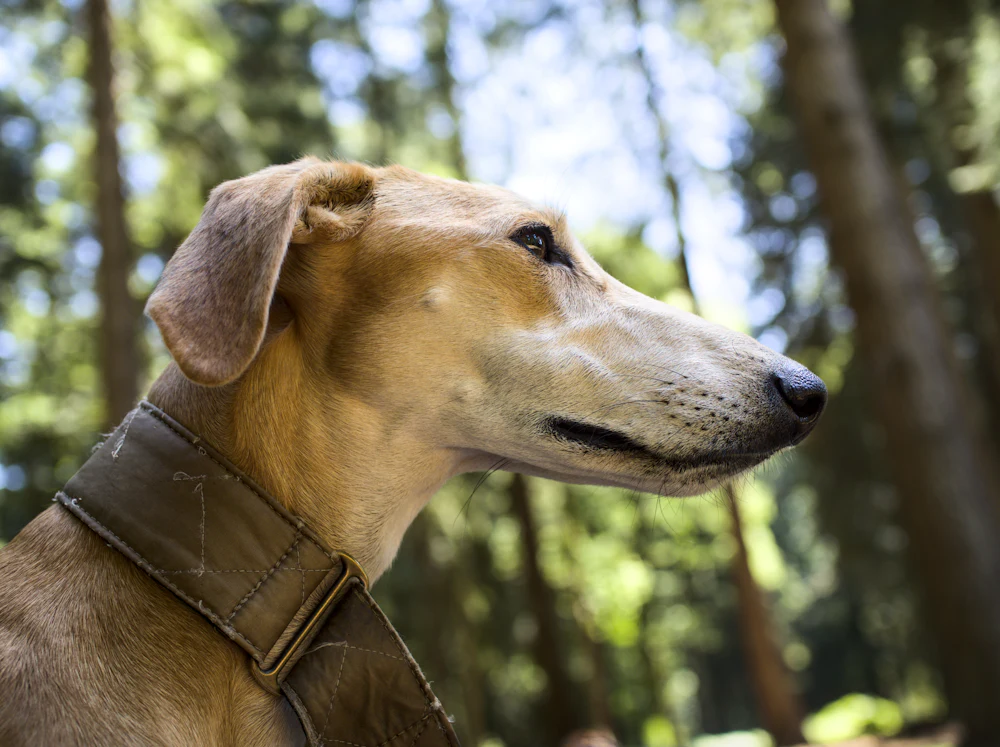
Off-lead running should only happen in enclosed spaces, as recall is unreliable when prey is in sight. Lure coursing and racing clubs offer safe outlets. On walks, a well-fitted harness or a wide sighthound collar is safer than a narrow collar. Thin skin tears easily, so check for cuts after running through brambles.
Training
Salukis respond best to gentle, patient training with food rewards and short sessions. Repetition bores them, and harsh methods make them withdraw. Focus on practical skills: walking nicely on lead, waiting at doors, coming when called in safe places and accepting handling.
Socialisation should begin early, with calm exposure to city life, lifts, trams, visitors and other dogs, to prevent shyness. Accept that some instincts cannot be trained away; management, such as secure fencing and long lines, is part of responsible ownership.
Coat and grooming
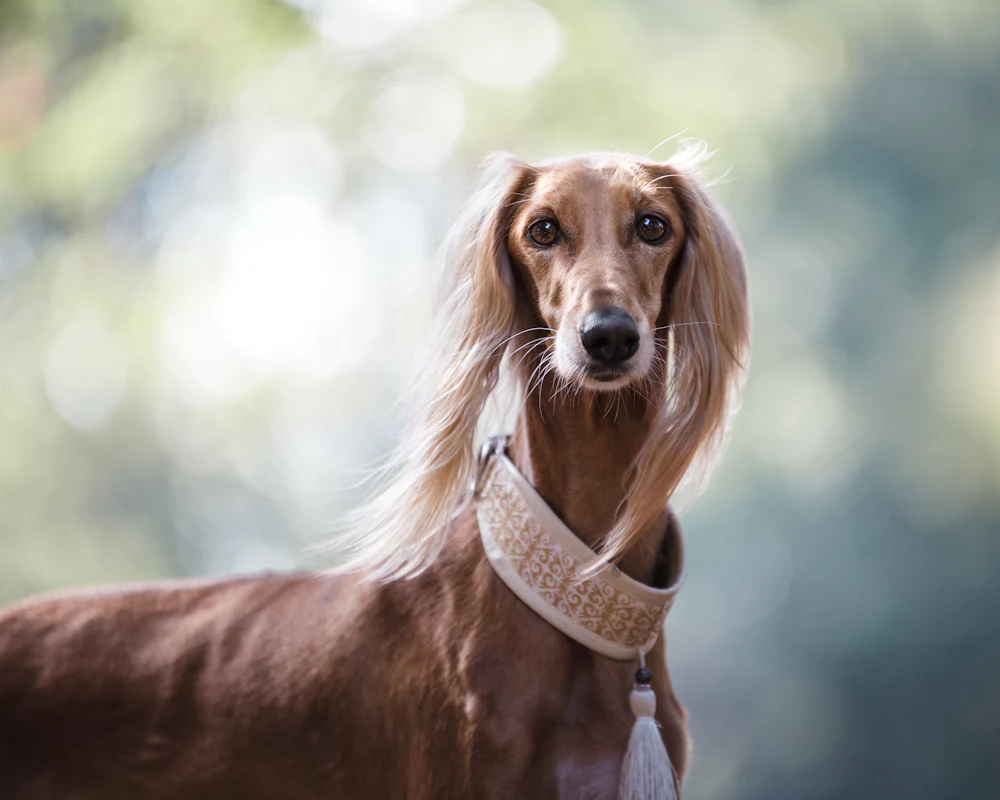
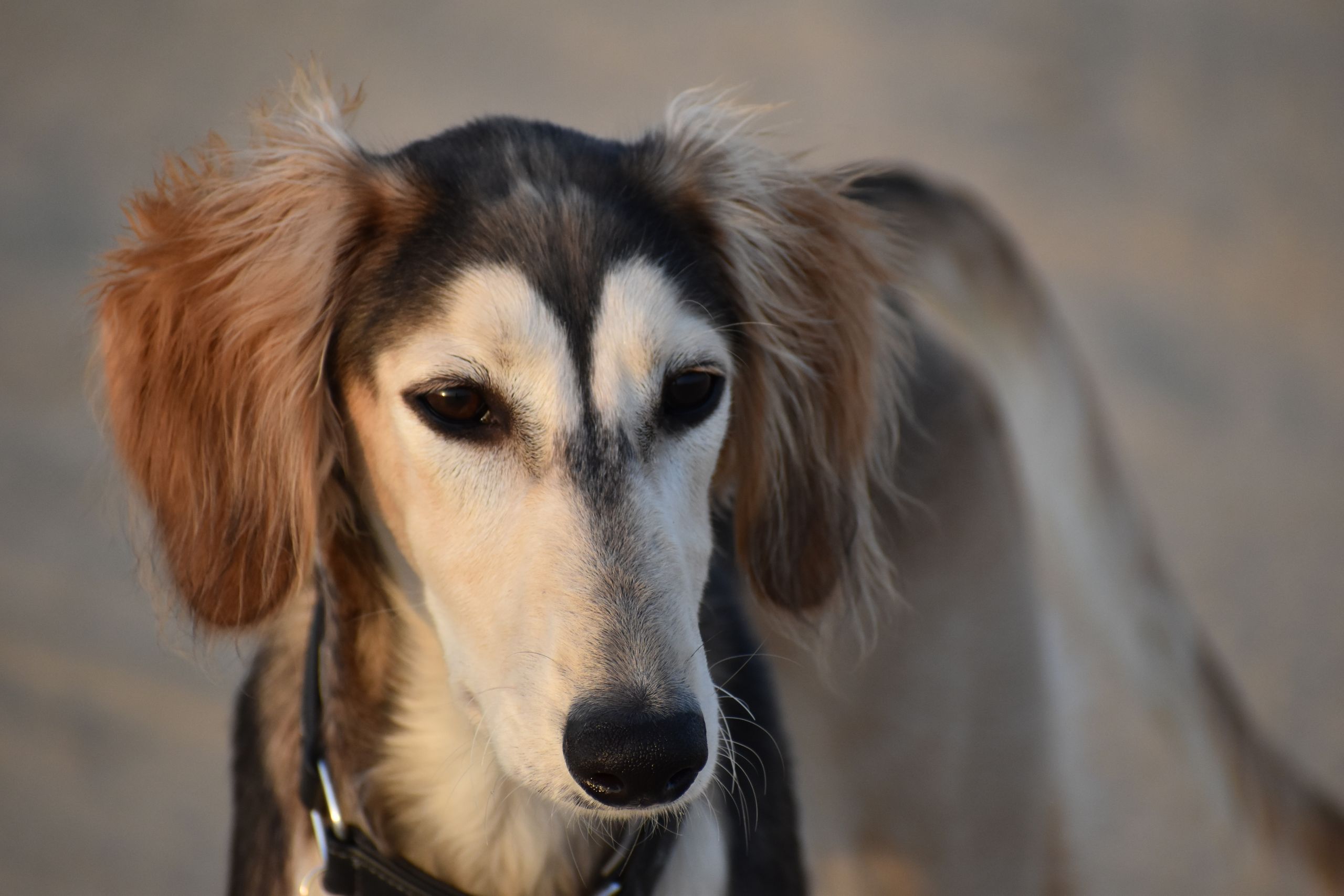
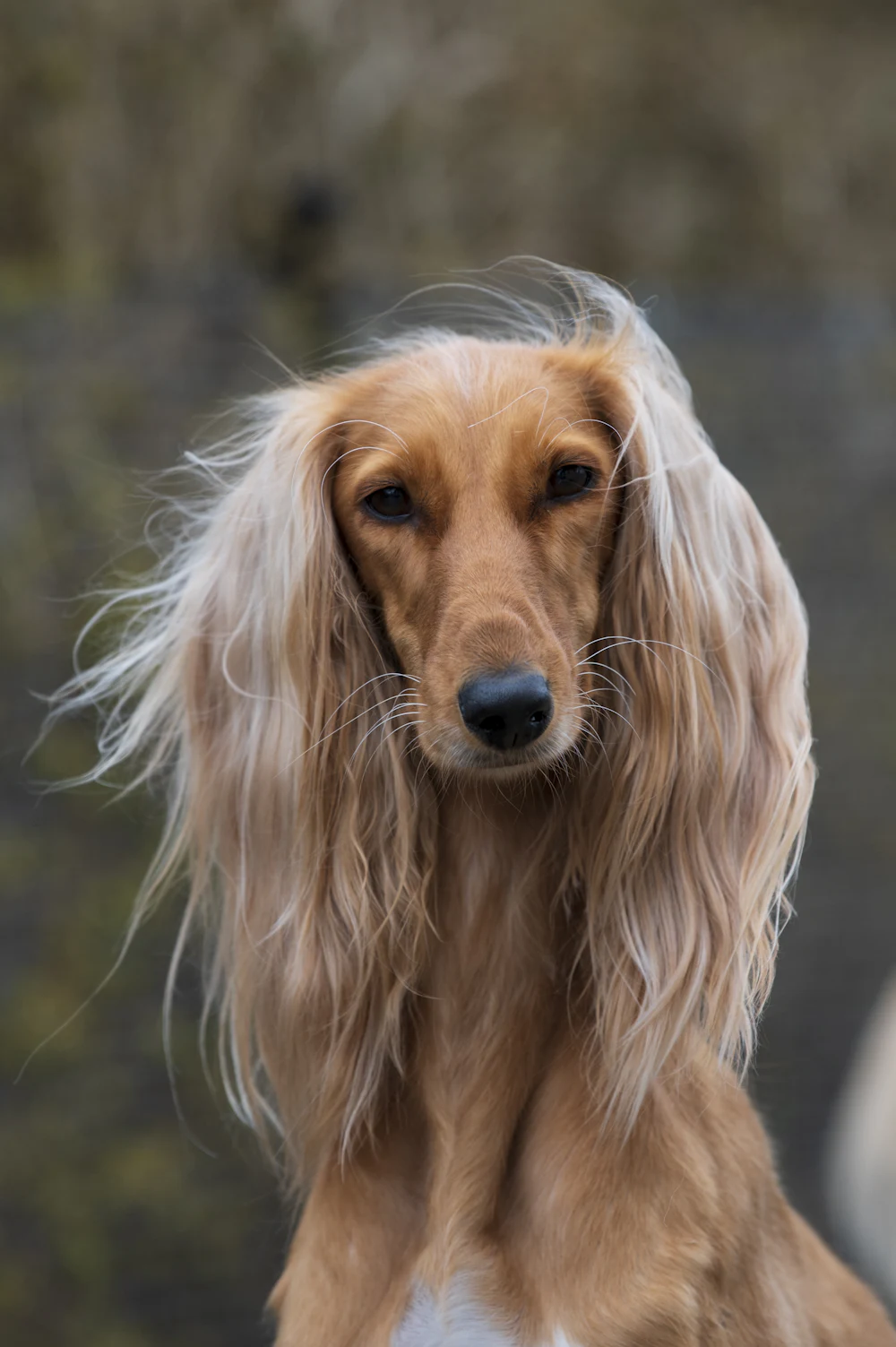
The coat is smooth and of a soft, silky texture. In the feathered variety there is feathering on the legs, the backs of the thighs and the throat, and puppies may show slight woolly feathering on thighs and shoulders. The smooth variety has no feathering. Any colour or combination of colours is permissible, though brindle is undesirable. The coat sheds lightly and needs only weekly brushing, with extra combing of the ear and tail feathering to prevent tangles.
Feeding and weight
Salukis are naturally lean, and their ribs and hip bones may be faintly visible in good condition. Feed a complete diet suited to an active sighthound, divided into two meals. Avoid vigorous exercise for an hour or so before and after meals, as deep-chested dogs are at risk of bloat. Some are picky eaters, so watch weight and appetite closely.
Work out a starting calorie figure and food weight with the calorie calculator. Not sure this is the right breed? Take the quiz.
Health
Every breed carries predispositions. These are the conditions most often discussed for the Saluki, not a prediction for any individual dog.
- Heart disease, including dilated cardiomyopathy and heart murmurs
- Hypothyroidism
- Cancers, including haemangiosarcoma
- Sensitivity to anaesthesia, as in many sighthounds
- Gastric dilatation-volvulus (bloat)
What to ask the breeder. Ask for recent cardiac screening and thyroid testing for both parents, how long the breeder's dogs have lived, and how the puppies are socialised.
Choosing a puppy
A Saluki puppy is playful, curious and quick. Start socialisation early with calm exposure to people, places and other dogs. Teach basic cues using food rewards and patience. Keep exercise moderate while the joints are developing, and never let the puppy off lead in unfenced areas. Provide soft bedding, as the breed has little natural padding.
In Luxembourg the national kennel club is the Fédération Cynologique Luxembourgeoise (FCL), a member of the FCI. Many owners also buy from breeders in Germany, France or Belgium; a puppy coming from another EU country must be microchipped and vaccinated against rabies, which in practice means it cannot travel before about fifteen weeks of age. Where to get a dog in Luxembourg.
The older Saluki
Older Salukis often stay graceful and active but may slow down. Keep walks regular and adapt them to the dog's comfort. Provide warm, soft bedding and a coat in cold weather. Watch for weight loss, heart problems or changes in behaviour, and arrange regular vet checks, including dental care.
A realistic day
A realistic weekday for a working household in Luxembourg City, with a midday visit. Adjust it to your dog, not the other way round.
A 40-minute lead walk, then breakfast with a quiet rest afterwards.
Owner leaves; the Saluki sleeps on a soft bed.
Midday visit: a 40-minute walk on lead, with water and a check of feet and skin.
Evening outing, ideally a gallop in a securely fenced field, then dinner after a rest.
Short final outing and bed.
A Saluki in Luxembourg
A Saluki can be a calm flat dog, sleeping much of the day, but it needs regular access to safe spaces to run. Most parks in Luxembourg City are not fenced, so free running should only happen in secure areas. Lifts and stairs are usually fine, though slippery floors can be a problem for a lean, fast dog.
Lead walks in Parc Merl, the Pétrusse valley or the Kinnekswiss are pleasant, while the Grünewald and Bambësch forests offer longer outings on a long line, as deer and hares are common. Salukis tolerate heat better than many breeds but still need water and shade in summer, and a coat in cold, wet winters. Remember microchip, commune declaration, dog tax and liability insurance.
Every dog in Luxembourg must be identified, declared to the commune and covered by liability insurance. How registration works.
When you travel
A sitter must understand that a Saluki should never be off lead outside a secure area. Check doors, gates and fences carefully, as the dog can slip out quickly. Provide soft bedding and keep the house warm in winter. Explain any feeding quirks, since some Salukis are fussy eaters. Leave the vet's contact details and mention the breed's sensitivity to anaesthesia.
PAWLY's holiday and overnight care takes place in your home, so your dog keeps its own bed and routine.
Myths and facts
MythSalukis need a huge garden.
FactThey need safe opportunities to run and daily walks; indoors they are calm and can live in flats.
MythSalukis are too thin.
FactA healthy Saluki is naturally lean, with faintly visible ribs and hip bones.
MythTraining can fix the chase instinct.
FactTraining helps, but the instinct remains strong; management and secure spaces are essential.
Is it the right dog for you?
Suits
- Experienced owners who understand sighthounds
- Calm households without small pets
- People with access to securely fenced running areas
- Owners who enjoy long walks
Think twice if
- Think twice if you have cats, rabbits or small pets
- Think twice if you want reliable off-lead walks
- Think twice if you have a noisy, chaotic household
- Think twice if you cannot provide safe running space
Questions owners ask
Can a Saluki live in a flat?
Yes, many do well in flats because they are calm indoors. They need daily walks and regular chances to run in secure areas. Soft bedding and non-slip flooring help.
Are Salukis good with cats?
Some accept cats they were raised with, but the chase instinct is strong. Outdoor cats and small pets are at risk. Introductions should be careful and supervised.
How much exercise does a Saluki need?
About an hour and a half a day, with regular safe gallops. They enjoy long walks and running, but are content to rest at home afterwards.
Do Salukis shed a lot?
No, they shed lightly. Weekly brushing is enough, with extra care for the feathering on ears and tail in the feathered variety.
Sources
Photo: Unsplash (Unsplash License) · Photo: Pexels (Pexels License) · Photo: Unsplash (Unsplash License) · Photo: Unsplash (Unsplash License) · Photo: Pexels (Pexels License)
General information for dog owners in Luxembourg, not veterinary or legal advice. Official facts (origin, size, group, history and temperament as described by the breed standard) follow the FCI standard; health and care sections reflect breed-club and veterinary guidance and are typical ranges rather than rules. For your own dog, ask your vet, the breed club or your commune. How this guide is written and checked. Last reviewed 8 October 2026.
Need someone for your Saluki?
PAWLY offers an individual 45-minute walk or a home visit at your dog's pace, the same walker every time, and a written report with photos after every visit, across Luxembourg City.
Read next: the journal, for the Saluki
All articles
Building a recall you can actually rely on
Sighthounds chase at speed and often cannot be recalled; the Saluki needs a realistic plan.

Harness, lead and collar: what to buy and what to avoid
A secure harness matters for a dog that can bolt in a second.

Feeding, portions and how to tell if your dog is the right weight
Large dogs suffer more from extra weight; this is how to judge the right one.
Similar breeds
All 198 breeds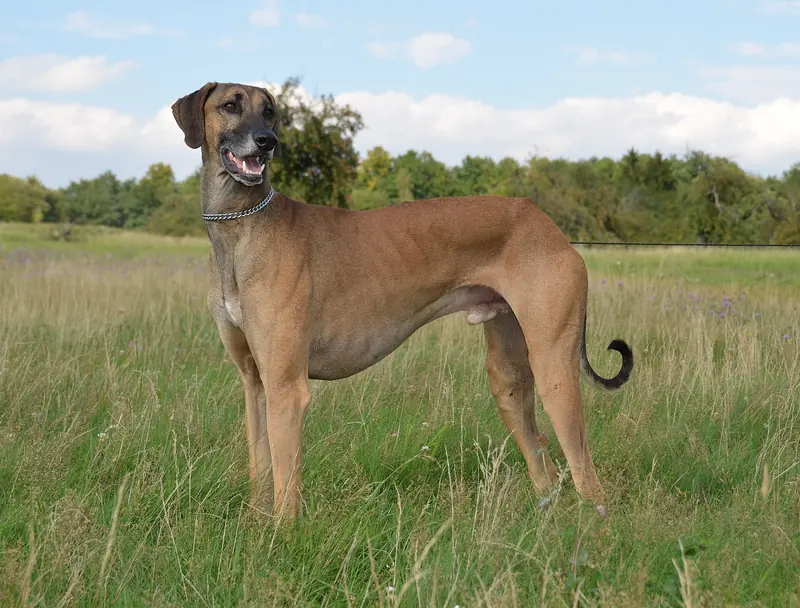
Sloughi
A lean North African sighthound that is aloof with strangers, devoted to its family and happiest asleep on a soft bed between sprints.
EnergyGroomingFlat life
Afghan Hound
A mountain hunter dressed for the catwalk, dignified and aloof indoors, astonishingly fast the moment something moves on the horizon.
EnergyGroomingFlat life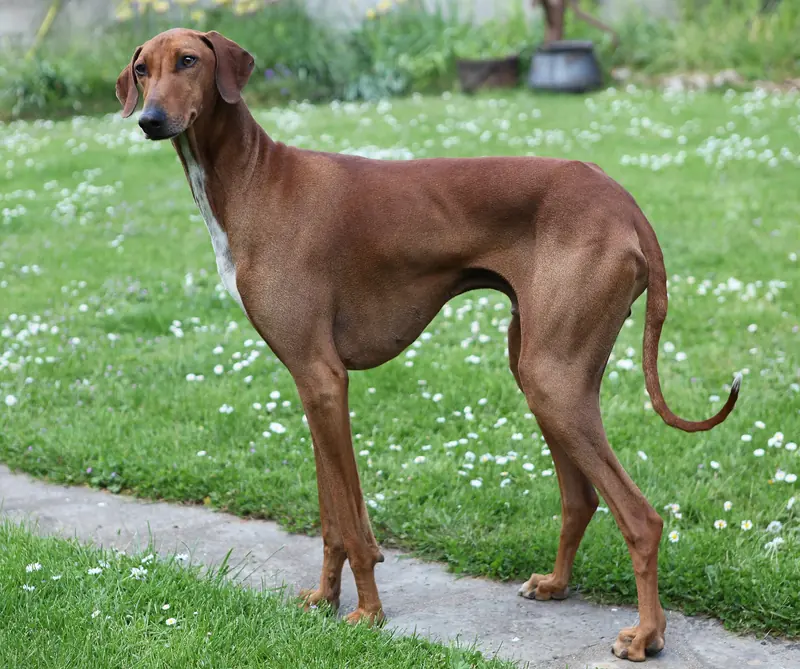
Azawakh
A tall, fine-boned sighthound from the southern Sahara, devoted to its own people and politely distant with everyone else.
EnergyGroomingFlat life

