History
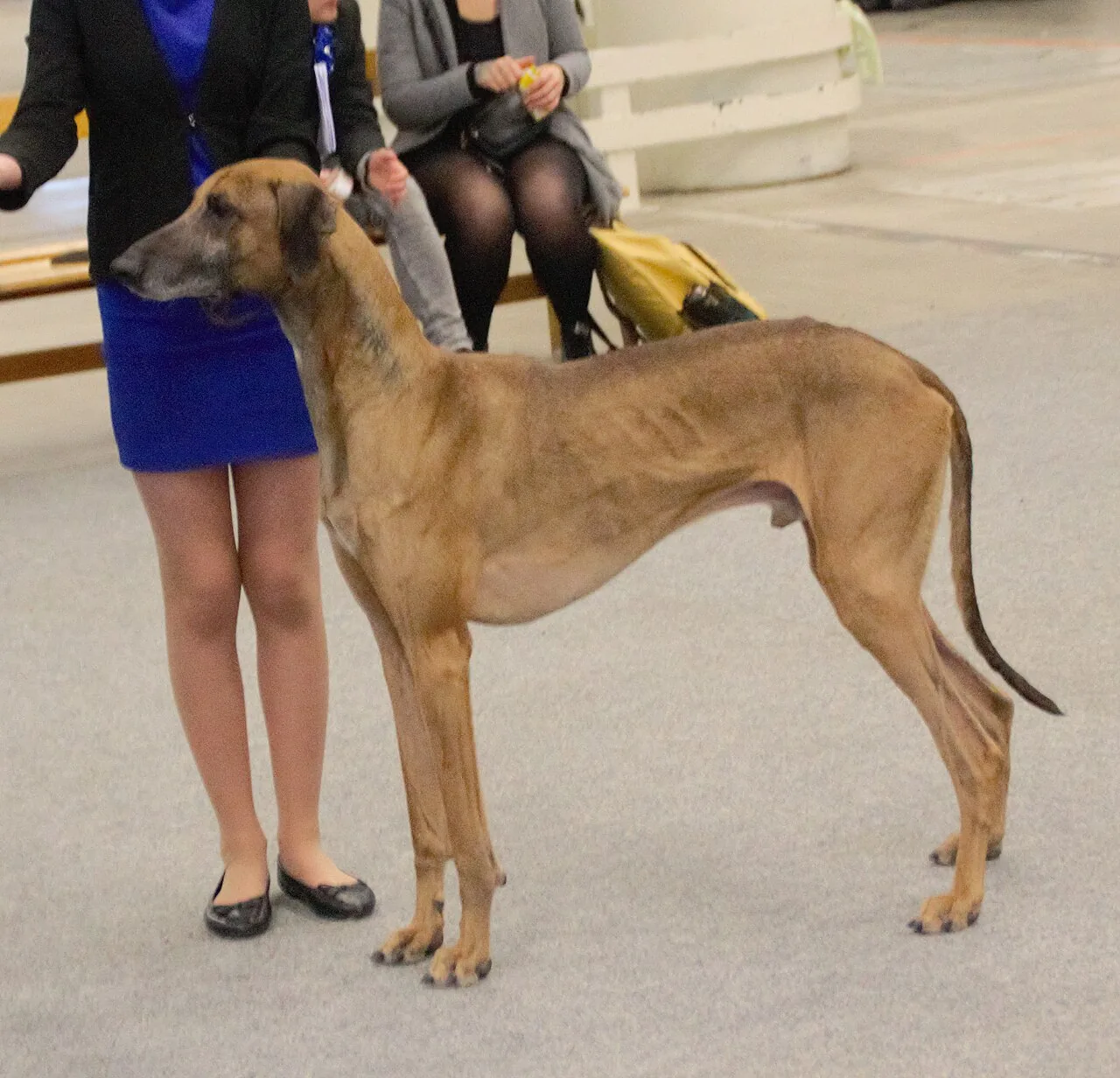
The FCI lists the Sloughi in Group 10, Section 3, short-haired sighthounds, with Morocco as the country responsible for the standard. According to the standard, the Sloughi has existed for many centuries in North Africa, and nowadays most of them are found in Morocco. It exists in a single, short-haired variety, and the standard classes it simply as a sighthound, a dog that hunts by sight and speed over open ground, which still shapes how it behaves on a walk today.
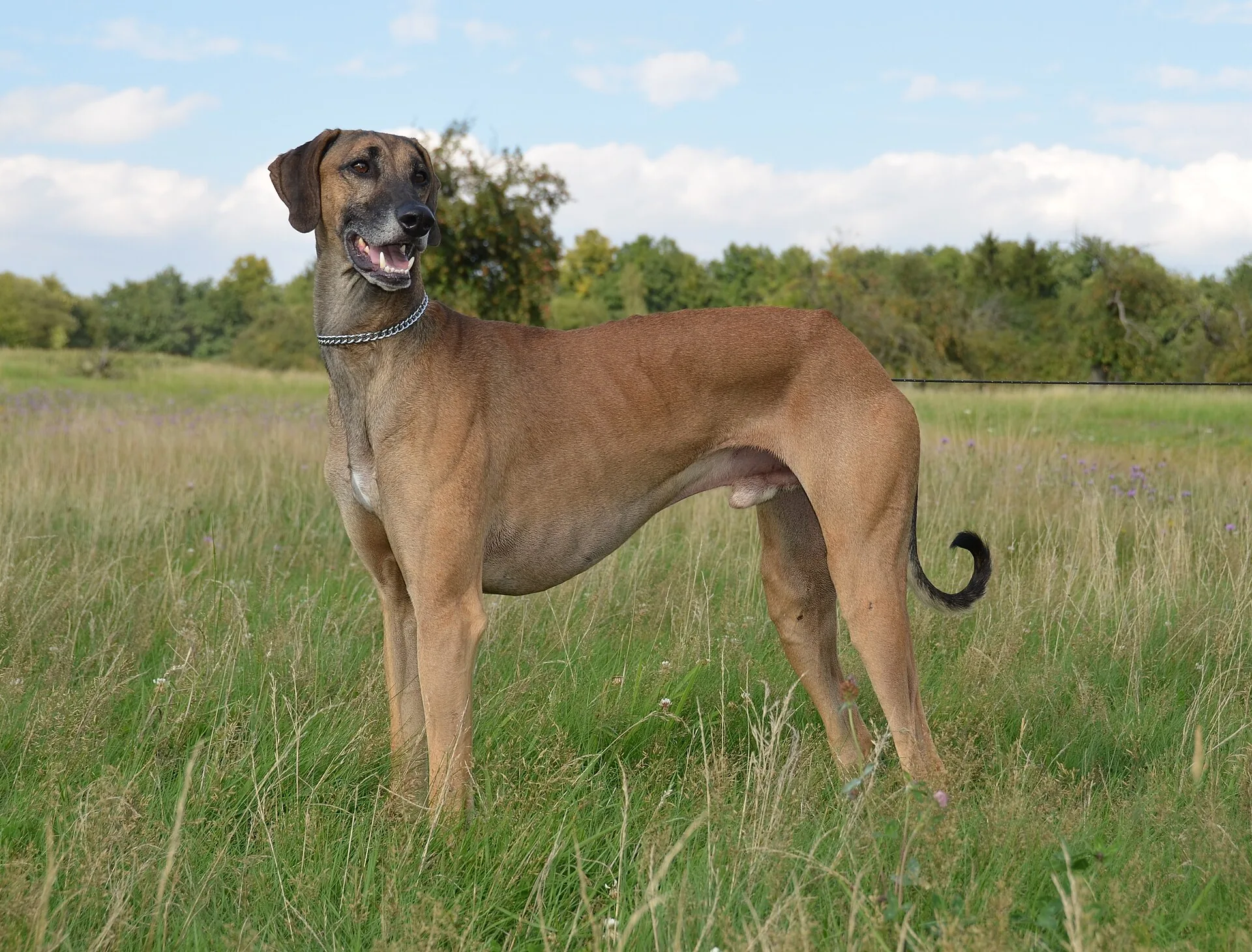
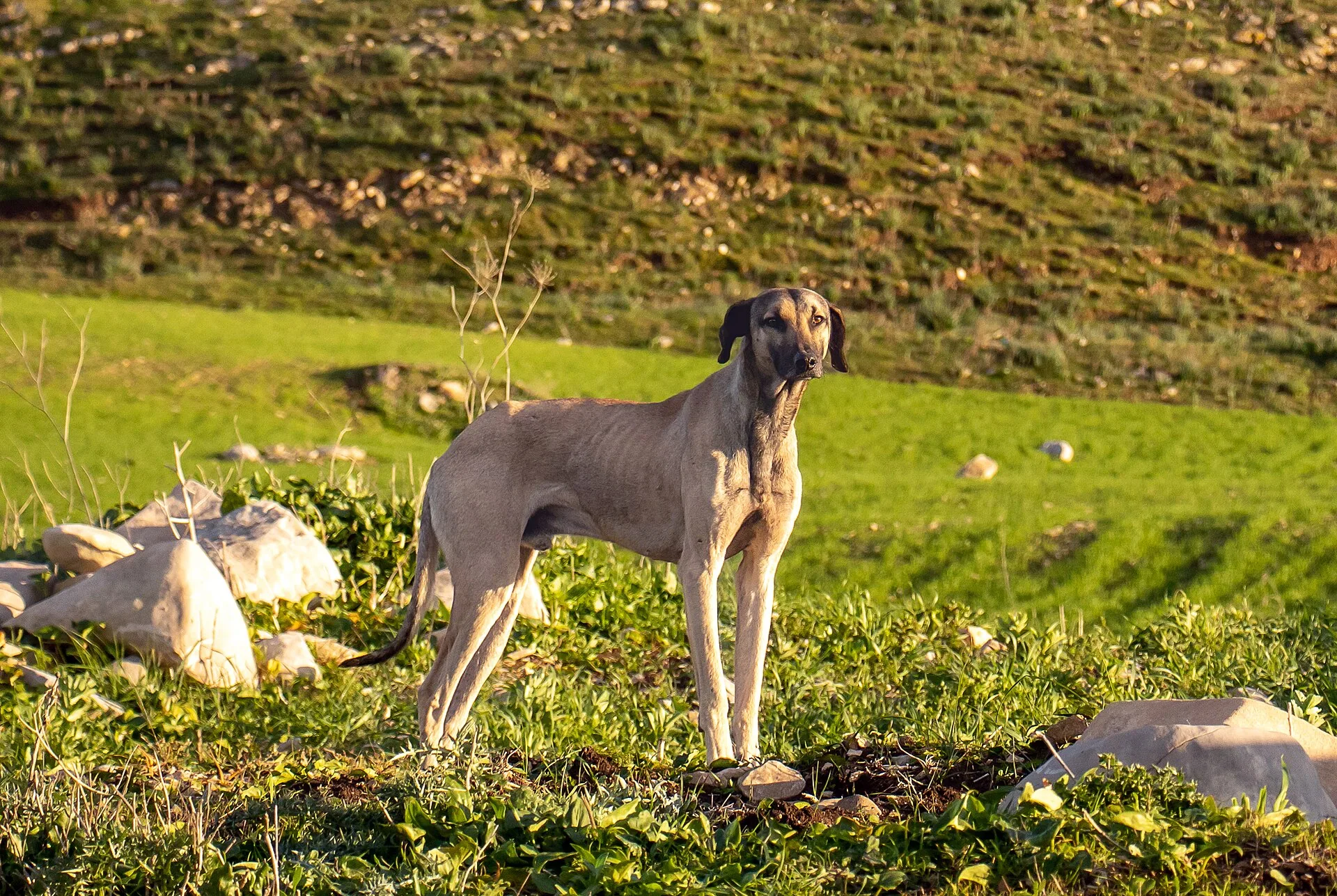
The standard describes it as a very racy and elegant dog, marked by delicacy of tissue and muscular leanness, and as noble and haughty yet very attached to its master. In Europe it remains rare, and it is often confused with other short-haired sighthounds, in particular the Azawakh, though it is a separate and distinct breed.
Temperament
The FCI describes a noble and haughty dog, very attached to its master and ready to defend him if necessary, with the instinct of a hunter and the capacity for sustained effort, and with a fondness for home comforts. That is a good summary of what owners meet: a reserved, sensitive dog that keeps a dignified distance from strangers, bonds deeply with its own household and appreciates warmth and comfort.
Sloughis are quiet and calm indoors, but they are not passive. Outdoors, the hunting instinct takes over, and a rabbit, a cat or a running dog can trigger an instant, silent chase. They are sensitive to harsh words and tone, and they can sulk or withdraw. Early, gentle socialisation helps prevent timid or suspicious behaviour with strangers, which is a common tendency in the breed.
Children and other pets
A Sloughi raised with children is gentle and affectionate with its own family, but it is sensitive, and noisy, chaotic play or rough handling distresses it. Small children must be taught to respect it, and its thin skin and long legs need care. It is usually fine with other dogs, particularly sighthounds, but its chase instinct makes cats and small pets outside the household vulnerable.
Exercise and the daily walk
An adult needs about an hour and a half of exercise a day, including some opportunity to run flat out. Brisk walks twice a day on a lead, plus a few sprints in a securely fenced area several times a week, suit the breed well.
Off-lead freedom is realistic only in a fully enclosed area. A sighthound can reach high speed in seconds and will not hear a recall once a chase has started. Always use a lead near roads and in open country, with a well-fitted harness or a wide, soft collar. Puppies must not be over-exercised while growing, and long runs should be built up gradually. Avoid hard exercise before and after meals because of bloat risk.
Training
Sloughis are intelligent and sensitive, and they respond best to gentle, patient and consistent training. Harsh correction or raised voices lead to shutdown or avoidance. Use short sessions with small food rewards, plenty of praise and variety, and finish on a success. Lead manners, a reliable settle and polite greeting should be taught early.
Introduce the puppy to a wide variety of people, dogs, noises, surfaces, lifts and traffic gently and positively, because the breed has a tendency towards reserve and timidity. Recall can be practised in enclosed areas but should never be relied on near roads.
Coat and grooming
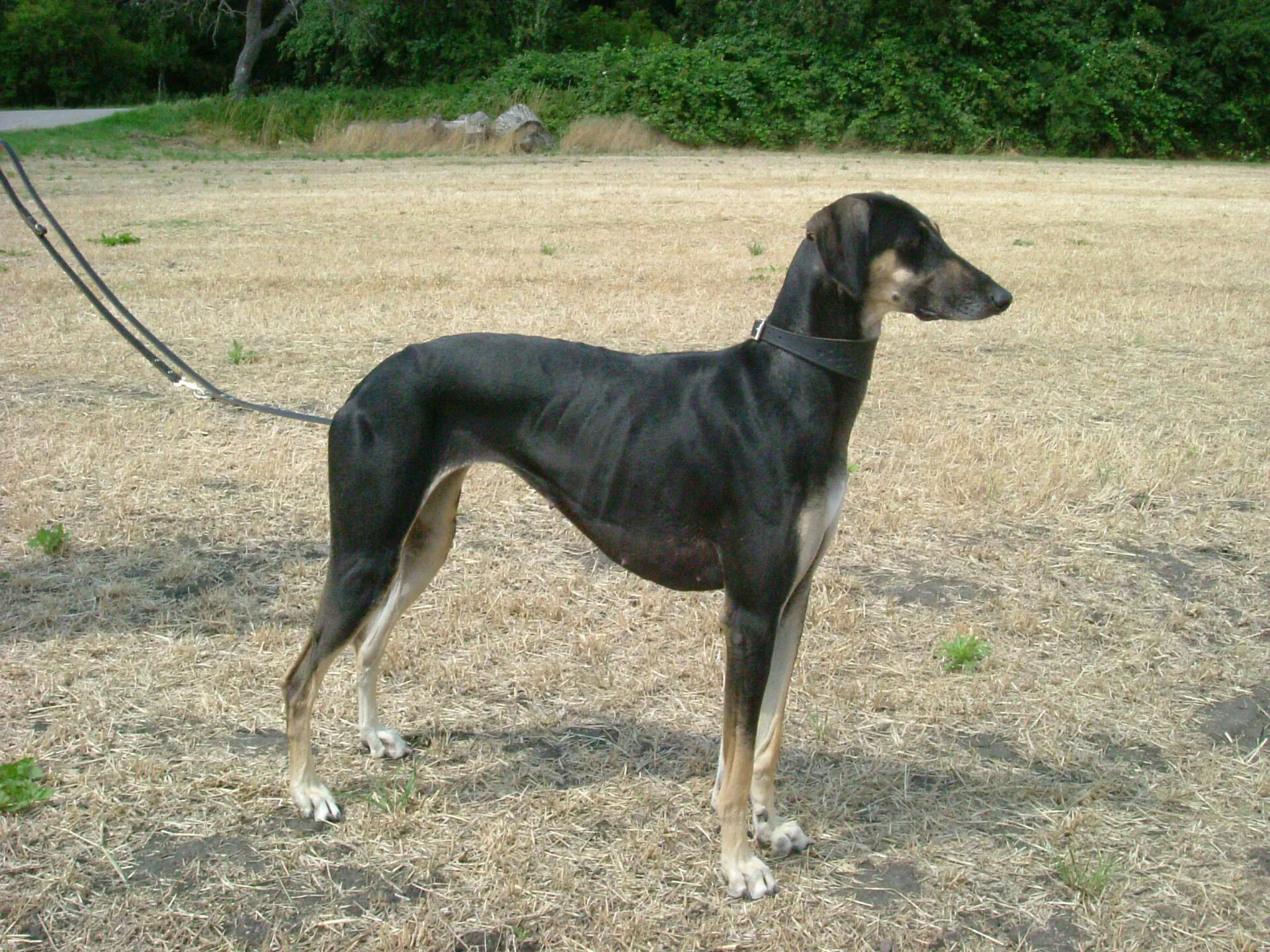
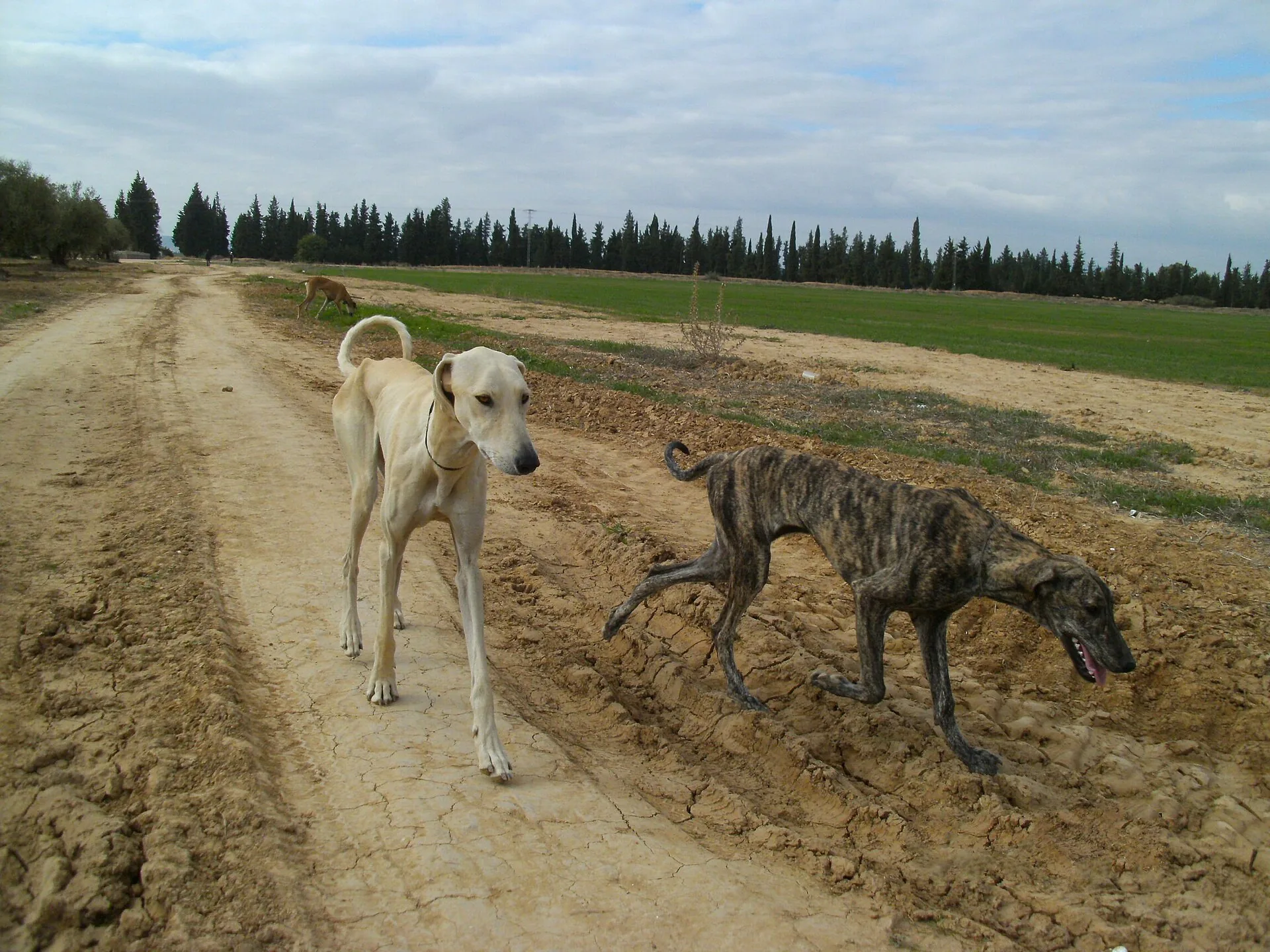
The coat is very short, dense and fine, lying close to the body. Grooming is minimal: a weekly rub with a soft glove or cloth removes dead hair and keeps the skin healthy, and the Sloughi is clean with little odour. The FCI permits light sand through red sand (fawn) shades, with or without a black mask, black mantle, black brindling or black overlay. The thin coat and lean body give little protection from cold and wet, so a coat is needed in winter.
Feeding and weight
A lean sighthound needs a good-quality complete food in measured portions, adjusted to age and activity. Feed two smaller meals a day rather than one large meal, to reduce the risk of bloat in this deep-chested breed, and avoid hard exercise just before and after eating. Keep the dog lean, with the ribs easily felt and the waist visible, and provide fresh water at all times.
Work out a starting calorie figure and food weight with the calorie calculator. Not sure this is the right breed? Take the quiz.
Health
Every breed carries predispositions. These are the conditions most often discussed for the Sloughi, not a prediction for any individual dog.
- Progressive retinal atrophy (PRA), an inherited eye disease that leads to loss of sight, for which DNA testing exists in the breed
- Bloat (gastric dilatation and volvulus), an emergency in deep-chested dogs
- Sensitivity to anaesthesia, common in lean sighthounds, so tell your vet the breed
- Thin skin that tears easily on thorns and rough ground
What to ask the breeder. Ask for DNA test results for PRA on both parents, and for current eye examinations. A responsible breeder will also discuss heart checks, temperament and the breed's small gene pool openly, and can explain the dogs' working or show background.
Choosing a puppy
A Sloughi puppy is a long-legged, sensitive youngster that grows fast. Protect it from slippery floors and jumping off furniture, and avoid long runs and stairs while the joints develop. Start gentle, positive socialisation immediately, with calm introductions to strangers, dogs, lifts and traffic, because the breed's natural reserve can become timidity. Begin lead training and short periods alone early, and handle paws, ears and mouth daily.
In Luxembourg the national kennel club is the Fédération Cynologique Luxembourgeoise (FCL), a member of the FCI. Many owners also buy from breeders in Germany, France or Belgium; a puppy coming from another EU country must be microchipped and vaccinated against rabies, which in practice means it cannot travel before about fifteen weeks of age. Where to get a dog in Luxembourg.
The older Sloughi
Healthy Sloughis often remain graceful well into their teens, but they need more warmth, softer bedding and gentler exercise as they age. Keep the dog lean, supply an orthopaedic bed, and replace sprints with steady walks. Watch for stiffness, changes in vision, weight loss, coughing and changes in appetite or thirst. Dental care becomes more important, and a twice-yearly check for senior health is sensible. Remember to mention the breed's sensitivity to anaesthesia before any procedure.
A realistic day
A realistic weekday for a working household in Luxembourg City, with a midday visit. Adjust it to your dog, not the other way round.
Toilet break, a brisk 30 minute walk in a coat if cold, and breakfast afterwards.
Settled on a soft bed with a chew while the household leaves; most Sloughis sleep through the morning.
Midday visit: toilet break, a gentle 30 minute walk on a lead and fresh water.
Main exercise of 60 minutes in a park, with a few sprints in a secure fenced area if available.
Final toilet break, supper and sleep on a warm bed near the family.
A Sloughi in Luxembourg
A Sloughi can be an excellent flat companion in Luxembourg, since it is quiet, clean and calm indoors once exercised. Lifts and corridors are not a problem for a dog this graceful, though it may be nervous at first on noisy, crowded entrances, so build confidence gradually. Free buses and trams make it easy to reach quieter parks and forests, where steady lead walks are possible.
The main issues are climate and running space. The thin coat means winter and wet walks require a coat, while summer days in the 30s call for early and late exercise, shade and water. Securely fenced areas for running are not common, so plan visits to enclosed fields with care. In the Grünewald and Bambësch, wildlife is a risk to a sighthound's recall, so use a lead or long line, and avoid roads and open country without a fence.
Every dog in Luxembourg must be identified, declared to the commune and covered by liability insurance. How registration works.
When you travel
A sitter should know that a Sloughi is sensitive, reserved and quick, and that it needs a calm, kind approach. Keep to the usual walking and feeding times, always use a secure harness and a lead, and never allow off-lead running outside a fenced area. Check gates and doors, provide a warm, soft bed and a coat in cold or wet weather, and avoid hard exercise before and after meals. Tell the vet that the dog is a sighthound if treatment is needed.
PAWLY's holiday and overnight care takes place in your home, so your dog keeps its own bed and routine.
Myths and facts
MythA Sloughi is the same as an Azawakh or a Saluki.
FactThey are separate breeds with different origins and types. The Sloughi is North African, short-haired and more refined, while the Azawakh is from the Sahel and the Saluki is from the Middle East.
MythSighthounds need huge amounts of exercise.
FactThey need a daily walk and a chance to sprint, but spend much of the day asleep.
MythA haughty dog does not need affection.
FactThe standard says the breed is very attached to its master. Behind the reserve is a sensitive dog that needs gentle, regular company.
Is it the right dog for you?
Suits
- Calm households that value a quiet, sensitive companion
- Owners who can provide safe sprinting and daily walks
- Flat dwellers with a warm, soft place for the dog
- People who enjoy sighthounds and understand their chase instinct
Think twice if
- You want a dog that is friendly with every stranger
- You have rabbits, hamsters or a cat that will not accept a chasing dog
- You cannot offer safe, fenced space to run
- You are away from home for long stretches each day
Questions owners ask
Is a Sloughi good for a first-time owner?
It can be if the owner is gentle, patient and willing to learn. The dog is sensitive and independent, and it needs early socialisation and safe exercise, but it is quiet, clean and easy indoors.
Can a Sloughi be let off the lead?
Only in a securely fenced area. A sighthound's chase instinct is very strong, and it can be far away and out of reach of a recall within seconds, so a lead is essential near roads and open country.
Does a Sloughi feel the cold?
Yes. The coat is thin and the body lean, so it needs a coat and a warm bed in cool or wet weather.
How is a Sloughi different from an Azawakh?
The Sloughi is from North Africa, in particular Morocco, and has a more refined and elegant body, while the Azawakh comes from the Sahel and is taller and leaner. Both are short-haired sighthounds, but they are separate breeds.
Sources
Photo: Sabine.schlenkrich, CC BY-SA 3.0, via Wikimedia Commons · Photo: Smailtn, CC BY-SA 4.0, via Wikimedia Commons · Photo: Dr. Sabine Schlenkrich, CC BY-SA 3.0, via Wikimedia Commons · Photo: Thomas I.M. Liedtke, CC BY-SA 4.0, via Wikimedia Commons · Photo: Canarian, CC BY 4.0, via Wikimedia Commons
General information for dog owners in Luxembourg, not veterinary or legal advice. Official facts (origin, size, group, history and temperament as described by the breed standard) follow the FCI standard; health and care sections reflect breed-club and veterinary guidance and are typical ranges rather than rules. For your own dog, ask your vet, the breed club or your commune. How this guide is written and checked. Last reviewed 8 October 2026.
Need someone for your Sloughi?
PAWLY offers an individual 45-minute walk or a home visit at your dog's pace, the same walker every time, and a written report with photos after every visit, across Luxembourg City.
Read next: the journal, for the Sloughi
All articles
Building a recall you can actually rely on
Sighthounds chase at speed and often cannot be recalled; the Sloughi needs a realistic plan.

Feeding, portions and how to tell if your dog is the right weight
Large dogs suffer more from extra weight; this is how to judge the right one.

Harness, lead and collar: what to buy and what to avoid
A secure harness matters for a dog that can bolt in a second.
Similar breeds
All 198 breeds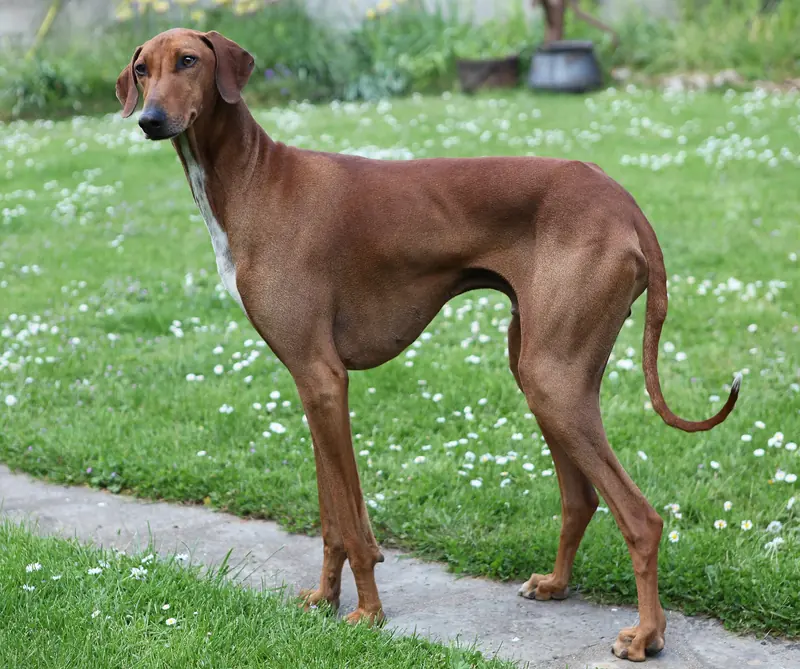
Azawakh
A tall, fine-boned sighthound from the southern Sahara, devoted to its own people and politely distant with everyone else.
EnergyGroomingFlat life
Saluki
An ancient desert hunter of great speed and stamina, gentle and reserved at home, and utterly single-minded once it spots something running.
EnergyGroomingFlat life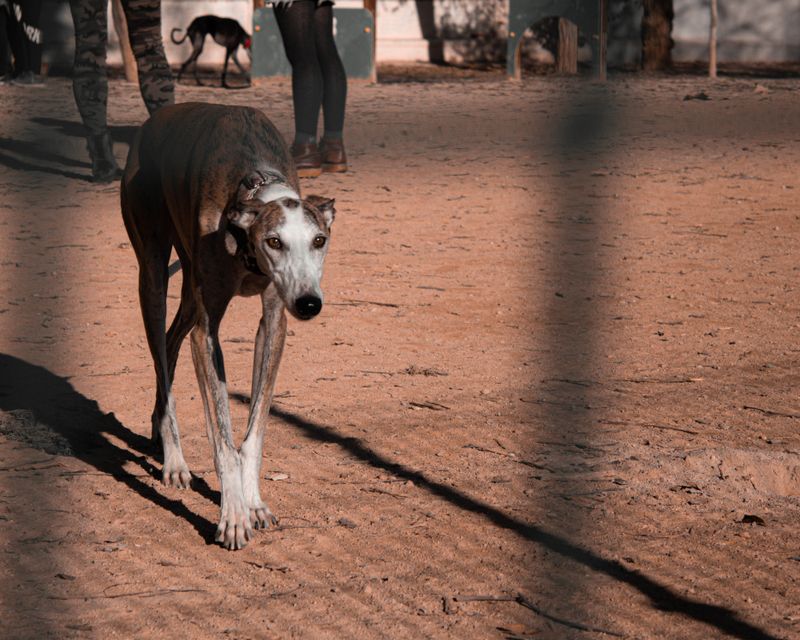
Galgo Español
A lean, quiet Spanish greyhound that sleeps like a cat all day and runs like a missile when it sees a hare.
EnergyGroomingFlat life

