


History
The American Akita and the Japanese Akita share their roots. The FCI standard traces both to the Akita Matagi, medium-sized bear-hunting dogs of the Akita region in northern Japan, with records reaching back to the early seventeenth century. From 1868 these dogs were crossed with Tosas and mastiffs, which increased their size but diluted the spitz character. The Second World War brought the breed close to collapse in Japan, and the dogs that survived were of mixed types.
After the war, American servicemen took Akitas home, many of them from the heavier, more mastiff-like Dewa line, and American breeders developed this type in its own direction. The standard notes that the Akita Club of America was founded in 1956 and that the American Kennel Club accepted the breed in October 1972, without opening registration to new imports from Japan. Separated from Japanese bloodlines since the mid-1950s, the American type became a distinct breed, and the FCI now recognises it separately, in Group 5, Section 5, with Japan as country of origin and a standard published in 2026.
Temperament
The standard describes the American Akita as alert and responsive, dignified and courageous, and warns that it may be highly responsive to other dogs, particularly of the same sex. In practice that means a calm, often silent dog at home, deeply attached to its family but reserved and watchful with strangers. It is a natural guardian that does not need to be taught to protect.
Owners also describe a strong-willed, independent dog that is affectionate on its own terms. Many dislike being fussed over by people they do not know, and they take their territory seriously, including the corridor outside the flat. Dog-to-dog tolerance is the breed's real limit: even well-socialised adults may not accept unfamiliar dogs, and a confrontation with a dog of this size and strength is serious. This is a breed for owners who think ahead.
Children and other pets
With its own family an American Akita is often gentle and patient, but it is a heavy, powerful dog that does not always tolerate the noise, chasing and visiting friends that come with young children. Adult supervision is essential, and households with toddlers should think carefully. Other dogs, especially of the same sex, are frequently a problem, and many Akitas are best as the only dog. Cats and small pets are at risk unless the dog has grown up with them, and even then caution is wise.
Exercise and the daily walk
An adult needs around an hour to an hour and a half a day of steady walking, with some time to explore and sniff. It is not a hyperactive breed, and many are content to rest for much of the day, but regular exercise keeps a large, muscular dog fit and mentally settled. Avoid strenuous exercise around mealtimes because of the risk of bloat in this deep-chested breed.
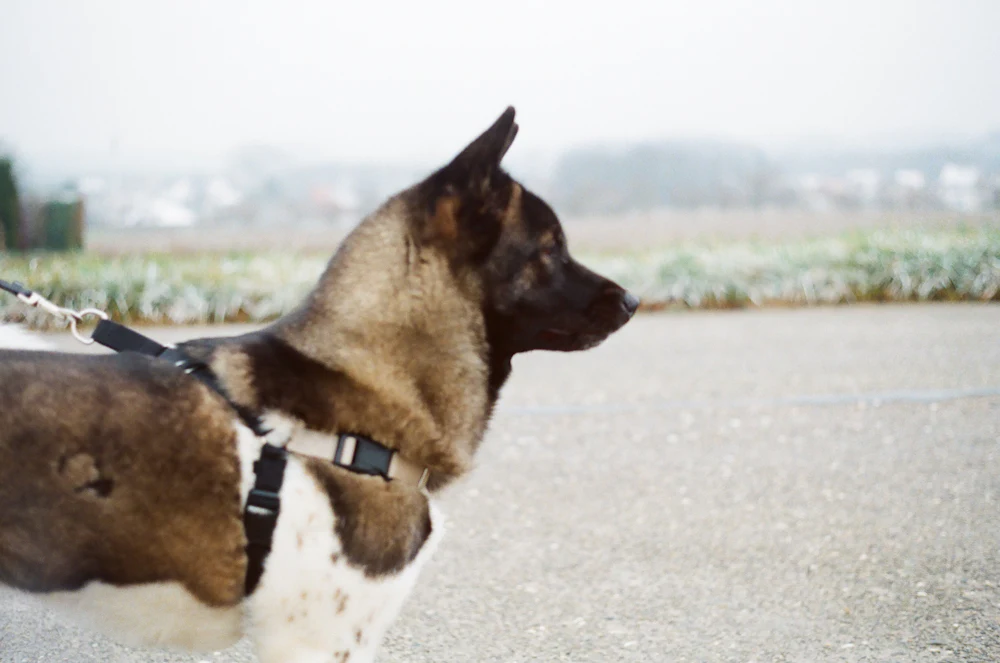
Walks need planning. Choose quieter routes and times, keep a secure lead and a well-fitted harness, and be ready to create distance from off-lead dogs. Free running is best in a private secure area. In cold weather an Akita comes alive and enjoys long walks in the forest; in heat it slows down quickly and should be walked only in the cool hours.
Training
Training must start early and be consistent, calm and fair. The American Akita is intelligent but not eager to please, and it shuts down or resists when handled roughly. Short sessions, good rewards and a clear routine work best. Priorities are loose-lead walking, a strong recall within the home and garden, a reliable leave it, and calm acceptance of handling by the vet and groomer.
Socialisation is not optional. Puppies should meet many calm people and well-mannered dogs, travel on buses, ride lifts and hear city noise during the first months. This does not guarantee tolerance of other dogs in adulthood, but it greatly improves the dog's confidence and manners. An experienced trainer familiar with guardian breeds is a sound investment, particularly through adolescence.
Coat and grooming
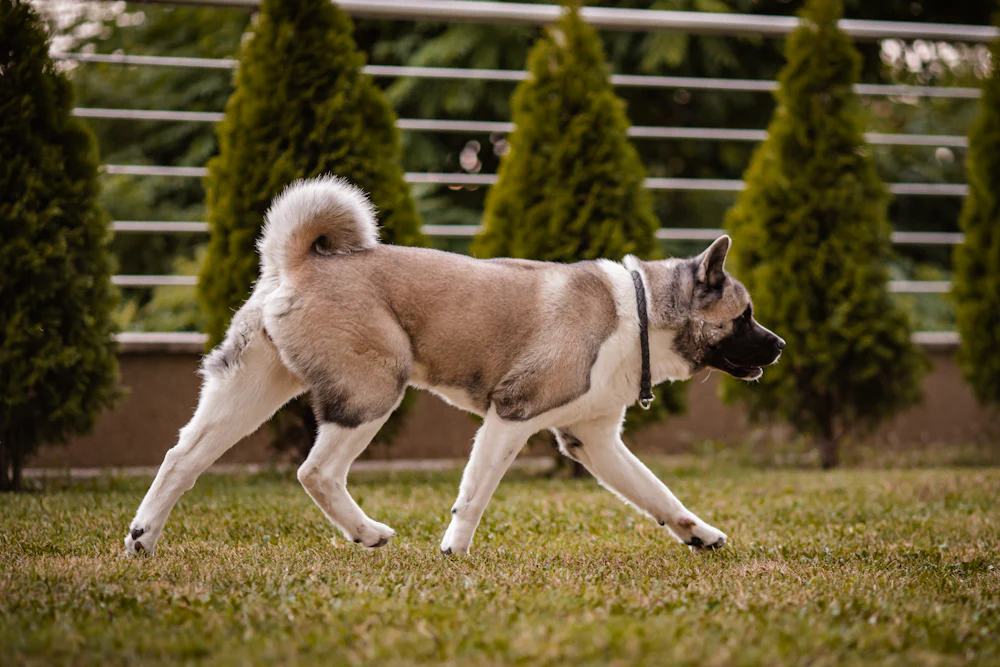
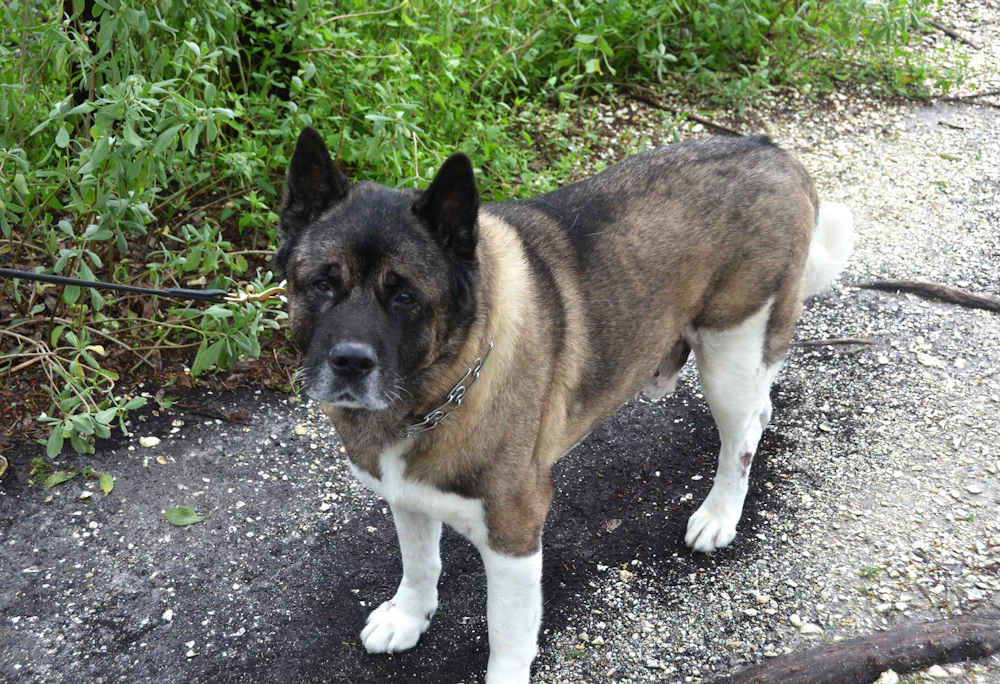
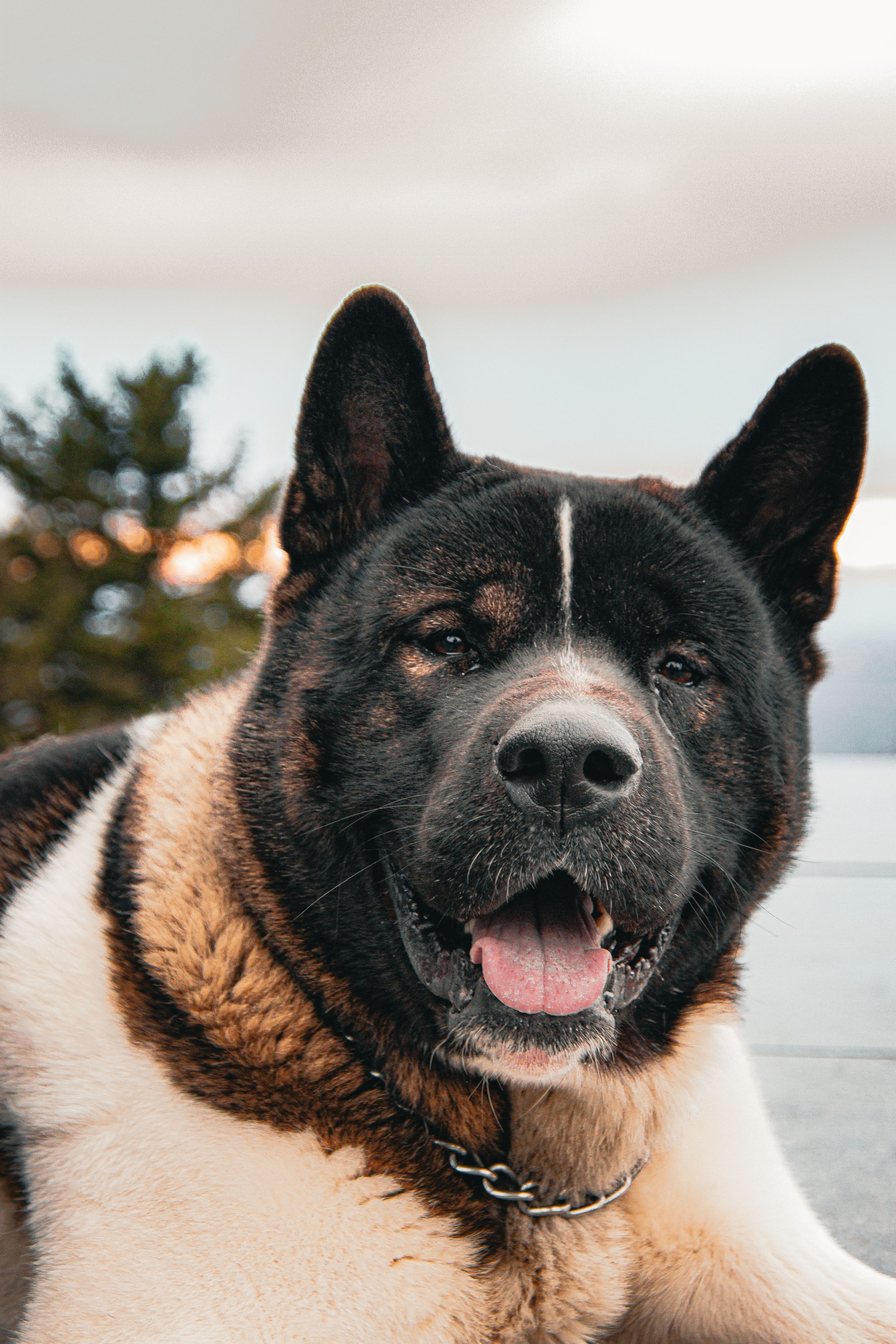
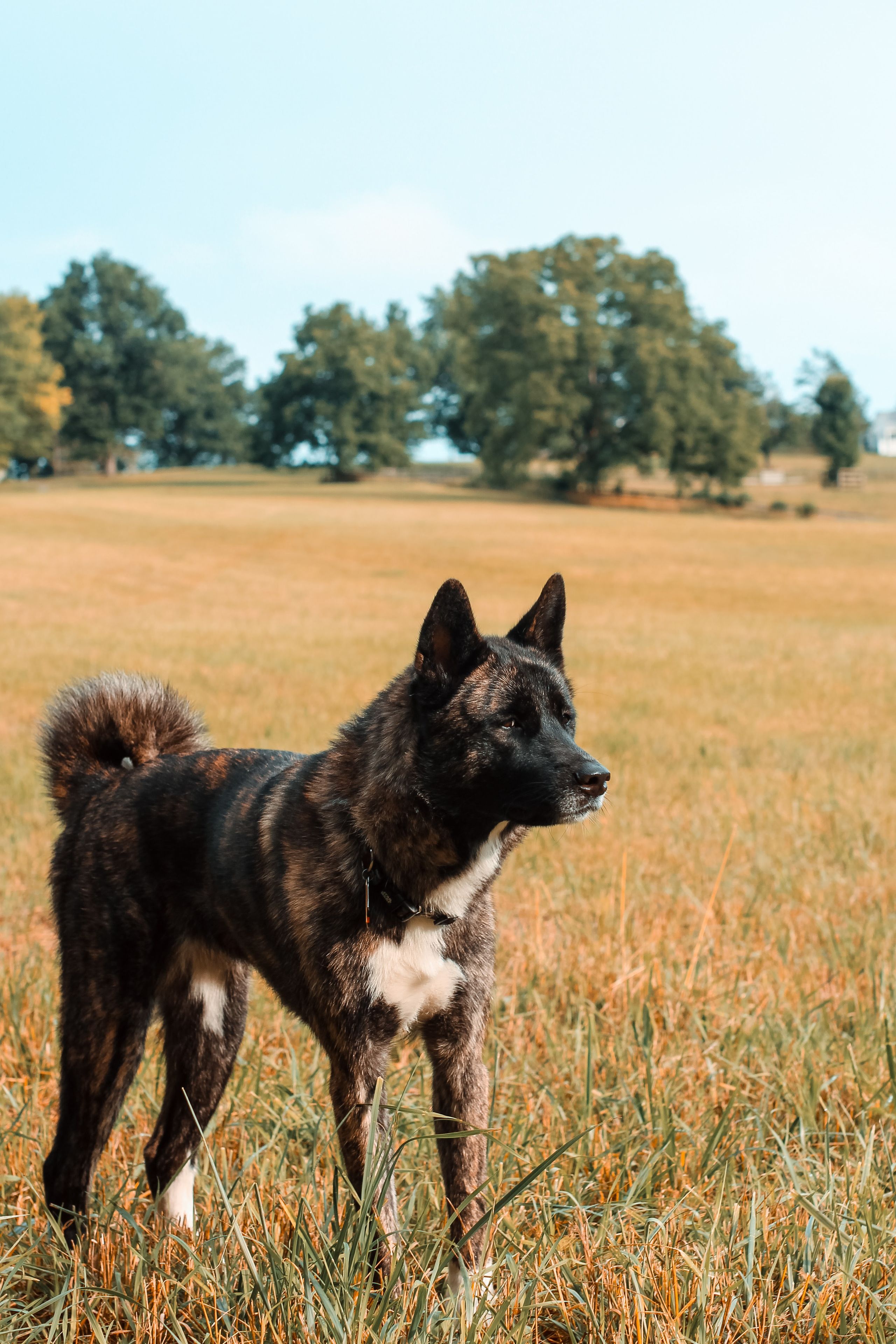
The coat is double, with a thick, soft, dense undercoat and a straight, harsh outer coat standing somewhat off the body, longer on the withers and rump and fullest on the tail. Brushing once a week is enough most of the year, but twice a year the undercoat comes out in quantity and daily brushing is needed for several weeks. Never shave the coat. The standard allows any colour, such as red, fawn, white, pinto or brindle, with or without mask or blaze; merle and liver are disqualifying.
Feeding and weight
Feed a complete diet formulated for large breeds, divided into at least two meals, and avoid exercise for an hour or so either side of eating to reduce the risk of bloat. Puppies need controlled growth on a large-breed puppy diet. Some Akitas guard their food bowl, so feed them in a quiet place away from children and other pets, and teach calm behaviour around food from the start.
Work out a starting calorie figure and food weight with the calorie calculator. Not sure this is the right breed? Take the quiz.
Health
Every breed carries predispositions. These are the conditions most often discussed for the American Akita, not a prediction for any individual dog.
- Hip dysplasia
- Elbow dysplasia
- Hypothyroidism
- Progressive retinal atrophy (PRA)
- Gastric dilatation-volvulus (bloat)
- Autoimmune conditions (sebaceous adenitis, uveodermatological syndrome)
What to ask the breeder. Ask to see hip and elbow scores, thyroid tests and recent eye examinations for both parents, and meet the mother to judge her temperament with strangers.
Choosing a puppy
An American Akita puppy is a fluffy bear cub that grows very quickly into a large, strong adolescent. Keep exercise moderate and avoid stairs and jumping during growth, feed for steady rather than rapid growth, and handle the puppy daily so that examination, grooming and nail trimming become routine. Socialisation and training in the first months shape the adult more than anything else, so enrol in a good puppy class and plan many calm outings.
In Luxembourg the national kennel club is the Fédération Cynologique Luxembourgeoise (FCL), a member of the FCI. Many owners also buy from breeders in Germany, France or Belgium; a puppy coming from another EU country must be microchipped and vaccinated against rabies, which in practice means it cannot travel before about fifteen weeks of age. Where to get a dog in Luxembourg.
The older American Akita
Older Akitas often stiffen in the hips and elbows, so shorter, gentler walks on soft ground and a supportive bed help. Keep weight lean to protect the joints, watch for signs of thyroid problems such as weight gain and lethargy, and schedule regular veterinary checks. Senior dogs can become less tolerant of disturbance, so give them a quiet space of their own.
A realistic day
A realistic weekday for a working household in Luxembourg City, with a midday visit. Adjust it to your dog, not the other way round.
A 30-minute walk at a quiet hour, on lead and with a harness, then rest before breakfast.
Breakfast in a calm spot, then the Akita settles to guard the flat while the owner leaves.
PAWLY midday visit by an experienced walker: a 40-minute walk on quiet paths, fresh water and a check of the coat and paws.
Main walk of the day, about 45 minutes in Bambësch or a quiet park, followed by dinner after a rest.
Short last outing, then the dog chooses its usual spot near the door or the family.
An American Akita in Luxembourg
An American Akita can live in a Luxembourg City flat, since it is calm and quiet indoors, but space, lifts and shared corridors need thought. Meeting a neighbour's dog in a small lift is the kind of situation an owner must plan around, waiting for the next car or taking the stairs. Ground-floor flats or houses with secure gardens make daily life easier. Many Akitas are naturally clean and rarely bark without reason, which neighbours appreciate.
The forests of Bambësch and the Grünewald suit this breed best on cool mornings, while busy places such as the Kinnekswiss on a sunny weekend are harder to manage. Summers in the 30s °C are a real burden for a dog with this coat, so walk at dawn and late in the evening and keep the flat cool. As for every dog, microchipping, declaration to the commune, third-party liability insurance and the annual dog tax apply.
Every dog in Luxembourg must be identified, declared to the commune and covered by liability insurance. How registration works.
When you travel
A sitter for an American Akita should already know the dog well before the owner leaves, as many Akitas do not accept strangers into the home. They need to know how the dog reacts to other dogs, the safest walking routes and times, feeding rules if the dog guards its bowl, and how to manage the heavy moult. Never leave the dog with unfamiliar dogs, and keep the routine as close as possible to normal.
PAWLY's holiday and overnight care takes place in your home, so your dog keeps its own bed and routine.
Myths and facts
MythThe American Akita and the Japanese Akita are the same breed.
FactThey share ancestors, but the FCI recognises them as separate breeds with different standards, size and colours.
MythA dog this size needs a huge amount of exercise.
FactIts needs are moderate. Steady daily walks matter more than long runs, and many Akitas are very calm indoors.
MythGood socialisation guarantees it will love other dogs.
FactSocialisation helps a great deal, but same-sex intolerance is part of the breed and must be managed throughout its life.
Is it the right dog for you?
Suits
- Experienced owners familiar with large guardian breeds
- Adult households or families with older, sensible children
- Homes with no other dog, or one carefully chosen companion
- People who prefer a quiet, dignified dog to a sociable one
Think twice if
- Think twice if this would be your first dog
- Think twice if you want to visit dog parks or have many canine friends
- Think twice if your building has small lifts and many dogs
- Think twice if you cannot cope with a heavy moult twice a year
Questions owners ask
Is an American Akita a good family dog?
It can be devoted and gentle with its own family, especially with older children. It is powerful and protective, though, and may react to rough play or to visiting children. It suits calm households with experienced adults who supervise interactions carefully.
Does it shed a lot?
Most of the year shedding is moderate, but twice a year the dense undercoat comes out in large tufts over a few weeks. During that time daily brushing, ideally with an undercoat rake, keeps the flat manageable.
Can it live with another dog?
Some do, typically with a dog of the opposite sex introduced carefully and raised together. Many American Akitas are not tolerant of other dogs, particularly of the same sex, so a single-dog household is often the safest choice.
Does it bark much?
The American Akita is usually quiet and barks mainly for a reason, such as an unexpected visitor. Some make other sounds, grumbles and low mutters, which owners learn to read. It is not usually a nuisance barker.
Sources
Photo: Unsplash (Unsplash License) · Photo: Unsplash (Unsplash License) · Photo: Unsplash (Unsplash License) · Photo: Pexels (Pexels License) · Photo: Pexels (Pexels License)
General information for dog owners in Luxembourg, not veterinary or legal advice. Official facts (origin, size, group, history and temperament as described by the breed standard) follow the FCI standard; health and care sections reflect breed-club and veterinary guidance and are typical ranges rather than rules. For your own dog, ask your vet, the breed club or your commune. How this guide is written and checked. Last reviewed 8 October 2026.
Need someone for your American Akita?
PAWLY offers an individual 45-minute walk or a home visit at your dog's pace, the same walker every time, and a written report with photos after every visit, across Luxembourg City.
Read next: the journal, for the American Akita
All articles
Arthritis: the pain owners file under old age
Giant breeds tend to have joint trouble early; this is what to look for.

Growing a large-breed puppy without wrecking its joints
A giant puppy grows fast on soft bones; how it grows decides its joints for life.

Building a recall you can actually rely on
Scent and movement can cancel a recall; this is the method for the American Akita.
Similar breeds
All 198 breeds
Akita Inu
A dignified, loyal Japanese spitz, made famous by Hachikō, and a serious dog for experienced owners.
EnergyGroomingFlat life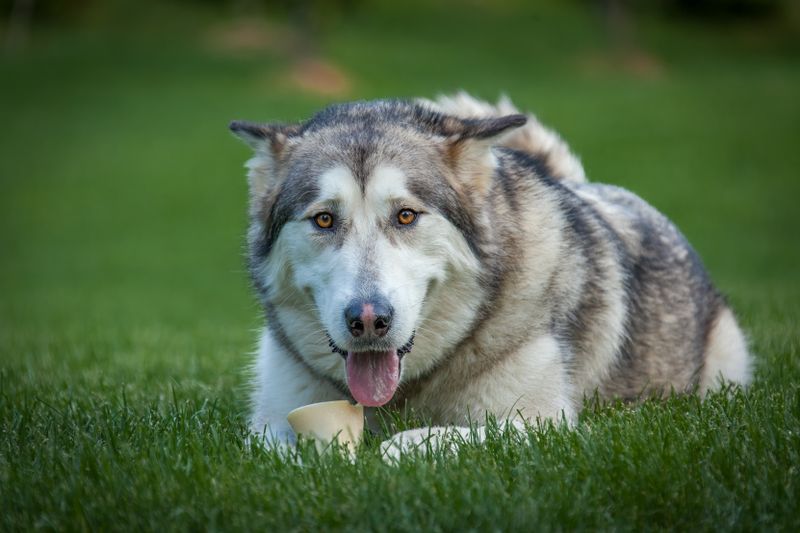
Alaskan Malamute
Built to haul heavy freight across snow, a friendly, powerful and opinionated companion that needs work, cool weather and an owner with patience.
EnergyGroomingFlat life
Korean Jindo
A loyal, watchful island hunting dog from southwest Korea, devoted to one person, famously good at finding its way out of gardens.
EnergyGroomingFlat life

