


History
The American Staffordshire Terrier developed in the United States from bull and terrier dogs brought over from England in the nineteenth century. The FCI standard, which gives the country of origin as the USA, says little about the breed's past and concentrates on the dog's character: great strength for its size, renowned courage and keen alertness. It was recognised by the American Kennel Club in 1936 as the Staffordshire Terrier.
The name was changed in 1972 to the American Staffordshire Terrier, to distinguish it from the smaller British Staffordshire Bull Terrier. The FCI places the breed in Group 3, Section 3, bull type terriers. Its muscular, agile, stocky build and its history as a strong terrier explain both its appeal and the caution it attracts.
Temperament
The FCI standard calls the breed's courage proverbial, and it requires that aggressive or overly shy dogs be disqualified. In the home, a well bred AmStaff is typically affectionate, loyal and keen to be near its people, with a clownish streak and a body that wriggles from end to end when you come in. It is sensitive to tone and handles being ignored badly.
Like other bull breeds it can be less tolerant of unfamiliar dogs, and some become reactive on the lead, particularly with dogs of the same sex. Strength turns every lapse in manners into a bigger problem, so training and socialisation from an early age are essential, and the owner must be in control at all times. Done properly, the result is a steady, friendly dog that is easy to love.
Children and other pets
AmStaffs can be devoted and gentle with their family's children under supervision, and many are patient and playful. Their strength and enthusiasm mean that a boisterous greeting can still knock over a toddler, so teach calm manners and never leave a young child alone with any dog. Tolerance of other dogs varies and needs careful management. Cats and small pets should be assessed individually and introduced slowly, if at all.
Exercise and the daily walk
An adult needs roughly an hour and a half a day, split into purposeful outings. Brisk walks, structured fetch, tug with rules and scent games all burn energy and strengthen the bond. Muscle needs a workout, but so does the mind, and a dog that has trained for ten minutes is calmer than one that has simply run.
Because the breed can be wary of other dogs, plan routes with room to move away and avoid crowded dog parks. A secure, well fitting harness or collar and a strong lead are essential. The breed is one of the four types named in Luxembourg law, so keep the dog under close control in public at all times.
Training
AmStaffs are intelligent, eager and responsive to positive training, with food and play as reliable rewards. Keep sessions short and upbeat, and be consistent. They can be stubborn adolescents, so start lead manners, sit, down, stay and a rock solid leave it as soon as the puppy comes home. A trained dog is a safer and happier dog, and in this breed a calm owner is the most valuable tool.
Socialisation should be broad and carefully managed: people of all ages, traffic, hats, bicycles, lifts and, above all, calm, well behaved adult dogs. Avoid rough play and chaos. Enrol in a class run by an instructor experienced with bull breeds, and revisit training through adolescence. In Luxembourg the legally required training certificate is the formal part, and it should be only the beginning.
Coat and grooming
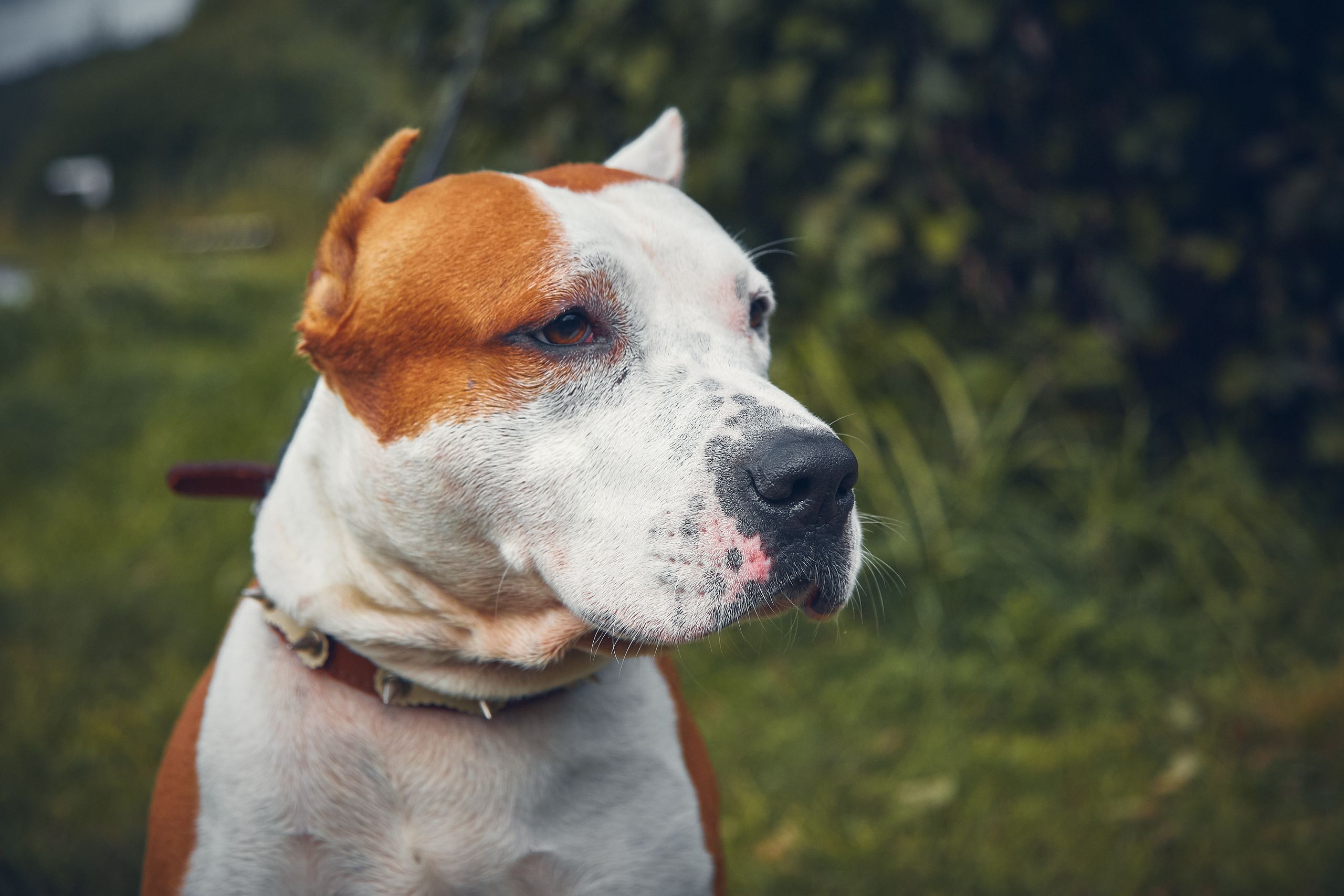
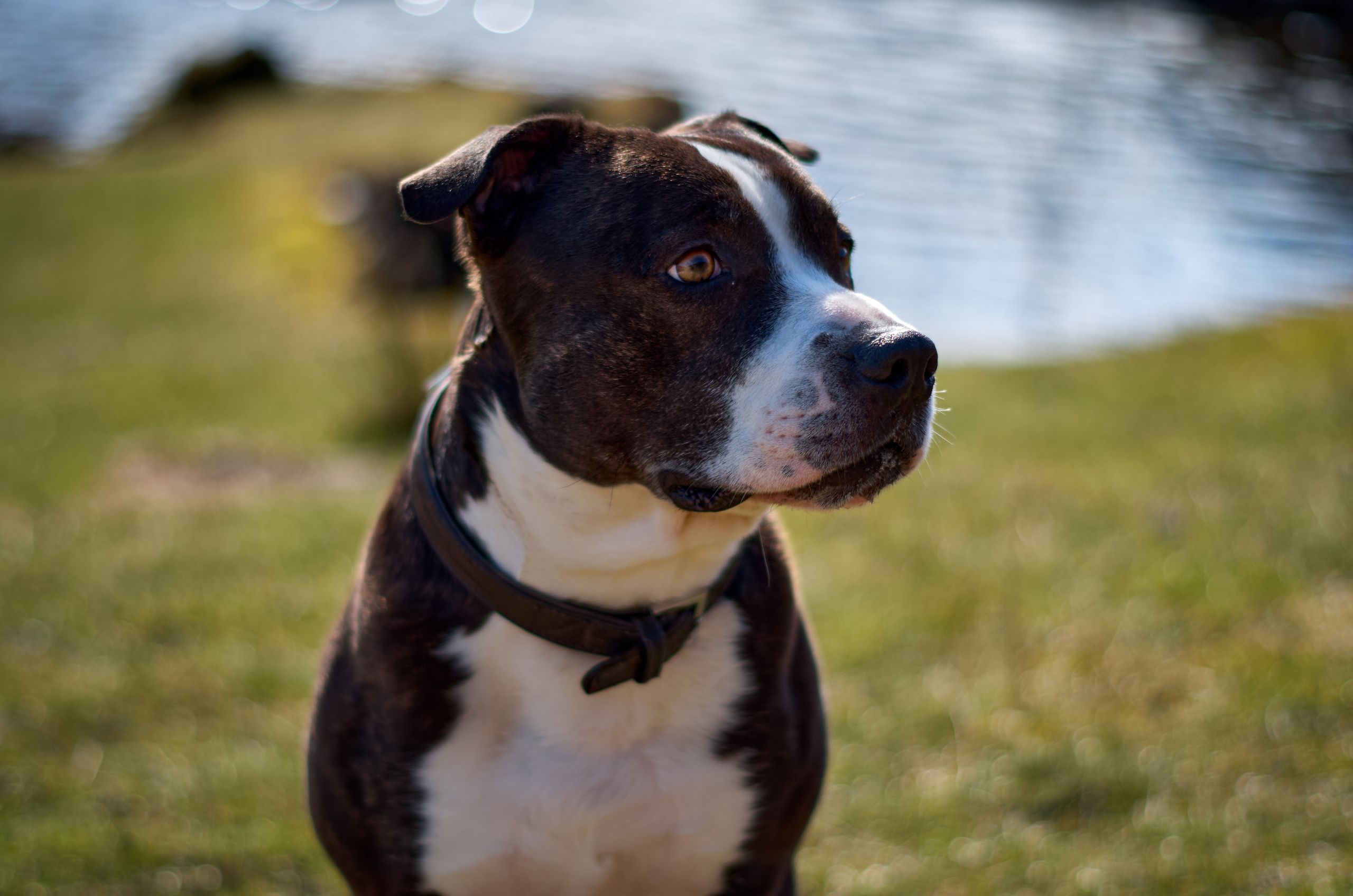
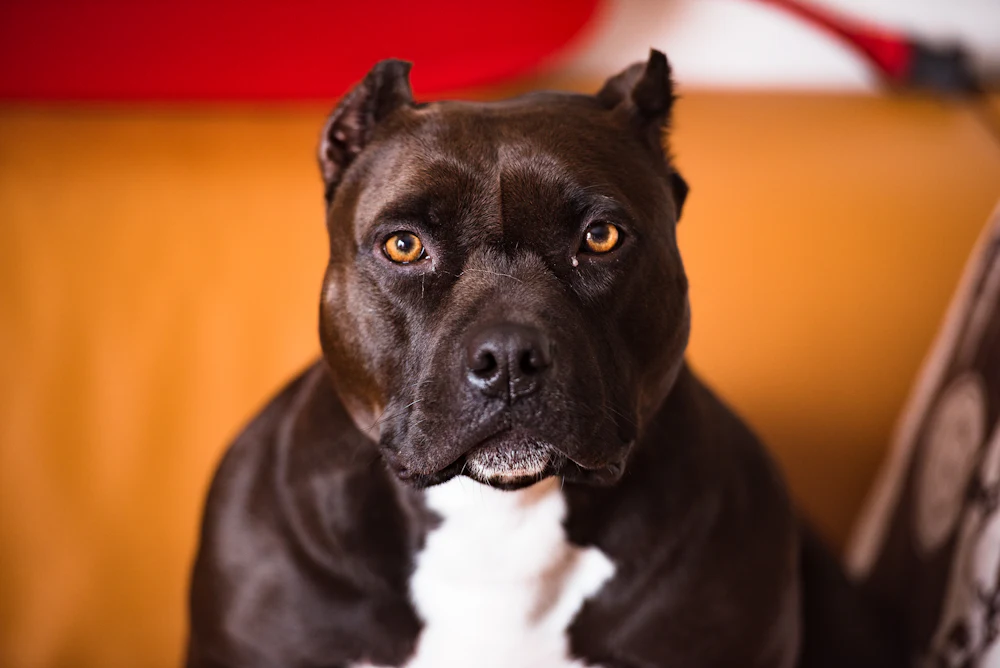
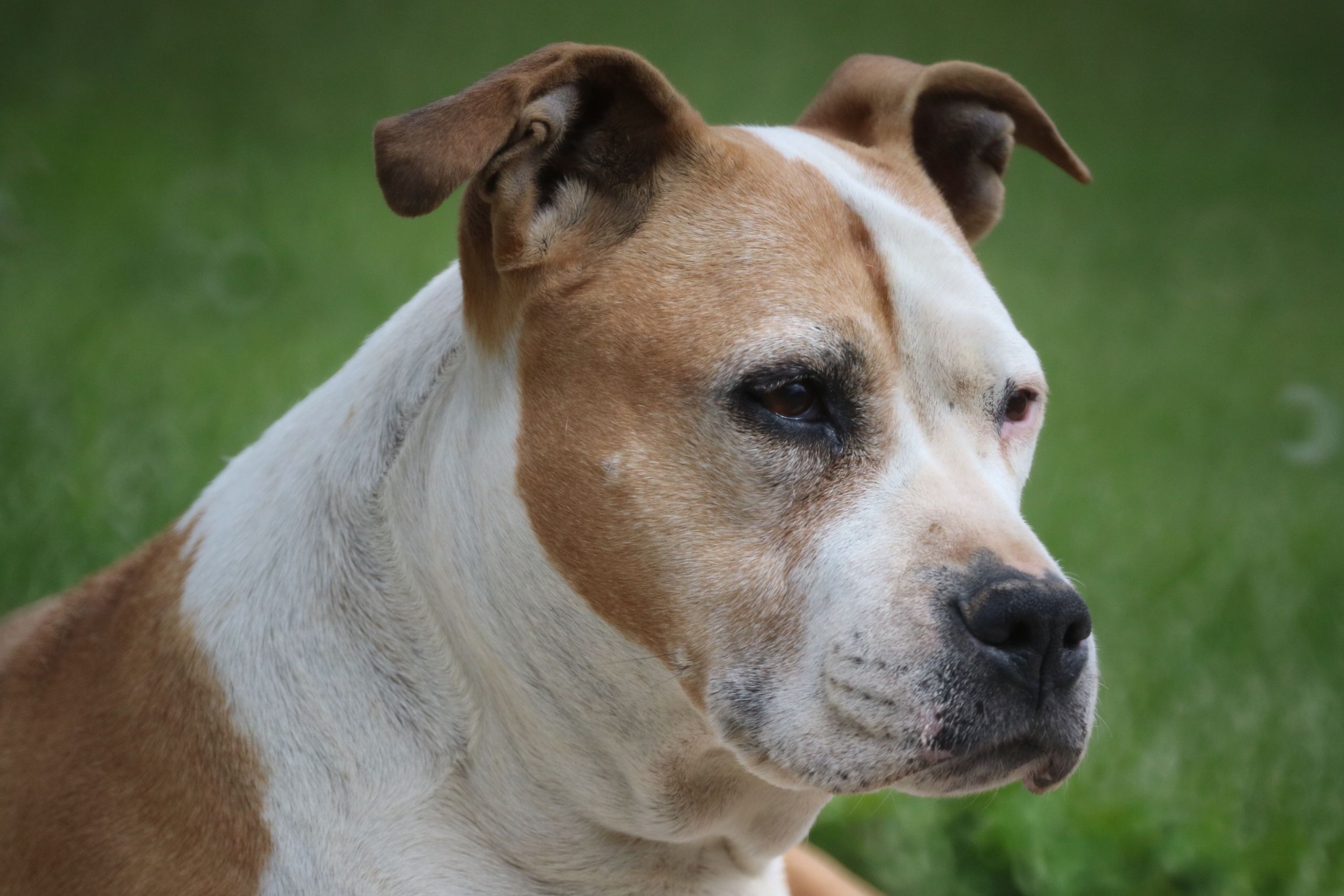
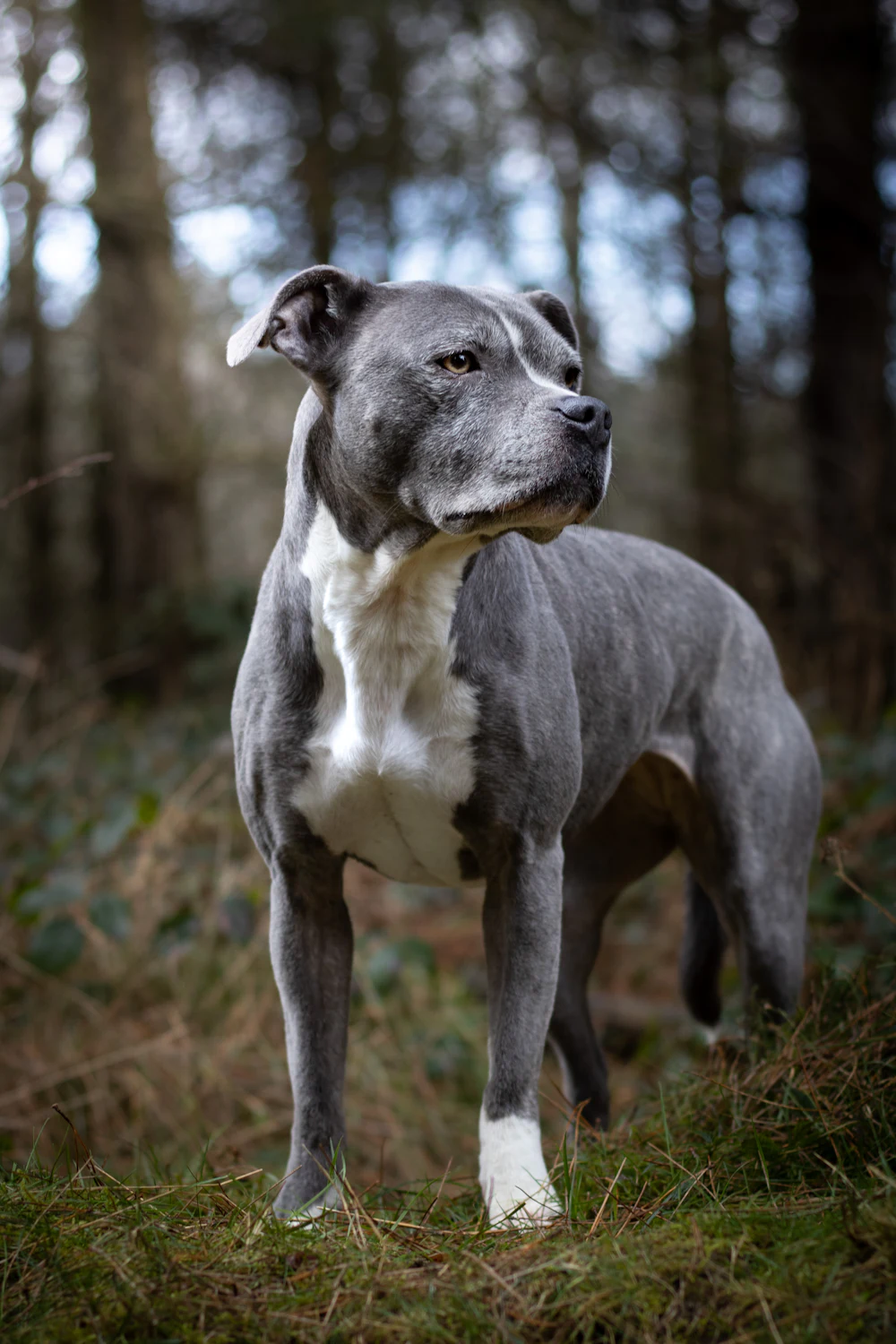
The standard describes a short, close, stiff and glossy coat. Permitted colours are solid, parti colour or patched, though the standard discourages more than 80 per cent white, and also black and tan and liver. Grooming is minimal: a weekly rub with a rubber mitt removes loose hair and keeps the coat shiny. Shedding is light to moderate. Short coats offer little protection from cold or wet, so a jacket helps in winter.
Feeding and weight
AmStaffs are muscular and can gain weight easily if the portions drift. Feed a balanced diet in measured amounts, and use part of the daily ration for training. Keep the dog lean enough that you can feel the ribs under a light covering. Avoid hard exercise straight after eating, change foods gradually, and ask a vet about the right diet if skin allergies appear.
Work out a starting calorie figure and food weight with the calorie calculator. Not sure this is the right breed? Take the quiz.
Health
Every breed carries predispositions. These are the conditions most often discussed for the American Staffordshire Terrier, not a prediction for any individual dog.
- Hip and elbow dysplasia
- Cerebellar ataxia (NCL-A, for which a DNA test exists)
- Skin allergies
- Cruciate ligament injury
What to ask the breeder. Ask for hip and elbow scores and the DNA test result for NCL-A for both parents. Ask to meet the parents and see how they behave with strangers and other dogs.
Choosing a puppy
Find a breeder who tests the parents and socialises the litter in a busy house. Meet the mother and look for a steady, curious puppy, neither anxious nor overbearing. Plan for the legal steps before the puppy comes home, not after: in Luxembourg this means the training certificate and ministerial authorisation. Start puppy classes early, teach good lead manners from day one and give the puppy sturdy chew toys, because jaw power develops fast.
In Luxembourg the national kennel club is the Fédération Cynologique Luxembourgeoise (FCL), a member of the FCI. Many owners also buy from breeders in Germany, France or Belgium; a puppy coming from another EU country must be microchipped and vaccinated against rabies, which in practice means it cannot travel before about fifteen weeks of age. Where to get a dog in Luxembourg.
The older American Staffordshire Terrier
Older AmStaffs can develop stiff hips and elbows, skin problems and cruciate injuries, and any new lump should be examined. Keep the dog lean, use ramps and non slip floors, and swap long walks for shorter, more frequent ones. Many remain affectionate and playful into their teens, and some become even more devoted. Check teeth, eyes and weight regularly, and provide a warm, supportive bed.
A realistic day
A realistic weekday for a working household in Luxembourg City, with a midday visit. Adjust it to your dog, not the other way round.
Walk with a qualified handler, on a short lead and a quiet route.
Breakfast, then a short training session of five or ten minutes.
Midday visit from a trusted walker: toilet break, a short walk and a chew.
Longer walk with structured play and more training.
Final toilet walk and a calm evening beside the family.
An American Staffordshire Terrier in Luxembourg
For this breed the law comes first. The law of 9 May 2008 names four types of dog: the Staffordshire Bull Terrier, the American Staffordshire Terrier, the Mastiff and the Tosa, along with dogs of similar morphology. Owning one requires a training certificate and ministerial authorisation, and this must come before the dog is declared. On top of that, every dog needs a microchip, a declaration to the commune, third party liability insurance and the annual dog tax. See our dedicated guide before you commit.
Day to day, an AmStaff is a flat dog if it is exercised: calm, short coated and tidy. In a lift, teach it to sit and wait, and be considerate of neighbours who may be nervous. The Pétrusse valley, Parc Merl and the Bambësch and Grünewald forests offer good space, but use quiet times. In summer, which can reach the 30s, walk early and late, and avoid the midday sun.
Every dog in Luxembourg must be identified, declared to the commune and covered by liability insurance. How registration works.
Luxembourg dog law. This breed is named in the law of 9 May 2008 on dogs, which requires a training certificate and a ministerial authorisation before you acquire the dog. Read the rules before you commit.
When you travel
An AmStaff needs a sitter who is experienced with strong dogs and comfortable with the legal framework, because the sitter will be responsible for the dog in public. Provide a written routine, the usual walks, veterinary details and a clear note on how the dog reacts to other dogs. Use a secure lead at all times, avoid crowded places and make sure gates and doors are shut. These dogs are people lovers and do best with company.
PAWLY's holiday and overnight care takes place in your home, so your dog keeps its own bed and routine.
Myths and facts
MythAmStaffs are all the same as pit bulls.
FactThe AmStaff is a registered breed with its own standard, although closely related to pit bull type dogs. Pit bull is a type, not an FCI breed.
MythA strong dog cannot be gentle.
FactMany AmStaffs are gentle and affectionate family dogs when well bred and raised. Strength simply means training matters more.
MythThey are not suitable for flats.
FactIf exercised and trained, an AmStaff is calm and tidy indoors. The challenge is the legal process and the handling, not the floor space.
Is it the right dog for you?
Suits
- Experienced owners prepared for the legal process
- Active households
- People who train consistently
- Owners who enjoy a people loving, athletic dog
Think twice if
- First time owners
- Anyone unwilling to meet the legal obligations
- Homes with many dog encounters and no training plan
Questions owners ask
Is the AmStaff the same as a pit bull?
The AmStaff is a registered breed with its own FCI standard. Pit bull is a type rather than an FCI breed. In Luxembourg, dogs of similar morphology without a pedigree can fall under the same law, so check the rules before acquiring any bull type dog.
What must I do before getting an AmStaff in Luxembourg?
Complete the training certificate and obtain ministerial authorisation first, then declare the dog to the commune. Like every dog, it also needs a microchip and third party liability insurance, and the commune charges the annual dog tax. See our full guide.
Are AmStaffs good with children?
Many are devoted and gentle with family children, but strength and enthusiasm call for supervision. Teach calm greetings, never leave a child alone with any dog, and be careful with visiting children, whose play may overexcite the dog.
Can an AmStaff live with another dog?
Some can, especially with a dog of the opposite sex and careful introductions, but tolerance varies and needs management. Meet the other dog first, introduce them on neutral ground and keep separate feeding places.
Sources
Photo: Pexels (Pexels License) · Photo: Pexels (Pexels License) · Photo: Unsplash (Unsplash License) · Photo: Pexels (Pexels License) · Photo: Unsplash (Unsplash License)
General information for dog owners in Luxembourg, not veterinary or legal advice. Official facts (origin, size, group, history and temperament as described by the breed standard) follow the FCI standard; health and care sections reflect breed-club and veterinary guidance and are typical ranges rather than rules. For your own dog, ask your vet, the breed club or your commune. How this guide is written and checked. Last reviewed 8 October 2026.
Need someone for your American Staffordshire Terrier?
PAWLY offers an individual 45-minute walk or a home visit at your dog's pace, the same walker every time, and a written report with photos after every visit, across Luxembourg City.
Read next: the journal, for the American Staffordshire Terrier
All articles
Luxembourg's dangerous dog list: the breeds, the obligations, and the debate
The law of 9 May 2008 names the American Staffordshire Terrier; these are the obligations that follow.

Dogs and cats in the same flat
The American Staffordshire Terrier can see small animals as prey; this covers living with a cat in a flat.

Building a recall you can actually rely on
Terriers follow scent and movement, so the American Staffordshire Terrier needs a recall built properly.
Similar breeds
All 198 breeds
Staffordshire Bull Terrier
Muscular, affectionate and devoted to people, and in Luxembourg a breed that comes with specific legal obligations.
EnergyGroomingFlat life
Bull Terrier
Egg-headed, muscular and endlessly clownish: a bull terrier wants to be at the centre of the household and rarely accepts a quiet day.
EnergyGroomingFlat life
Rottweiler
A calm, powerful working dog from the town of Rottweil, loyal and protective, and a real responsibility.
EnergyGroomingFlat life

