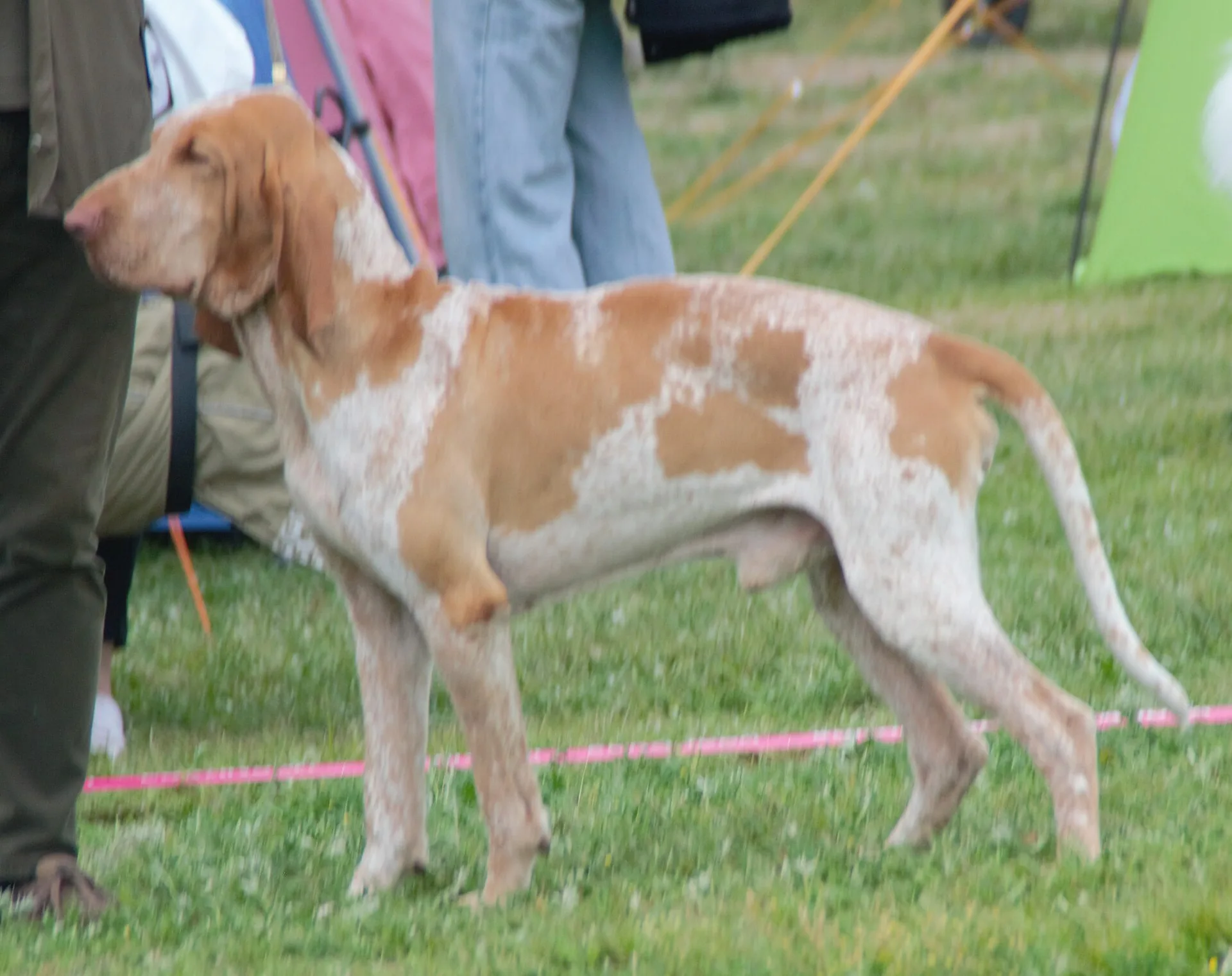
History
The Bracco Italiano is one of the oldest European pointing breeds. The FCI standard traces its documented existence back to the fourteenth century, and the dog appears in Italian paintings and frescoes of the Renaissance, where pointing dogs were used with nets and later with guns. Noble families in Lombardy and Piedmont kept and bred these dogs, and the breed travelled with Italian hunting culture across Europe.
Interest declined by the late nineteenth century, and devoted Italian breeders worked to preserve and revive the breed in the twentieth. The FCI places the Bracco Italiano in Group 7, Section 1, among the Continental pointing dogs of braque type, with a working trial required, and its current standard dates from 2015. The standard emphasises a dog selected for a fast, wide trot and a natural talent for retrieving, a combination still central to the breed.
Temperament
The FCI standard describes the Bracco Italiano as tough and adapted to all types of hunting, reliable, endowed with an excellent ability to understand, docile and easy to train. Owners often describe a gentle, affectionate dog that loves people, enjoys physical contact and wants to be part of family life.
Brachi are generally not guarding dogs; most greet visitors calmly and with interest. They can be sensitive and a little clownish, and some are vocal when excited. Their hunting drive is real: a scent on the wind can take a Bracco's whole attention, and birds are especially interesting. With enough work, they are calm and easy companions in the house.
Children and other pets
Brachi are typically patient and gentle with children and enjoy family life, though a young, large dog can knock over toddlers during play, so supervision is needed. Most get along well with other dogs. They can live with cats if raised with them, but birds and small animals outside will draw strong interest, as the breed is bred to find and point game. Chickens and pet birds should be kept secure.
Exercise and the daily walk
A working pointer needs real exercise: about one and a half to two hours a day, including some free running in safe places. Walks should give time to use the nose; a Bracco that can search and quarter in a field is far more settled than one that only walks on pavement. Under-exercised Brachi may become restless and destructive.
Off-lead freedom needs careful judgement. Many Brachi have reasonable recall but can follow scent a long way, and in forests with deer and wild boar a long line is often wiser. Retrieving games, scent work and gundog training are ideal outlets. Because of the deep chest and bloat risk, avoid strenuous exercise just before or after meals.
Training
Brachi are intelligent and usually keen to please, but they are sensitive and respond poorly to harshness. Calm, reward-based training with patience works best. They can be slower to mature than some breeds, so expect a long adolescence.
Key skills are a reliable recall, walking on a loose lead despite enticing scents, and calm behaviour at home. Using the breed's natural pointing and retrieving abilities in gundog training or scent work gives a strong bond and a focused dog. Be prepared for some drool and enthusiasm for food, which can be useful in training.
Coat and grooming
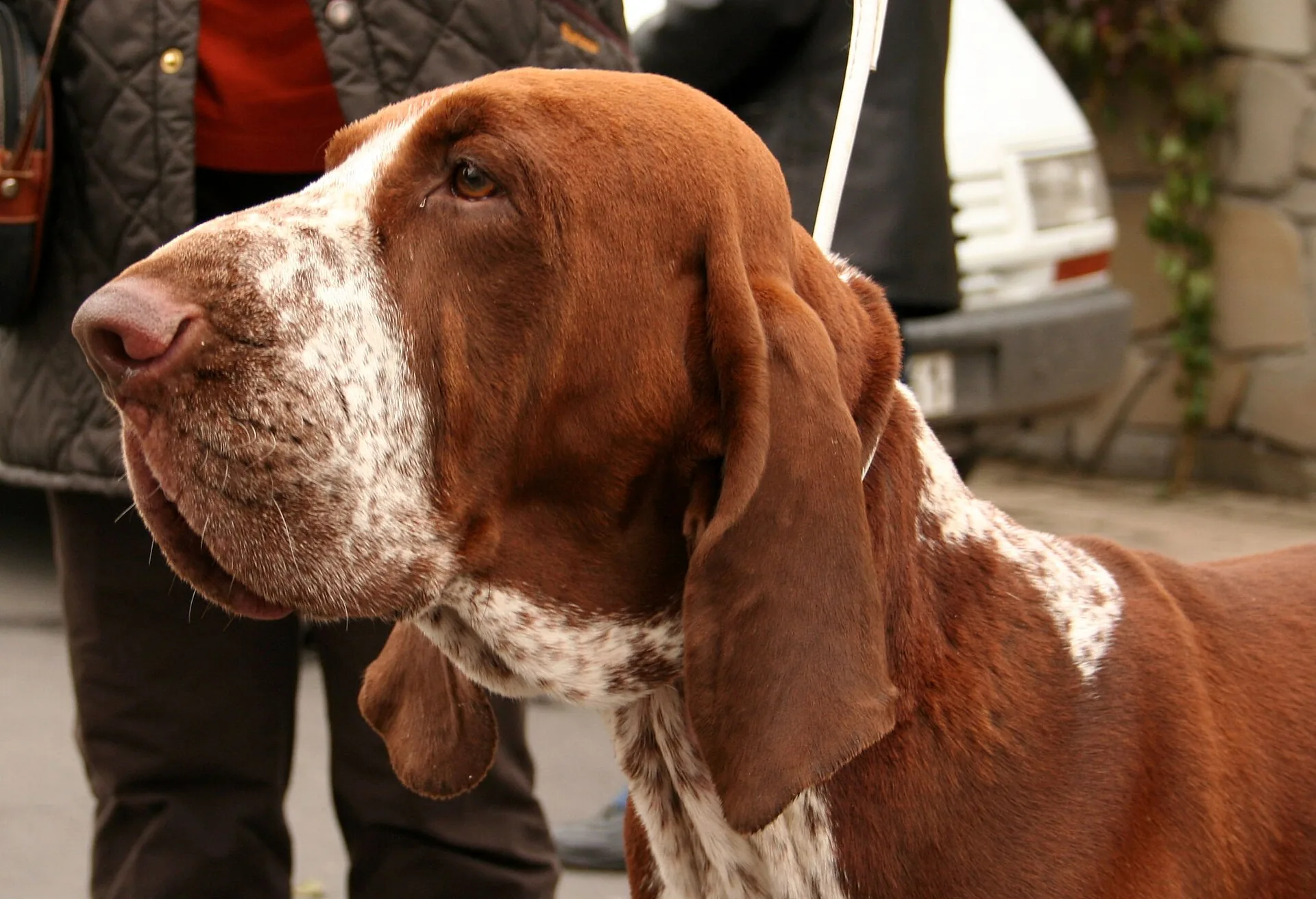
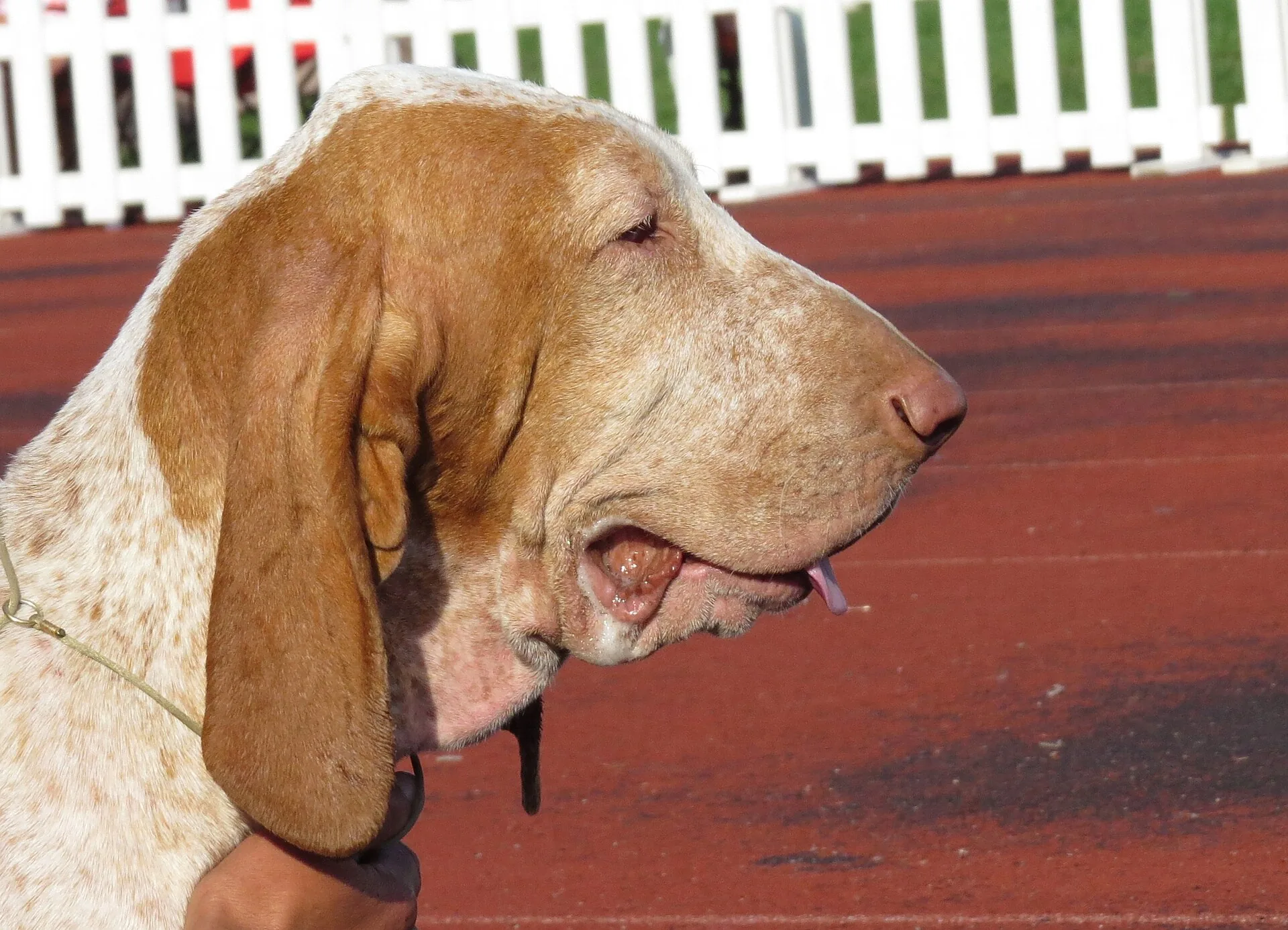
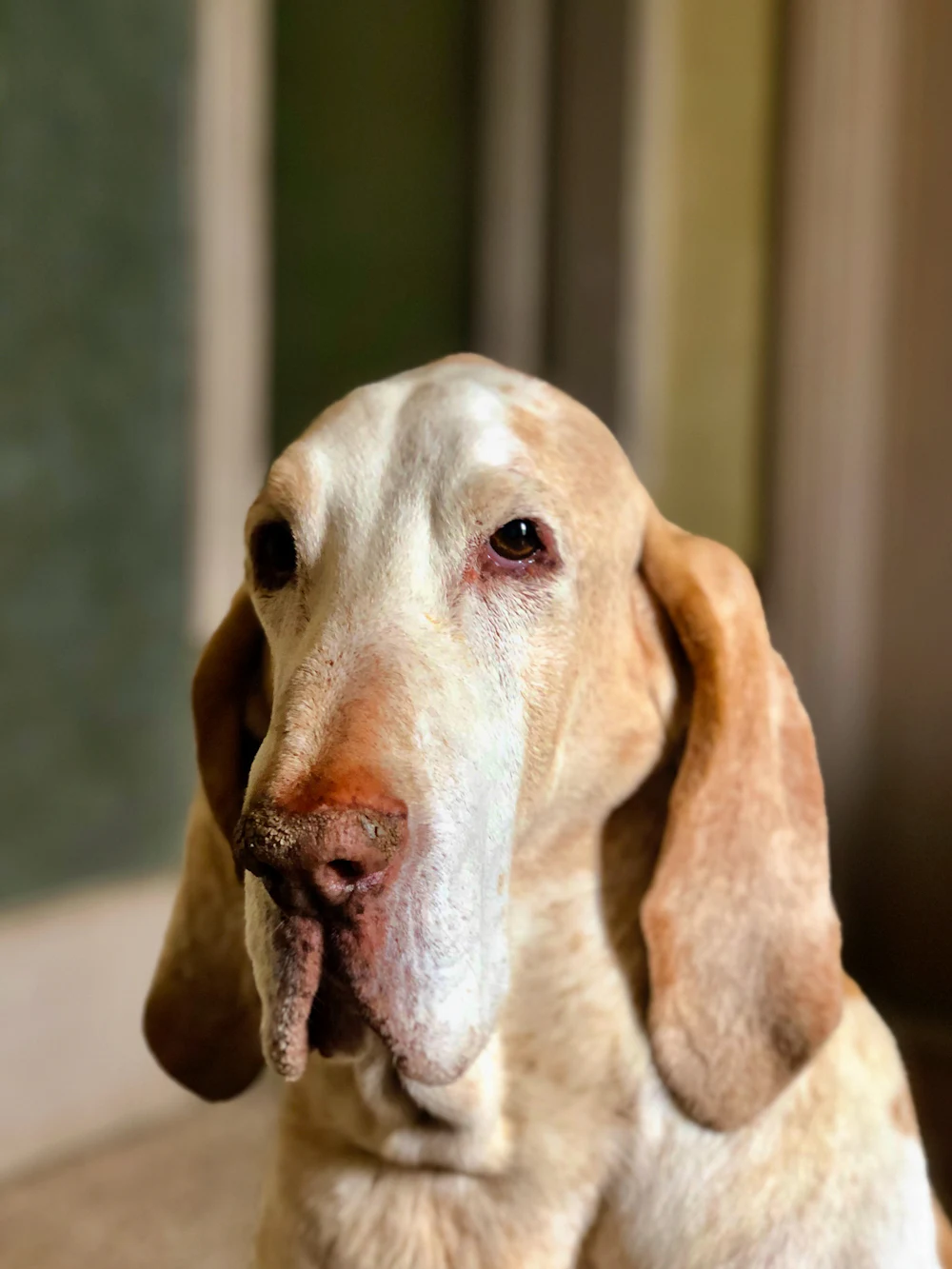
The coat is short, dense and glossy, finer and shorter on the head, ears and front of the legs. Shedding is moderate. A weekly brush with a rubber mitt keeps it in good condition. The long ears and loose lips need regular attention: clean and dry the ears weekly, and wipe the lips to prevent infection in the folds. FCI colours are white, white with orange or amber patches, white with brown patches, orange roan and liver roan; a symmetrical mask is preferred.
Feeding and weight
Brachi often have healthy appetites, and many are opportunistic with food left within reach. Feed a high quality complete diet in two measured meals a day, rather than one large one, to reduce the risk of bloat. Keep the dog lean, as excess weight stresses joints. Use part of the daily ration for training, and keep kitchen counters clear.
Work out a starting calorie figure and food weight with the calorie calculator. Not sure this is the right breed? Take the quiz.
Health
Every breed carries predispositions. These are the conditions most often discussed for the Bracco Italiano, not a prediction for any individual dog.
- Hip dysplasia
- Elbow dysplasia
- Kidney disease (breed clubs recommend kidney health testing)
- Entropion and ectropion (eyelid problems)
- Ear infections (otitis externa)
- Gastric dilatation-volvulus (bloat)
What to ask the breeder. Ask for hip and elbow scores, eye examination results and kidney health testing for both parents, and whether there is a history of bloat in the line.
Choosing a puppy
Bracco puppies are affectionate, curious and often clumsy as they grow. Start with gentle socialisation in town and countryside, with lifts, buses and traffic introduced gradually. Teach recall early and practise it daily. Keep exercise moderate and free while the skeleton develops, and avoid excessive stairs. Introduce ear cleaning and lip wiping as routine. Expect chewing and stealing; puppy proof the home.
In Luxembourg the national kennel club is the Fédération Cynologique Luxembourgeoise (FCL), a member of the FCI. Many owners also buy from breeders in Germany, France or Belgium; a puppy coming from another EU country must be microchipped and vaccinated against rabies, which in practice means it cannot travel before about fifteen weeks of age. Where to get a dog in Luxembourg.
The older Bracco Italiano
Older Brachi still enjoy using their nose. Keep walks regular but shorter, and continue gentle scent games. Watch weight, joints and kidney health with regular vet checks, and report any increase in thirst or urination. Provide soft, supportive bedding, and consider non-slip rugs in the home. Ear care remains important.
A realistic day
A realistic weekday for a working household in Luxembourg City, with a midday visit. Adjust it to your dog, not the other way round.
Brisk 40-minute walk with time to sniff, then breakfast after a short rest.
Ear check and lip wipe, then a nap while the owner leaves for work.
PAWLY midday visit: an hour in a park or green area with a long line, scent games and fresh water.
Main exercise: a long walk or run in a safe area, followed by dinner after a rest.
Short last walk, then bed.
A Bracco Italiano in Luxembourg
A Bracco Italiano can live in a Luxembourg City flat if its exercise needs are met, but it is a large dog that appreciates space. Lifts and stairs are manageable, though wet, muddy ears and paws after a forest walk need towels by the door, and some drool is normal. Neighbours may hear the occasional deep bark or howl when the dog is excited or bored.
The Grünewald and Bambësch offer excellent walking, but their deer and wild boar mean a long line is usually wise. Parc Merl and the Pétrusse valley are good for shorter daily walks. In summer heat, walk early and late, and provide plenty of water. Remember the local requirements: microchip, declaration to the commune, insurance and dog tax.
Every dog in Luxembourg must be identified, declared to the commune and covered by liability insurance. How registration works.
When you travel
A sitter should be comfortable with a large, strong dog and know its exercise needs. Keep the dog on lead or a long line in forests, and avoid exercise around meals because of bloat risk. Clean the ears regularly, especially after walks in wet weather. Keep food out of reach, as many Brachi are skilled at stealing. Most adapt well to a kind, active sitter.
PAWLY's holiday and overnight care takes place in your home, so your dog keeps its own bed and routine.
Myths and facts
MythBrachi are lazy because they look relaxed.
FactThey are calm at home, but they are working pointers that need substantial daily exercise.
MythPointers only suit hunters.
FactMany Brachi live as companions. They are happiest with outlets such as scent work, long walks or gundog training.
MythShort coats need no care.
FactThe coat is easy, but the long ears and loose lips need regular cleaning to prevent infection.
Is it the right dog for you?
Suits
- Active owners who enjoy long country walks
- Families with older children
- People interested in gundog training or scent work
- Owners who appreciate a gentle, affectionate dog
Think twice if
- You live in a small flat and work long hours
- You dislike drool or muddy ears
- You want reliable off-lead control in forests
- You keep birds or small pets
Questions owners ask
Do Brachi drool?
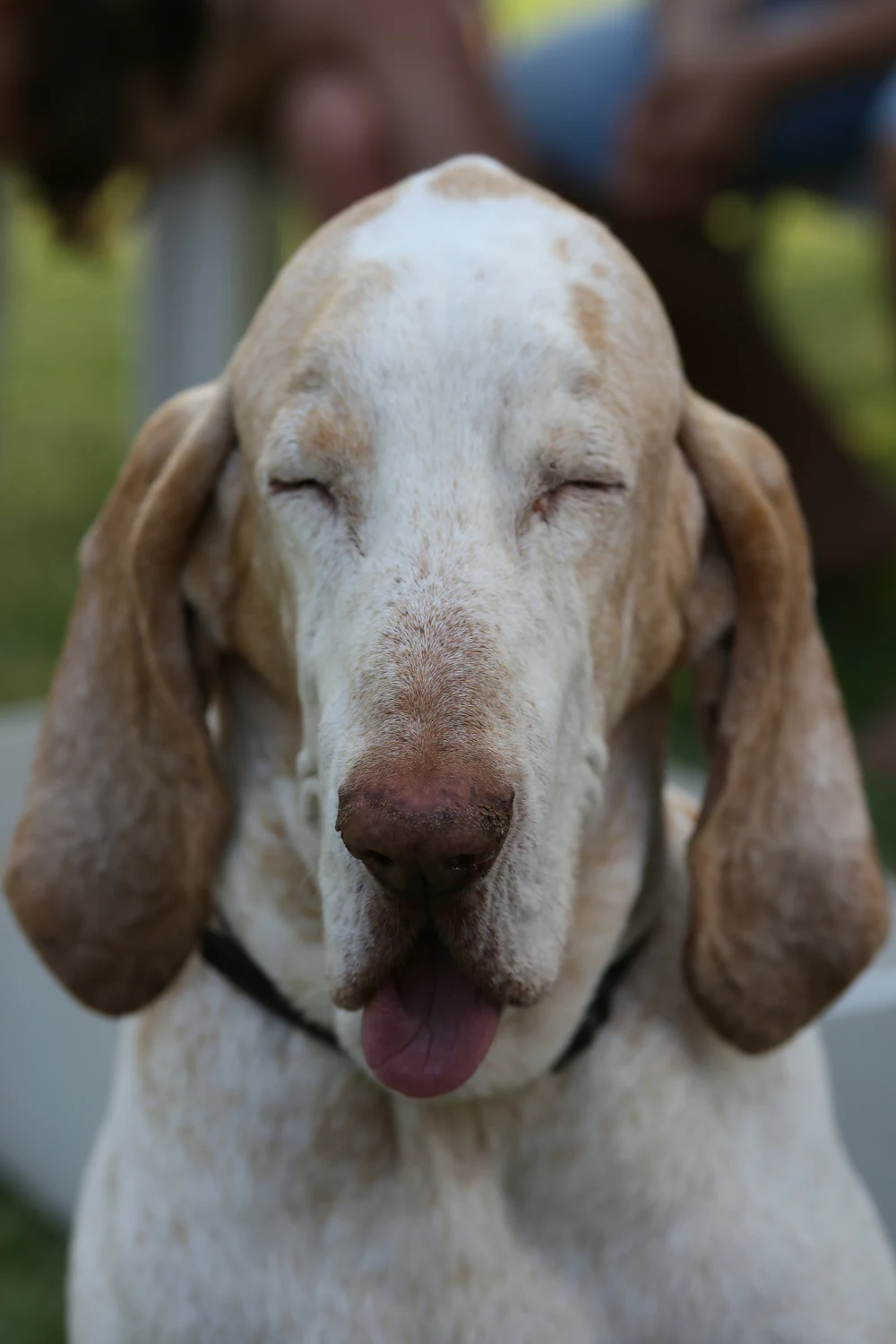
Yes, many do, especially after drinking or eating or when excited. Wiping the lips regularly also prevents infection in the folds.
Can a Bracco be left alone during the day?
Brachi are sociable and dislike long periods alone. A midday walk and company help a great deal.
Are they good with other dogs?
Most are friendly and sociable with other dogs, especially when well socialised from puppyhood.
How much exercise does a Bracco need?
Around one and a half to two hours a day, including some free running and sniffing. Mental work such as scent games also helps.
Sources
Photo: Pleple2000, CC BY-SA 3.0, via Wikimedia Commons · Photo: Томасина, CC BY-SA 3.0, via Wikimedia Commons · Photo: Unsplash (Unsplash License) · Photo: Unsplash (Unsplash License) · Photo: Canarian, CC BY-SA 4.0, via Wikimedia Commons
General information for dog owners in Luxembourg, not veterinary or legal advice. Official facts (origin, size, group, history and temperament as described by the breed standard) follow the FCI standard; health and care sections reflect breed-club and veterinary guidance and are typical ranges rather than rules. For your own dog, ask your vet, the breed club or your commune. How this guide is written and checked. Last reviewed 8 October 2026.
Need someone for your Bracco Italiano?
PAWLY offers an individual 45-minute walk or a home visit at your dog's pace, the same walker every time, and a written report with photos after every visit, across Luxembourg City.
Read next: the journal, for the Bracco Italiano
All articles
Feeding, portions and how to tell if your dog is the right weight
Large dogs suffer more from extra weight; this is how to judge the right one.

Ears: the three signs that mean an appointment
Ear trouble is common in the Bracco Italiano; these are the three signs that mean an appointment.

Building a recall you can actually rely on
Scent and movement can cancel a recall; this is the method for the Bracco Italiano.
Similar breeds
All 198 breeds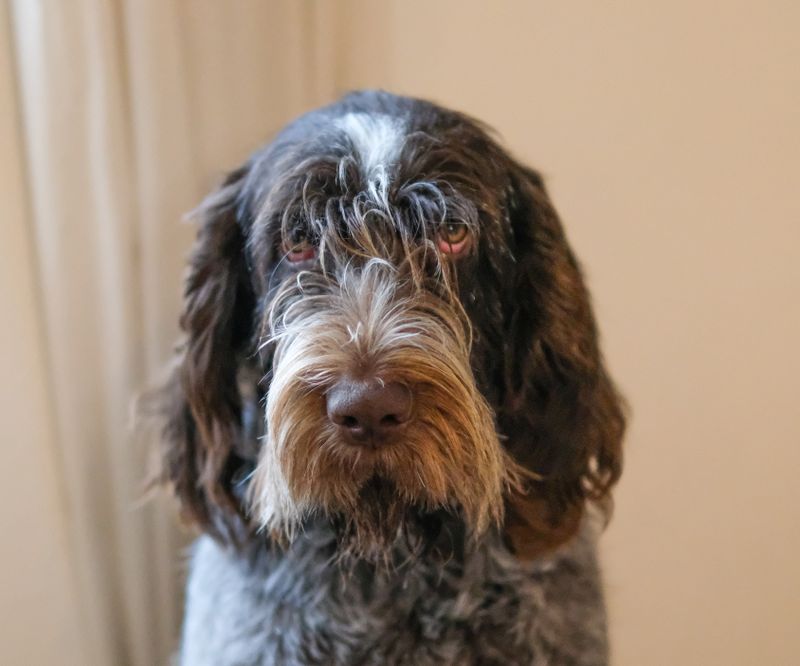
Spinone Italiano
A shaggy, bearded Italian gundog with the patience of a saint and the trot of a marathon runner.
EnergyGroomingFlat life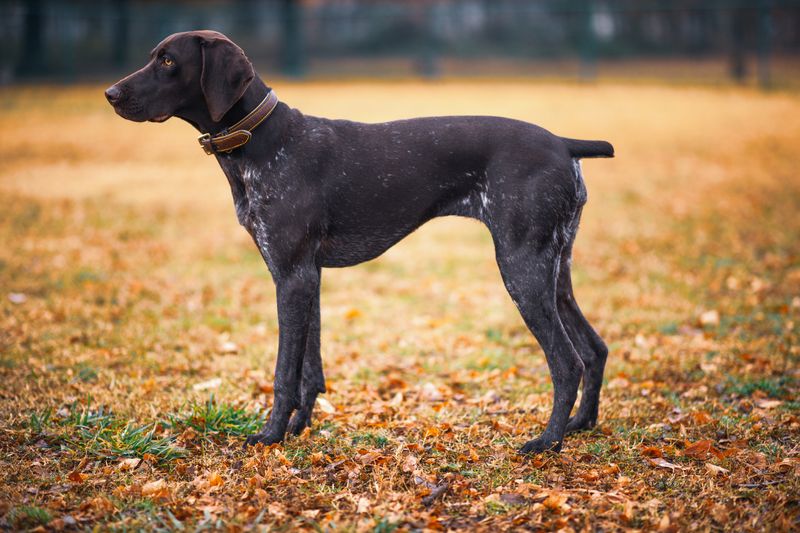
German Shorthaired Pointer
A versatile German hunting dog built for strength, endurance and speed, affectionate on the sofa and tireless outdoors when given a job.
EnergyGroomingFlat life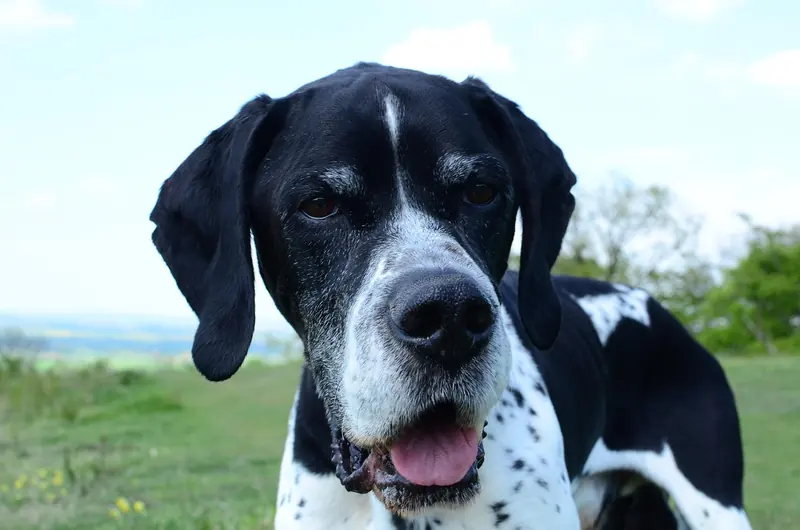
English Pointer
A lean, tireless bird dog that freezes on scent, and needs a great deal of running.
EnergyGroomingFlat life

