History
The English Pointer is a pointing dog of Great Britain, and the FCI lists it in Group 7, Section 2.1, with the British and Irish Pointers and Setters. The standard gives no detailed history beyond the country of origin, so this entry keeps to what is documented. What the standard does make plain is the job: this is a dog that finds game by scent and indicates it by standing still.
The FCI notes that the breed is subject to a working trial, which tells you something about how the breed's own authorities see it. It is not meant to be only a handsome shape. The standard describes symmetry, a series of graceful curves and a strong but lissom appearance, and it expects that appearance to come with endurance and speed. Both halves matter, and a Pointer that looks the part but cannot work has missed the point.
Temperament
The FCI describes the breed as aristocratic and alert, with the appearance of strength, endurance and speed, and with a kind, even disposition. That last phrase is the one owners recall. A well-exercised Pointer is a gentle, undemanding house dog that will fold itself onto a rug or a sofa and sleep, rather than patrol the flat looking for work.
Outdoors the character changes. A Pointer on a scent is entirely absorbed, and the drive that makes it superb in the field can make it deaf in a park. These are sensitive dogs, affectionate with their people and usually friendly with other dogs, who will sulk under harsh handling. They do not enjoy being left alone for long days, and bored Pointers invent their own entertainment.
Children and other pets
Affectionate and tolerant with children, though the size and energy can overwhelm small ones, especially in an adolescent that has not yet learned to stop. Other dogs are usually welcome playmates, and a Pointer will happily exhaust a canine friend. Small animals and birds are a problem for a dog built to find them, so cats, rabbits and caged pets need careful management and often a closed door.
Exercise and the daily walk
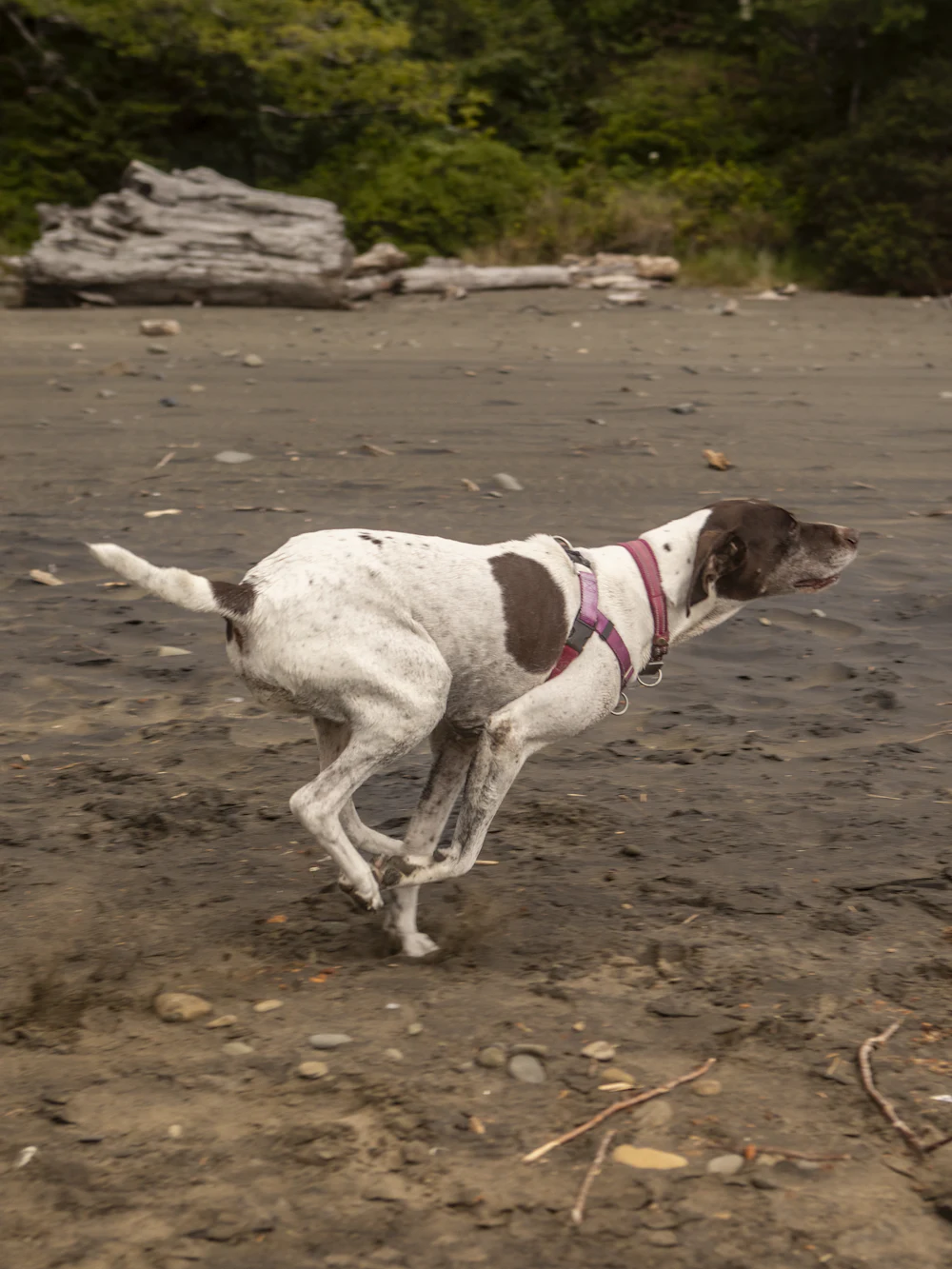
Plan on two hours or more a day, including proper running, not just walking. Pointers need somewhere safe to gallop, or several long, purposeful outings. A tired Pointer is calm and affectionate; an under-exercised one is destructive, noisy and restless at eleven at night.
Mental work counts too. Scent games, hunting for hidden toys and structured training sessions add to the day. Cycling or running beside an adult dog on a quiet path is useful if the dog is fully grown and fit. Wait for the joints to mature before asking for hard, repetitive exercise from a young dog.
Training
Pointers are intelligent and willing but easily distracted by scent. They respond to positive, patient training and are sensitive to harshness. Keep lessons short and lively, use food and play, and teach early that attention to you pays better than anything on the ground.
Recall is the hardest part, because the hunting instinct overrides everything. Use a long line, practise in safe places, and do not assume that a well-behaved dog at home will listen in a field. Teach a reliable stop whistle, loose-lead walking and calm settling, and give adolescents extra patience.
Coat and grooming
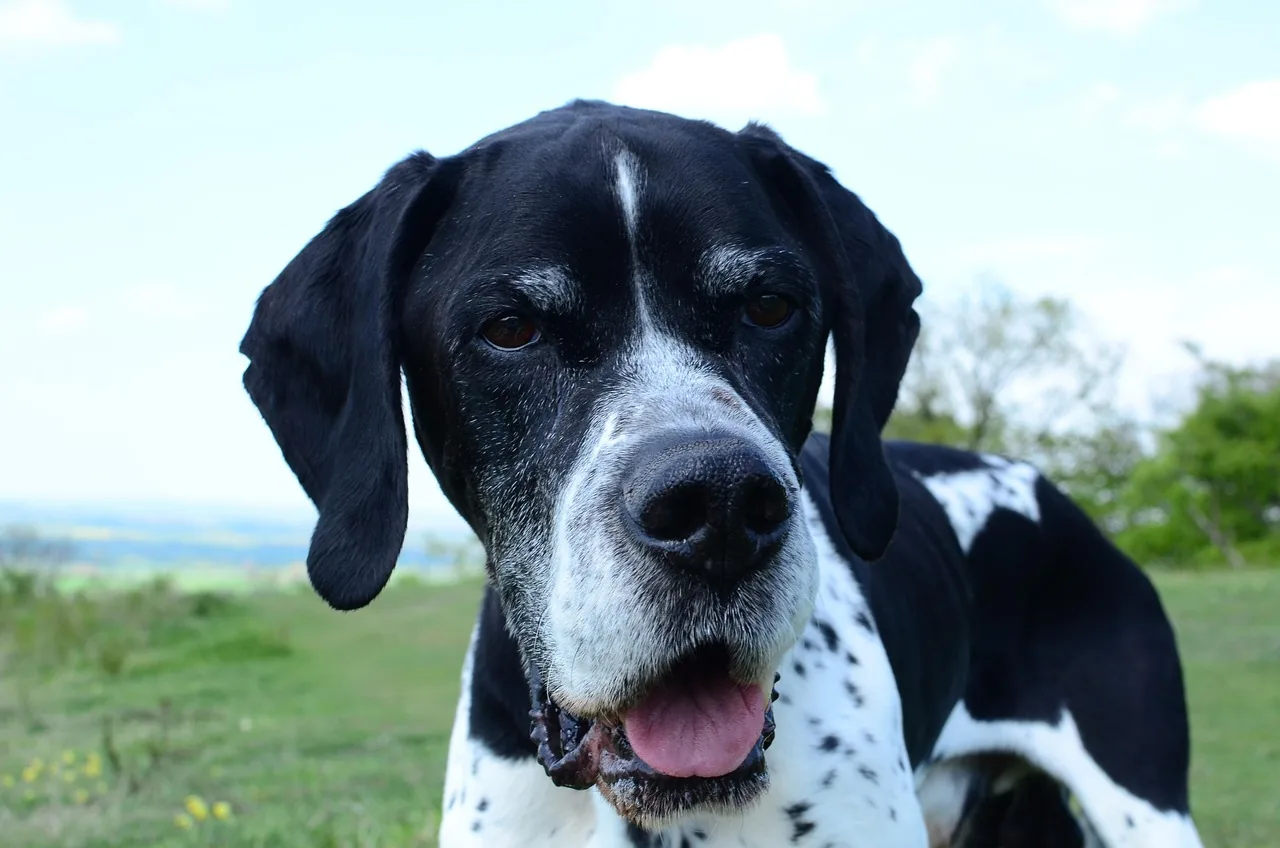
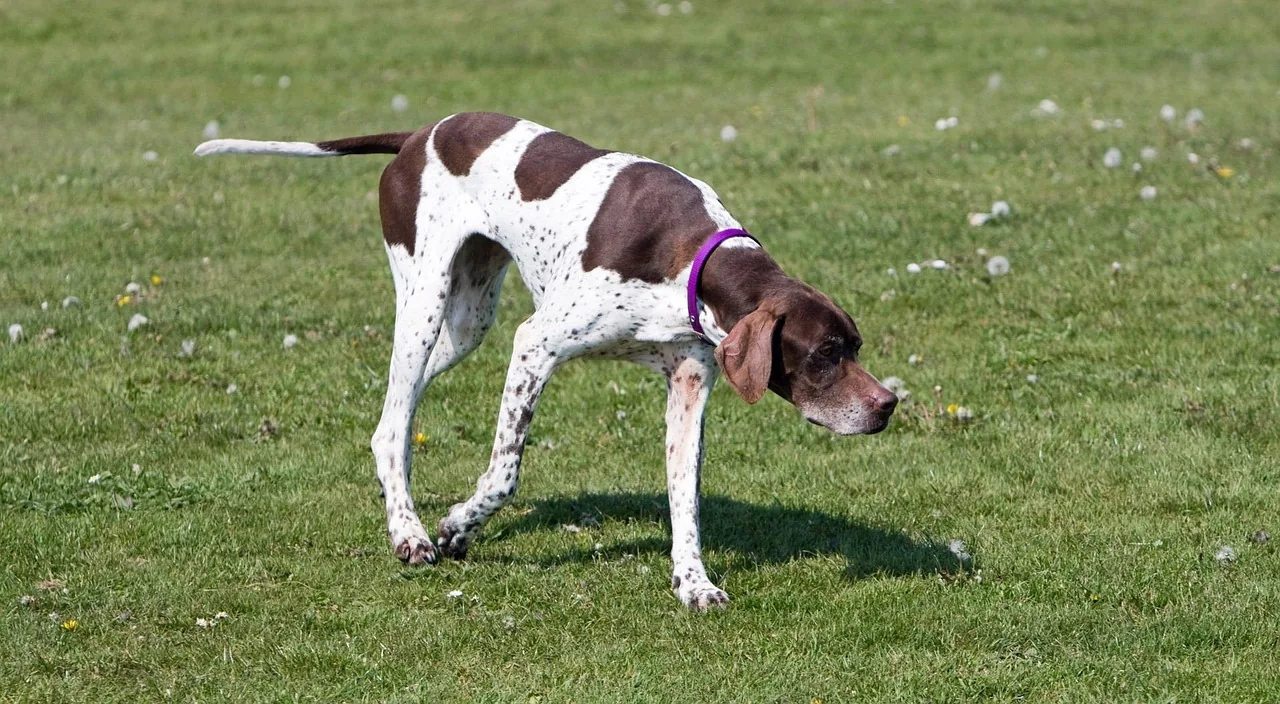
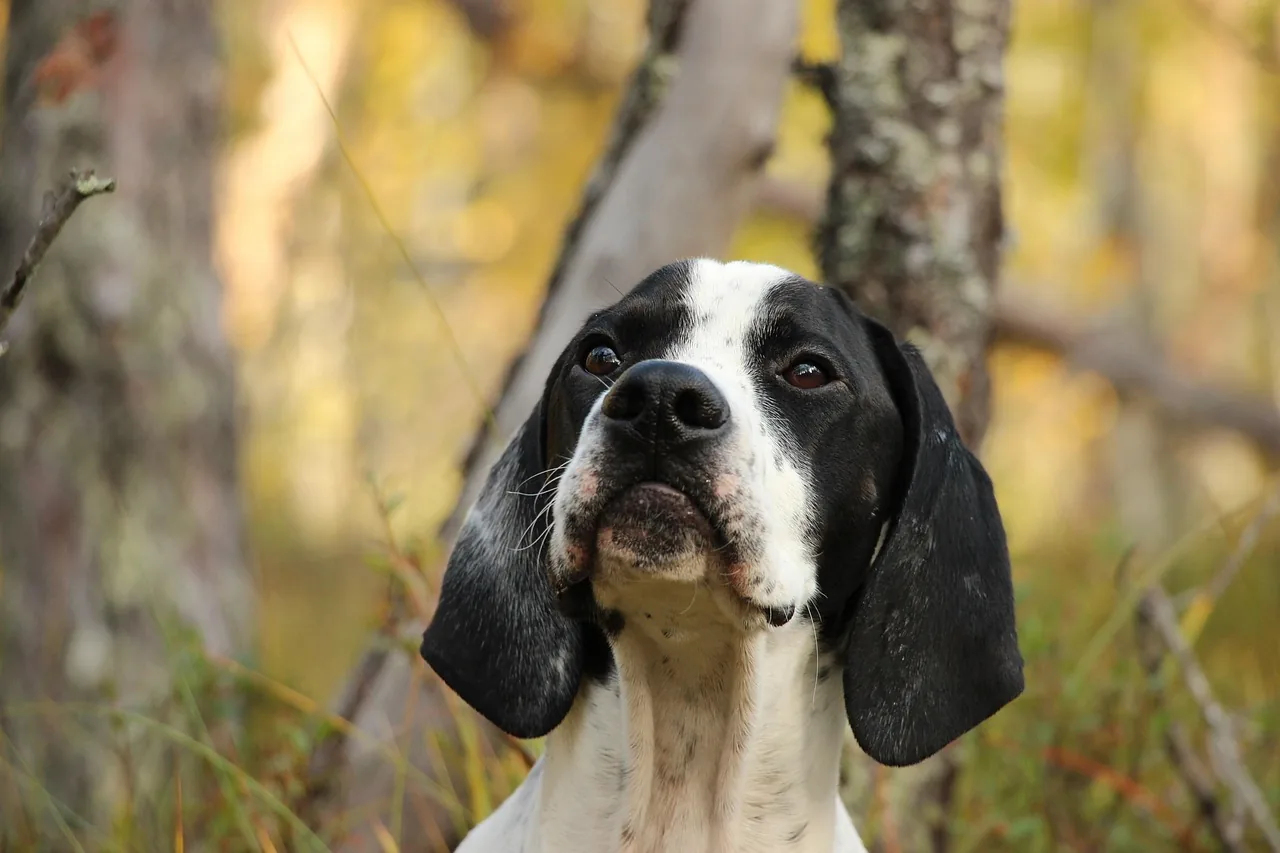
The FCI describes a fine, short, hard coat, evenly distributed, smooth and straight with a decided sheen. Colours include lemon and white, orange and white, liver and white, and black and white, with solid colours and tricolours also accepted. A weekly rub with a rubber mitt removes loose hair, and shedding is modest. Pointers feel the cold, so a coat is useful in winter, and the thin skin is easily scratched by brambles.
Feeding and weight
Pointers burn a lot of energy but easily gain weight in less active homes. Feed for the work the dog actually does, split into two meals, and avoid vigorous exercise directly after eating. Keep the dog lean, so the ribs can be felt without being prominent. Measure treats, and use part of the daily ration for training so that rewards do not add weight.
Work out a starting calorie figure and food weight with the calorie calculator. Not sure this is the right breed? Take the quiz.
Health
Every breed carries predispositions. These are the conditions most often discussed for the English Pointer, not a prediction for any individual dog.
- Hip dysplasia
- Hypothyroidism
- Hereditary deafness in some lines
- Entropion and other eye conditions
- Skin allergies
What to ask the breeder. Ask for hip scores, eye examinations and thyroid results for the parents, and for hearing tests where deafness occurs in the lines.
Choosing a puppy
Ask for hip scores and eye tests for the parents and meet them if you can. Check that the puppies are confident, have been handled and are used to household sounds. Decide honestly whether your life offers two hours of real exercise for the next ten years. Be ready for an adolescent with endless energy, and for a sensitive dog that needs steady, kind training.
In Luxembourg the national kennel club is the Fédération Cynologique Luxembourgeoise (FCL), a member of the FCI. Many owners also buy from breeders in Germany, France or Belgium; a puppy coming from another EU country must be microchipped and vaccinated against rabies, which in practice means it cannot travel before about fifteen weeks of age. Where to get a dog in Luxembourg.
The older English Pointer
Watch for stiffness after exercise, weight gain and thinning skin. Many Pointers stay active into old age with shorter, more frequent outings, and a good bed and a coat in winter make a difference. Regular checks of hearing, eyes and joints are worthwhile. Keep up gentle exercise, because muscle protects the joints, and do not cut walks too sharply.
A realistic day
A realistic weekday for a working household in Luxembourg City, with a midday visit. Adjust it to your dog, not the other way round.
A long, brisk walk with running time.
Breakfast, then rest.
Midday visit with a walk.
Second long outing with a run in a safe place.
Final walk.
An English Pointer in Luxembourg
A Pointer in a flat is possible only if the exercise is genuinely met, and most owners here have a house with a garden or easy access to open country. Forest and field edges are ideal, and the Grünewald and Bambësch forests give room for long walks, though a dog loose on a scent near a road is a danger. Free buses and trams help you reach quieter ground without a car.
In winter put on a coat, since the short coat gives little insulation. In summer, which can reach the 30s °C, walk early and late and carry water. Never trust recall near roads or livestock. Dog tax, microchipping and third-party liability insurance apply as for any dog.
Every dog in Luxembourg must be identified, declared to the commune and covered by liability insurance. How registration works.
When you travel
Pointers cope well with a sitter who exercises them generously. Arrange long outings in a safe place, and keep the dog on a lead outside unless the sitter has proven recall. Tell the sitter about the scent drive and the risk near roads. A tired Pointer sleeps for hours, so the walks are the most important part of the plan.
PAWLY's holiday and overnight care takes place in your home, so your dog keeps its own bed and routine.
Myths and facts
MythPointers are hyperactive dogs.
FactThey are calm indoors when properly exercised. It is the exercise that makes the calm.
MythA Pointer will happily walk beside you off lead.
FactOnly until it catches a scent. Recall around game is always uncertain.
MythA short coat means no grooming and no cold.
FactThe coat is easy to care for, but the dog feels the cold and needs a coat in winter.
Is it the right dog for you?
Suits
- Very active owners
- People who run, cycle or hike
- Homes with space and safe places to run
Think twice if
- Flat-dwellers with little time
- Homes with cats or small pets
- People who want a dog reliable off lead everywhere
Questions owners ask
Can an English Pointer live in a flat?
Rarely well. It needs a lot of running that most flats do not provide. If the exercise is truly met, a Pointer can be quiet indoors, but a flat without daily access to open space is a poor match.
English Pointer or German Shorthaired Pointer?
The English Pointer is leaner, lighter and more specialised, bred to find and hold game. The German Shorthaired Pointer is heavier, more all-round and also retrieves. Both need a great deal of exercise.
Is the English Pointer good with other dogs?
Usually, yes. The breed's even disposition and love of company make it a good partner for other dogs. Introduce cats and small pets carefully, since the hunting drive is strong.
How do I stop a Pointer pulling on the lead?
Start in puppyhood, reward the dog for staying beside you and stop whenever the lead tightens. Combine this with enough exercise, since a Pointer that has had no run will pull. A well-fitted harness helps.
Sources
Photo: foxycoxy / Pixabay (Pixabay Content License) · Photo: Pixabay (Pixabay Content License) · Photo: isakH / Pixabay (Pixabay Content License) · Photo: Unsplash (Unsplash License)
General information for dog owners in Luxembourg, not veterinary or legal advice. Official facts (origin, size, group, history and temperament as described by the breed standard) follow the FCI standard; health and care sections reflect breed-club and veterinary guidance and are typical ranges rather than rules. For your own dog, ask your vet, the breed club or your commune. How this guide is written and checked. Last reviewed 8 October 2026.
Need someone for your English Pointer?
PAWLY offers an individual 45-minute walk or a home visit at your dog's pace, the same walker every time, and a written report with photos after every visit, across Luxembourg City.
Read next: the journal, for the English Pointer
All articles
Working breeds in a city flat: the honest version
High-drive dogs like the English Pointer can live in a flat, but it takes a plan.

What actually tires a dog indoors
Walks alone rarely tire a busy breed like the English Pointer; this covers what works indoors.

Building a recall you can actually rely on
Scent and movement can cancel a recall; this is the method for the English Pointer.
Similar breeds
All 198 breeds
Hungarian Vizsla
A golden-rust pointer from Hungary, sensitive, affectionate and famously known as the velcro dog.
EnergyGroomingFlat life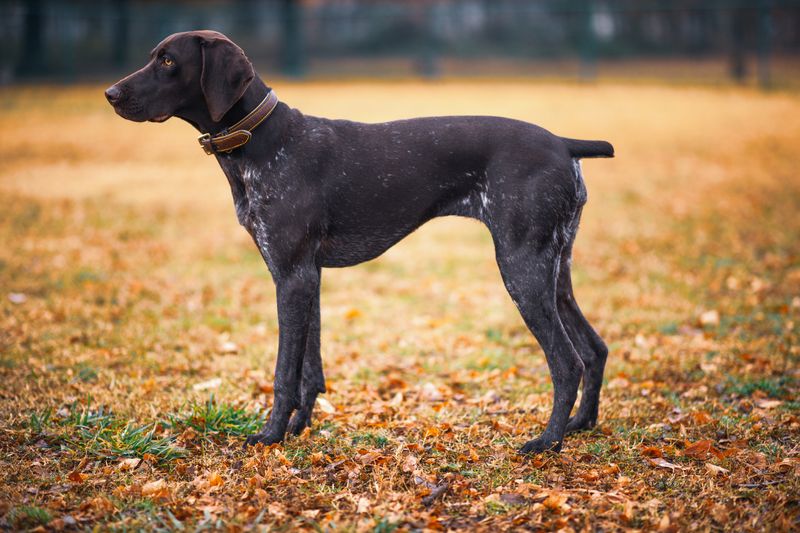
German Shorthaired Pointer
A versatile German hunting dog built for strength, endurance and speed, affectionate on the sofa and tireless outdoors when given a job.
EnergyGroomingFlat life
Weimaraner
The silver-grey hunting dog of Weimar: elegant, athletic and so attached to its people that it shadows them from room to room.
EnergyGroomingFlat life

