History
The exact origins of the Irish Water Spaniel are unclear. The FCI standard repeats a theory that water spaniels reached Ireland from Persia by way of Spain, but it also notes that records from 1600 already mention water dogs that pursue waterfowl in Ireland. The rat tail, smooth and tapering and unlike the tail of any other breed, points to an Irish rather than a foreign ancestor, and the dog's whole design, from the oily coat to the barrel-shaped body, suits a life spent in cold water and bog.
The modern breed took shape in the nineteenth century, when the show ring turned local working dogs into recognised types. The Irish Water Spaniel Club was formed in 1890, and the standard has been kept faithful to the working dog ever since. It belongs to FCI Group 8, Section 3, the water dogs, rather than to the flushing spaniels, and it remains uncommon. Anyone choosing one should expect to wait for a litter.
Temperament
The FCI standard describes the Irish Water Spaniel as proud, combining great intelligence and endurance with a bold and dashing eagerness of temperament, immense stamina and loyalty. It adds that the breed makes an excellent family companion with plenty of humour, though it is reserved toward strangers. That reserve is real: a visitor may be watched for some minutes before the dog decides to come over, and some individuals stay aloof for ever.
Owners tend to talk about the clowning. An Irish Water Spaniel will carry a sock round the room, shake a wet coat over a clean floor and invent games that nobody else has agreed to. It also has a long memory for rough handling and can sulk if corrected too sharply. Expect a dog that is deeply attached to one household, bright, sometimes silly and not suited to being left alone for most of the day.
Children and other pets
Irish Water Spaniels are playful and robust, and many enjoy the company of active children who will swim, fetch and run with them. Their size and exuberance can overwhelm toddlers, and their reserve with visitors means friends and neighbours need to be introduced calmly. They usually live happily with other dogs when raised together. Small pets deserve caution, since a bird dog is still a bird dog, and the retrieving instinct will make a water spaniel pick up almost anything it can carry.
Exercise and the daily walk
This is a working water dog with immense stamina, so about an hour and a half a day is a sensible minimum. That should include proper running and, ideally, swimming. Many Irish Water Spaniels will find any puddle, pond or fountain within a hundred metres, so think about where you walk and carry a towel. Retrieving games with a ball or dummy are the natural outlet and tire the dog both physically and mentally.
Mental work matters, because the breed is intelligent and bored dogs improvise. Try scent games, retrieving from water, trick training or a class in gundog work. The rolling gait described in the standard hints at an economical trot that can go on for hours, so a tired owner is no guide to a tired dog. A secure garden helps, but it does not replace outings.
Training
Irish Water Spaniels are clever, eager to work and quick to learn, but they are also sensitive and independent. Reward-based training with plenty of variety works best, and harsh corrections lead to sulking or avoidance. Retrieving is natural, so use it as a reward and a tool. Keep sessions short and cheerful, and finish on something the dog finds easy.
Socialise early and widely, because reserve with strangers can harden into suspicion if the puppy sees little of the world. Teach a solid recall before the dog discovers water and birds, and practise settling on a mat in public places. Joint classes in obedience or gundog work are a good way to channel the breed's drive and give the owner an instructor to ask.
Coat and grooming
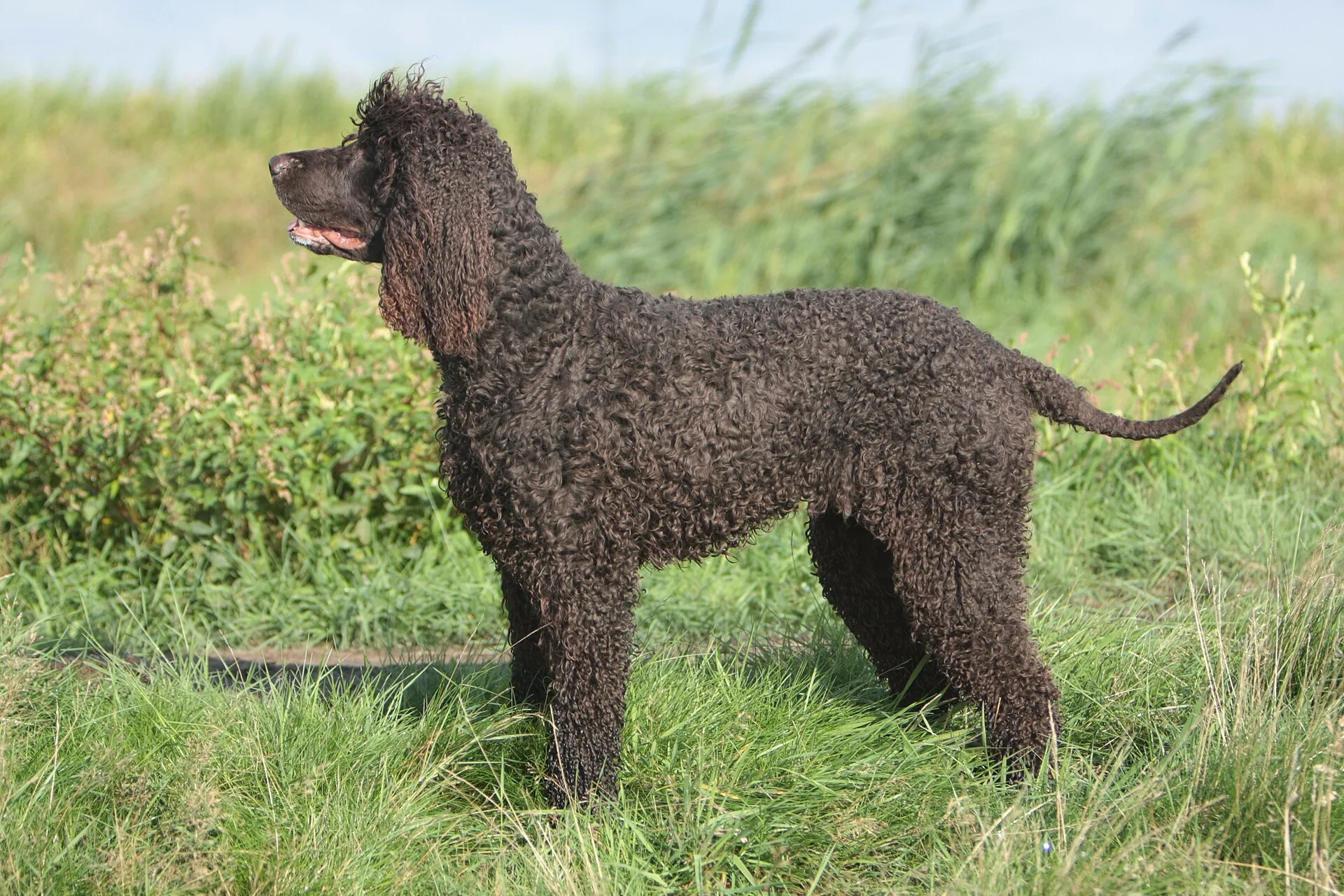
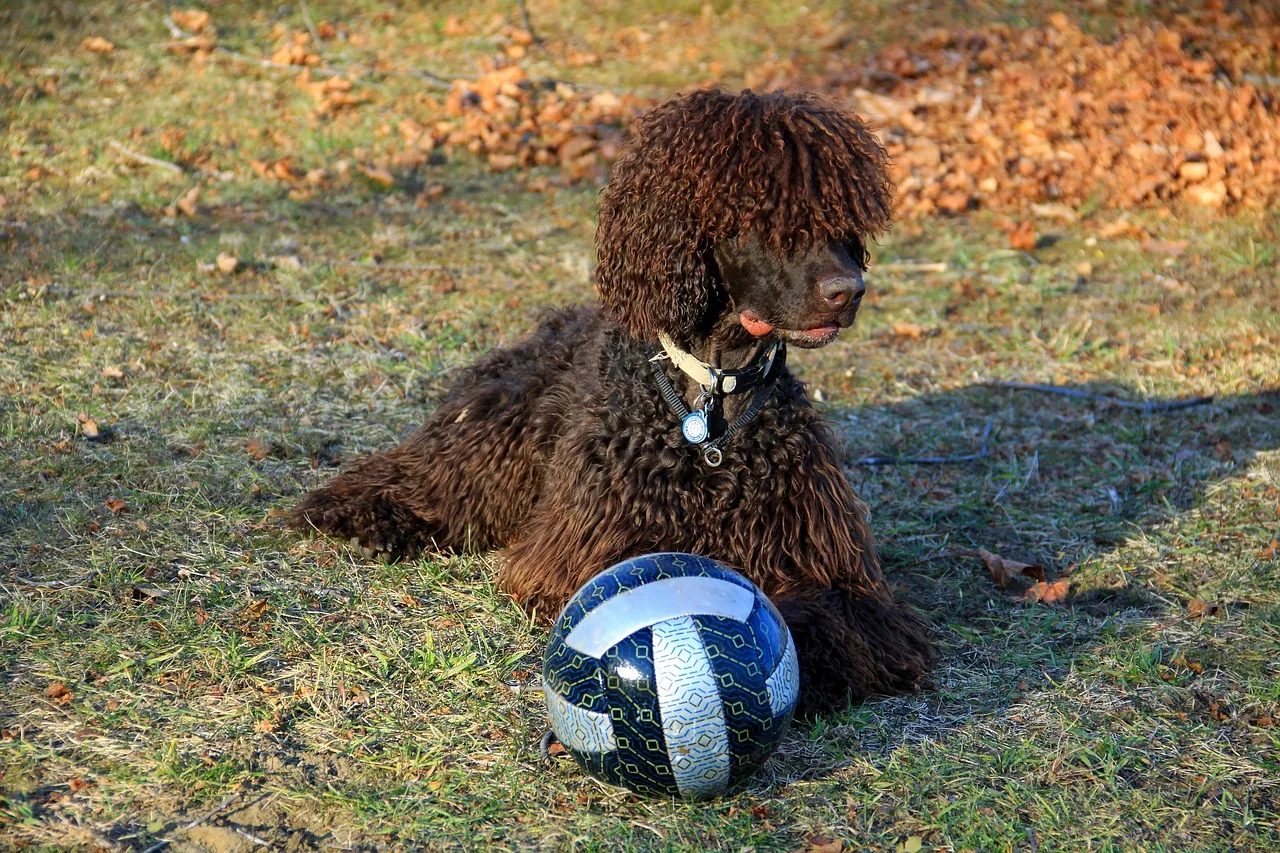
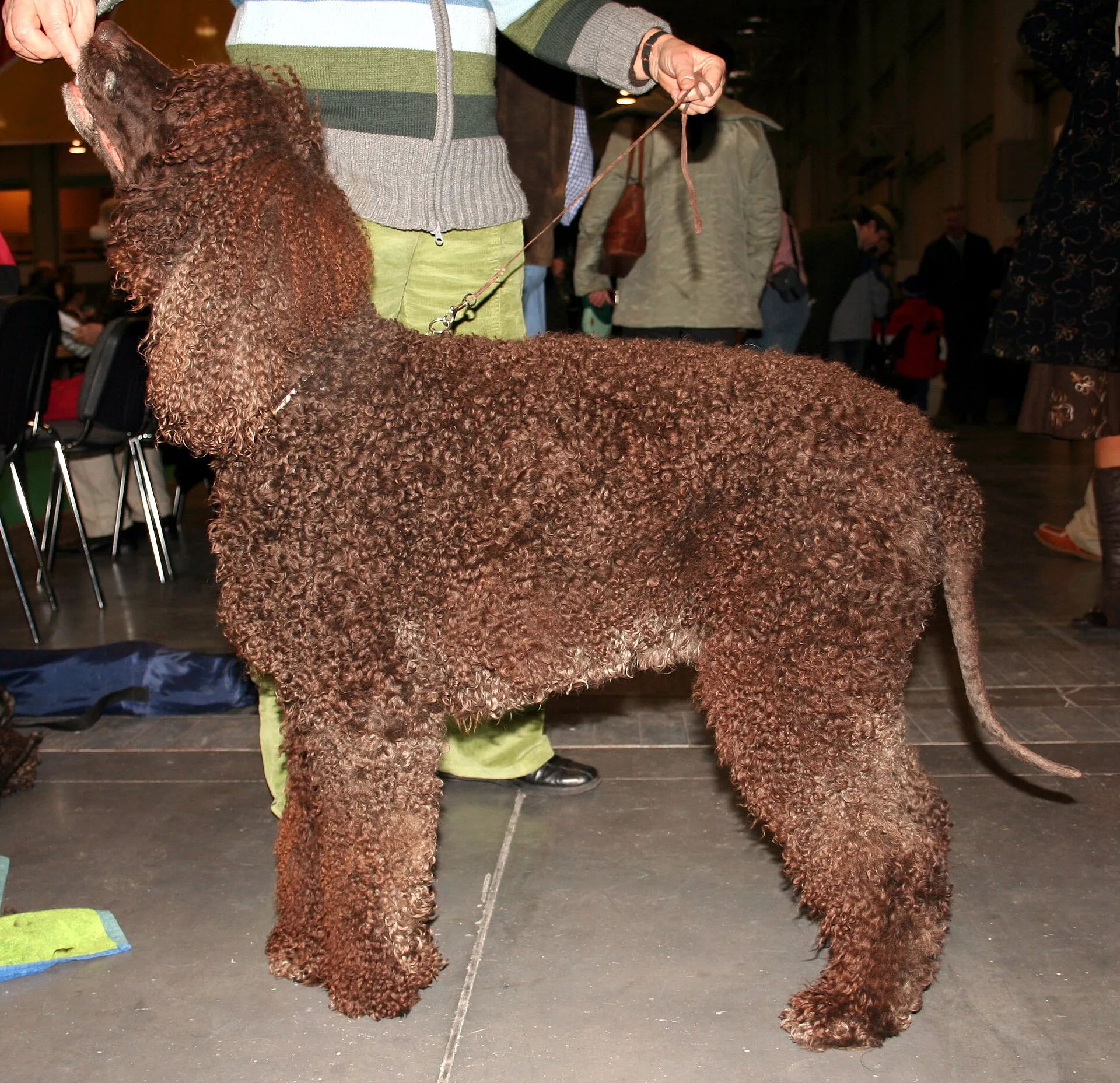
The coat is dense, in tight, crisp ringlets with a natural oiliness, and the FCI standard says it must be entirely free from wooliness. The colour is a very rich puce liver, and white on the chest is considered objectionable. The face and the tail are smooth, while the topknot and body are curly. Brush several times a week with a comb that reaches the skin, bath only when needed and trim every six to eight weeks. Shedding is light, but damp curls can smell.
Feeding and weight
Irish Water Spaniels are athletic and burn plenty of energy, but they can put on weight when exercise drops. Choose a complete diet suited to a medium to large active dog and measure meals. Split the daily ration into two to avoid one large feed, and rest the dog after eating before exercise. Keep the dog lean, since extra weight stresses the hips and joints.
Work out a starting calorie figure and food weight with the calorie calculator. Not sure this is the right breed? Take the quiz.
Health
Every breed carries predispositions. These are the conditions most often discussed for the Irish Water Spaniel, not a prediction for any individual dog.
- Hip dysplasia
- Hypothyroidism (an underactive thyroid)
- Ear infections, since the ears are heavy and the canals hold moisture
- Follicular dysplasia and other skin problems
- Epilepsy in some lines
What to ask the breeder. Ask for hip scores and thyroid results for the parents, whether epilepsy or skin problems have occurred in the lines, and how often the breeder's dogs have ear trouble.
Choosing a puppy
A puppy should be confident and curious, though a little reserve with strangers is normal for the breed. Meet the mother and look at her coat, which should be tight and crisp rather than woolly. Ask about hip and thyroid testing. From the start, make gentle introductions to many people, lifts, trams and different surfaces, and keep the coat tidy from the first week so that grooming becomes routine.
In Luxembourg the national kennel club is the Fédération Cynologique Luxembourgeoise (FCL), a member of the FCI. Many owners also buy from breeders in Germany, France or Belgium; a puppy coming from another EU country must be microchipped and vaccinated against rabies, which in practice means it cannot travel before about fifteen weeks of age. Where to get a dog in Luxembourg.
The older Irish Water Spaniel
Older Irish Water Spaniels often slow down gradually, and joint stiffness is the first sign most owners notice. Keep the dog lean, offer shorter walks and ask the vet about joint support. Dry the ears after any swim and check them weekly, since infections become more frequent with age. Annual blood tests help catch thyroid problems, which can bring weight gain, lethargy and coat changes.
A realistic day
A realistic weekday for a working household in Luxembourg City, with a midday visit. Adjust it to your dog, not the other way round.
A good walk or a run in the park, with a ball or retrieve game.
Breakfast, then a brisk comb through the coat.
Midday visit from a walker: a toilet break, a game and a short walk.
Long outing in the forest or beside water if possible, with retrieving practice.
Final walk, then dry the coat and settle for the night.
An Irish Water Spaniel in Luxembourg
A large, energetic water dog in a flat is manageable only if the owner commits to long outings every day. A lift is no problem for a dog of this size, but a wet Irish Water Spaniel after a river visit can soak the lobby, so keep a towel in the bag. Choose a flat with a quiet hallway and understanding neighbours, as the breed's exuberance can show at the front door.
Luxembourg offers good ground for the breed. The Grünewald and the Bambësch give long walks on soft paths, and the Pétrusse valley suits an early morning outing. Water is trickier: do not let the dog enter fountains or ornamental ponds, and check before it swims in rivers, since quality varies. In summer, dark liver curls absorb heat, so walk early and late. Buses and trams are free, which helps when the best walking is a short ride away.
Every dog in Luxembourg must be identified, declared to the commune and covered by liability insurance. How registration works.
When you travel
Irish Water Spaniels bond closely and can be unsettled by the owner's absence, so a sitter should keep to the usual routine of two or three outings a day and plenty of company. Tell the sitter about the dog's love of water and its reserve with strangers, and warn them not to let it off the lead near rivers or ponds. Leave towels, ear cleaner and the vet's details.
PAWLY's holiday and overnight care takes place in your home, so your dog keeps its own bed and routine.
Myths and facts
MythIrish Water Spaniels are a type of poodle.
FactThey are separate breeds. The Irish Water Spaniel is a water dog with its own long Irish history, a smooth face and a rat tail.
MythThe curly coat means no shedding and no work.
FactShedding is light, but the coat needs regular brushing, bathing and trimming to avoid matting and odour.
MythThey are friendly with everybody.
FactThe standard describes the breed as reserved toward strangers, so introductions should be calm and patient.
Is it the right dog for you?
Suits
- Active owners who enjoy swimming and outdoor life
- People who want a clever dog with humour
- Families with sensible, energetic children
- Owners who like a coat with character and will groom it
Think twice if
- You are out of the house most of the day
- You want an easy friend for every visitor
- You dislike a wet, muddy dog after a walk
- You live in a small flat with no access to green space
Questions owners ask
Does an Irish Water Spaniel shed?
Very little, but the coat grows densely and tangles without care. Plan on brushing several times a week and trimming every six to eight weeks to keep it tidy and healthy.
How big do they get?
Dogs stand 53 to 59 cm and bitches 51 to 56 cm at the withers according to the FCI standard, which makes it the tallest of the spaniels. The standard gives no weight.
Do they need to swim?
They love it, and swimming is excellent exercise, but it is not essential. A dog that never swims can still be well exercised with retrieving games and long walks. Whatever the dog does, dry the ears afterwards.
Are they easy to find?
No. The breed is rare, and good breeders often have waiting lists. Expect to wait and be prepared to travel for a puppy. Contact the national breed club or the FCL for leads on litters.
Sources
Photo: Roete002, CC BY 4.0, via Wikimedia Commons · Photo: Pleple2000, CC BY-SA 3.0, via Wikimedia Commons · Photo: Pixabay (Pixabay Content License)
General information for dog owners in Luxembourg, not veterinary or legal advice. Official facts (origin, size, group, history and temperament as described by the breed standard) follow the FCI standard; health and care sections reflect breed-club and veterinary guidance and are typical ranges rather than rules. For your own dog, ask your vet, the breed club or your commune. How this guide is written and checked. Last reviewed 8 October 2026.
Need someone for your Irish Water Spaniel?
PAWLY offers an individual 45-minute walk or a home visit at your dog's pace, the same walker every time, and a written report with photos after every visit, across Luxembourg City.
Read next: the journal, for the Irish Water Spaniel
All articles
Grooming and coat care through the Luxembourg year
The Irish Water Spaniel has a coat that needs a routine that holds through the Luxembourg seasons.

Building a recall you can actually rely on
Scent and movement can cancel a recall; this is the method for the Irish Water Spaniel.
The dog that is afraid of people
The Irish Water Spaniel is often reserved with strangers; early, patient handling of that matters.
Similar breeds
All 198 breeds
Portuguese Water Dog
A fisherman's dog from the Algarve, strong, clever and water mad, with a coat that needs a professional and a mind that needs a job.
EnergyGroomingFlat life
Spanish Water Dog
A rustic Andalusian all-rounder in a curly woolly coat, quick to learn, keen to work and wary of strangers until it knows them.
EnergyGroomingFlat life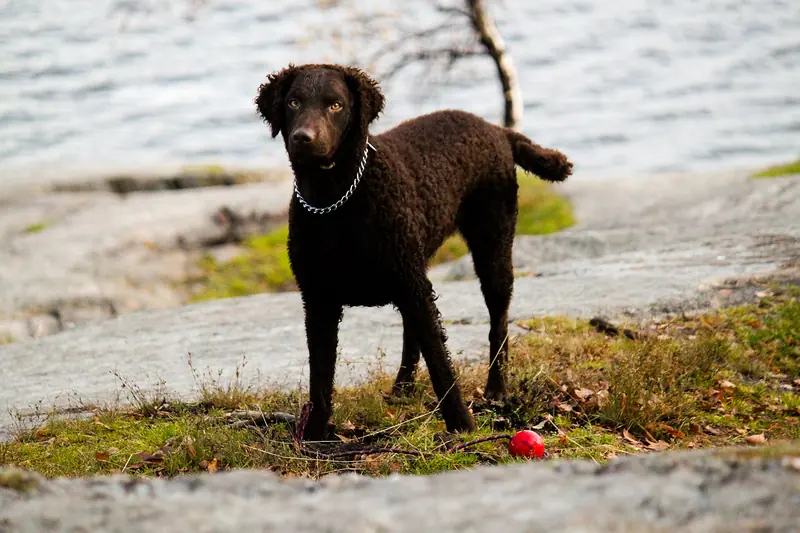
Curly-Coated Retriever
The tallest and most independent of the retrievers, a self-assured water dog whose coat of tight curls sheds rain like a waxed jacket.
EnergyGroomingFlat life

