
History
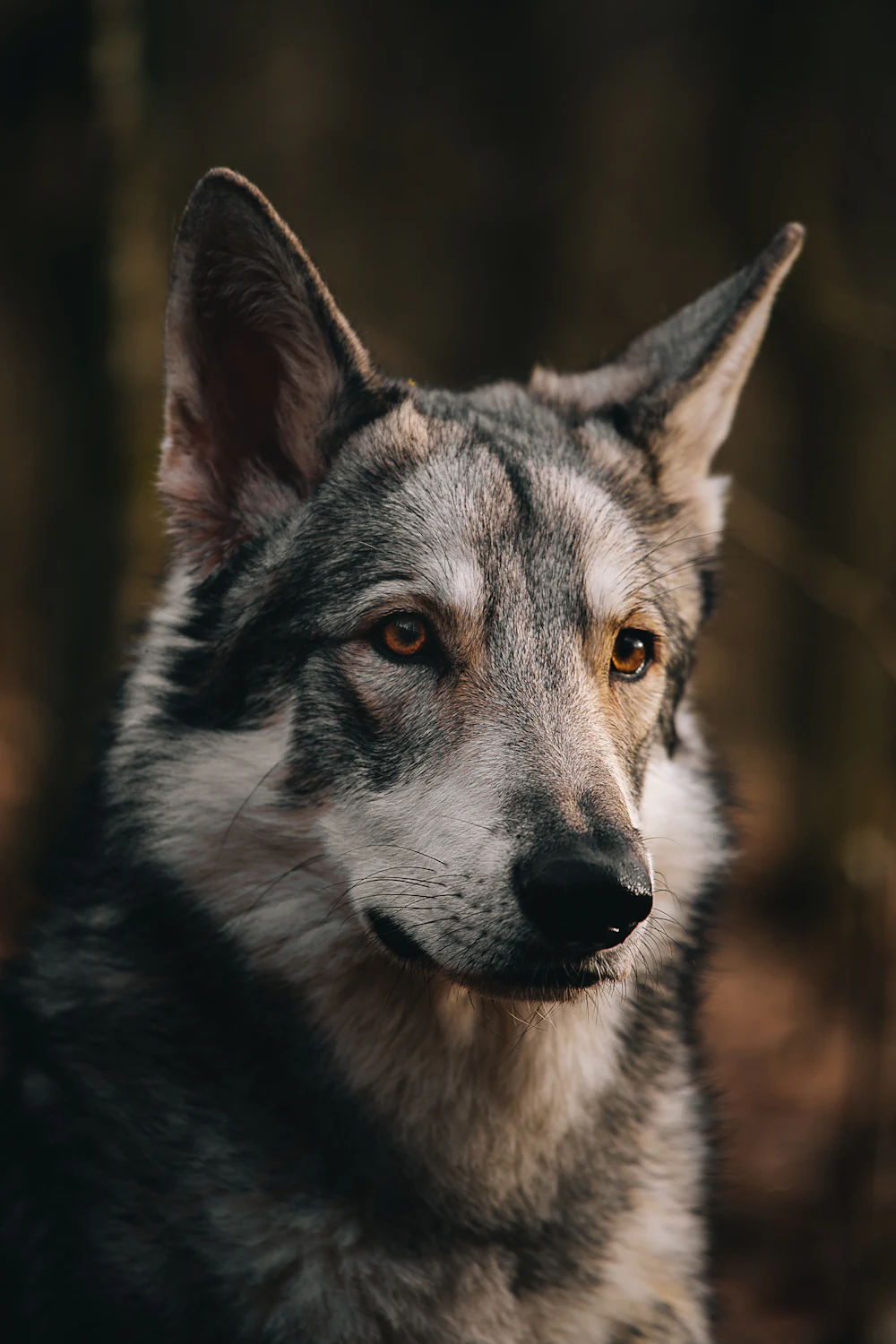
The Saarloos Wolfdog is a Dutch breed, named after its founder, Leendert Saarloos (1884 to 1969). The FCI standard tells how he wanted to restore natural qualities to the German Shepherd Dog. In 1932 he crossed a male German Shepherd of classical Prussian type, Gerard van der Fransenum, with Fleuri, a female wolf of the Siberian European branch. Through selective breeding this produced animals with one quarter wolf blood, and the breed gradually developed from there.
Saarloos first thought the dogs would be useful as guide dogs for the blind, but the standard records that the breed gradually lost working ability as the proportion of wolf blood increased. In its words, his legacy is not a working dog but a dog with attributes close to nature. The breed was officially recognised in 1975 under its founder's name. The FCI places it in Group 1, Section 1, Sheepdogs, without a working trial, and says that it is intended as a faithful and reliable companion and house dog.
Temperament
The FCI standard describes a lively dog, bursting with energy, with a proud, independent character. It says the dog foremost obeys its own will, but is devoted and reliable to its owner. Towards strangers it is reserved and typically avoids contact. The standard states that this reserved, wolf-like manner of avoiding unknown situations is typical for the breed.
Expect a dog that is gentle and affectionate with a small circle of people and distant from everyone else. It does not seek attention from visitors, and a new situation, such as a crowded street or a noisy lift, may cause it to retreat rather than to push forward. Patience, early and careful exposure to the world, and a quiet, consistent owner are what the breed needs.
Children and other pets
The Saarloos can be devoted to a household it has grown up with, but it is not a typical family dog. Its caution with unfamiliar people includes visiting children, and it dislikes sudden noise and chaos. Respectful older children who understand a reserved dog may suit it, while toddlers do not. With other dogs, early socialisation is essential, and same-sex tension is possible. Cats and small pets are risky, since the dog retains strong hunting instincts and may treat them as prey.
Exercise and the daily walk
This is an athletic dog that needs about two hours of activity each day, preferably varied and including steady trotting, walking, play and mental work. The standard speaks of a dog bursting with energy, and a Saarloos kept on short, predictable walks may become frustrated or anxious.
These dogs can jump, dig and slip through gaps, and a startled Saarloos may bolt. Use a well-fitted harness, a secure lead and a high, well-built fence. Recall is unreliable near wildlife or in unfamiliar places, so assume that off-lead running is only possible in enclosed areas. Puppies should avoid heavy, repetitive exercise while the joints develop.
Training
A Saarloos is highly intelligent, but it does not work to please. As the standard says, it foremost obeys its own will, so training must give the dog good reasons. Gentle, reward-based, consistent methods work best, with short sessions and plenty of patience. It learns quickly when it trusts its handler, and it also learns quickly how to open doors and gates.
Introduce the puppy calmly and repeatedly to people, traffic, lifts, buses, other dogs and the vet, always at a pace that keeps it confident. Teach comfortable handling, a reliable settle and good manners on the lead. This breed suits experienced owners who understand primitive, sensitive and independent dogs and who are comfortable with a dog that will never be a people-pleaser.
Coat and grooming
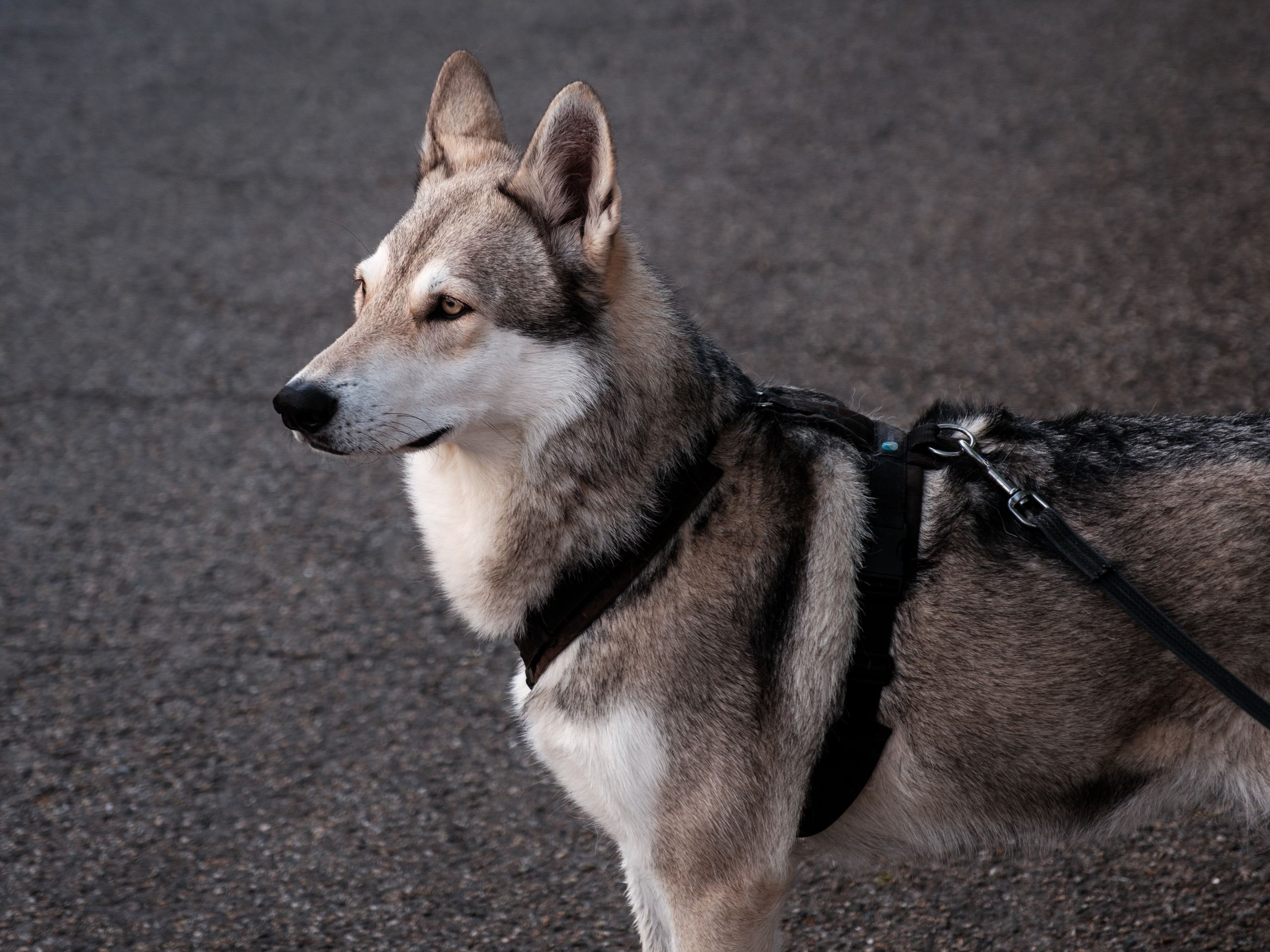
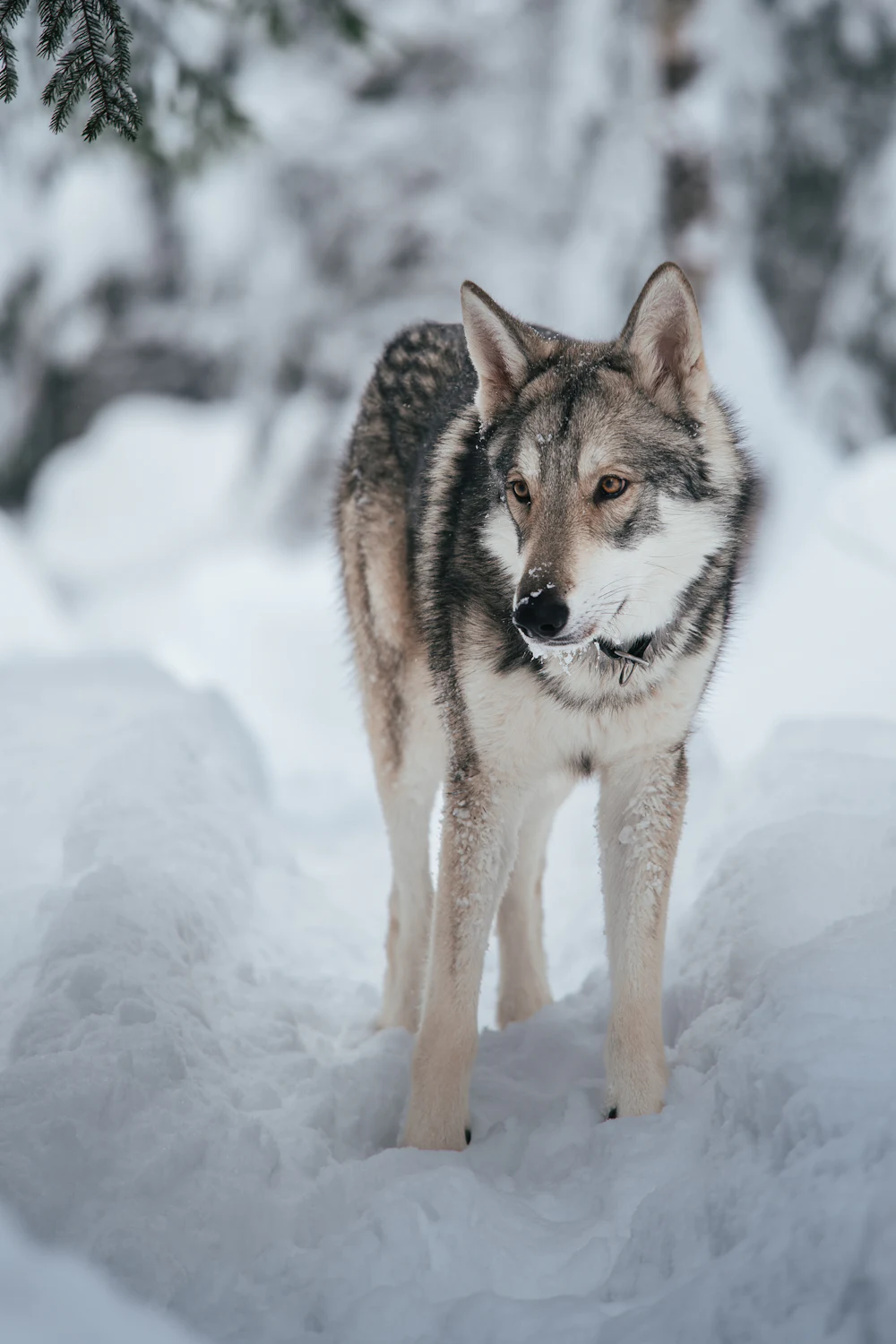
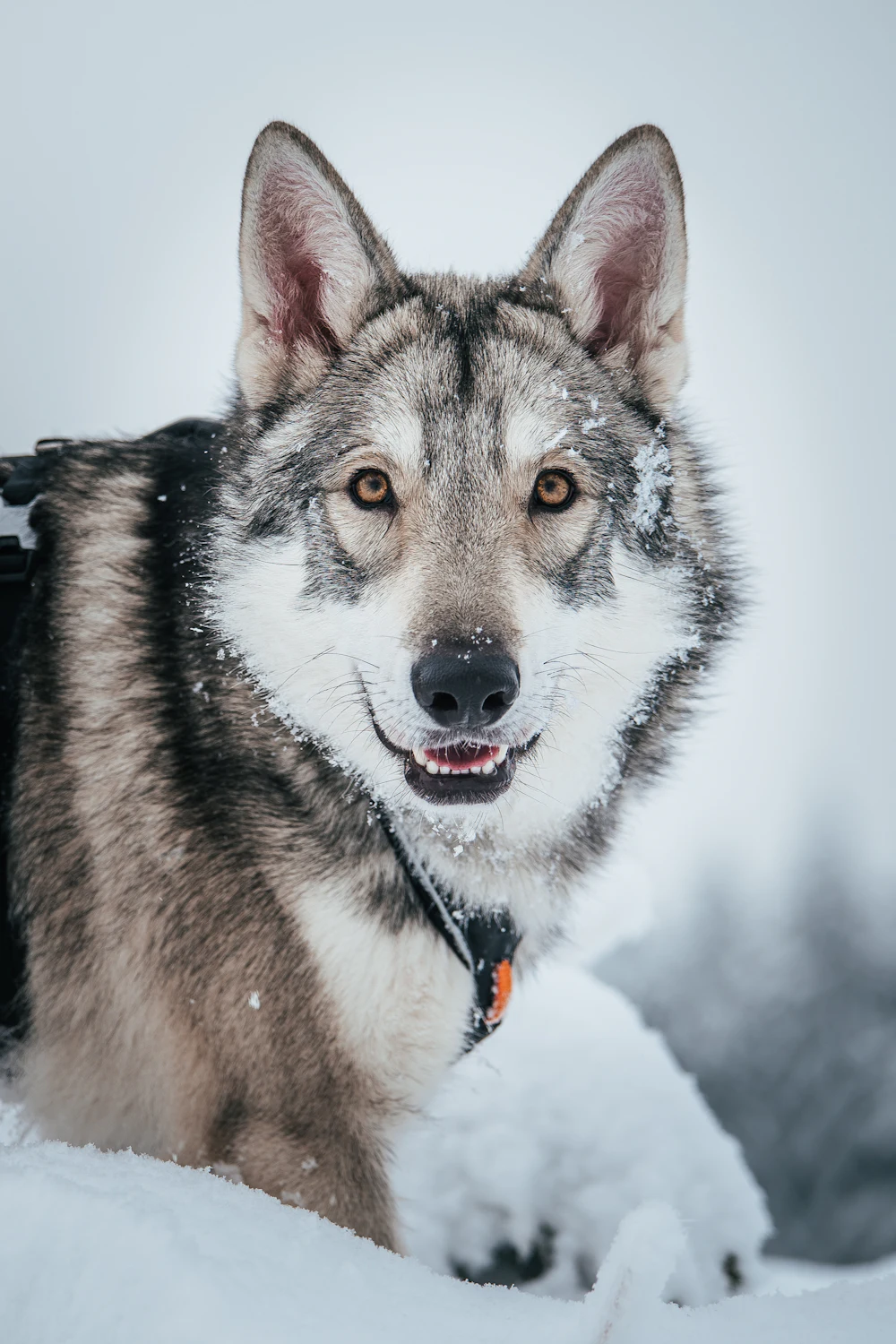
The standard notes that the coat changes with the seasons: in winter a prominent undercoat forms a distinct collar, while in summer the guard hair shows more. Brush weekly, and daily during the heavy moult, when the undercoat comes out in large quantities. Permitted colours are light to dark shaded black-tipped game colour (boar, hare), also called wolf-grey, and light to dark shaded brown-tipped game colour, with wolf-like markings from creamy white to white on the underside and inner limbs.
Feeding and weight
Choose a complete, good quality food in measured portions, appropriate for a lean, athletic dog of large size. Two meals a day suit most adults, and growing puppies should be fed in a way that supports steady, not rapid, growth. Use food rewards in training but count them in the daily ration.
Work out a starting calorie figure and food weight with the calorie calculator. Not sure this is the right breed? Take the quiz.
Health
Every breed carries predispositions. These are the conditions most often discussed for the Saarloos Wolfdog, not a prediction for any individual dog.
- Hip dysplasia and elbow dysplasia, as in many large breeds
- Degenerative myelopathy, a progressive spinal cord disease in older dogs
- Pituitary dwarfism, a rare inherited growth disorder reported in the breed
- Stress-related problems in dogs that are poorly socialised or left alone
What to ask the breeder. Ask for hip and elbow results for both parents, and ask whether the breeder tests for degenerative myelopathy and pituitary dwarfism. Ask about the temperament of the parents and how puppies are socialised.
Choosing a puppy
The first months decide how confident the adult will be, so plan calm, frequent socialisation with people, surfaces, lifts, vehicles and city noise, always with a retreat available. Keep walks short and joints protected, and teach handling gently. Secure the home and garden early, since a determined dog can find any gap.
In Luxembourg the national kennel club is the Fédération Cynologique Luxembourgeoise (FCL), a member of the FCI. Many owners also buy from breeders in Germany, France or Belgium; a puppy coming from another EU country must be microchipped and vaccinated against rabies, which in practice means it cannot travel before about fifteen weeks of age. Where to get a dog in Luxembourg.
The older Saarloos Wolfdog
A well-cared-for Saarloos stays active for years, but from about eight years it may slow down and become stiff. Keep daily exercise regular and gentle, and discuss joint support with the vet. Watch for hind limb weakness or scuffing of the paws, which can be an early sign of spinal disease. Maintain a healthy weight, provide a warm, non-slip bed and keep routines predictable, since older reserved dogs often become more sensitive to change.
A realistic day
A realistic weekday for a working household in Luxembourg City, with a midday visit. Adjust it to your dog, not the other way round.
Brisk 40-minute walk on a harness and secure lead, with sniffing time, then breakfast.
Owner leaves for work; the dog settles with a chew and a scatter feed, in a secured home with windows and doors checked.
Midday visit: a 45-minute outing with a handler the dog knows, in a quiet green area, plus water and a short training game.
Longer evening outing of an hour or more, with trotting and varied routes, then dinner after a rest.
Quiet toilet break in a secure space, and a calm wind-down before bed.
A Saarloos Wolfdog in Luxembourg
The Saarloos Wolfdog is a challenging dog for city life. A flat with a lift can work only with a very experienced owner who offers a great deal of exercise, company and careful socialisation, since the dog's wariness of strangers, noises and crowded spaces can be tested daily by neighbours, stairwells and pavements. A house with a high, secure garden, or a home near open woodland, suits it far better.
The Grünewald and the Bambësch forests are ideal for long, varied outings on a long line, and the quieter edges of the Pétrusse valley and Parc Merl can work at off-peak hours. Because the dog may bolt, never rely on off-lead recall near roads or wildlife. Free buses and trams are a useful way to reach green areas, but introduce them gradually. In summer, with temperatures in the 30s °C, walk early and late and provide shade and water. Every dog must be microchipped, declared to the commune, insured for third-party liability and subject to the annual dog tax.
Every dog in Luxembourg must be identified, declared to the commune and covered by liability insurance. How registration works.
When you travel
A sitter needs real experience with sensitive, independent dogs and should meet the dog repeatedly before the owner leaves. Check every door, gate and window, since the dog can slip out and run. Walk only on a harness with a secure lead, avoid unfamiliar crowds and keep to the dog's routine. Provide mental activity and plenty of exercise, and leave the vet's details and a clear description of how the dog reacts to strangers.
PAWLY's holiday and overnight care takes place in your home, so your dog keeps its own bed and routine.
Myths and facts
MythA Saarloos is basically a wolf in the living room.
FactIt is a domestic dog, bred in the Netherlands from a German Shepherd and a wolf and developed over many generations. It is wary and independent, but it is not a wild animal.
MythWith enough training it will be as obedient as a Shepherd.
FactThe standard says it foremost obeys its own will. Training builds cooperation but does not turn it into a people-pleaser.
MythIt is a good guard dog because of its wolf look.
FactIt avoids unknown situations and strangers by nature. It is reserved and may withdraw, not defend.
Is it the right dog for you?
Suits
- Very experienced owners of primitive or northern breeds
- Homes with a high secure fence and quiet surroundings
- Active people who enjoy long woodland walks
- Owners who can spend most of the day with the dog
Think twice if
- You want a dog that is friendly with everyone
- You are away at work all day with no company for the dog
- You have cats or small animals at home
- You need reliable off-lead recall
Questions owners ask
Is a Saarloos Wolfdog really part wolf?
The breed began in 1932 with a cross between a German Shepherd and a wolf, according to the FCI standard, and was developed over many generations. Today it is a domestic dog breed, but it retains wolf-like looks and a reserved, independent temperament.
Is it a good first dog?
No. It needs experienced, patient handling, careful socialisation and a secure home. First-time owners are likely to be overwhelmed by its caution, independence and escape skills.
Can it live in a flat?
Rarely well. The dog needs a lot of exercise, calm surroundings and security. A noisy building and frequent encounters with strangers in corridors and lifts can make a sensitive Saarloos anxious.
Does it bark?
It is not a typical barker, but it may whine, howl or vocalise when anxious or left alone. Company, exercise and a calm routine help keep it settled.
Sources
Photo: Pexels (Pexels License) · Photo: Unsplash (Unsplash License) · Photo: Unsplash (Unsplash License) · Photo: Unsplash (Unsplash License) · Photo: Unsplash (Unsplash License)
General information for dog owners in Luxembourg, not veterinary or legal advice. Official facts (origin, size, group, history and temperament as described by the breed standard) follow the FCI standard; health and care sections reflect breed-club and veterinary guidance and are typical ranges rather than rules. For your own dog, ask your vet, the breed club or your commune. How this guide is written and checked. Last reviewed 8 October 2026.
Need someone for your Saarloos Wolfdog?
PAWLY offers an individual 45-minute walk or a home visit at your dog's pace, the same walker every time, and a written report with photos after every visit, across Luxembourg City.
Read next: the journal, for the Saarloos Wolfdog
All articles
Long-backed breeds, stairs and the spine
A long back makes stairs matter more than most owners think.

What actually tires a dog indoors
Walks alone rarely tire a busy breed like the Saarloos Wolfdog; this covers what works indoors.

Dogs and cats in the same flat
The Saarloos Wolfdog can see small animals as prey; this covers living with a cat in a flat.
Similar breeds
All 198 breeds
Czechoslovakian Wolfdog
A pack-minded, wolf-looking working dog with the stamina of a marathon runner and a strong need for an owner who understands it.
EnergyGroomingFlat life
German Shepherd
Intelligent, loyal and built to work. In the right hands one of the finest dogs there is; without a job, a handful.
EnergyGroomingFlat life
Siberian Husky
A sled dog built to run for hours in the cold, friendly with everyone and loyal to no fence.
EnergyGroomingFlat life

