History
The Swedish Lapphund, Svensk Lapphund in the FCI standard, belongs to Group 5, Section 3, Nordic watchdogs and herders, without a working trial. The standard states that it served the nomadic herders of the north for centuries as a reindeer herding dog and watchdog. That background explains a lot about the dog: hardy, weatherproof, alert, and used to working closely with people over long distances in cold country.
Today it is kept mainly as a companion, as the standard notes, though the working instincts remain. It is a rare breed outside Scandinavia and is unlikely to be seen often in Luxembourg, so owners often become ambassadors, answering the question, is that a husky, every walk. It is not related to the sled dogs in function, being a herder and guard with a friendly, social character, and it is closely related in type to the Finnish Lapphund.
Temperament
The FCI describes the Swedish Lapphund as lively, alert, kind and affectionate, receptive, attentive and willing to work, with endurance and toughness. In the home it is a warm, sociable, family-minded dog that likes to join in. It is rarely suspicious of strangers, and more likely to greet than to guard, although it will announce a visitor with a few barks.
The herding legacy shows in a wish to keep things in order, which can mean following, circling and barking at moving things. It is intelligent and responsive, and generally happier in a setting where it has something to do than in a quiet, inactive household. Many enjoy cold weather and have a gleeful response to snow, while hot days leave them heavy and subdued.
Children and other pets
Swedish Lapphunds are typically affectionate and friendly with children, and enjoy being part of a lively family. Their herding drive can show as nudging or circling running children, so gentle supervision is wise. They generally get on well with other dogs. With cats and other pets they are often fine if raised together, though small animals outdoors may trigger chasing. The tendency to bark when excited is something to manage in multi-household buildings.
Exercise and the daily walk
A healthy adult needs about an hour to an hour and a half of activity a day. The breed was built for endurance, so it enjoys longer walks at weekends, hiking and cooler-weather runs. Off-lead freedom is best in secure areas until recall has been proven, as the herding and chasing instincts can carry the dog away from you.
Mental work matters as much as miles. The standard mentions herding, obedience and agility as areas where the breed excels, and short training sessions, trick work, scent games and tracking are all good outlets. In warm weather, reduce intensity and keep the dog out of midday heat, since the thick coat is designed for the north. Young dogs should avoid strenuous, repetitive exercise while the joints are developing.
Training
With its attentive and willing nature, the Lapphund is a pleasant breed to train. It responds best to reward-based methods, short sessions and variety. It thrives on a clear partnership with its owner and is sensitive to harsh handling. Start with recall, polite greetings and walking on a loose lead, which are the foundations for a dog that likes to move and explore.
Barking is the main training issue. It is a natural warning behaviour, and can be shaped by rewarding quiet and by controlling the view through windows. Herding habits such as circling bicycles and nipping at heels should be redirected early with a game or an alternative behaviour. Alone-time practice is also worth the effort, as the dog is closely attached to its family and may complain if left.
Coat and grooming
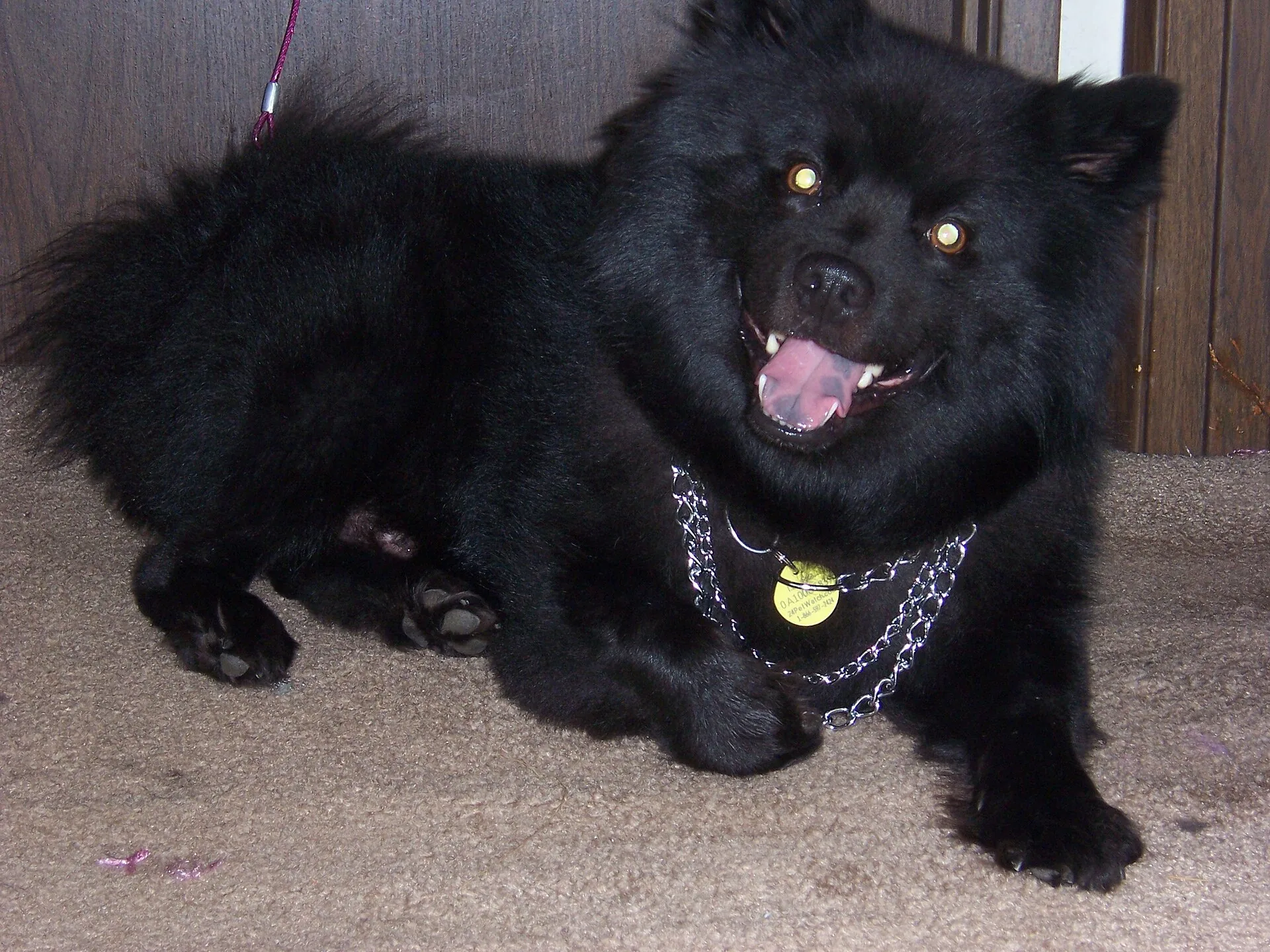
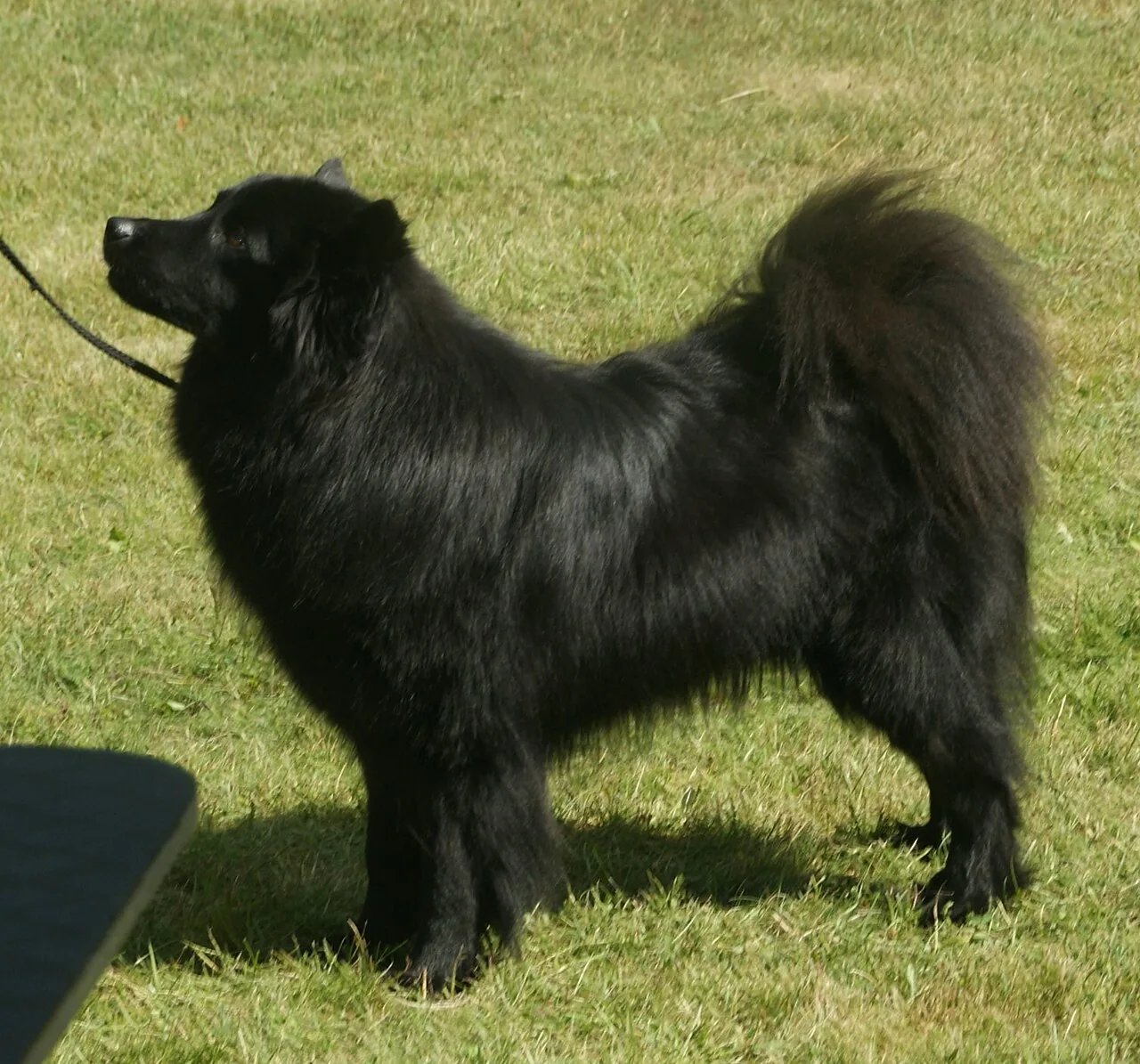
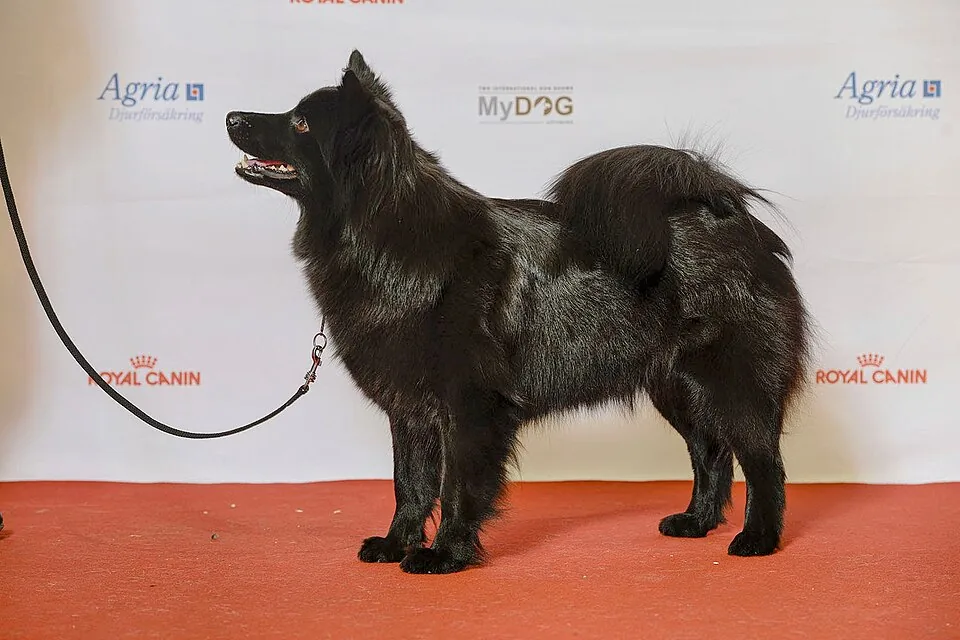
The FCI describes a profuse double coat, with hair standing straight out from the body and a dense, finely frizzy undercoat, short on the head and front legs and longer on the brisket, back of the legs and bushy tail, forming a ruff at the neck. Colour is usually solid black, with typical bronzing in bear-brown shades, and white on chest, feet and tail tip is allowed. Brush once or twice a week, daily during the heavy moult, when loose undercoat comes out in clouds. Never shave the coat.
Feeding and weight
A complete diet suited to a medium-sized, active dog is right, divided into two meals. The thick coat can hide weight gain, so feel the ribs regularly. Use a measured daily ration, include training treats in it and adjust for season and activity. Fresh water should be available at all times, particularly in warm weather. Avoid hard exercise straight after meals.
Work out a starting calorie figure and food weight with the calorie calculator. Not sure this is the right breed? Take the quiz.
Health
Every breed carries predispositions. These are the conditions most often discussed for the Swedish Lapphund, not a prediction for any individual dog.
- Progressive retinal atrophy (inherited eye disease leading to sight loss)
- Hip dysplasia (malformed hip joints)
- Elbow dysplasia (developmental joint disease)
- Excess weight (easily hidden under the thick coat)
What to ask the breeder. Ask for hip and elbow scores and current eye examination results for both parents, and ask which DNA tests are used for inherited eye disease in the breed.
Choosing a puppy
Lapphund puppies are fluffy, friendly and busy. Begin socialisation and training early, with short sessions, plenty of rewards and varied experiences of lifts, trams, city noise and other dogs. Teach quiet behaviour and alone-time in small steps. Brush from the first week so that grooming is pleasant. Protect growing joints by limiting stairs, jumping and long walks, and offer chews for teething and mouthing.
In Luxembourg the national kennel club is the Fédération Cynologique Luxembourgeoise (FCL), a member of the FCI. Many owners also buy from breeders in Germany, France or Belgium; a puppy coming from another EU country must be microchipped and vaccinated against rabies, which in practice means it cannot travel before about fifteen weeks of age. Where to get a dog in Luxembourg.
The older Swedish Lapphund
Older Lapphunds typically stay cheerful, though they slow down and need more rest. Reduce intensity but keep regular walks, keep weight lean and consider joint support after talking to your vet. Check eyes for signs of cloudiness or reluctance in dim light. Keep the coat tidy around the bottom and feet if grooming becomes difficult, and keep the dog cool in summer.
A realistic day
A realistic weekday for a working household in Luxembourg City, with a midday visit. Adjust it to your dog, not the other way round.
Lead walk of about 40 minutes with a sniff stop and some recall practice, then breakfast.
Owner leaves for work; the dog settles with a chew in a cool spot.
Midday visit: a 45-minute outing in the Pétrusse valley or Parc Merl with a training game, plus fresh water.
Evening outing of about an hour, ideally in woodland or a safe open area, then dinner.
Short toilet break and a brush, then bed.
A Swedish Lapphund in Luxembourg
The Swedish Lapphund can adapt to a Luxembourg flat if exercised, but it needs more care than many. Its bark is a real consideration in shared buildings, so practise quiet behaviour in the lift and hallway from the start. The breed likes company, and a midday visit or daycare makes a long working day more bearable.
The main challenge here is the climate. The profuse double coat is made for northern winters, and Luxembourg summers that reach the 30s °C can be unpleasant for the dog. Walk in the early morning or late evening, offer shade and water, and avoid pavements that have heated in the sun. The Pétrusse valley and Parc Merl serve for daily walks, and the Bambësch and Grünewald forests provide cooler, longer outings. Free buses and trams are available for trips. Microchip, commune declaration, insurance and the annual dog tax apply as for any dog.
Every dog in Luxembourg must be identified, declared to the commune and covered by liability insurance. How registration works.
When you travel
A sitter needs to provide an active routine with two or three outings, and should expect barking at movement outside. Keep the dog cool in warm weather, never exercising it hard in midday heat. Brush regularly, especially in the heavy moult, and watch portions, since the coat hides weight. Keep the dog on a lead near roads, and give contact details for the vet and owner.
PAWLY's holiday and overnight care takes place in your home, so your dog keeps its own bed and routine.
Myths and facts
MythA Lapphund is a type of husky.
FactIt is a Swedish reindeer herder and watchdog, not a sled dog, with a very different, friendlier temperament.
MythA thick coat means the dog loves any weather.
FactIt copes well with cold but suffers in heat. In summer, exercise should be early and late.
MythIt is the same breed as the Finnish Lapphund.
FactThe two are separate breeds with their own standards, though they share a Nordic herding heritage.
Is it the right dog for you?
Suits
- Active owners who enjoy walks in cold or cool weather
- Families wanting a friendly, lively dog
- People willing to groom and train regularly
- Those who enjoy a rare, characterful breed
Think twice if
- You dislike barking or live with sensitive neighbours
- You want a dog for hot-weather exercise
- You cannot manage a heavy seasonal moult
- You work long hours with no midday help
Questions owners ask
Is the Swedish Lapphund a good family dog?
Generally yes. The FCI describes it as lively, alert, kind and affectionate. It tends to be good with children and other dogs, though herding instincts and barking need training.
Does the Swedish Lapphund suit hot climates?
Not especially. It has a profuse double coat built for the north, so in Luxembourg summers it needs early and late exercise, shade, water and a cool home. Never shave the coat.
How much grooming does it need?
Brush once or twice a week, and daily during the heavy moult, when a large amount of undercoat is shed. Bathing is seldom necessary.
Is it easy to find in Luxembourg?
No. It is rare outside Scandinavia, so expect waiting lists, possible travel and the need to check health test results carefully.
Sources
Photo: Ljhumbix at en.wikipedia, Public domain, via Wikimedia Commons · Photo: Canarian, CC BY-SA 4.0, via Wikimedia Commons · Photo: Johan Frick-Meijer, 2016, CC BY 2.0, via Wikimedia Commons
General information for dog owners in Luxembourg, not veterinary or legal advice. Official facts (origin, size, group, history and temperament as described by the breed standard) follow the FCI standard; health and care sections reflect breed-club and veterinary guidance and are typical ranges rather than rules. For your own dog, ask your vet, the breed club or your commune. How this guide is written and checked. Last reviewed 8 October 2026.
Need someone for your Swedish Lapphund?
PAWLY offers an individual 45-minute walk or a home visit at your dog's pace, the same walker every time, and a written report with photos after every visit, across Luxembourg City.
Read next: the journal, for the Swedish Lapphund
All articles
Dogs in hot weather: the Luxembourg summer guide
The Swedish Lapphund carries a heavy coat or a heavy frame, which makes a Luxembourg summer the hard season.

Building a recall you can actually rely on
Scent and movement can cancel a recall; this is the method for the Swedish Lapphund.

Dogs and cats in the same flat
The Swedish Lapphund can see small animals as prey; this covers living with a cat in a flat.
Similar breeds
All 198 breeds
Finnish Lapphund
A soft-eyed reindeer herder from the far north, friendly and calm indoors, but equipped with a ready voice and a coat built for snow.
EnergyGroomingFlat life
Norwegian Buhund
A cheerful Viking-age farm dog that herds, guards and talks, and expects to be involved in everything you do.
EnergyGroomingFlat life
Icelandic Sheepdog
A cheerful, curly-tailed Viking herder that wants to be involved in everything and will say so, loudly, at every opportunity.
EnergyGroomingFlat life

